
Many employees go to work each day without knowing the protections available to them or what to do when workplace issues arise.
Questions about fair pay, safety, leave, or unfair treatment can leave workers feeling uncertain and unprepared.
Employee rights awareness helps workers understand their legal protections and address workplace issues with confidence.
With experience in HR management and workplace policies, practical insights can explain how employment rules apply in real situations.
Workplace protections cover essential areas such as fair pay, overtime compensation, employee leave, safe working conditions, equal treatment, and complaint procedures.
Gain insight into how these rights operate, the situations where they apply, and the enforcement processes that help maintain fair workplace protections and employee responsibilities.
What Are Employee Rights?
Employee rights are legal protections that set standards for how employers must treat workers.
These rights cover important areas such as wages, working hours, workplace safety, privacy, and equal treatment.
The protections available can vary based on factors such as job type, industry, employment status, location, and applicable federal or state laws.
Employers must follow these requirements and ensure employees receive the protections provided by law.
Key areas of workplace protections include fair pay, overtime compensation, safe working conditions, protection from discrimination and harassment, job-protected leave, accurate employment records, and safeguards against unlawful retaliation.
Types of Employee Rights
Employee rights cover several areas that help ensure fair treatment at work. These protections address pay, working conditions, leave, safety, and other essential workplace standards:
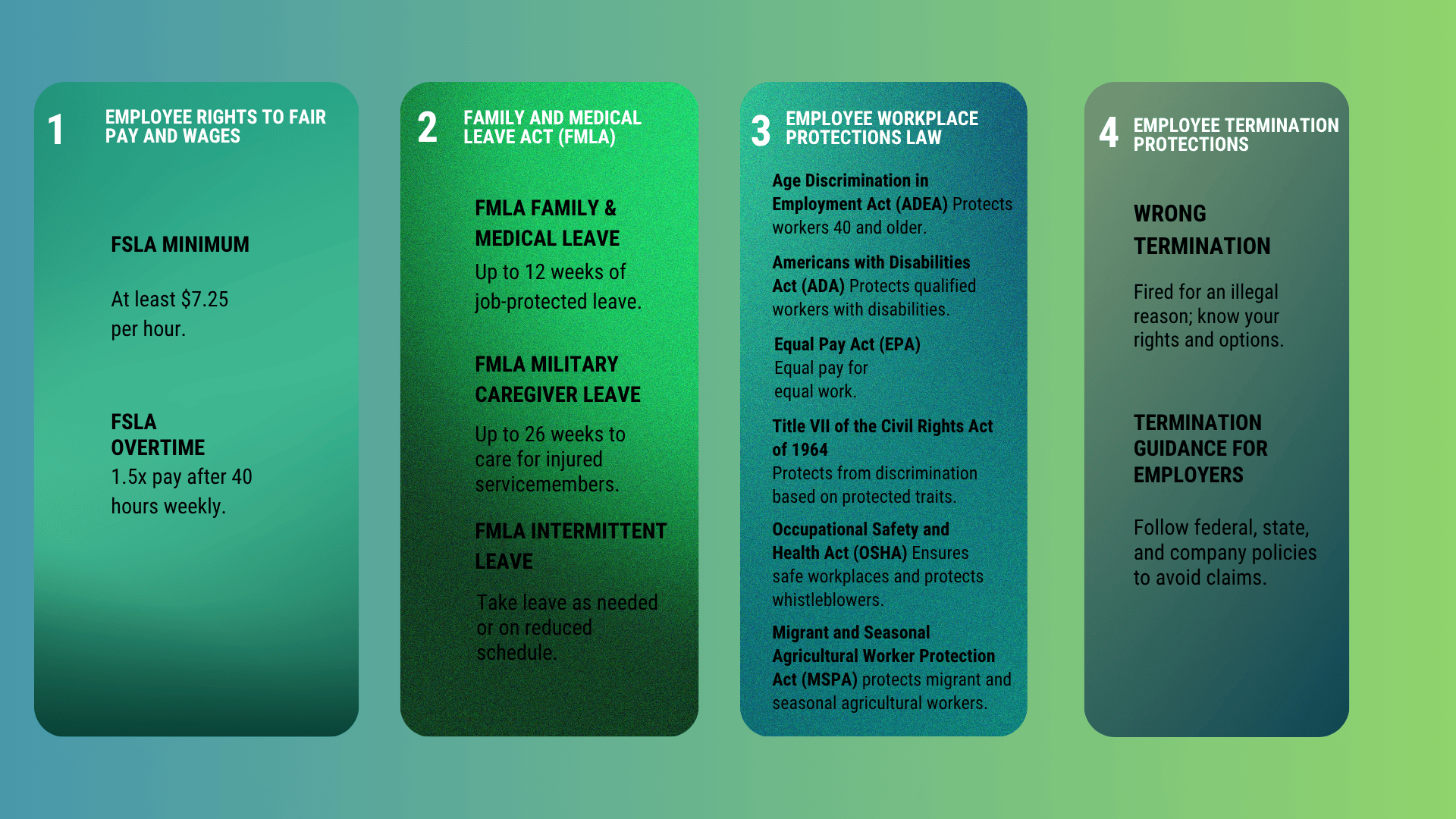
1. Employee Rights to Fair Pay and Wages
The Fair Labor Standards Act (FLSA) protects workers by establishing federal rules for minimum wage and overtime pay requirements for eligible employees.
- FLSA Minimum Wage: The federal minimum wage is $7.25 per hour, but employees receive higher state or federal rates when both laws apply.
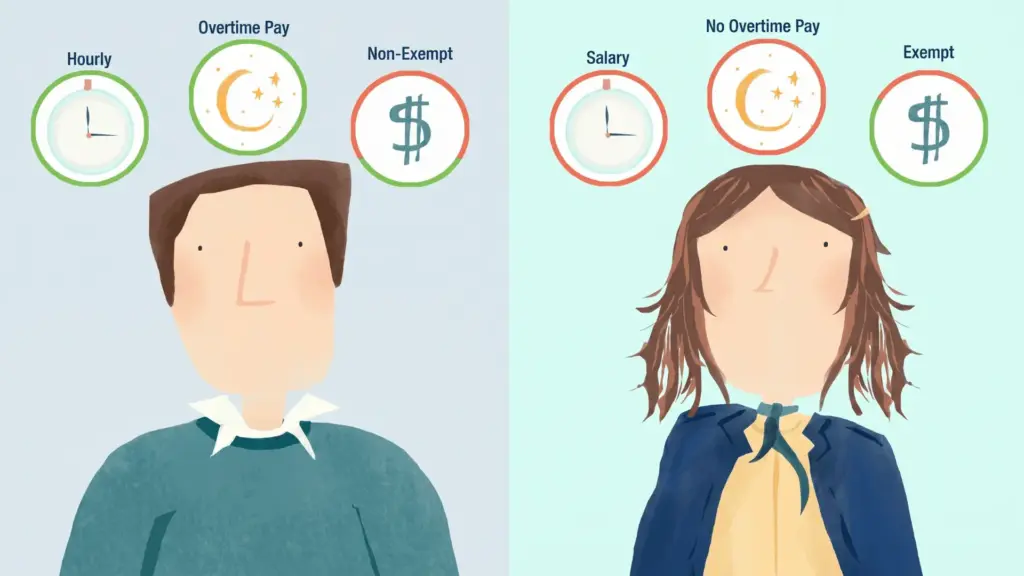
- FLSA Overtime: Eligible nonexempt employees must receive overtime pay at one and one-half times their regular rate after working over 40 hours weekly.
2. Family and Medical Leave Act
The Family and Medical Leave Act (FMLA) protects eligible employees by providing covered employees with unpaid, job-protected leave for qualifying family and medical reasons while requiring continuation of their group health benefits as if no leave were taken.
- FMLA Family & Medical Leave: Eligible employees can take up to 12 weeks of unpaid, job-protected leave for qualifying family and medical reasons.
- FMLA Military Caregiver Leave: Eligible family members can receive up to 26 weeks of leave to care for injured covered servicemembers.
- FMLA Intermittent Leave: Employees may take leave periodically or on reduced schedules for medical needs, qualifying events, or child bonding.
3. Employee Workplace Protections Law
Federal Employment Laws Establish Important Protections that Help Employees Receive Fair Treatment, Safe Working Conditions, Equal Opportunities, Proper Wages, and Legal Support in The Workplace.
- Age Discrimination in Employment Act of 1967 (ADEA): protects Workers Aged 40 and Older from Age-Based Discrimination in Hiring, Firing, Promotions, and Other Employment Decisions.
- Americans with Disabilities Act (ADA): protects Qualified Workers with Disabilities from Discrimination and Requires Reasonable Workplace Accommodations when Necessary.
- Equal Pay Act (EPA): prevents Gender-Based Pay Discrimination by Requiring Equal Compensation for Employees Performing Substantially Equal Work.
- Title VII of The Civil Rights Act of 1964: protects Employees from Workplace Discrimination and Harassment Based on Protected Characteristics, Including Race, Color, Sex, Religion, and National Origin.
- Occupational Safety and Health Act (OSHA): requires Employers to Maintain Safe Workplaces and Protects Employees Who Report Workplace Safety Violations.
- Migrant and Seasonal Agricultural Worker Protection Act (MSPA): provides Workplace Protections and Resources for Migrant and Seasonal Agricultural Workers Regardless of Immigration Status.
4. Employee Termination Protections
Termination of employment laws set federal and state rules for how and when workers can be legally fired, helping employees understand their rights and giving employers guidance on lawful practices.
- Wrongful Termination: It occurs when an employer fires an employee for an illegal reason, sometimes following a workplace investigation, and affected workers can learn what qualifies as unlawful discharge and what actions they can take.
- Termination Guidance for Employers: Federal and state agencies set laws on how and when employers can fire employees, and employers should follow these policies alongside company guidelines to avoid wrongful termination claims.
Workplace Rights for Different Types of Workers
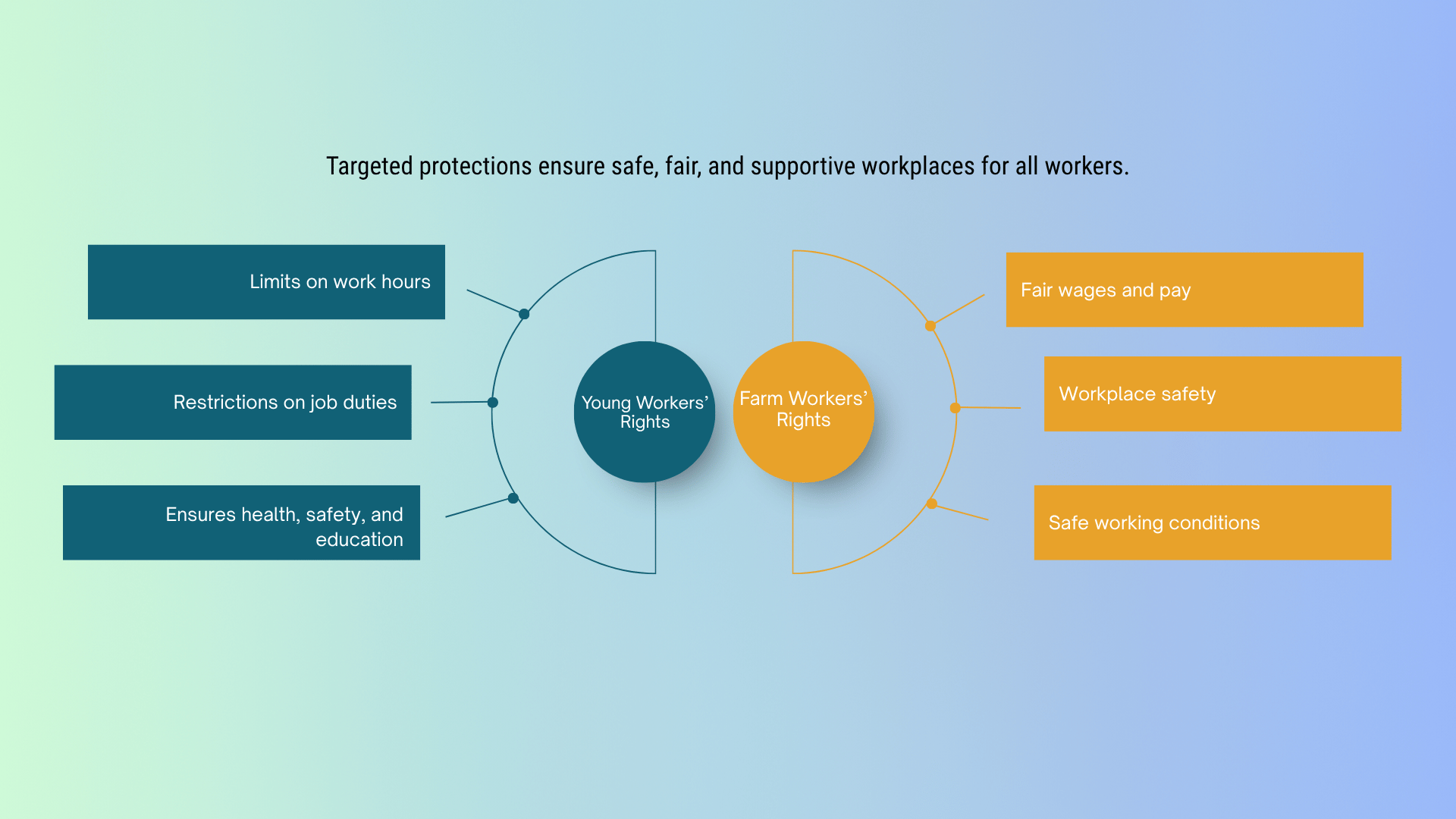
Labor laws provide specific protections for workers in different industries and age groups. Young employees and farm workers have additional rights that help promote safe, fair, and lawful workplaces.
|
Category |
Rights and Protections |
|---|---|
|
Young Workers’ Rights |
Federal child labor laws provide additional protections for young employees, limiting work hours, job duties, and workplace conditions to protect health, safety, and education. |
|
Farm Workers’ Rights |
Agricultural workers receive protections related to wages, workplace safety, and working conditions. Labor standards apply regardless of immigration status, and the Department of Labor enforces them. |
NOTE: Workplace protections vary by worker type. W-2 employees receive broad labor protections, while gig workers and independent contractors follow different rules for pay, benefits, taxes, and protections.
What Should Employees Do If Their Rights Are Violated?
If your workplace rights are violated, act quickly and document everything.
Start by writing down dates, times, witnesses, and specific incidents, and save relevant emails, messages, or pay records.
Review your employee handbook and contract to understand company policy, then report the issue in writing to your manager or HR.
If the problem isn’t resolved, file a complaint with the appropriate government agency, such as a labor board, the EEOC, or an equivalent authority in your country.
Consider consulting an employment lawyer, especially for serious matters like discrimination, harassment, wrongful termination, or unpaid wages.
Many offer free consultations. Acting promptly matters because legal claims often have strict filing deadlines.
Note: This is general information, not legal advice.
How Employee Rights Are Enforced
Government agencies and legal processes enforce employee rights by helping workers report violations, recover unpaid wages, and protect important workplace records.
- Filing a Workplace Complaint: Employees can report violations to the appropriate agency, including the Department of Labor for wage issues, OSHA for safety concerns, and EEOC for discrimination complaints.
- Recovering Unpaid Wages: Workers may recover unpaid wages through government actions or legal options by providing records of hours worked, payments received, and employer communications.
- Keeping Workplace Documentation: Employees should maintain pay statements, schedules, agreements, communications, and complaint records to support claims and workplace disputes.
Maintaining accurate records and knowing available enforcement options helps employees protect their rights, address workplace issues, and seek appropriate solutions when employers do not follow employment laws.
Conclusion
Clarity on employee rights helps create a fair and respectful workplace by giving employees the knowledge needed to recognize protections related to wages, safety, leave, and fair treatment.
Practical experience in workplace policies and compliance shows how clear information can help employees handle concerns and make informed decisions.
Staying aware of employment laws also helps organizations build stronger relationships with their teams while maintaining legal responsibilities.
Having an idea of these protections can build confidence when workplace challenges arise and encourage better communication between employees and employers.
Take the time to review your employee rights and stay prepared for workplace situations. Protect your rights by staying informed today.
Share your experiences in the comments. What employee right do you think matters most?
Frequently Asked Questions
What Are Illegal Things an Employer Cannot Do?
Employers cannot discriminate against protected traits, require unpaid work, retaliate against whistleblowers, or ignore workplace safety rules under federal and state laws.
What Scares HR the Most?
HR fears costly legal action, compliance violations, and toxic workplace issues because discrimination, harassment, and wrongful termination claims can expose companies to lawsuits, penalties, and reputational damage.
What Can Your Boss Not Say to You?
A boss cannot legally make discriminatory, harassing, retaliatory, or threatening statements that violate workplace rights, labor laws, or protections against unlawful treatment and unsafe working conditions.