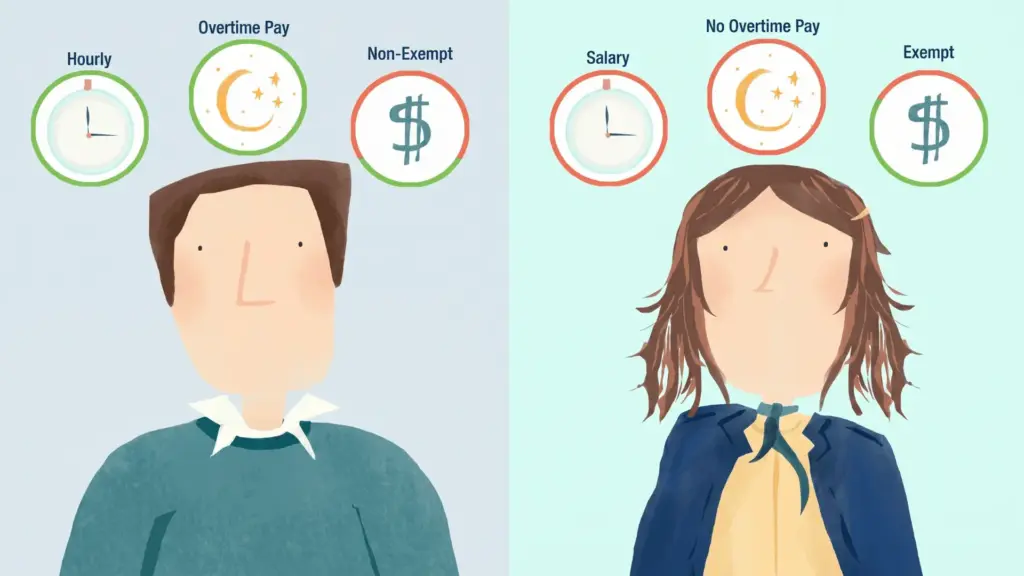


Close to 30% of the American workforce works outside a standard daytime schedule, and much of that group falls under one label: the NOC shift.
The NOC shift meaning is simple: an overnight work schedule, usually running from late evening through early morning, and the term shows up most often in healthcare and nursing.
From an HR standpoint, how well a facility structures and supports these hours often decides whether overnight staff stay long-term or burn out within a year.
Why Do They Call It NOC Shift?
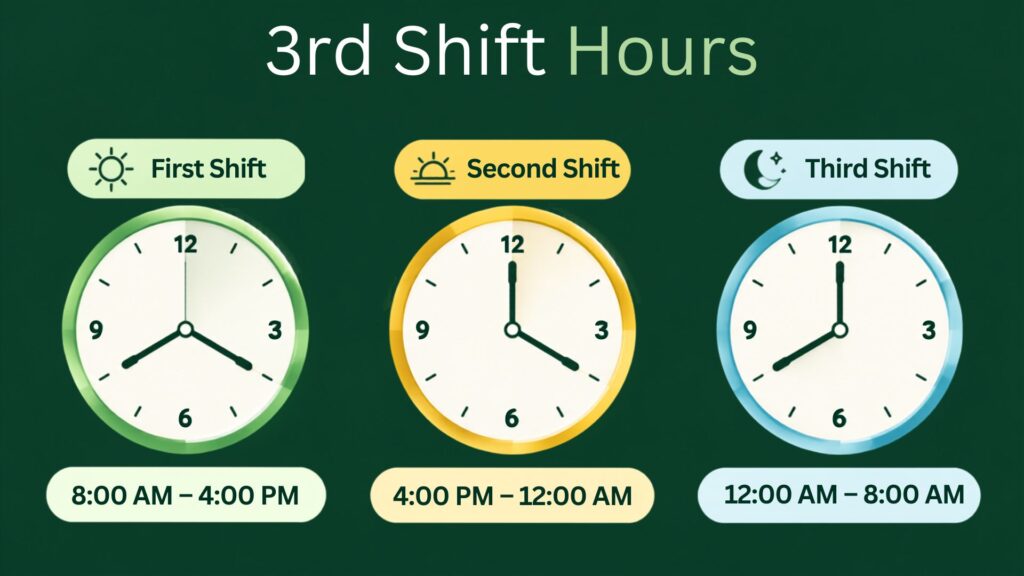
NOC comes from the Latin word noctis, meaning night, and in healthcare it is shorthand for the night shift, also called the third shift or graveyard shift.
In IT and technology, the same letters usually stand for Network Operations Center, the room where technicians watch servers, networks, and system alerts around the clock.
Hospitals adopted “NOC” as an informal label for nocturnal nursing staff because it is quicker to write on a schedule board than “overnight shift.” Both meanings point to the same idea: someone has to keep working while most people sleep.
What Are Typical NOC Shift Hours?
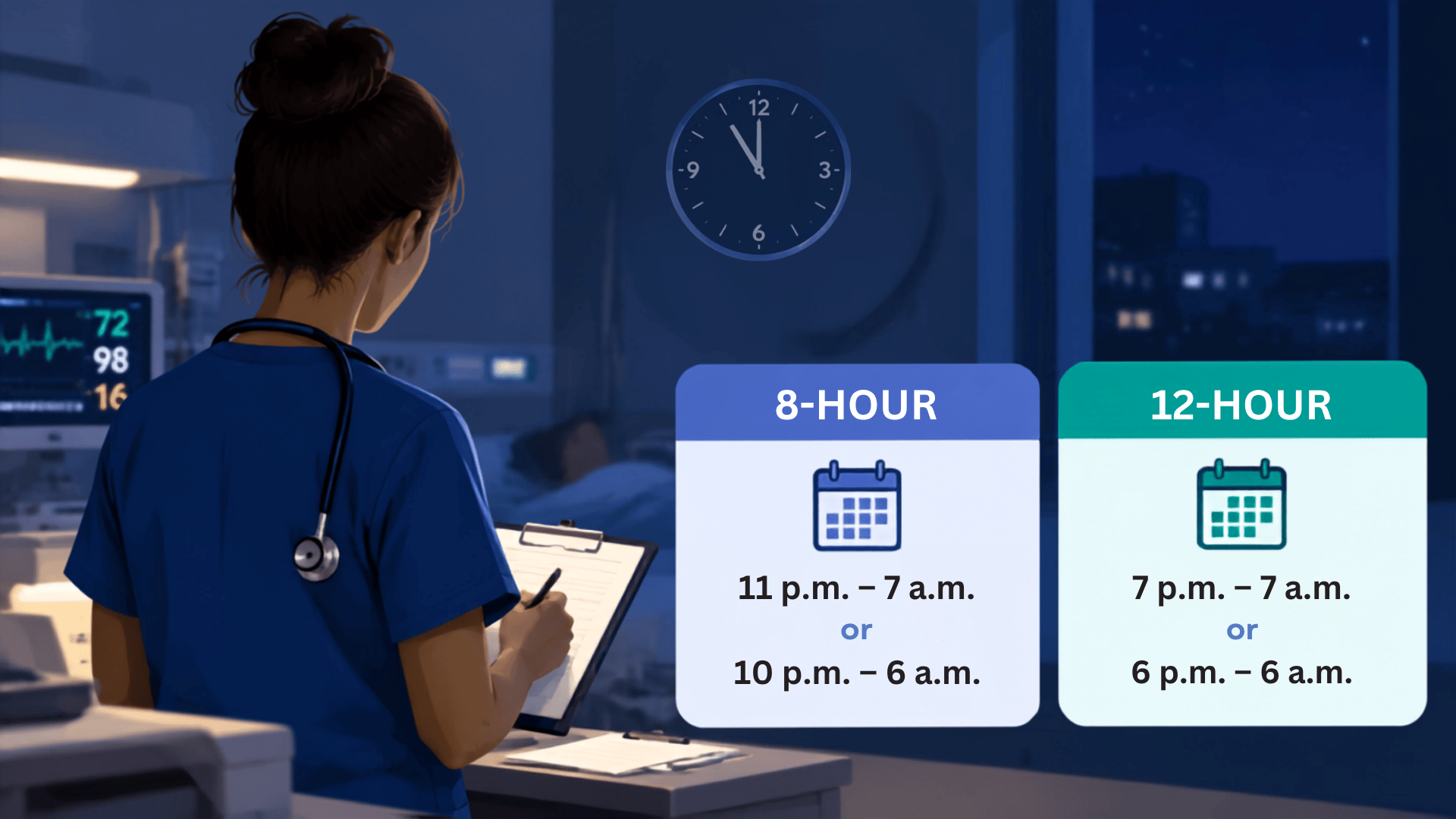
Exact timing depends heavily on the employer, industry, and role, since some overnight positions run a straightforward 8-hour block while others follow a longer 12-hour rotation for fewer handoffs.
|
Shift Type |
Common Hours |
|---|---|
|
8-hour |
11 p.m. – 7 a.m. or 10 p.m. – 6 a.m. |
|
12-hour |
7 p.m. – 7 a.m. or 6 p.m. – 6 a.m. |
Healthcare facilities tend to favor 12-hour rotations, since fewer handoffs mean less risk of missed information during patient transfers.
NOC Shift Meaning in Nursing and Healthcare
In nursing, NOC refers to the overnight rotation where staff provides continuous care while most departments run on a skeleton crew.
These overnight nurses and CNAs fall squarely into the broader group of essential workers whose roles cannot pause outside business hours.
Duties include vital checks, medication administration, wound care, emergency response, and charting for the incoming day team. Hospitals, nursing homes, and long-term care centers schedule NOC coverage because patient needs do not pause at sunset.
Nursing Specialties That Commonly Work NOC Shifts
- Critical care and ER nurses manage life-support and urgent cases at any hour.
- Labor and delivery nurses support births, which follow no fixed schedule.
- Pediatric and geriatric nurses provide overnight comfort, safety checks, and care for chronic conditions.
- Psychiatric nurses observe patients and manage medication overnight.
What Does a NOC Shift CNA Do?
CNA stands for Certified Nursing Assistant, a state-certified caregiver who handles hands-on patient support under the supervision of a registered nurse.
A NOC shift CNA is simply a CNA assigned to the overnight rotation, typically 11 p.m. to 7 a.m. or a 12-hour block, in a hospital, nursing home, or assisted living facility.
Most overnight CNA roles are scheduled to meet full-time employment thresholds, though part-time NOC positions exist at smaller facilities.
Because fewer nurses and support staff are on duty at night, the CNA’s overnight role often carries more direct responsibility for patient comfort and safety checks than the same role during the day.
Core duties include rounding every two to three hours to reposition patients, assisting with bathroom care, checking vital signs, reporting changes to the on-duty nurse, and restocking supplies before the day shift arrives.
Recommendation: Before accepting a NOC position, CNAs should ask about patient-to-staff ratios and overnight mentorship support. Facilities that answer these clearly tend to see lower overnight turnover.
NOC Shift Meaning in Different Industries
The same term describes different overnight jobs, but the shared thread is nighttime coverage that keeps operations running. Healthcare is covered in detail later in this piece, so the examples below focus on other 24/7 industries.
Here are some examples of different industries:
1. IT and Network Operations NOC Shift
NOC stands for Network Operations Center here, where overnight technicians track server uptime and security alerts so outages get caught before business hours resume across time zones.
2. Hospitality NOC Shift
Hotels rely on night auditors and front desk staff to handle late check-ins, guest requests, and end-of-day financial reconciliation while the rest of the property runs on a skeleton crew.
3. Warehousing and Logistics NOC Shift
Order selectors, stockers, and delivery drivers work overnight to process inventory and load shipments so distribution centers can meet early-morning delivery windows.
4. Security and Facilities NOC Shift
Overnight security guards and janitorial crews handle building checks, access control, and cleaning after daytime staff and visitors leave the premises.
Does NOC Shift Get Paid More?
Yes, NOC shifts usually pay more through a shift differential, an added hourly amount for overnight hours. The exact figure depends on the employer, industry, and location, but healthcare facilities commonly add a dollar to several dollars per hour for night coverage.
Some organizations stack weekend or holiday premiums on top of it, adding up over a full pay period. Since most facilities run on a biweekly pay cycle, differentials typically show up as a separate line on each stub rather than a lump sum.
Because policies vary widely, confirm the differential in an offer letter or compensation policy rather than assuming it from general figures.
How Does Working a NOC Shift Affect Mental Health?
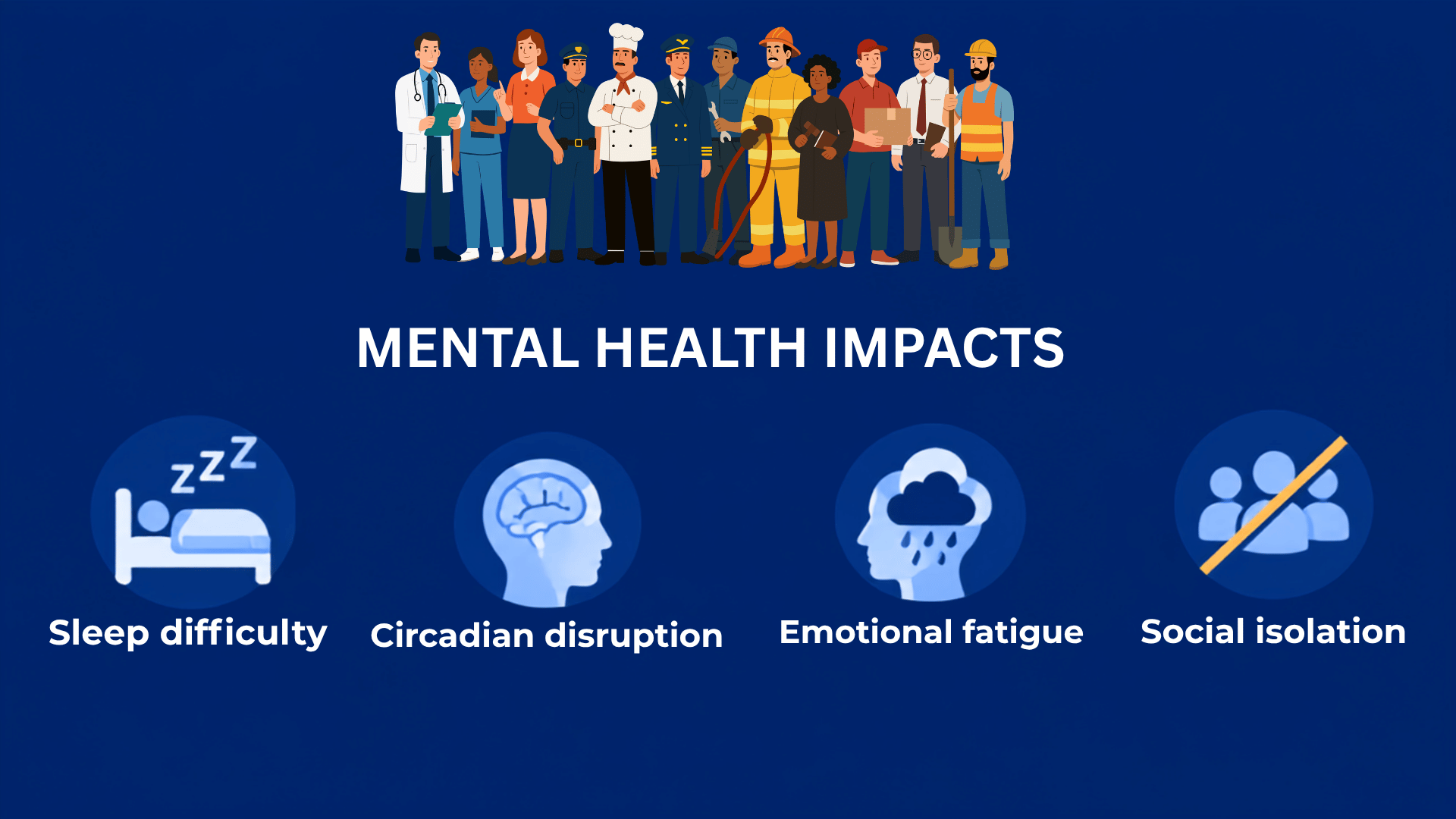
Working against the body’s natural clock drives most NOC shift mental health concerns. NIOSH training for nurses notes that shift workers report shorter, more disrupted sleep than daytime staff, which affects mood and concentration over time.
- Circadian disruption: Staying awake overnight suppresses melatonin and shifts the internal clock.
- Sleep difficulty: Daytime sleep rarely matches the depth of nighttime rest.
- Emotional fatigue: Chronic tiredness paired with leaner staffing accelerates burnout.
- Social isolation: An inverted schedule pulls workers away from family routines.
Advisory: Night work affects people differently based on age and health history. Anyone with ongoing insomnia, low mood, or anxiety tied to overnight work should raise it with a doctor rather than treat it as a normal cost of the job.
Pros and Cons of Working a NOC Shift
For nurses and CNAs, overnight schedules offer financial upside and a quieter unit, but they also come with bedside-specific trade-offs worth weighing before committing long-term.
|
Pros |
Cons |
|---|---|
|
Shift differential adds to base nursing pay |
Fewer specialists and attending physicians on hand for consults |
|
Lighter visitor traffic and fewer scheduled procedures |
Leaner staffing raises the workload per nurse or CNA |
|
More autonomy in patient care decisions with a smaller team |
Daytime sleep takes real effort and rarely feels as restorative |
|
Easier to handle daytime appointments and family obligations |
Family and social plans often clash with work hours |
|
Stronger bonds with a small, consistent overnight team |
Long-term fatigue can affect focus during emergencies |
In my opinion: Anyone weighing a permanent switch to nights should treat it like any major schedule change: get the differential policy in writing, ask about staffing ratios on the unit, and confirm whether the arrangement can be reversed if it stops working.
How to Survive a NOC Shift?
Adjusting to overnight hours takes more than willpower. Small, consistent habits around sleep, light exposure, and meal timing often make the biggest difference in how alert and rested a NOC worker feels.
- Head straight to bed after the shift ends to catch the natural rest window.
- Use blackout curtains or a white noise machine to block daytime light and sound.
- Wear sunglasses on the drive home to limit morning light exposure.
- Time caffeine early in the shift and stop it six hours before planned sleep.
- Take a short nap during breaks when the schedule allows it.
- Stay hydrated and choose protein-rich snacks over sugar-heavy foods.
- Keep sleep and wake times consistent on days off, per NIOSH’s coping guidance.
Final Thoughts
At its core, the NOC shift meaning comes down to someone working while most of the world sleeps, whether a nurse checking on patients or a technician watching a server dashboard.
Healthcare remains the setting where the term is used most, though the schedule shows up across IT, hospitality, and security too.
What separates a NOC shift that works long-term from one that burns people out usually comes down to fair differentials, realistic staffing, and support for sleep and health.
Have you worked a NOC shift, or are you considering one? Share what schedule or coping habit made the biggest difference for you, so other overnight workers can plan ahead with better information.
Frequently Asked Questions
Is NOC Shift Work Stressful?
It can be, mainly due to leaner staffing and disrupted sleep. Some workers find it calmer than day shifts; stress levels usually depend on staffing ratios and personal adjustment.
At What Age Should You Stop Working Night Shifts?
There is no fixed cutoff, but many occupational health resources suggest reassessing night rotations around age 40 to 50, when sleep recovery gets harder.
Can Nurses Choose Permanent NOC Shifts?
Yes, Many facilities allow nurses to request permanent night rotations, though availability depends on staffing needs and seniority. Check with HR or a nurse manager to confirm local options.