

Receiving a suspension notice from your employer can be stressful and confusing. Many employees immediately worry about losing their job, income, or professional reputation before knowing what happens next.
If you are suspended from work pending investigation, what are my rights? You likely want to understand whether your suspension means termination and what protections you still have.
A suspension does not automatically mean you are fired or found guilty. It is often a temporary step that allows an employer to review allegations, collect information, and make a fair decision.
From pay and employer obligations to protecting yourself during the process, here’s a look at your rights during suspension and the outcomes you may face once the investigation ends.
What Does Suspended From Work Pending Investigation Mean?
Being suspended from work pending investigation means an employer temporarily pauses an employee’s usual duties while looking into a workplace concern.
It’s typically used so the employer can review the situation without pressure or interference, and the employee may be asked to stay away from work, systems, or certain coworkers during this time.
This step does not confirm any wrongdoing on the employee’s part, and it should not be treated as a form of punishment in itself. It simply allows the employer space to gather facts before reaching a decision.
A suspension is generally considered a temporary employment measure, and the employer is still expected to investigate the matter before deciding what happens next.
What Are Your Rights During a Workplace Investigation?
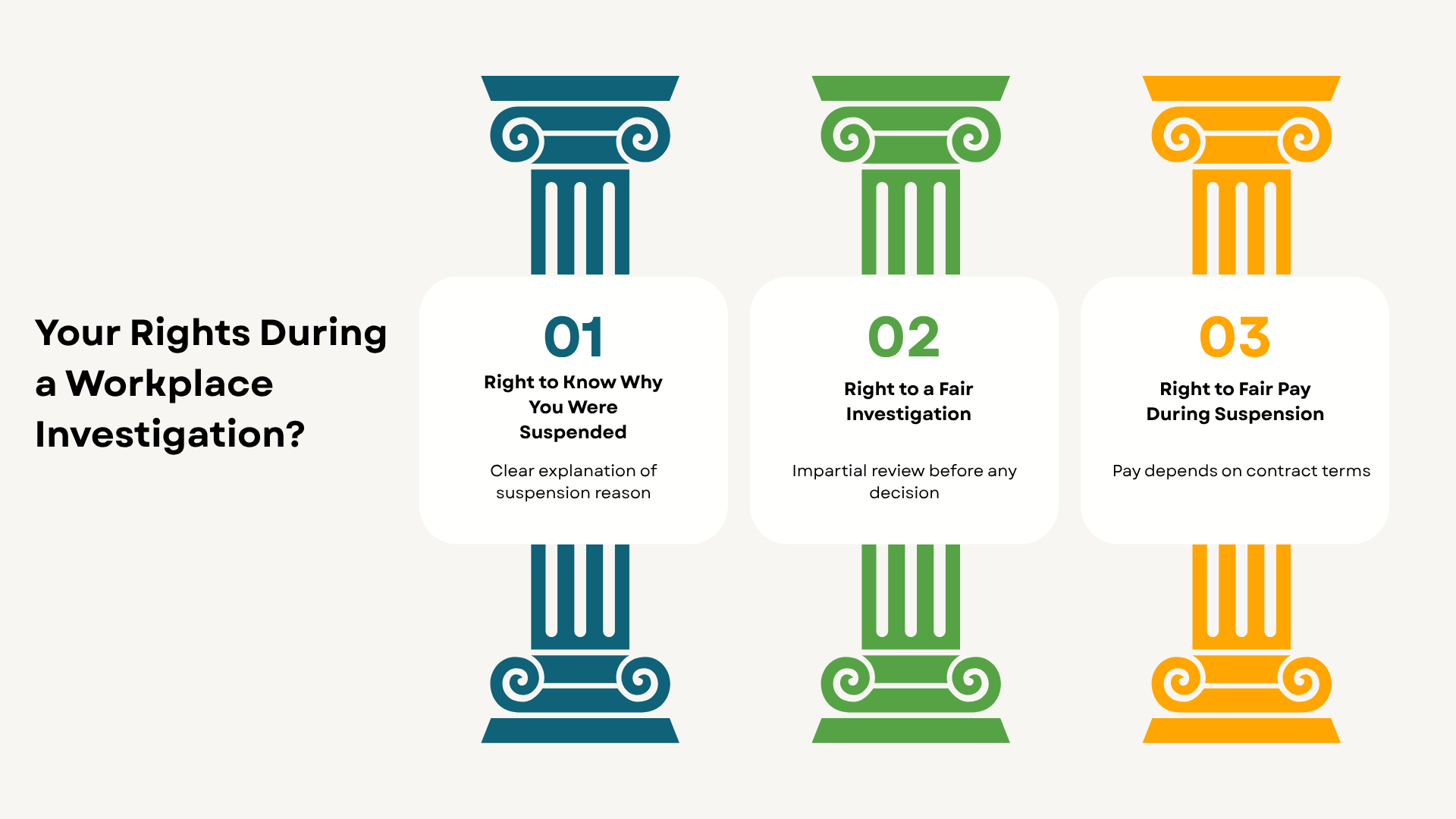
Employees do not lose all workplace protections after being suspended, and understanding these rights can make the process feel less uncertain.
- Right to Know Why You Were Suspended: Employers should usually explain why the suspension is happening, whether pay will continue, and what rules and next steps to expect.
- Right to a Fair Investigation: Employers should review evidence, hear both sides, and follow workplace policies before making a decision.
- Right to Fair Pay During Suspension: Whether pay continues depends on the employment contract, company policy, local labor laws, and whether the suspension is administrative or disciplinary.
Suspension doesn’t strip away an employee’s basic rights; knowing what protections apply can help you navigate the process with more clarity and confidence.
Is Suspension From Work the Same as Being Fired?
No, suspension and being fired are quite different, even though both can feel unsettling to go through.
| Suspended From Work | Fired From Work |
|---|---|
| Temporary removal from duties | Permanent end of employment |
| Investigation is ongoing | Final decision has been made |
| Employee may return to work | Employee leaves the company |
| Outcome is not decided yet | Employment has ended |
A suspended employee may return to work if the investigation finds no serious wrongdoing. Other possible outcomes include a warning, additional training, disciplinary action, or termination if the allegations are confirmed.
What Should You Do After Being Suspended From Work?
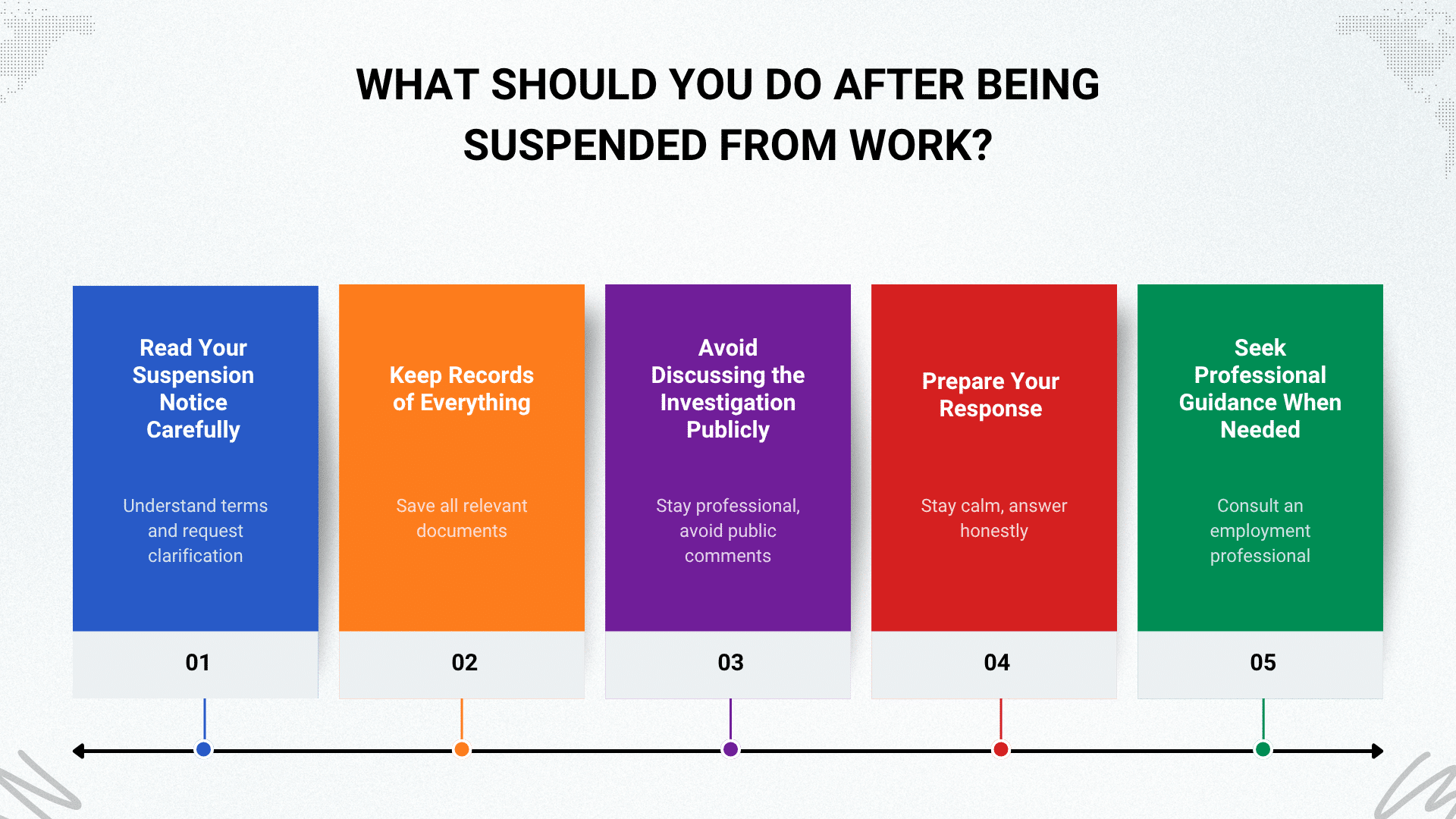
The way you respond during suspension can affect the outcome of the investigation, so a thoughtful approach matters.
- Read Your Suspension Notice Carefully: Review the reason for suspension, pay arrangements, investigation expectations, communication restrictions, and required meetings, and request written clarification from HR if anything is unclear.
- Keep Records of Everything: Maintain copies of suspension letters, emails, messages, meeting notes, performance reviews, and relevant workplace documents in case questions arise later.
- Avoid Discussing the Investigation Publicly: Refrain from posting on social media, criticizing coworkers publicly, sharing confidential workplace information, or contacting witnesses if instructed not to.
- Prepare Your Response: Stay calm, answer honestly, focus on facts, avoid guessing, and ask questions if something is unclear during any investigation meeting.
- Seek Professional Guidance When Needed: If the allegations are serious, speaking with an employment professional may help you understand your options.
Handling a suspension calmly and carefully can help protect your position and make the investigation process go more smoothly.
How Long Can a Suspension Pending Investigation Last?
There is no universal time limit for workplace suspension. The length depends on the complexity of the investigation and the amount of information the employer needs to review.
Several factors can affect the timeline, including the number of people involved, the amount of evidence, witness availability, the need for external reviews, and any legal or regulatory requirements.
A short investigation may take days or weeks, while more complex cases can take considerably longer to resolve.
Employers are generally expected to avoid unnecessary delays, so if communication stops for a long period, employees may request an update on the investigation status.
What Happens During an Internal Investigation?
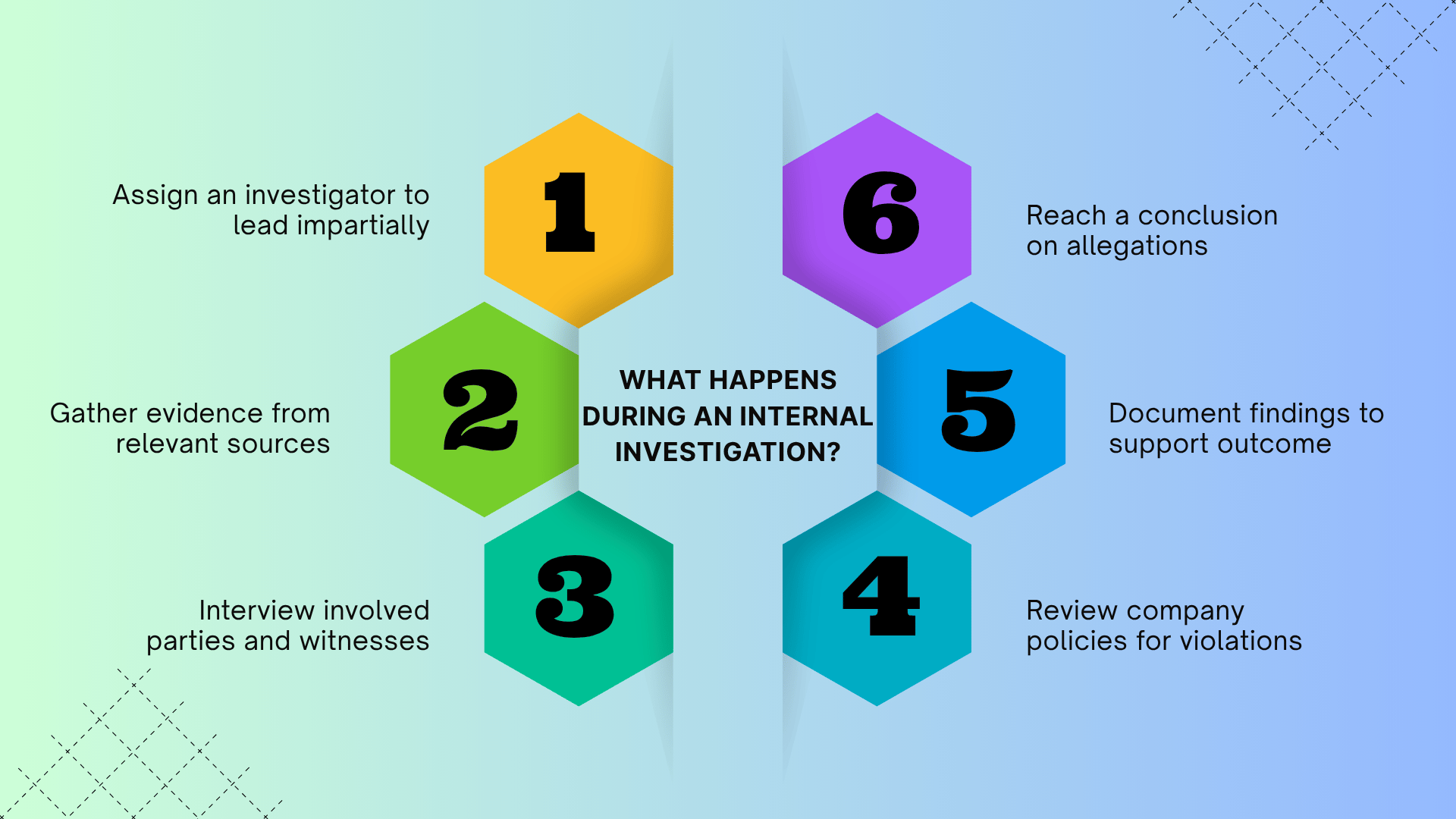
An internal investigation is the process employers use to gather facts and reach a fair conclusion before deciding on next steps, and understanding how it works can ease some of the uncertainty.
- Assign an investigator, typically a manager, HR representative, or external investigator, to lead the process impartially.
- Gather evidence by reviewing relevant documents, emails, messages, and other material connected to the concern.
- Interview involved parties, including employees and witnesses who may have relevant knowledge to share.
- Review company policies to check whether workplace rules or codes of conduct were followed or breached.
- Document findings by compiling notes and evidence to support a clear, well-reasoned outcome.
- Reach a conclusion on whether allegations are supported and what action, if any, is appropriate.
A thorough and impartial investigation helps ensure the outcome is fair to everyone involved, including the employee under review.
Can You Refuse to Participate in an Investigation?
Employees can generally choose not to participate in a workplace investigation, but refusing to cooperate can still carry consequences depending on company policy.
Most contracts require reasonable cooperation with internal investigations, so declining to answer questions or attend meetings may be treated as a separate conduct issue, sometimes resulting in disciplinary action.
That said, employees may have valid reasons to seek support before participating, such as requesting a witness, representative, or legal advice, especially if the allegations are serious. Refusing entirely without reason is different from asking for reasonable safeguards during the process.
Employee Rights by Country
Suspension rules vary across countries, but employees generally have protections during workplace investigations. The table below highlights key rights in different regions:
| Country/Region | Key Employee Rights During Suspension Pending Investigation |
|---|---|
| UK | Right to know the reason, receive full pay in most cases, fair investigation, fair hearing, and representation at meetings. |
| Canada | Right to reasonable suspension, fair process, continued pay in many cases, information about allegations, and privacy during investigation. |
| California | Right to clear communication, protection from discrimination or retaliation, opportunity to respond, and applicable wage protections. |
| Texas | Right to know the reason, review company policies, fair investigation, protection from discrimination, and pay based on circumstances. |
| Florida | Right to understand allegations, fair treatment, protection from retaliation, wage protections based on status, and review of company policies. |
Knowing local employment laws, contract terms, and workplace policies can help employees understand their protections and next steps during suspension.
Common Reasons for Suspension While an Investigation
Employees can be suspended pending investigation for a range of reasons, most of which involve protecting the workplace while facts are gathered.
- Alleged Misconduct: Issues like insubordination, dishonesty, workplace bullying, attendance fraud, or misuse of company property may lead an employer to suspend an employee while reviewing evidence or interviewing witnesses.
- Harassment or Discrimination Complaints: When an employee is accused of harassment, discrimination, or retaliation, employers often suspend the accused worker to reduce workplace tension and protect those involved in the complaint.
- Workplace Violence or Safety Concerns: Allegations involving threats, fighting, dangerous conduct, or safety violations often prompt employers to act quickly and remove the employee until risks are assessed.
- Financial Misconduct or Theft: Employees accused of fraud, theft, embezzlement, or falsifying records may be suspended immediately while the employer reviews financial data or security footage.
- Regulatory and Compliance Issues: In industries like healthcare, banking, aviation, education, or government, employers may suspend workers while investigating regulatory violations or compliance concerns.
Whatever the reason, suspension is typically a precautionary step rather than a final decision, giving employers room to investigate before determining next steps.
Wrapping Up
Being suspended from work can create uncertainty, but understanding your protections can help you respond with confidence.
If you are asking, suspended from work pending investigation what are my rights, remember that suspension does not always mean job loss.
Knowing your rights around fair treatment, pay, communication, and the investigation process can help you make better decisions.
Stay professional, keep records, and follow workplace instructions while the investigation continues. Take time to understand your position before making any major decisions.
Need more workplace guidance? Read through your employee rights carefully and share your experience in the comments below.
Have you faced a workplace suspension? Share your thoughts or questions in the comment section.
Frequently Asked Questions
Can I Look for Another Job While Suspended Pending Investigation?
Yes, being suspended doesn’t restrict you from job searching, since your contract with your current employer remains active. However, check your contract for any exclusivity or conduct clauses that may apply during this period.
Can My Employer Suspend Me without Any Prior Warning?
In most cases, yes, suspension is often a precautionary step rather than a disciplinary one, so employers aren’t usually required to give advance notice. It’s meant to secure the investigation process, not to penalize you upfront.
Will a Workplace Suspension Appear on My Employment Record or Affect Future References?
A suspension itself typically does not appear on formal employment records unless it leads to disciplinary action or termination. However, some employers may reference it informally, so it’s worth clarifying this with HR if you’re concerned