

A death in the family doesn’t wait for a convenient time at work and since 2023, California law says your employer can’t make you choose between your job and grieving.
Assembly Bill 1949 (AB 1949) is the law that made this a statutory right, not just a company perk.
Here’s exactly what it covers, who qualifies, and how HR teams should be handling requests.
What is Bereavement Leave?
Bereavement leave is time off work granted after the death of a family member or close loved one.
In the U.S., no federal law requires employers to offer it, the Family and Medical Leave Act doesn’t cover grief-related absences.
Companies set their own reasons for leave of absence, typically offering 3 to 5 paid days for immediate family (spouse, child, parent, sibling) and 1 to 2 days for extended relatives.
Oregon is the only state mandating paid bereavement leave, through its Family Leave Act. Many employers also allow unpaid leave or let workers use accrued PTO or sick days.
What AB 1949 Actually Requires
AB 1949 took effect January 1, 2023, and amended the California Family Rights Act (CFRA) to add a standalone bereavement leave right.
It applies to any employer with five or more employees, private companies and public agencies alike.
Eligible employees get up to five days of leave following the death of a covered family member.
If your company has no existing bereavement policy, those five days can be unpaid. If you already have a policy, AB 1949 sets the floor, it doesn’t replace a more generous one.
How Much Bereavement Leave Does California Require, and Is It Paid?
California law entitles eligible employees to up to 5 days of job-protected bereavement leave after the death of a qualifying family member, including a spouse, child, parent, sibling, grandparent, grandchild, or domestic partner.
Employees must use these days within 3 months of the death, and employers can allow the leave to be taken consecutively or spread across separate days based on workplace scheduling needs.
The law protects the job, not the paycheck, employers aren’t required to pay for bereavement days.
Whether an employee gets paid depends on the company’s own paid bereavement policy, available PTO, vacation balance, or other paid leave programs.
Suggested: Employees can typically apply accrued paid leave to cover the time off, check PTO payout rules in your state if you're unsure how that balance carries over.
Who Qualifies for Bereavement Leave in California?
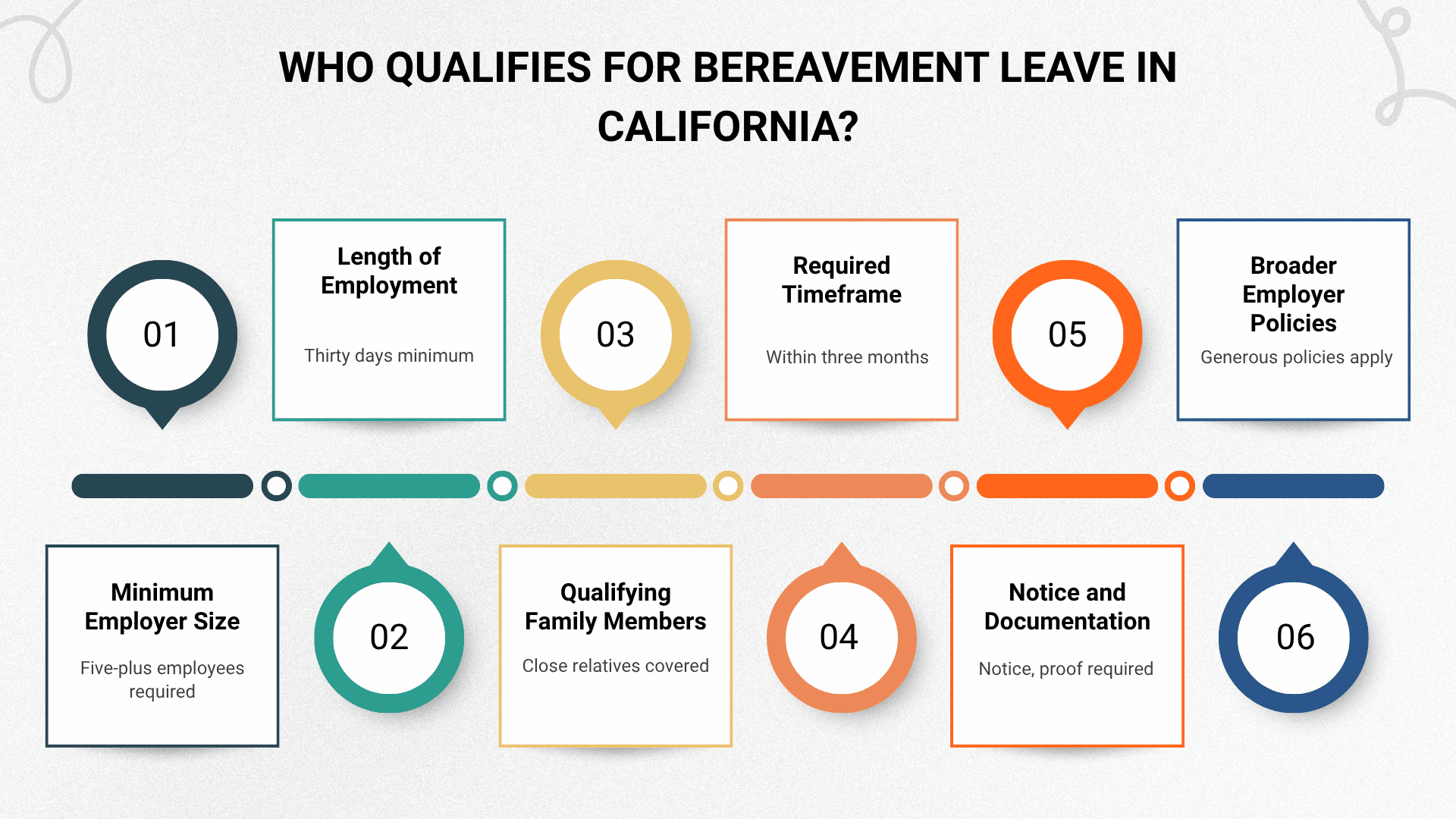
Employees need at least 30 days on the job before the leave starts. There’s no exemption for part-time status, the 30-day threshold is the only eligibility test AB 1949 sets.
- Minimum Employer Size: Employees generally qualify only if they work for an employer with five or more employees.
- Length of Employment: Workers must have been employed for at least 30 days before the family member’s death to be eligible.
- Qualifying Family Members: Leave applies to the death of a spouse, child, parent, sibling, grandparent, grandchild, or domestic partner.
- Required Timeframe: The leave must typically be completed within a set window, often within three months of the family member’s death.
- Notice and Documentation: Employees should give reasonable notice and, if requested, provide supporting documentation of the death.
- Broader Employer Policies: Those who don’t meet the standard requirements may still qualify if their employer offers a more generous bereavement policy.
What Losses are Not Covered Under California Bereavement Leave?
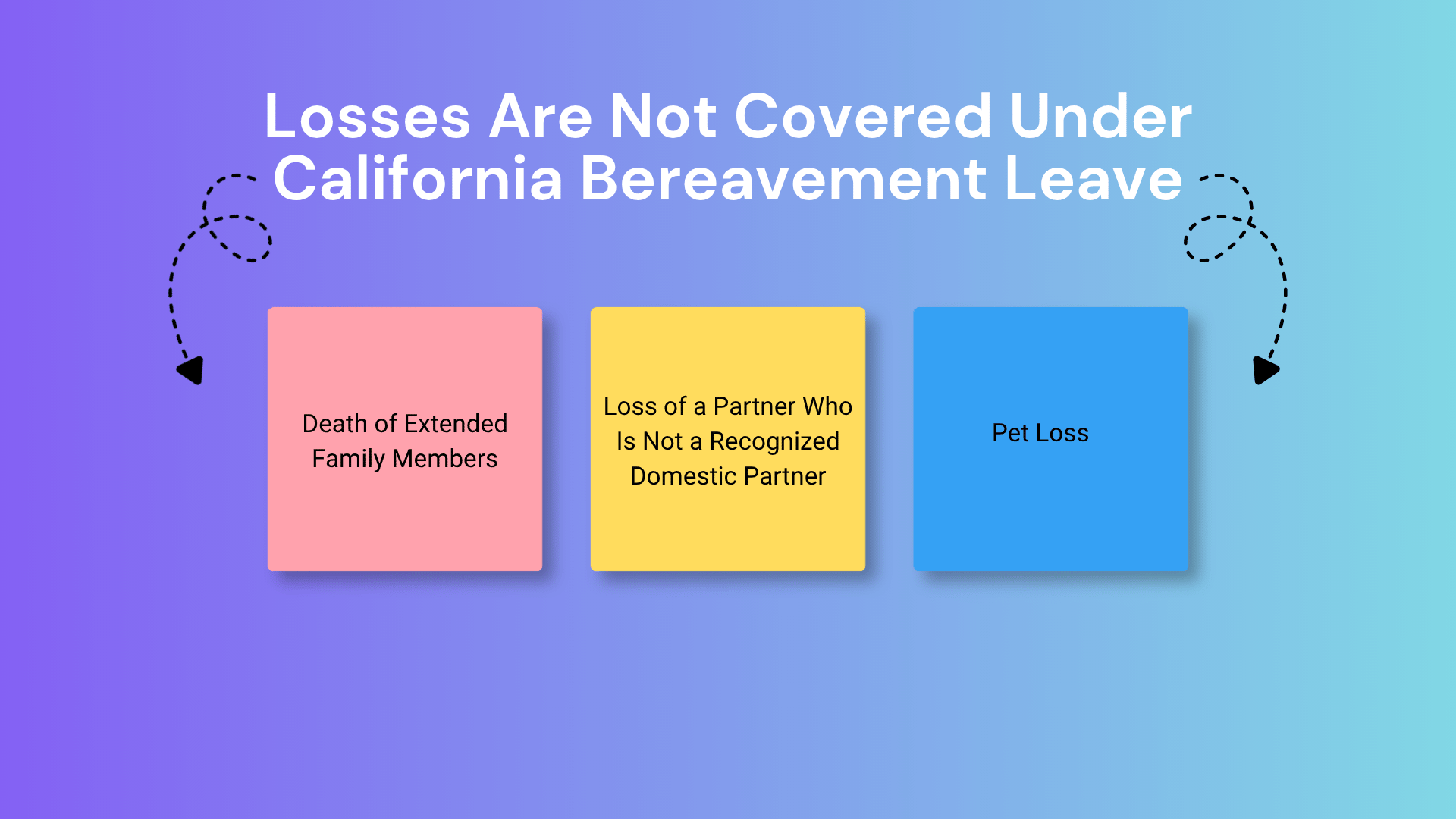
While California’s bereavement leave law provides important protections, it does not cover every type of loss, and knowing what falls outside its scope is just as important as knowing what’s included
Death of Extended Family Members
While AB 1949 protects bereavement leave for close family members, the law does not specifically require employers to provide bereavement leave for more extended relatives, such as:
- Aunts and uncles
- Cousins
- Nieces and nephews
That said, an employer may still choose to offer leave for these situations at their own discretion, whether through company policy or on a case-by-case basis, but doing so is not a requirement under AB 1949.
For a full breakdown of exactly who counts as immediate family, click here see our companion guide.
Loss of a Partner Who Is Not a Recognized Domestic Partner
A romantic partner may not automatically qualify as an eligible party under California law, depending on the specific circumstances of the relationship
For example, a boyfriend or girlfriend may not be covered unless the relationship meets the legal definition of a domestic partnership.
Employees should check their employer’s policy because some companies provide broader benefits than the state minimum.
Pet Loss
California bereavement leave protections apply to qualifying human family members.
Time off after the death of a pet depends on whether an employer voluntarily offers pet bereavement benefits.
Some companies now include pet bereavement in their formal policies, though it remains far from standard.
Workers who lack such benefits may still request personal days or ask whether personal leave can be denied under their company’s policy.
Who Counts as a Family Member for California Bereavement Leave?
California law does not extend its protections to every personal relationship a person may have.
Instead, it specifically identifies certain family members who legally qualify, drawing a clear line around which connections are formally recognized.
Qualifying Family Members Include:
- Spouse
- Child
- Parent
- Sibling
- Grandparent
- Grandchild
- Domestic partner
- Parent-in-law
Can an Employer Deny Bereavement Leave in California?
An employer generally cannot deny protected bereavement leave once an employee meets the legal requirements. Eligible workers are entitled to this time off, and the request cannot simply be refused.
Employers are also prohibited from firing or disciplining someone for taking approved bereavement leave. Retaliating against an employee for requesting or using protected leave is also not allowed.
California law specifically requires job protection for eligible employees who take bereavement leave. This ensures workers can grieve without risking their position or facing workplace consequences.
California Bereavement Leave vs Employer Bereavement Policies
California law sets a baseline for bereavement leave that every covered employer must meet, but individual companies are free to go beyond it.
| California Legal Requirement | Employer Policy |
|---|---|
| Provides minimum protection | May offer additional benefits |
| Covers specific family relationships | May include more relatives or close relationships |
| Provides up to five protected days | May provide more days |
| Does not require paid leave | May offer paid bereavement leave |
Employers can provide more generous benefits, but they cannot offer less than the legal minimum for covered employees.
What Should You Do If Your Employer Denies Bereavement Leave?
If an employer refuses to provide legally protected bereavement leave, employees are not without recourse and have several practical steps they can take to protect their rights and hold the employer accountable:
- Review their eligibility under AB 1949.
- Keep records of leave requests and employer responses.
- Check workplace policies for additional benefits.
- Consider filing a complaint with the California Civil Rights Department.
Employees may file a complaint if their employer violates bereavement leave protections or retaliates against them for requesting leave, and taking these steps early can strengthen their position if further action becomes necessary, the same way documenting issues early matters in any wrongful termination claim.
The Bottom Line
This overview draws on HR management and business law experience helping organizations build bereavement policies that hold up legally and still treat people decently during a bad week.
Take the time to review your workplace policy, understand your options, and make the right request when you need support.
Share your thoughts or experiences with bereavement leave in the comments below.
Frequently Asked Questions
Is Bereavement Leave Under AB 1949 Paid or Unpaid?
Employers with no existing bereavement policy must provide five days of unpaid leave, though you can use available vacation, sick leave, or PTO to get paid during that time.
How Soon Do I Need to Give Notice Before Taking Leave?
AB 1949 doesn’t set a strict advance-notice rule, so timing often follows your workplace policy. Checking your employee handbook helps you request leave the right way.
Can My Employer Ask for Proof of The Death?
Yes. Employers may request documentation, such as a death certificate or obituary, within 30 days of your first day of leave, and they must keep it confidential.