

Knowing the Massachusetts minimum wage is important for both employees and employers handling state labor laws.
For workers and businesses in the state, the minimum wage in Boston follows Massachusetts law, with additional rules governing overtime and other wage requirements.
This blog breaks down the key regulations, the current rate, who it applies to, and how it compares with federal requirements, which can help ensure accurate pay and legal compliance.
What is the Massachusetts Minimum Wage?
The Massachusetts minimum wage is $15.00 per hour for most workers, set by the state’s Fair Minimum Wage law. This has been the rate since January 1, 2023. A handful of jobs run on their own rate, though.
Tipped roles and farm work are the two big exceptions, and both are covered below. Tipped workers in Massachusetts have a base wage of $6.75 an hour, provided their tips bring total hourly pay to at least $15.00.
Farm and agricultural workers in Massachusetts have a minimum wage of $8.00 an hour, which applies to most hand-labor jobs on farms.
How Does Overtime Work in Massachusetts?
Overtime rules in Massachusetts can affect how much employees earn when their workweek extends beyond their regular schedule.
- Overtime rate: 1.5 times the regular hourly rate.
- Overtime threshold: More than 40 hours in a workweek.
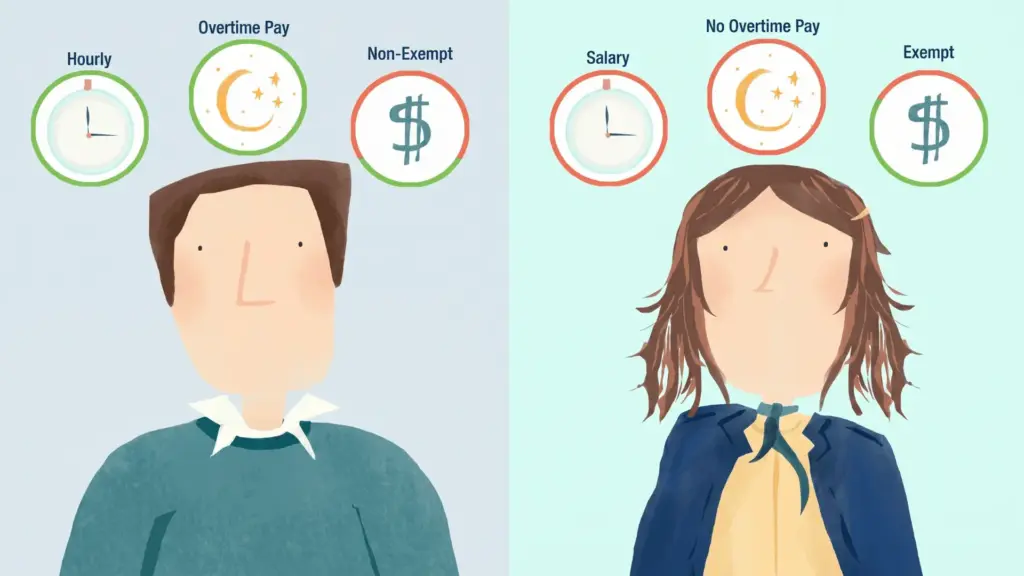
- Exempt workers: Some salaried, professional, and industry-specific employees may not qualify.
- Sunday premium pay: Massachusetts ended required Sunday premium pay for retail workers on January 1, 2023.
- Holiday premium pay: Retail employees are also no longer automatically entitled to extra pay for working certain holidays.
The Reality of Earning Minimum Wage in Boston
Boston is one of the most expensive cities in Massachusetts, but workers there do not get a higher local minimum wage. Boston does not have its own separate minimum wage law.
The minimum wage in Boston is $15.00 per hour, the same rate that applies across Massachusetts.
A barista in the Seaport and a barista in Springfield are legally entitled to the same basic hourly wage, even though their living costs can be very different.
Massachusetts does not allow cities and towns to create a higher local minimum wage. That keeps the wage floor the same in Boston, Worcester, Lowell, Springfield, and other communities.
Note: Boston has a living wage ordinance, but it does not apply to most workers in private businesses. The ordinance mainly covers employees working for certain companies that have service contracts with the City of Boston.
Comparision of Boston Minimum Wage to Other Major U.S. Cities
Boston’s $15.00 minimum wage is lower than the local minimum wage in several major U.S. cities.
|
City |
2026 Minimum Wage |
Living Wage Benchmark |
Hourly Gap |
Minimum Wage Covers |
|---|---|---|---|---|
|
$15.00 |
$33.60 |
$18.60 |
44.6% |
|
|
$17.00 |
$38.21 |
$21.21 |
44.5% |
|
|
$18.40 |
$26.72 |
$8.32 |
68.9% |
|
|
$21.30 |
$30.60 |
$9.30 |
69.6% |
|
|
$18.42 |
$28.92 |
$10.50 |
63.7% |
Why Hasn’t the Minimum Wage Gone Up Since 2023?
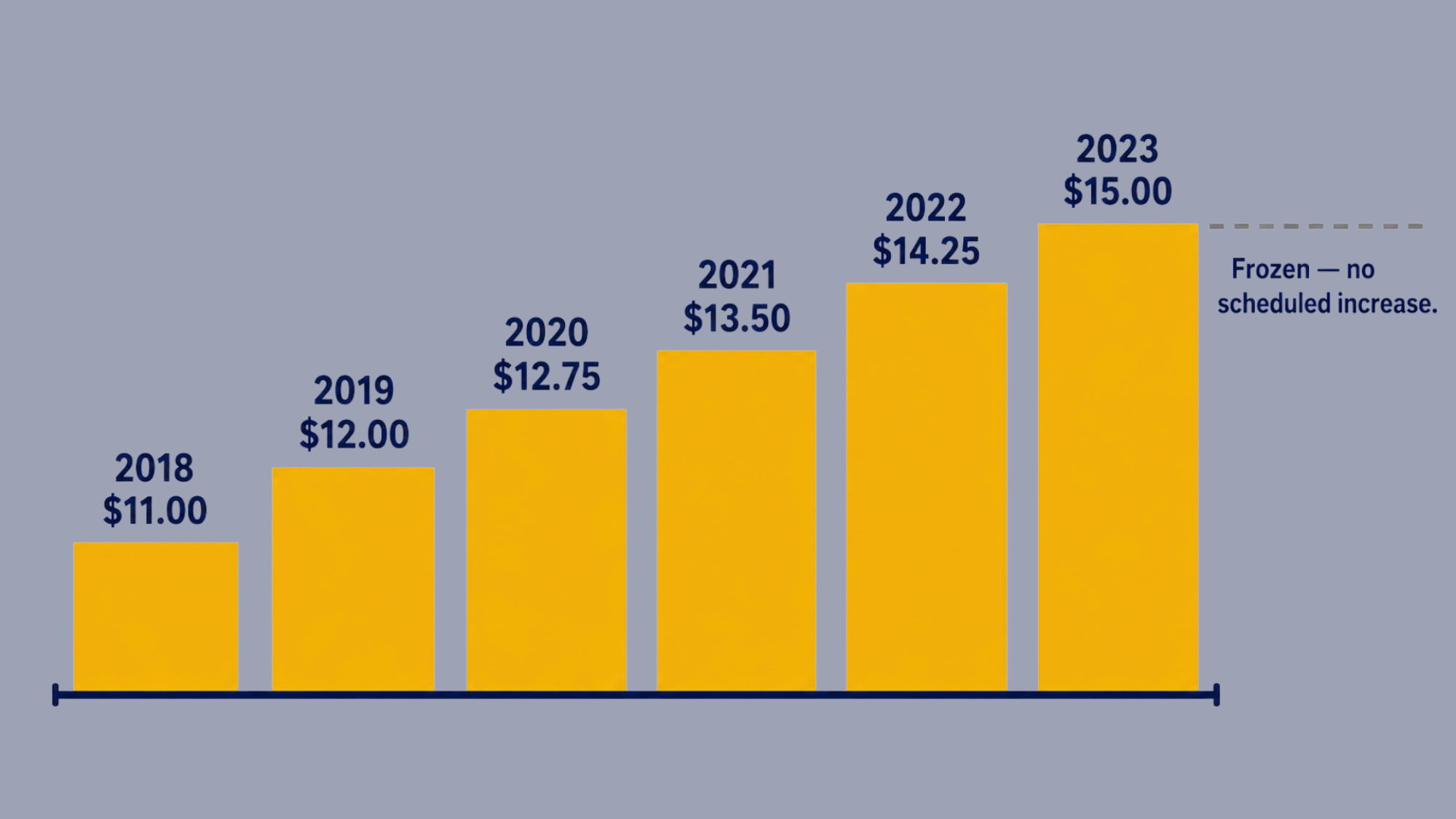
Massachusetts’ scheduled minimum wage increases ended after January 1, 2023.
This does not mean the state’s minimum wage law expired. It means the final increase required by the existing law took effect, with no additional automatic increases scheduled.
The plan came from the Grand Bargain, signed in 2018 as Chapter 121 of the Acts of 2018. It raised the standard minimum wage from $11.00 to $15.00 through five increases:
- 2018: $11.00
- 2019: $12.00
- 2020: $12.75
- 2021: $13.50
- 2022: $14.25
- 2023: $15.00
The gradual schedule gave workers regular raises while allowing employers time to prepare for higher payroll costs. However, the law did not tie future increases to inflation or the cost of living.
Once the rate reached $15.00, the schedule was complete. The current Massachusetts law therefore keeps the standard rate unless lawmakers approve another increase.
State vs. Federal Minimum Wage
In Massachusetts, the state minimum wage is $15.00 per hour, while the federal minimum wage under the Fair Labor Standards Act (FLSA) is $7.25 per hour since 2009.
Employers in Massachusetts must follow both federal and state requirements, using whichever rule provides the greater protection or benefit when the laws differ.
Because Massachusetts requires a higher rate, covered workers in the state must generally receive at least the Massachusetts rate.
For workers, this means the federal minimum wage does not replace Massachusetts’ higher state rate.
The Bottom Line
The Massachusetts minimum wage has stayed at $15.00 an hour since January 1, 2023, with no automatic yearly increase.
Any future change would require action from lawmakers or voters. Workers and employers should not assume the current rate will remain the same.
For the latest rate and official updates, check the Massachusetts Attorney General’s minimum wage page. A quick review can help workers spot underpayment and help employers keep payroll practices current.
Frequently Asked Questions
Will the Massachusetts Minimum Wage Increase in 2026?
No increase is set in current law. Any raise would need a new bill or ballot measure, so check mass.gov for the latest before assuming a change.
What Is the Penalty for Paying Below Minimum Wage?
Massachusetts law lets underpaid workers recover triple the owed wages plus legal fees. Employers can also face state fines through the Attorney General’s Fair Labor classification.
Do Small Businesses Pay a Lower Minimum Wage?
No. Massachusetts sets one rate for all employers regardless of size. A two-person shop owes the same $15.00 minimum as a large chain store.
How Often Must Massachusetts Employers Pay Workers?
State law requires hourly workers to be paid weekly or every two weeks. Payment is due within six days of the pay period ending for most jobs.
Does Massachusetts Have a Youth or Training Wage?
No general youth or training subminimum wage applies to standard jobs. Most young hourly workers earn the full $15.00 rate like everyone else.