

A small change in an hourly rate can affect rent, groceries, and everyday expenses. For workers and businesses, knowing the current rules helps avoid confusion about paychecks and payroll decisions.
The Wisconsin minimum wage has remained tied to broader discussions about worker pay, business costs, and changing economic conditions.
Employees need to know what they should earn, while employers need to follow state and federal requirements.
Current Wisconsin Minimum Wage Rate
The current standard minimum wage in Wisconsin is $7.25 per hour, which matches the federal minimum wage.
This rate applies to many employees covered by Wisconsin wage laws, including workers who are not covered by a different wage category.
While knowing the posted hourly rate is helpful, workers also need to understand how pay rules apply to their specific job.
For example, an employee earning the standard rate who works more than the allowed weekly hours may qualify for overtime pay.
Workers can also check federal wage standards through the U.S. Department of Labor.
Wisconsin Minimum Wage History and Major Changes
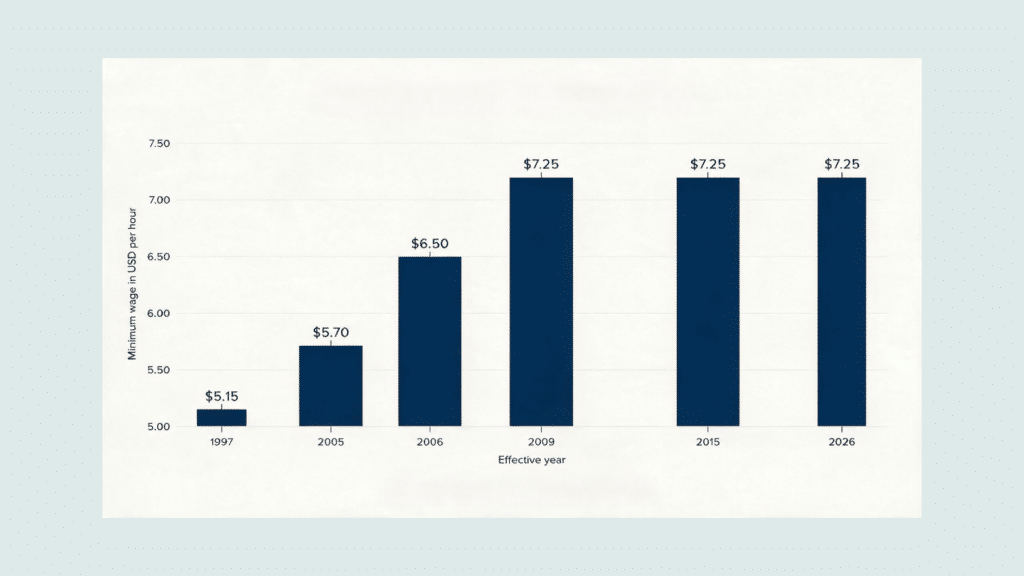
Wisconsin’s minimum wage has increased several times since the late 1990s, reflecting changes in state and federal wage standards.
The rate rose from $4.75 to $5.15 per hour on September 1, 1997, then to $5.70 in June 2005 and $6.50 in June 2006.
On July 24, 2009, Wisconsin’s minimum wage reached $7.25 per hour, matching the federal minimum wage at that time. The rate was later included in Wisconsin state law in 2015.
Check the Wisconsin wage rates page for current minimum wage information and updates
Wisconsin Minimum Wage Compares With Neighboring States
As of July 2026, Illinois, Michigan, and Minnesota all require higher base minimum wages, while Iowa matches Wisconsin at $7.25.
|
State |
2026 Minimum Wage |
Compared With Wisconsin |
|---|---|---|
|
Wisconsin |
$7.25/hour |
Baseline |
|
Illinois |
$15.00/hour |
$7.75 higher |
|
Michigan |
$13.73/hour |
$6.48 higher |
|
Minnesota |
$11.41/hour |
$4.16 higher |
|
Iowa |
$7.25/hour |
Same rate |
The latest state wage rates from the U.S. Department of Labor provide updated minimum wage comparisons across Wisconsin and neighboring states.
Overtime Rules and Minimum Wage Requirements in Wisconsin
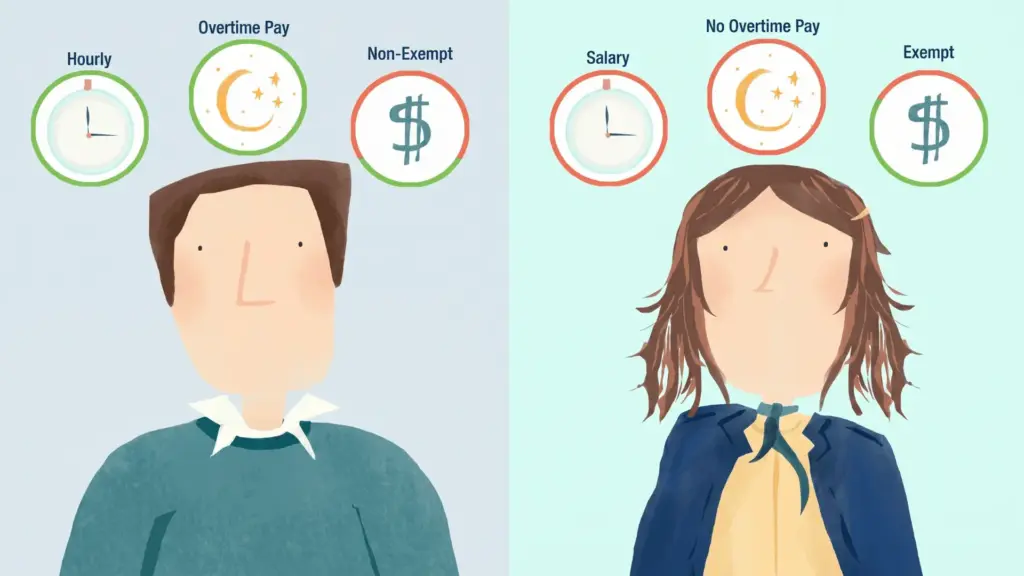
Minimum wage and overtime rules often apply together in Wisconsin. Many covered employees must receive overtime pay after working more than 40 hours in a workweek.
Overtime is generally calculated at 1.5 times the regular hourly rate, so an employee earning $12 per hour would receive $18 per overtime hour.
Eligibility can depend on job duties, pay structure, and the type of work performed.
Certain executive, administrative, professional, and outside sales roles may be exempt under state or federal law, a distinction covered in more depth in this exempt vs non-exempt guide.
A job title alone does not decide eligibility. Workers who believe they are missing overtime pay should review their hours and pay records.
Tipped Employees and Wisconsin Server Minimum Wage Rules
Not every worker in Wisconsin is covered by the same minimum wage rules. Age, tips, training status, occupation, and worker classification can affect which requirements apply.
|
Employee Category |
Wisconsin Rate |
Main Rule |
|---|---|---|
|
Non-opportunity employee |
$7.25/hour |
Standard minimum wage |
|
Opportunity employee |
$5.90/hour |
Under 20, first 90 days |
|
Tipped employee |
$2.33/hour |
Tips + wages must reach $7.25 |
|
Tipped opportunity employee |
$2.13/hour |
Opportunity wage rules apply |
|
Agricultural employee |
$7.25/hour |
Same for adults and minors |
|
Golf caddy |
$5.90 / $10.50 |
9 holes / 18 holes |
|
Camp counselor |
$210–$350/week |
Depends on board and lodging |
Wisconsin Minimum Wage Legal Requirements and Worker Rights
Wisconsin wage law sets rules beyond the hourly minimum. Employers also have responsibilities involving hours worked, overtime, paydays, pay records, deductions, and unpaid wages.
Workers Must Be Paid for Required Work Time
Employees covered by Wisconsin minimum wage law must receive at least the applicable minimum wage for all hours an employer requires them to work.
This can include preparation time, required meetings, and job training, the same category of tasks discussed in this unpaid work time rights breakdown.
For tipped employees, wages and tips must reach at least the general minimum wage over the pay period.
Overtime May Be Required After 40 Hours
Most covered employees must receive overtime at 1.5 times their regular rate for hours worked beyond 40 in a seven-day workweek.
Some occupations and employees are exempt, so eligibility depends on the work performed and the rules that apply to that position.
Employees Have Rights Around Paydays and Pay Records
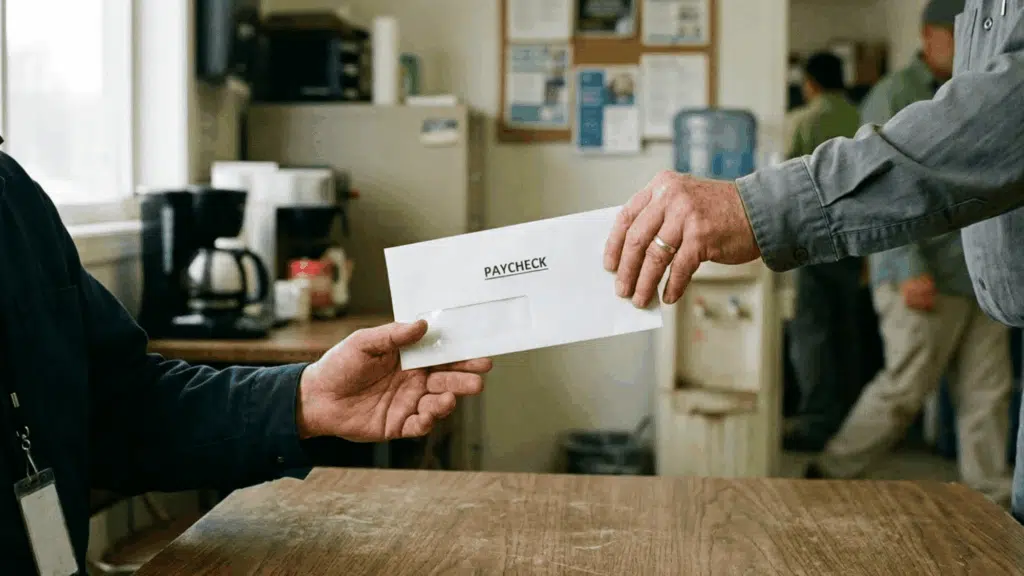
Most Wisconsin employers must pay earned wages at least once each month, with no more than 31 days between pay periods.
Employees must also receive wage information showing their hours worked, rate of pay, and the amount and reason for deductions from their earnings, information that becomes much clearer once you know the basics of reading your pay stub.
Wisconsin Limits Certain Wage Deductions
Employers cannot freely deduct money for damaged property, shortages, theft, or faulty work.
For many such deductions, the employee must give written authorization after the incident and before the deduction is taken, unless another legal exception applies.
Workers Can File Claims for Unpaid Wages
Employees can file a Wisconsin labor standards complaint over issues such as unpaid minimum wage, overtime, illegal deductions, commissions, bonuses, or other wages owed.
If wages are not paid on the regular payday, the worker should first request payment. If you still do not receive payment after six days, you may file a wage claim.
Workers May Be Protected From Retaliation
Wisconsin law also prohibits certain retaliation when workers try to enforce labor standards rights or take part in a labor standards investigation.
Retaliation may include termination, reduced hours or pay, demotion, or other adverse employment actions. A separate complaint process is available through the Wisconsin Equal Rights Division
The Wisconsin Department of Workforce Development (DWD) provides information about minimum wage laws, wage claims, pay requirements, and workplace standards
Is Wisconsin Minimum Wage Increasing in 2026?
Wisconsin has not increased its statewide minimum wage in 2026. As of September 2026, the standard rate remains $7.25 per hour, and Wisconsin DWD still lists July 24, 2009, as the effective date for that rate.
Wisconsin does not have an automatic annual adjustment that raises the minimum wage with inflation, so a new rate would require a change in law.
Proposals to raise the state minimum wage have been introduced, but none has changed the rate currently in force.
Workers and employers should rely on the latest Wisconsin DWD rate rather than proposed figures reported in the news.
Final Thoughts
Understanding wage rules can help prevent confusion for both workers and employers.
The Wisconsin minimum wage is currently tied to the federal rate, but pay questions often involve more than the hourly number alone.
Overtime, tips, job duties, and special worker categories can affect what someone should receive. Knowing where to find accurate information makes it easier to handle payroll concerns and workplace questions.
Whether checking a paycheck or managing employees, staying aware of Wisconsin wage requirements helps people make better decisions.
Frequently Asked Questions
Does Wisconsin Automatically Increase Minimum Wage Every Year?
No. Wisconsin does not automatically increase the minimum wage each year based on inflation. Changes usually require action by state lawmakers.
Can Wisconsin Employers Pay Less than Minimum Wage?
Some workers may fall under special wage rules, such as certain tipped employees or specific categories of workers.
How Can Workers Report Unpaid Wages in Wisconsin?
Workers who believe they have unpaid wages can contact the Wisconsin Department of Workforce Development for state wage concerns.