

What is Contract Negotiation?
Contract negotiation is the process of agreeing on the terms of a binding deal.
You explain what you need, look for shared interests, and bargain toward terms both sides can accept. The talks cover money, such as the amount and payment dates, and risk, such as who pays if something goes wrong.
The talks also set how you and the other side will work together once the deal begins.
Good negotiation turns a rough list of wishes into clear, written promises that everyone understands before anyone signs.
What are the Benefits of Effective Contract Negotiation?
-
It preserves the full value of the agreement by ensuring that pricing and obligations are clearly defined and fairly set.
-
Careful negotiation can secure discounts, better rates, and favorable payment terms that might otherwise be overlooked.
-
Clearly discussed terms reduce the risk of misunderstandings, contract breaches, and costly legal disputes.
-
Considering factors beyond price allows each party to prioritize what matters most, resulting in a more balanced outcome.
-
A well-structured agreement continues to safeguard your interests as business needs evolve.
The legal information in this article is based on United States law. Contract regulations vary by country and by state, so please review the rules that apply to your specific agreement.
The Types of Contract Negotiation
Contract negotiations fall into two groups. Some are defined by approach, meaning how you bargain, and others by setting, meaning the kind of deal involved. Knowing both helps you choose the right tactics.
|
Type |
What It Means |
Key Focus |
|---|---|---|
|
Distributive |
Dividing a fixed amount of value, often called “splitting the pie.” |
Price and terms |
|
Integrative |
Trading across issues that each side values differently to create more value. |
Shared gains |
|
Vendor and procurement |
Agreeing on terms with suppliers or service providers. |
Cost, quality, delivery |
|
Employment |
Setting pay, benefits, and protective clauses between employer and employee. |
Compensation and clauses |
|
Labor |
Bargaining between employers and workers, often as a group. |
Wages, safety, worker rights |
|
M&A |
Negotiating the sale, merger, or purchase of a business. |
Partners, outside parties, deal follow-through |
Contract Negotiation Prep That Puts You Ahead
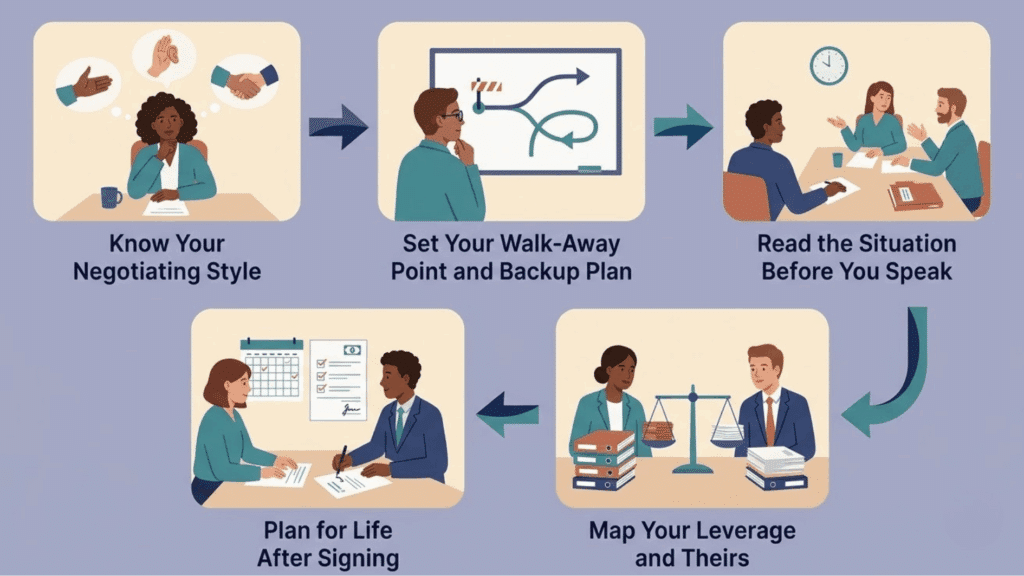
Most negotiators lose ground before the first meeting starts, simply because they arrive unprepared. Some groundwork on your style, limits, leverage, and the deal itself gives you a much stronger position.
1. Know Your Negotiating Style
Every negotiator has a natural style. Some people compete and push hard for the best terms. Others prefer to keep the peace and give way to avoid conflict, while some would rather avoid tense talks altogether.
None of these styles is wrong, but each has weak spots.
A people-pleaser may give away too much, while a hard competitor may damage the relationship. Before your next meeting, think about how you usually behave under pressure.
Prep Tip: Ask a trusted colleague for honest feedback. Once you know your habits, you can plan ways to balance them and stay in control.
2. Set Your Walk-Away Point and Backup Plan
Decide in advance what you will do if the deal falls through. A solid backup option gives you confidence, because you never feel forced to accept bad terms. Write down the price, timeline, or terms at which you would end the talks.
Then estimate the other side’s limits and backup options. The space between both sides’ limits is where a deal can happen. If the ranges do not overlap, you will know early that an agreement may not be possible.
3. Read the Situation Before You Speak
Every negotiation has its own setting, and that setting shapes which approach works.
Ask yourself a few simple questions like: What does the other side really want? Who needs this deal more? Is either party under outside pressure, such as a budget cycle or a project launch?
The answers show you which tactics to use and which to avoid. For example, if the other side needs the deal more than you do, you can afford to hold firm on key terms.
4. Map Your Leverage and Theirs
Leverage is the pressure each side can apply, and it often decides who gets the better deal.
List what gives you strength, such as being a large customer or having other options. Then list your weak spots, because the other side will likely raise them. Do the same for the other party.
Example: If a vendor earns a large share of its revenue from your business, losing you would hurt them significantly. That gives you leverage to ask for better pricing or terms, since they have a strong reason to compromise.
5. Manage the Contract Draft
Find out who will write the first draft, because the drafting side sets the starting point.
Mark changes with tracked changes (often called redlines) or comments, address one topic at a time, and keep a single current version so both sides review the same text.
Before you sign, reread the final draft for typos, missing details, and terms that differ from what you agreed.
6. Prepare for Life After Signing
A good contract should hold up for the full life of the deal. Think about what could go wrong, such as late delivery or rising costs, and make sure the contract clearly states how each issue will be handled.
Also discuss who will track deadlines and payments once the deal begins.
How Do You Negotiate Business Contracts Remotely?
Remote negotiation removes body language, so a plain request can sound blunt and a slow reply can look like a signal. Without a face or a tone of voice, small things get misread. Plan for that gap before talks begin.
Keep emails short and specific, and move sticky points to a call so tone is clear.
After any call, confirm what was agreed in writing so both sides work from the same notes.
Remote deals also usually end with an electronic signature.
In the US, the E-SIGN Act gives electronically signed contracts the same legal validity as paper ones.
Smart Strategies to Negotiate Business Contracts
The right strategy can change the outcome of a negotiation. These tactics help you control the pace, protect your position, and secure better terms.
-
Open with Room to Bargain: Start above your target so you have space to move without giving up your goals.
-
Concede Slowly and in Small Steps: Avoid big early concessions, state what each one costs you, and ask for something in return.
-
Take Your Time Before Agreeing: A quick yes suggests you would have accepted less, while a measured response makes the final deal feel earned.
-
Use Limited Authority: Saying “I need approval from my team” lets you decline politely and pressures the other side to improve their offer.
-
Ask for Cost Breakdowns (as a Buyer): Seeing how a price is built shows where you can negotiate savings.
-
Let Silence Work: Staying quiet right after the other side makes an offer often prompts them to improve it.
-
Protect Your Concessions Near the Deadline: Most people give away too much when time runs short, and many deadlines are more flexible than they appear.
|
Here’s how a labeled trade works in practice |
What Contract Clauses Should You Review Carefully?
Clauses that shift risk or limit your future choices deserve the closest read before you sign.
Arbitration Clauses
These clauses send disputes to an arbitrator instead of a court and may waive rights like appeals or class actions. Before signing, confirm who picks the arbitrator, where hearings happen, and who pays.
Noncompete Clauses
A noncompete limits where you can work or which clients you can serve after the deal ends.
Before signing, check the scope, duration, and location, and review how noncompete agreements work.
Morals Clauses
With a morals clause, the other party can end the deal if your conduct harms its reputation. Vague wording makes it hard to enforce and easy to misuse, so ask for a clear definition of the conduct that counts.
Payment Terms
The payment terms set how much you pay, when you pay, and what happens if payment is late. Check the due date, any late fee, and whether you can pay in installments. Shorter due dates help the party being paid, and longer ones help the buyer’s cash flow.
Termination and Renewal Clauses
This clause explains how and when either side can end the deal, and whether it renews automatically. Check the notice period, any early-termination fee, and any automatic renewal date, then put the renewal deadline in your calendar.
Liability and Indemnity Clauses
When something goes wrong, the liability and indemnity terms decide who pays and whether there is a cap on the amount. Check whether the cap is fair to both sides and what it leaves out.
What Should You Never Do When Negotiating a Contract?
Hurrying through talks leaves gaps and unclear terms, and that is how contracts break and lawsuits start.
Mix up your approach. A tactic that works in one deal can fail in the next. Stay flexible and check every detail before you sign.
Skipping over the other person’s personality, pressure points, and communication style is just as risky, because these shape how they respond to your offers.
Ask a qualified lawyer to review any contract that is high-value, long-term, limits your future work (like a noncompete), or sends disputes to arbitration.
The Bottom Line
Contract negotiation is a skill that gets better with practice. The main types of negotiation, simple ways to prepare, and strategies that keep control in steady hands are covered.
The common thread is care. Take time to prepare, listen well, and read every term before agreeing.
Start small by trying one new tactic in the next meeting. Over time, those habits lead to clearer terms and fewer problems once the work begins.
Frequently Asked Questions
What Does the 70/30 Rule Mean in Negotiation?
Many negotiators use a 70/30 rule of thumb. Listen about 70% of the time and speak about 30%. In contract talks, use that listening time to learn which terms matter most to the other side.
In What Situations is It Better Not to Negotiate an Offer?
It is often best to accept an offer as it stands when it already meets your needs and walk-away point, or when rules or policy fix the terms. Skip pushing if the small gain could cost you goodwill.
What is the Golden Rule of Negotiation?
The golden rule is to treat the other side the way you would want to be treated: with honesty, respect, and fairness. This builds trust and makes it more likely that both sides stay committed to the deal.
Quick ReferenceAcronyms and Abbreviations
Essential Terminology
|