

Losing someone close can bring unexpected responsibilities, from attending services to helping family members and handling personal matters.
“Immediate family” may not mean the same thing everywhere. Employers often create their own bereavement leave policies, which decide which relationships qualify for time off.
In this blog, you will learn who is considered immediate family for bereavement leave, does bereavement cover grandparents, and which other relationships may qualify.
How Does Bereavement Leave Support Employees During Loss?
Bereavement leave gives employees time away from work after the death of a family member or another person covered by company policy.
It allows employees to attend services, make arrangements, travel, and spend time with family during a difficult period.
Some employers offer paid bereavement leave, while others provide unpaid leave or allow employees to use accrued paid time off.
Private employers are generally not required under federal law to provide bereavement leave, so workplace policies play an important role.
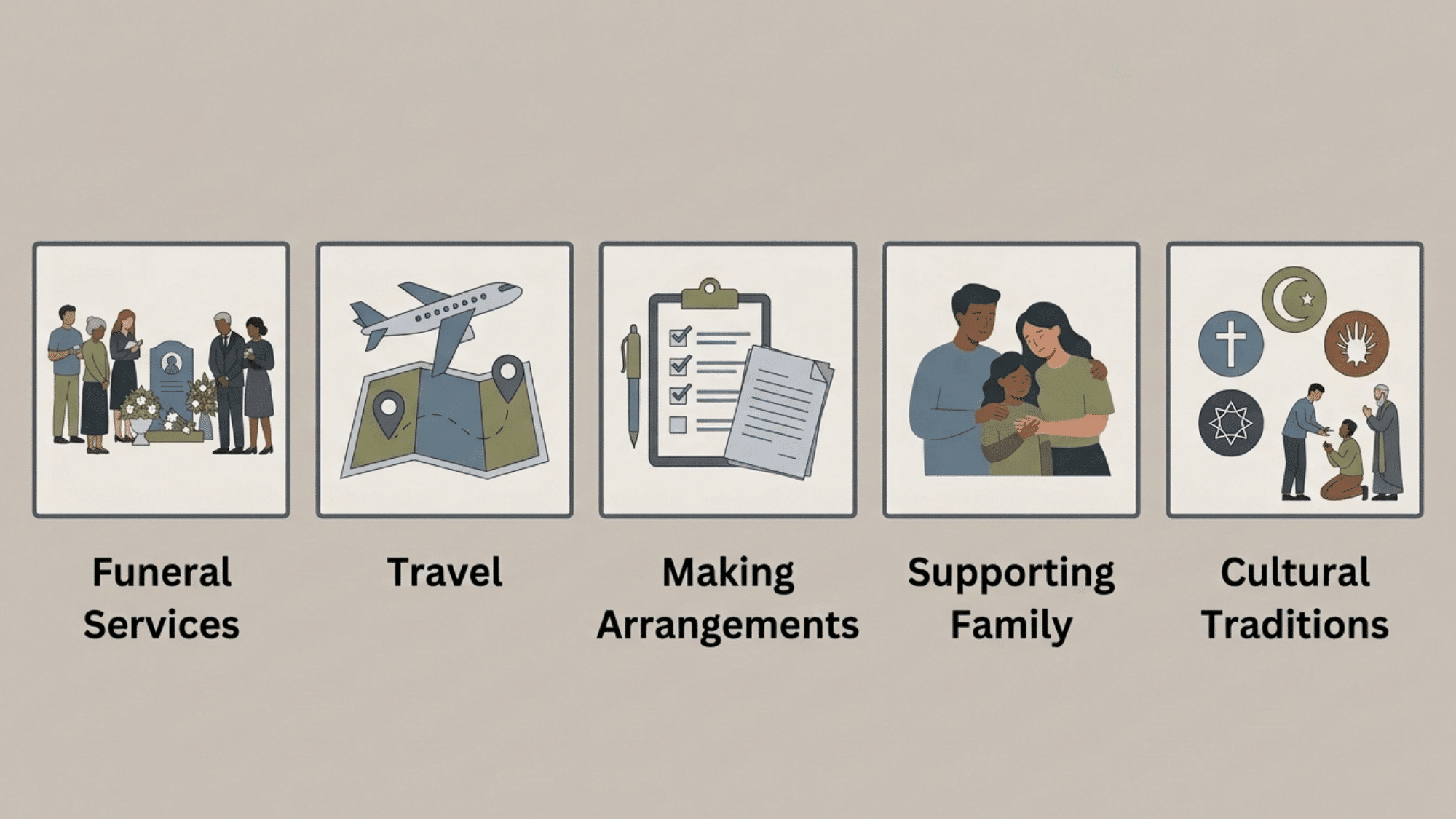
What Bereavement Leave May Be Used For
Every employer writes its own bereavement policy unless state law requires something different. Even though many policies look similar, there is no single nationwide definition that every workplace follows.
- Attending a funeral or memorial: Taking part in funeral, burial, or memorial services.
- Travel: Reaching another city or state for services or family support.
- Making arrangements: Handling funeral planning or immediate legal paperwork.
- Supporting family members: Spending time with close relatives after the loss.
- Religious or cultural traditions: Taking part in mourning customs observed by the family.
Who Is Considered Immediate Family for Bereavement Leave?
The relatives covered under bereavement leave can vary by employer, but most workplace policies include a similar group of close family members.
| Relationship | Coverage in Many Workplaces |
|---|---|
| Spouse, child, parent, sibling | Commonly covered |
| Grandparent or grandchild | Often covered |
| Stepchildren or stepparents | May be covered |
| Parents-in-law | Frequently covered |
| Domestic partners or legal guardians | Depends on employer policy |
Note: Many employers also recognize adoptive relationships in the same way as biological relationships. Others extend coverage to foster parents, foster children, or guardians who acted as a parent during the employee’s life.
Does Bereavement Cover Grandparents?
One of the most common questions employees ask is does bereavement cover grandparents. For many employer policies, the answer is yes.
Grandparents are frequently listed alongside parents, spouses, children, and siblings as immediate family members.
Some policies use broader language such as “family member” or “individual whose relationship is equivalent to a family relationship.” This gives employers more flexibility when reviewing special situations.
The number of leave days may still differ from one employer to another. Some companies provide the same amount of leave for every immediate family member, while others separate for extended family members.
Federal or State Laws On Bereavement Leave
Several states have adopted their own bereavement leave requirements for eligible employees. These laws differ in the employers they apply to, the family members they cover, and the amount of leave available.
| State | General Rule |
|---|---|
| California | Eligible employees may receive up to five days of bereavement leave after the death of a covered family member |
| Illinois | The Family Bereavement Leave Act gives eligible employees protected leave for qualifying family losses. |
| Oregon | Eligible employees may qualify for bereavement leave under the Oregon Family Leave Act. |
Does FMLA Cover Time After a Family Death?
FMLA does not give employees leave simply to attend a funeral or spend time grieving after the death of a family member. The law only covers qualifying family and medical reasons for eligible employees.
A serious physical or mental health condition that develops after a loss may qualify under FMLA if the employee meets the law’s eligibility requirements and provides any required medical certification.
Employees who need medical leave after a loss can read more about how to get FMLA for depression and anxiety, including eligibility, paperwork, and job protection.
How Does Bereavement Leave Work?
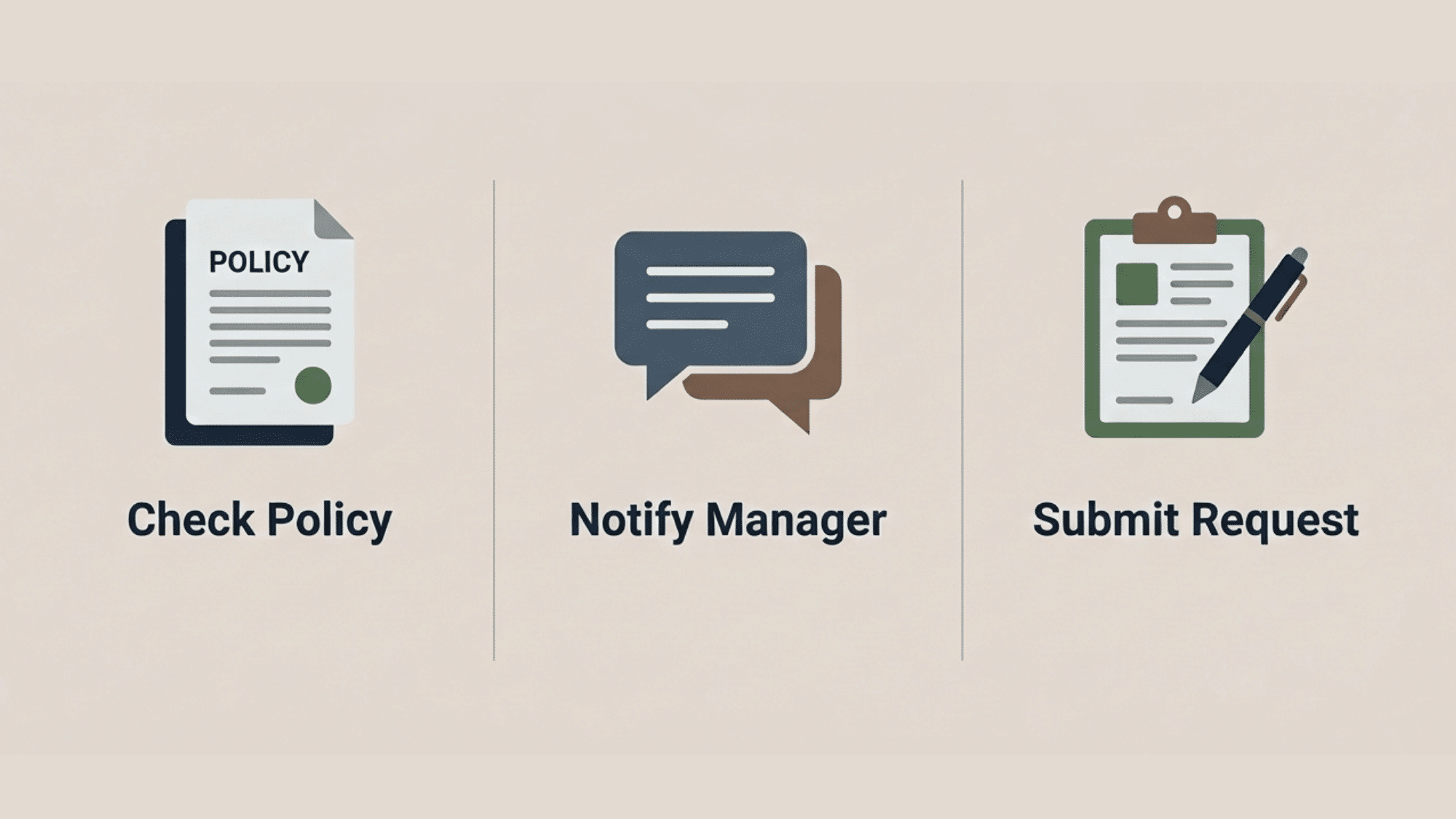
Requesting bereavement leave is usually straightforward. Since these situations are often unexpected, many employers allow employees to provide notice as soon as they are able.
Check Your Workplace Policy
The first step is to review your employee handbook or leave policy. This will help you understand which family members qualify, how much leave is available, and whether any specific requirements apply.
Confirm If the Relationship Qualifies
Not every workplace uses the same definition of immediate family. Check whether the person who passed away is included under your employer’s policy or whether state law provides additional coverage.
Contact Your Manager or HR
Once you know your eligibility, inform your manager or HR department about your need for leave. Share the expected dates you will be away and when you plan to return, if possible.
Understand Pay and Documentation Rules
Ask whether the leave is paid, unpaid, or needs to be covered through available PTO. Some employers may also request reasonable documentation, such as a funeral notice or obituary.
Request Additional Time If Needed
If the available bereavement leave does not provide enough time, discuss other options with your employer. PTO, personal leave, flexible scheduling, or unpaid time off may help extend your absence.
What Employees Share About Bereavement Leave Experiences
Many employees turn to online workplace communities to discuss bereavement leave, especially when they are unsure about eligibility, paid time off, or how their employer handles loss.
An employee discussion in the r/humanresources community focused on how companies handle bereavement leave policies. Participants shared how eligibility, the number of days provided, and covered relationships can differ between workplaces.
In the r/AskWomenOver30 community, employees discussed how much bereavement leave their workplaces provide. Many shared that the amount of time offered depends on company benefits, workplace culture, and the relationship with the person who passed away.
A discussion in the r/work community highlighted the challenges employees face when their workplace does not provide paid bereavement leave. Users shared experiences with using PTO, requesting unpaid time off, and asking employers for flexibility during difficult situations.
The r/GriefSupport community includes conversations about whether bereavement leave should be viewed as a workplace benefit or an essential support during grief. Employees and grieving individuals discussed the importance of having enough time away from work after a loss.
What if You Need More Time After Bereavement Leave?
Returning to work after a loss is not always possible. Travel, family responsibilities, or personal health may make extra time necessary. Many employers offer additional options even after bereavement leave ends.
| Option | When It May Help |
|---|---|
| Paid Time Off | Extending time away after bereavement leave |
| Vacation Leave | Planned additional days away |
| Personal Leave | Employer-approved unpaid time off |
| Flexible Work Schedule | Gradual return to work |
| Remote Work | When the position allows |
| Medical Leave | If a qualifying medical condition develops |
What Can an Employee Do if Bereavement Leave Is Denied?
An employer may deny bereavement leave when no company policy, employment agreement, or state law gives the employee a right to it.
- Request the denial in writing: Ask the employer to state the policy or legal reason used to reject the request.
- Raise any medical need separately: Grief alone may not create a leave right, but a qualifying physical or mental health condition may be protected under FMLA, disability law, or state law.
- Mention a religious obligation: Time needed for required mourning practices may need to be considered as a religious accommodation.
- Review the EEOC rules: The EEOC explains when employers may deny leave requests and states that employers should consider effective alternatives.
- Contact the proper agency: A state labor department, the U.S. Department of Labor, or the EEOC may be able to review a denial involving protected rights.
- Speak with an employment attorney: Legal advice may be appropriate when the denial appears to violate a law, contract, or written workplace policy.
Wrapping It Up
The answer to who is considered immediate family for bereavement leave depends on the employer’s written policy and any applicable state law.
When a request is denied, employees should look beyond the decision itself and check the legal reason, written policy, and available alternatives.
Employees should review the employee handbook before requesting leave, especially when the relationship falls outside the standard list. A quick conversation with HR can often answer questions.
Frequently Asked Questions
Is Bereavement Leave Paid?
Some employers provide paid bereavement leave, while others offer unpaid leave or allow employees to use accrued PTO. The employee handbook or employment agreement explains how the leave is handled.
How Many Days of Bereavement Leave Do Employers Usually Provide?
Many employers offer between three and five days for the death of an immediate family member. Some policies allow additional time for travel or special family circumstances.
Can an Employer Ask for Proof of A Family Member’s Death?
Yes. An employer may request reasonable documentation, such as an obituary, funeral program, or notice from the funeral home, if the company policy allows it and state law does not limit the request.
Are In-Laws Considered Immediate Family?
Parents-in-law are commonly included in bereavement policies. Coverage for siblings-in-law, sons-in-law, daughters-in-law, and other in-law relationships depends on the employer’s policy.
Can PTO Be Used After Bereavement Leave Ends?
Many employers allow employees to request vacation leave, PTO, personal leave, or another approved absence if additional time away from work is needed after bereavement leave ends.