

Most employees have heard the term PTO tossed around at work.
But not everyone actually knows what PTO stands for or how it works, and that confusion can cost people time off they’ve already earned.
But the details get trickier. How much PTO does someone get? How is it tracked? What happens if it isn’t used? This guide breaks it all down, so there are no surprises come time to book that much-needed break.
What Does PTO Stand For?
PTO stands for Paid Time Off, a workplace benefit that allows employees to take time away from work while continuing to receive their regular pay.
PTO can cover various types of leave, including vacation days, sick leave, personal days, and family-related absences.
Many employers combine these leave categories into a single PTO policy, giving employees greater flexibility in how they use their allotted time off throughout the year.
How Does PTO Work?
Most employers follow a structured PTO system that outlines how leave is earned and used.
In many organizations, PTO accrues over time, meaning employees earn a certain number of hours or days each pay period, while others provide a set balance at the beginning of the year.
Employees generally submit time-off requests for approval, and company policies often specify rules for accrual rates, carryover limits, and unused PTO balances.
According to the U.S. Department of Labor, leave benefits, whether paid or unpaid, are generally agreed to by the employer and employee.
Benefits of PTO
A well-designed PTO policy creates mutual value by supporting employee wellbeing while helping employers maintain a productive, engaged, and stable workforce.
For Employees:
- Improved Work-Life Balance: PTO allows employees to manage personal commitments, family responsibilities, and leisure time without compromising their employment or income.
- Better Mental and Physical Wellbeing: Regular breaks from work help reduce stress, prevent burnout, and support overall physical and mental health.
- Financial Security During Absences: Employees continue to receive their normal pay while on approved leave, reducing financial concerns during their time away.
For Employers:
- Enhanced Employee Retention: Competitive leave policies encourage employees to remain with the organization, reducing turnover and associated recruitment costs.
- Higher Workforce Productivity: Employees who take regular time off often return refreshed, helping to maintain focus, efficiency, and consistent performance.
- Reduced Absenteeism: A structured PTO policy enables employees to plan leave in advance, supporting better attendance management and workforce planning.
Types of Paid Time Off
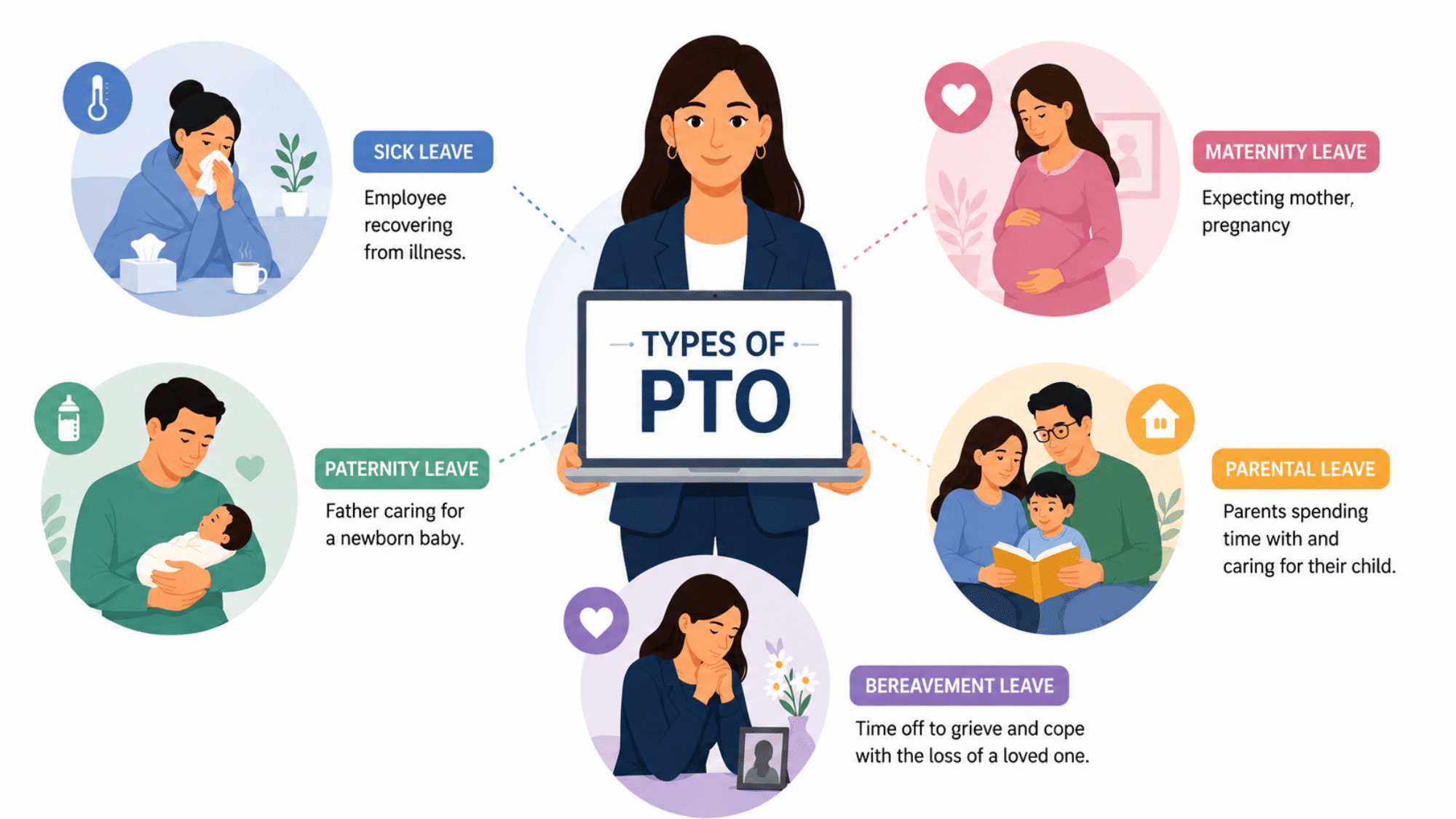
Employers may offer different types of paid leave to support employees’ personal, health, and family-related needs while ensuring compliance with employment regulations.
1. Sick Leave
Sick leave allows employees to take time off when they are unable to work due to illness or injury.
Eligible employees may receive Statutory Sick Pay (SSP), while some employers provide enhanced sick pay schemes that exceed the statutory minimum requirements.
2. Maternity Leave
Eligible employees can take up to 52 weeks of maternity leave following the birth of a child, and statutory Maternity
Pay may be available for a portion of this period, subject to qualifying conditions and employment eligibility criteria.
3. Paternity Leave
Paternity leave enables eligible fathers or partners to take time off following the birth or adoption of a child.
Employees may receive statutory pay during this period, helping them support their family during the early stages of parenthood.
4. Parental Leave
Parental leave provides eligible employees with unpaid time off to care for a child’s welfare.
It can be used for various family-related responsibilities, including childcare arrangements, educational matters, or managing unexpected situations involving a child.
5. Bereavement Leave
Bereavement leave allows employees to take time away from work following the death of a close family member.
Some employers offer paid compassionate leave, while statutory parental bereavement leave may apply in specific circumstances.
Beyond standard leave types, there are many reasons employees may need time away from work, including personal emergencies and military commitments.
PTO Vs Vacation Time
While the terms are often used interchangeably, PTO and vacation time are distinct concepts with different scopes and levels of flexibility.
| Feature | PTO | Vacation Time |
|---|---|---|
| Definition | A combined leave system that may include holiday, sick, and personal leave. | Leave specifically intended for holidays, travel, or leisure activities. |
| Scope | Covers multiple types of employee absences under a single entitlement. | Limited to vacation-related time away from work. |
| Flexibility | Employees can generally choose how to use their available leave. | Usage is restricted to holiday or recreational purposes. |
| Leave Structure | Consolidates multiple leave categories into a single balance. | Exists as a separate leave category alongside other entitlements. |
| Administration | Simplifies leave tracking and management for employers. | Requires separate administration from sick leave and other absence types. |
How is PTO Granted?
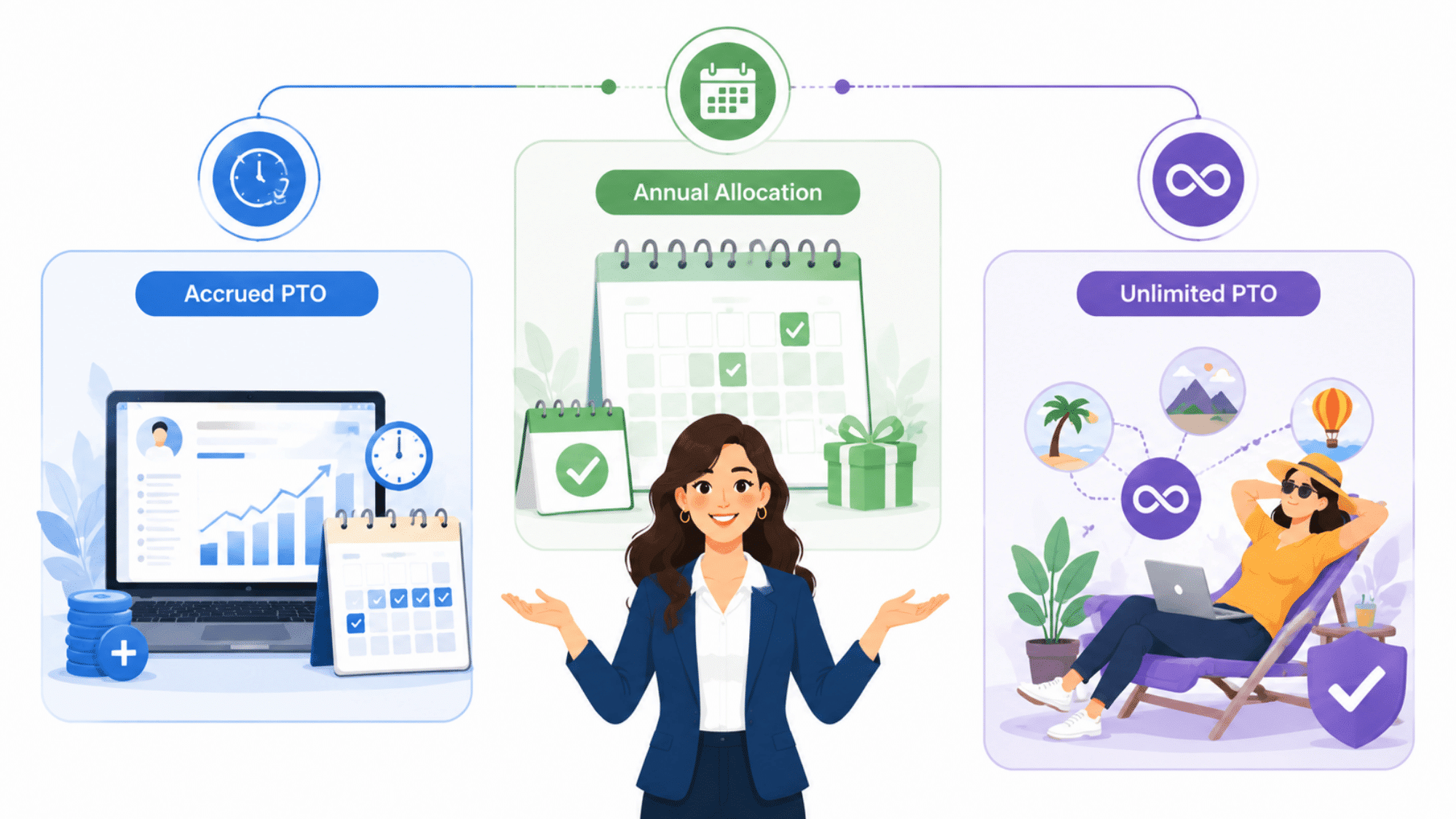
Employers may provide PTO through different allocation methods, depending on company policy and employment terms.
The approach determines how employees earn and access their leave entitlement.
1. Accrued PTO
Under an accrued PTO system, employees gradually build their leave entitlement over time based on the hours, weeks, or months they work.
This approach is commonly used for part-time, temporary, and newly hired employees, and accrual rates are typically outlined in employment contracts and calculated throughout the holiday year.
2. Annual Allocation
With an annual allocation, employees receive their full holiday entitlement at the beginning of the leave year rather than earning it gradually.
This method provides greater flexibility when planning extended leave; however, employers may adjust final pay if an employee leaves the organization after taking more leave than they have accrued.
3. Unlimited PTO
Although less common in the UK, some organizations offer unlimited PTO policies that allow employees to request leave without a fixed annual allowance.
Time off remains subject to managerial approval and business needs, as these policies are often designed to promote flexibility, autonomy, and a stronger focus on performance rather than attendance.
Types of Companies That Need a PTO System
A PTO system can benefit organizations of all sizes, particularly those with growing workforces and structured leave requirements.
It is especially valuable for businesses in sectors such as healthcare, retail, hospitality, technology, manufacturing, and professional services.
By providing a centralized approach to managing employee leave, it improves workforce planning, maintains compliance with employment policies, reduces administrative burden, and ensures fair and consistent leave management across the organization.
PTO Policy Best Practices
A well-defined PTO policy promotes transparency, consistency, and effective leave management. Employers should clearly communicate the following elements to avoid misunderstandings and support compliance.
- PTO Eligibility Requirements: Clearly outline which employees qualify for PTO, including full-time, part-time, temporary, and fixed-term staff, ensuring leave entitlements are applied consistently.
- Accrual Rates: Explain how leave is earned, when accrual begins, and whether employees can access PTO immediately or after a qualifying period.
- Carryover Rules: Specify whether unused leave can be carried forward, any applicable limits, and deadlines for using carried-over entitlement.
- Approval Procedures: Define the process for requesting leave, including notice requirements, approval timelines, and circumstances that may affect approval decisions.
- Blackout Periods: Identify peak business periods when leave requests may be restricted to maintain operational efficiency and adequate staffing levels.
- PTO Payout Upon Termination: Clarify how unused holiday entitlement is calculated and paid when employment ends, in accordance with contractual and legal requirements.
The Bottom Line
Knowing what PTO stands for is essential for both employees and employers seeking clarity on workplace leave entitlements.
From annual and sick leave to parental and bereavement leave, PTO plays an important role in supporting both.
A well-structured PTO system helps organizations manage absences effectively while giving employees the flexibility to address personal and professional needs.
If you are reviewing a job offer, updating workplace policies, or exploring employee benefits, having a clear understanding of PTO can help ensure informed decisions and a more balanced working environment.