

Losing someone close is difficult enough without worrying about work, pay, or time off. That’s where bereavement pay and bereavement leave policies come in.
While many employers offer some leave after a loss, the rules can vary widely depending on your company and state. Some employees receive paid time off, while others may need to use vacation or sick days.
So what is bereavement leave and pay? This blog breaks everything down in simple terms, including state laws and employer policies.
What is Bereavement Pay?
Bereavement pay refers to compensation an employee may receive while taking time off after the death of a loved one.
In many workplaces, this leave is intended to give employees time to grieve, attend funerals, manage arrangements, and address personal matters related to the loss.
However, there is no universal federal law in the United States requiring private employers to provide paid bereavement leave. Most policies depend on employer discretion or specific state laws.
What Is Bereavement Leave?
Bereavement leave is time off given to employees after the loss of a loved one. It’s designed to give you space to step away from work and deal with personal matters during a difficult time.
Some employers include paid bereavement leave as part of their benefits package. Others may require you to use PTO, sick days, or take unpaid leave instead.
- Usually applies to immediate family members like parents, spouse, children, or siblings
- Some employers include extended family, such as grandparents, in-laws, or cousins
- Both full-time and part-time employees may qualify, depending on the employer
- Some workplaces may allow leave for close friends or non-family relationships
What Bereavement Pay Usually Covers?
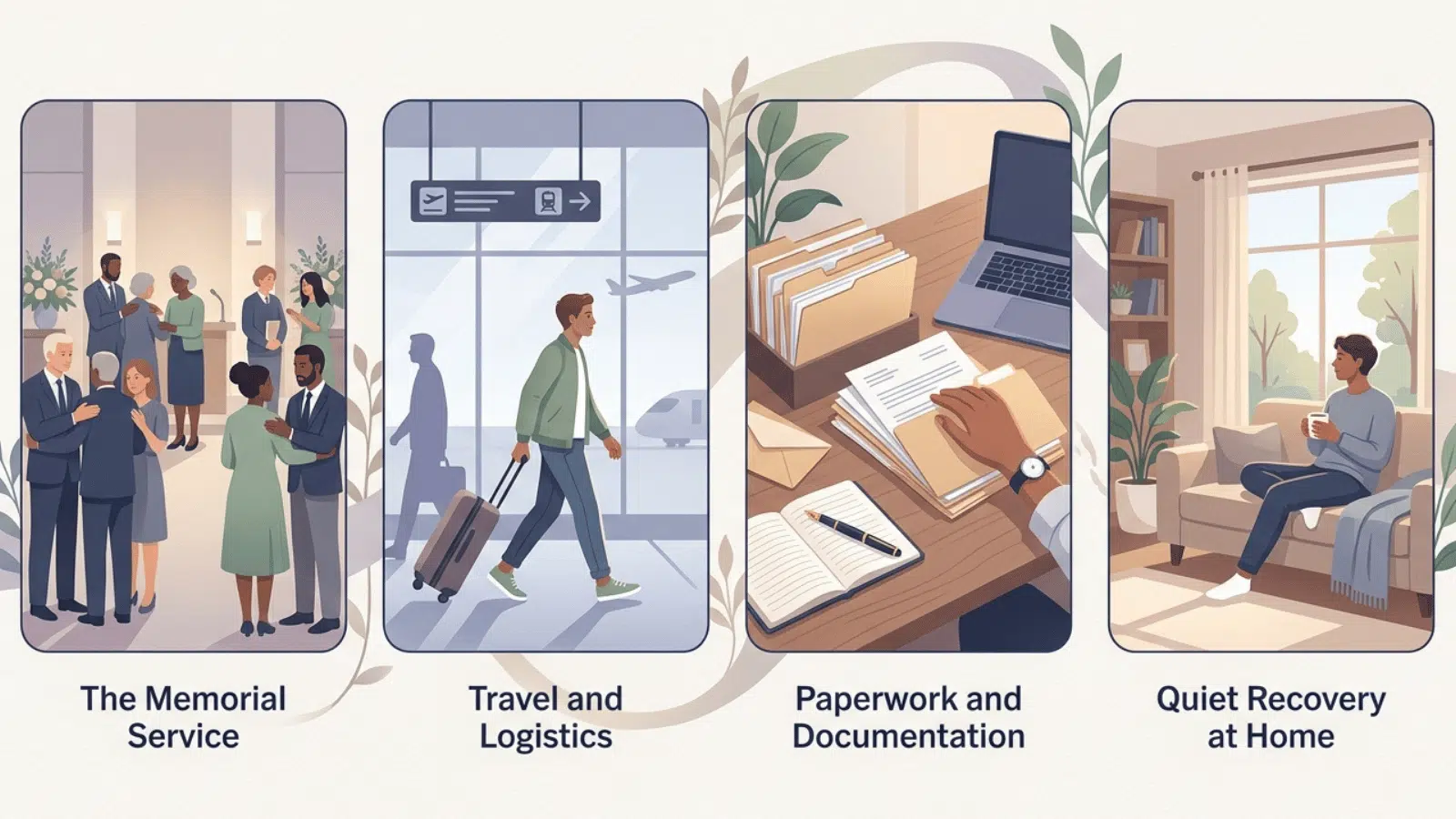
Bereavement leave is often used for more than just attending a funeral. It helps employees manage the practical, emotional, and personal responsibilities that come with losing someone close.
- Funeral Attendance: Employees commonly use bereavement leave to attend funerals, memorial services, or religious services related to the loss.
- Travel Time and Costs: Leave may help employees manage travel needed to visit family, attend services, or handle arrangements in another location.
- Legal and Financial Responsibilities: Many people use this time to handle paperwork, wills, insurance, and estate matters.
- Emotional Recovery: Time away from work can provide space to process grief and adjust before returning to regular responsibilities.
How Long is Bereavement Leave?
Bereavement leave isn’t standardized across all workplaces so that the length can vary depending on your employer and location.
Here’s how it’s typically structured:
Typical Employer Policies
Most employers provide around 3–5 days of leave after the death of an immediate family member, such as a spouse, parent, child, or sibling.
Some larger companies may offer additional days depending on the situation, especially if travel or cultural customs are involved.
Extended Family Policies
Leave for extended family members is usually shorter, ranging from 1 to 3 days. Policies often differ when it comes to grandparents, cousins, aunts, uncles, or in-laws.
Some employers clearly define eligible relationships in their handbook, while others may allow managers more flexibility when approving requests.
Additional Time Off Options
If the standard bereavement leave period isn’t enough, employees can often request extra time using PTO, vacation days, or unpaid leave.
In some workplaces, managers may also allow remote work or temporary schedule adjustments to help employees transition back more comfortably.
Can Bereavement Leave Be Denied?

In states without mandatory bereavement leave protections, employers are generally not legally required to provide time off.
Because of this, approval often depends entirely on internal company policy.
However, many employers still offer some form of leave because it’s considered an important part of employee well-being and workplace support.
States Where Bereavement Leave Is Required
Currently, there is no federal law that requires private employers to provide bereavement leave. The Family and Medical Leave Act (FMLA) also does not specifically guarantee leave after the death of a loved one.
A few states have created their own protections. These laws vary in terms of eligibility, leave duration, and whether the leave is paid or unpaid.
| State | What the Law Requires | Key Details |
|---|---|---|
| California | Up to 5 days of unpaid bereavement leave | Applies to employers with 5+ employees and covers immediate family members. |
| Illinois | Up to 10 workdays of unpaid leave | Includes bereavement, pregnancy loss, failed adoption, and related situations. |
| Oregon | Up to 2 weeks of bereavement leave | Leave must usually be taken within 60 days of the loss. |
| Maryland | Allows use of earned leave for bereavement | Employees may use accrued paid sick or safe leave after a death. |
| Washington | Paid leave protections in certain cases | Some workers qualify for leave related to the loss of a child. |
| Vermont | Up to 2 weeks of unpaid bereavement leave | Employees can take leave under Vermont’s family leave law. |
States With Additional Bereavement-Related Protections
Some states don’t have dedicated bereavement leave laws, but still allow employees to use other protected leave benefits after a loss. These protections are usually tied to paid sick leave policies.
Colorado
Under the Healthy Families and Workplaces Act, Colorado allows employees to use accrued paid sick leave for bereavement-related needs. This can include attending funerals, making arrangements, or handling matters connected to the death of a family member.
The law applies to most employees in the state and gives workers access to paid leave they have already earned, rather than creating a separate bereavement leave category.
Minnesota
Minnesota’s Earned Sick and Safe Time law also allows employees to use accrued leave after the death of a family member. This may include attending funeral services, arranging memorials, or managing related responsibilities.
Instead of offering standalone bereavement leave, the state expands how earned leave can legally be used during difficult personal situations.
How to Request Bereavement Leave?
If you need bereavement leave, it’s usually best to contact your manager or HR department as soon as possible. Early communication helps your employer understand the situation and arrange coverage if needed.
Before making the request, check your company’s employee handbook or leave policy to determine how much time is available and whether the leave is paid or unpaid.
Some employers may also ask for documentation, such as a funeral notice or obituary, before approving the leave.
You can also ask whether your workplace offers additional support, like counseling services or employee assistance programs, which may help during the grieving process.
Tips for Employers Creating Bereavement Policies
A clear bereavement policy helps employees feel supported during difficult situations and reduces confusion in the workplace. Well-defined policies make expectations easier for everyone involved.
- Keep the policy simple and easy for employees to understand
- Clearly explain eligibility, leave duration, and whether the leave is paid or unpaid
- Define which family relationships are covered under the policy
- Offer flexibility for unexpected situations or extended travel needs
- Include information about documentation requirements, if any
- Consider offering counseling or employee assistance resources
- Regularly review state laws to ensure the policy stays compliant and updated
Conclusion
Understanding bereavement pay can make an incredibly difficult time slightly easier to navigate.
Knowing what bereavement leave is and how long it lasts helps employees understand their rights, options, and workplace benefits after a loss.
Whether the leave is paid or unpaid, having time to grieve and manage responsibilities is an important part of employee well-being.
As more states continue updating their laws, bereavement policies are becoming an increasingly important workplace topic.
Has your workplace’s bereavement policy ever left you with questions? Share your thoughts in the comments below.
Frequently Asked Questions
Do Aunts and Uncles Count for Bereavement Leave?
In some workplaces, aunts and uncles may qualify for bereavement leave, especially if the employee had a close relationship with them. Eligibility depends on the employer’s policy and how immediate family is defined.
Is Bereavement Paid in Full?
No, employers are not legally required to provide paid bereavement leave in most cases. However, many companies do offer paid leave, so it’s important to check your workplace policy.
What are the Rules Around Bereavement Leave?
Bereavement leave rules vary by employer, but many companies offer different lengths of leave. Some policies allow one day for non-immediate family losses and around three days for situations like miscarriage or stillbirth.