

Workplace emergencies can happen without warning, and many businesses are unprepared for them. Without a clear emergency plan, confusion and delayed responses can put employees at risk.
Small mistakes during emergencies can lead to injuries and business disruptions. Employees also need clear instructions on how to respond safely and remain calm.
So, how does an emergency action plan benefit your workplace? A robust EAP improves safety, speeds emergency response times, reduces disruptions, and supports OSHA compliance.
This article explains the key benefits of an emergency action plan, essential components, common mistakes to avoid, and how businesses can improve workplace preparedness.
What Is an Emergency Action Plan (EAP)?
A Workplace Emergency Action Plan (EAP) is a written document detailing procedures for employees to ensure safety and OSHA compliance during emergencies.
It outlines exactly how employees should respond in emergencies such as fires, chemical spills, natural disasters, or workplace violence.
The plan also includes evacuation procedures, emergency contacts, reporting methods, and employee responsibilities during a crisis.
A well-prepared EAP helps reduce confusion, improve response time, and protect both employees and workplace property.
The Essential Components of an Effective EAP
A strong Emergency Action Plan helps employees respond safely and keeps businesses prepared during emergencies. Read the essential components below.
| Essential Component | What It Includes | Why It Matters |
|---|---|---|
| Risk Assessment | Fires, spills, natural disasters, security threats | Helps identify workplace risks |
| Evacuation Procedures | Exit routes, assembly areas, accessibility support | Supports safe evacuation |
| Communication Systems | Alarms, alerts, PA systems, radios | Enables fast communication |
| Roles and Responsibilities | Coordinators, wardens, first responders | Improves emergency coordination |
| Training and Drills | Fire drills, simulations, refresher training | Improves preparedness |
| Accessibility Support | Procedures for special needs employees | Ensures safe assistance for all |
Include medical response, recovery actions, and incident reporting procedures, and document the event through a detailed workplace incident report.
Regular reviews and updates help keep the EAP accurate, effective, and aligned with current workplace risks.
How Does an Emergency Action Plan Benefit Your Workplace?
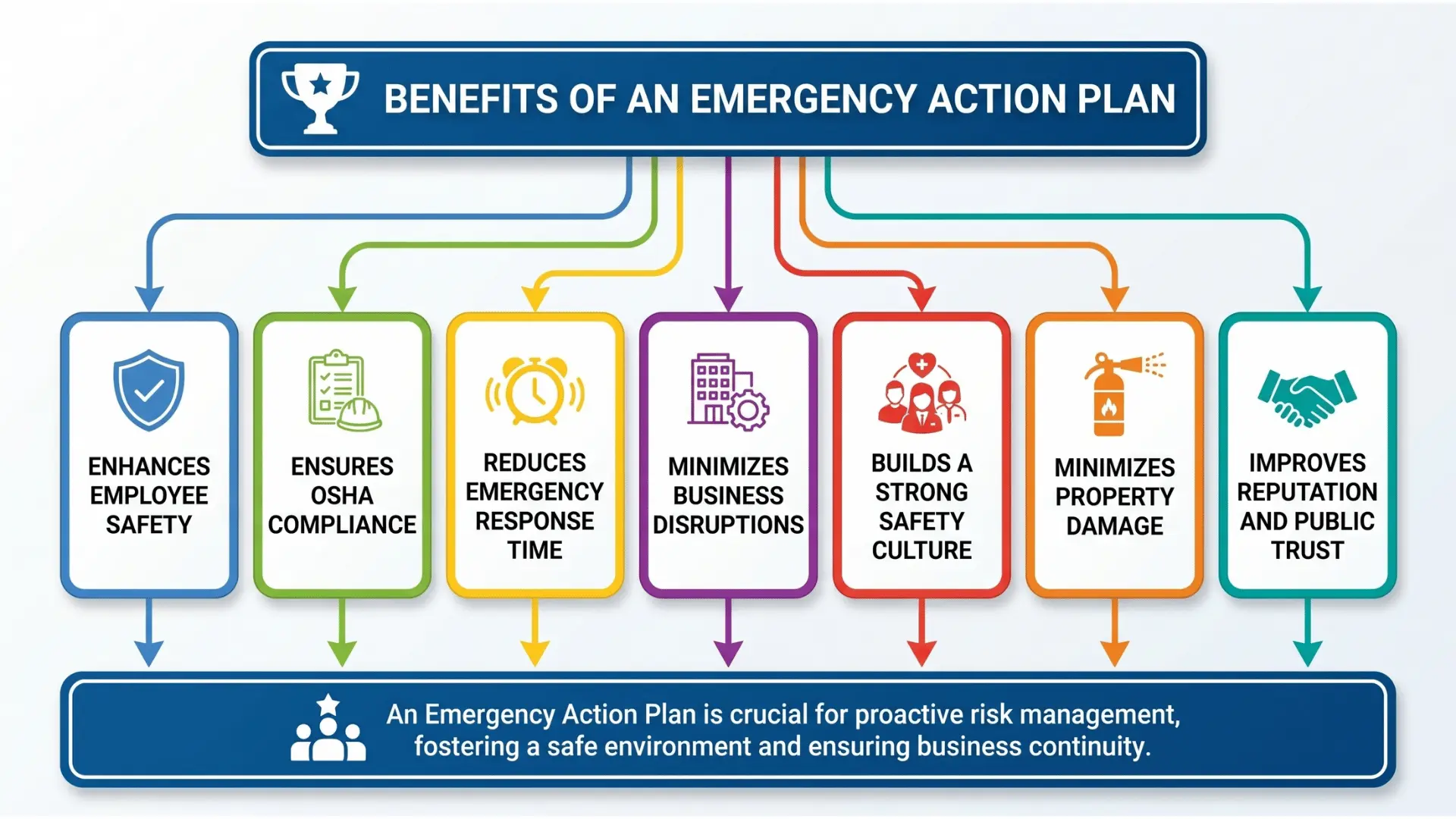
Beyond legal requirements, there are many reasons why you should have an emergency action plan.
A well-structured EAP enhances workplace safety, preparedness, and emergency response. Read the key benefits below:
1. Enhances Employee Safety
An EAP helps employees respond safely during emergencies by reducing panic, improving evacuation procedures, and lowering injury risks.
- Regular emergency drills improve evacuation speed and employee preparedness.
- Employees become more familiar with emergency procedures and safety protocols.
- Clear instructions improve coordination during critical situations.
2. Ensures OSHA Compliance
An EAP helps businesses meet OSHA safety requirements and maintain workplace emergency preparedness. OSHA requires workplaces with more than 10 employees to maintain a written EAP.
- Failure to comply can result in fines, citations, and legal liability.
- OSHA 1910.38 requires clear emergency procedures for workplace safety.
- High-risk industries may require additional emergency preparedness measures.
Pro Tip: OSHA provides a model EAP template that can be adapted to your workplace conditions.
3. Reduces Emergency Response Time
An EAP helps employees respond more quickly during emergencies by establishing clear procedures, defining roles, and improving coordination.
- Clear communication channels help share accurate information quickly.
- Assigned emergency coordinators and response roles improve overall incident management.
- Organizations with structured emergency procedures often respond faster during workplace incidents.
4. Minimizes Business Disruptions
An EAP helps businesses continue essential operations during and after emergencies by reducing downtime and supporting faster recovery.
- FEMA reports that many businesses affected by major disasters never fully recover.
- Clear recovery procedures help reduce financial losses and operational delays.
- Strong emergency planning also helps protect productivity and business reputation.
5. Builds a Strong Safety Culture
An EAP shows employees that workplace safety is a priority through clear procedures and regular emergency training.
- Strong safety programs are linked to higher employee engagement and safety awareness.
- Regular training helps employees feel more confident and prepared during emergencies.
- Clear emergency procedures also improve trust and workplace morale.
6. Minimizes Property Damage
An EAP helps reduce property damage through faster emergency response and clear shutdown procedures.
- Fire containment measures and safety protocols help limit damage and recovery costs.
- Faster response times can prevent small incidents from becoming major emergencies.
- Clear procedures also help protect equipment, systems, and workplace assets.
7. Improves Reputation and Public Trust
An EAP helps businesses maintain a positive reputation through organized emergency response and workplace safety preparedness.
- Clear emergency procedures show commitment to employee and community safety.
- Strong emergency planning helps build customer and public trust.
- Effective responses during emergencies can protect the organization’s image and credibility.
Developing an Effective Emergency Action Plan
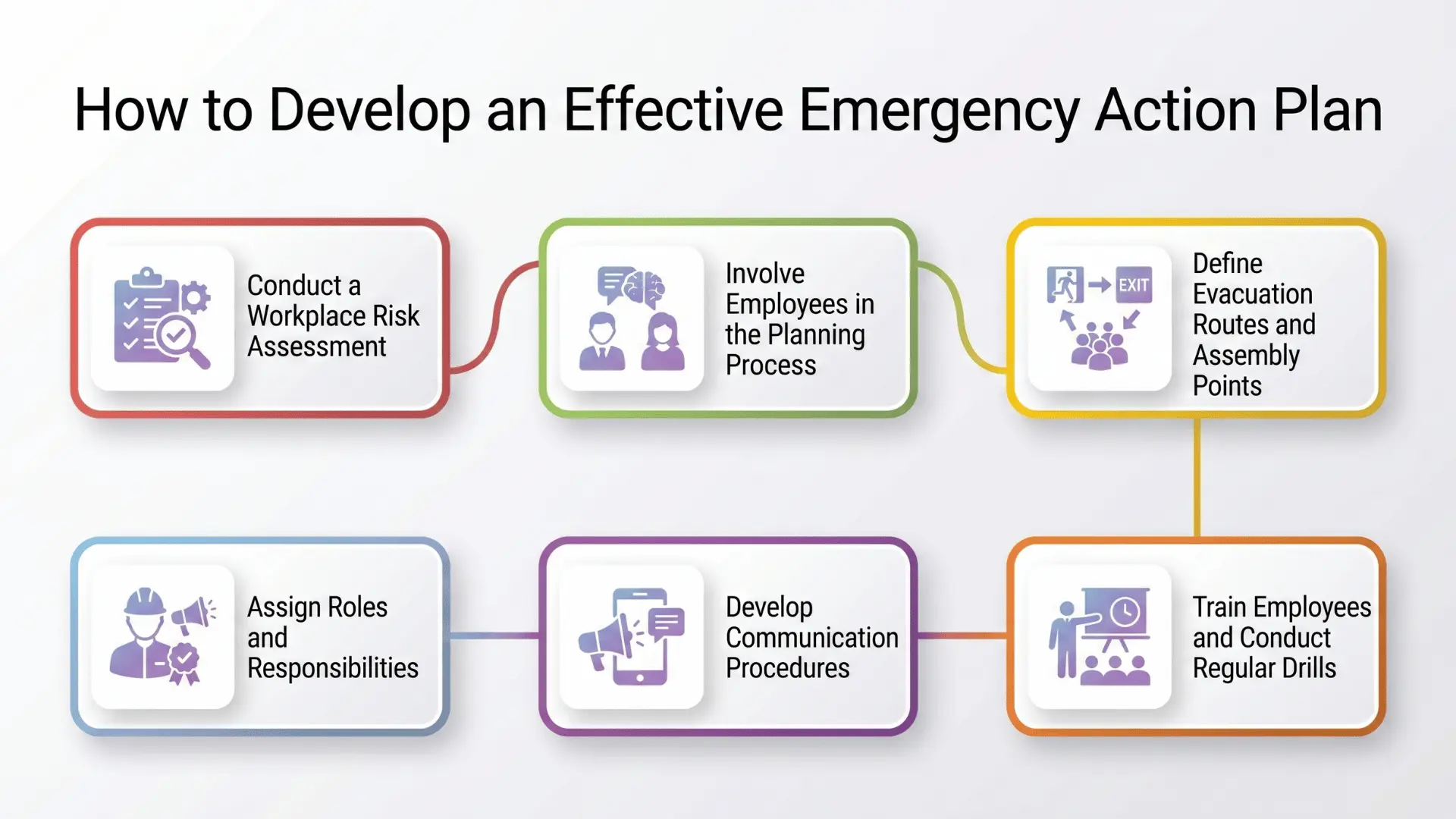
Creating a clear Emergency Action Plan improves workplace safety and emergency preparedness. Read the steps below to develop an effective EAP.
- Conduct a Workplace Risk Assessment: Identify workplace hazards, including fires, chemical spills, natural disasters, and security threats.
- Involve Employees in the Planning Process: Gather employee feedback to improve emergency procedures and workplace awareness.
- Define Evacuation Routes and Assembly Points: Clearly mark exits, evacuation routes, and safe assembly areas.
- Assign Roles and Responsibilities: Assign emergency coordinators, first aid responders, and communication leads.
- Develop Communication Procedures: Use alarms, PA systems, alerts, and contact lists for emergency communication.
- Train Employees and Conduct Regular Drills: Conduct regular training, fire drills, and emergency response practice.
- Review and Update the EAP Regularly: Update the plan after workplace changes, incidents, or new safety risks.
A well-developed EAP helps employees respond faster and reduces confusion during emergencies.
Emergency Action Plan for Different Workplace Incidents
Different workplace incidents require specific response procedures to reduce risks and protect employees. The table below highlights common incidents and key safety actions.
| Incident Type | Immediate Actions | Key Safety Measures |
|---|---|---|
| Fire Emergencies | Activate alarms, evacuate the area, and move to assembly points. | Fire containment, safe evacuation, and emergency reporting |
| Medical Incidents | Call emergency services and provide first aid if trained. | Fast medical response and injury management |
| Severe Weather | Move employees to shelter areas and follow emergency instructions. | Employee protection and safe shelter procedures |
| Hazardous Material Spills | Isolate the area and use protective equipment if required. | Exposure control, spill containment, and hazard prevention |
Signs Your Workplace Needs a Better EAP
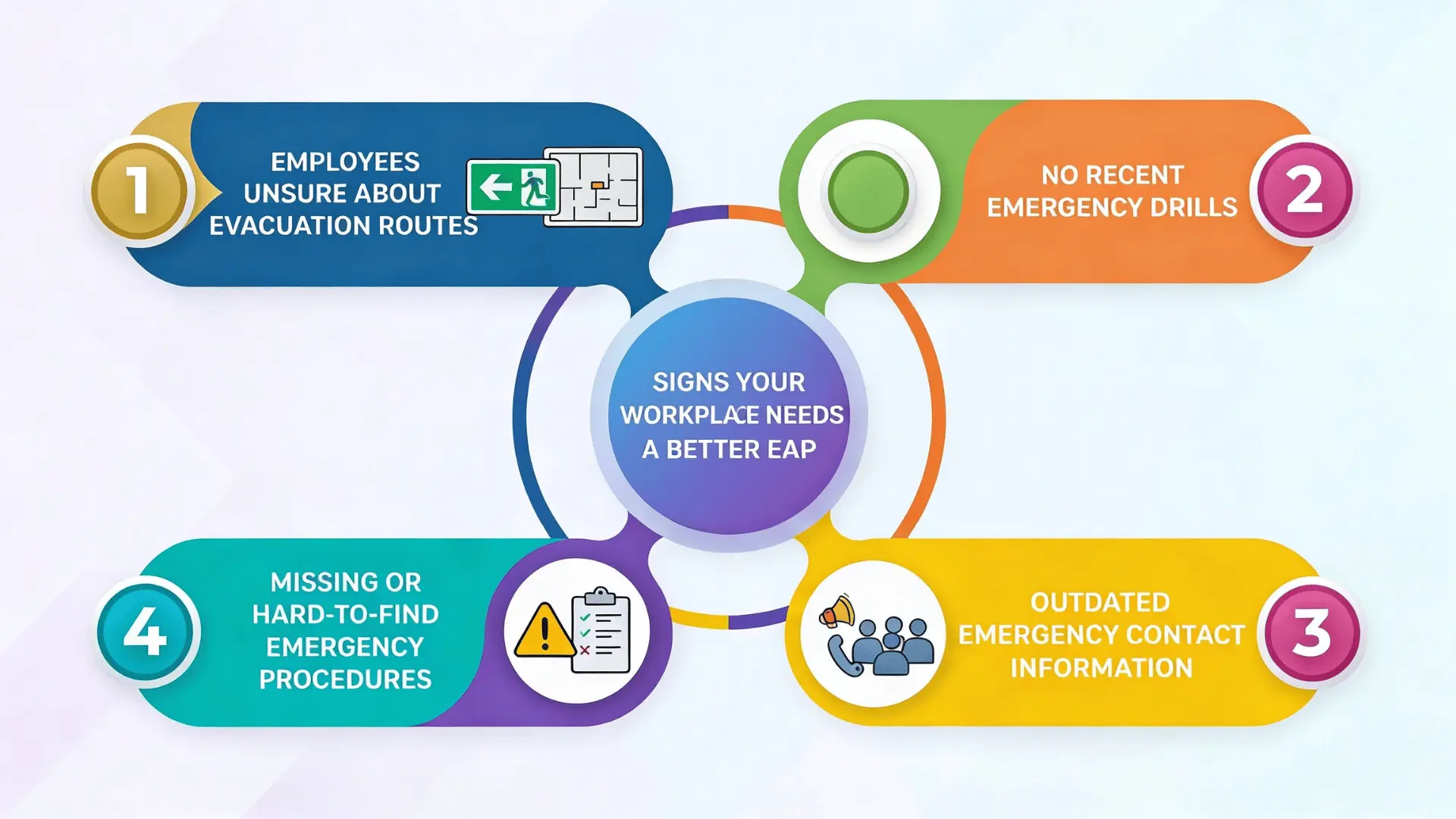
A weak or outdated Emergency Action Plan can increase confusion and safety risks during critical situations. The signs below may indicate that your workplace needs a more effective EAP.
- Employees are unsure about evacuation routes or emergency procedures.
- The workplace has not conducted emergency drills recently.
- Emergency contact information is outdated or incomplete.
- Written emergency procedures are missing or difficult to access.
- The organization has concerns about OSHA compliance or workplace safety readiness.
Identifying these signs early helps improve workplace preparedness and reduce safety risks. If unsafe conditions already exist, knowing how to handle unsafe working conditions is just as important as having a plan in place.
Regular reviews and training help keep emergency procedures effective.
How Emergency Action Plans Support Different Industries?
Different industries face different workplace risks, and an EAP helps address those specific emergency situations effectively and safely.
Non-profit organizations use EAPs to protect staff and volunteers while maintaining essential services, while housing authorities focus on resident safety and operational continuity.
Schools and educational institutions rely on EAPs for lockdown procedures, student accountability, evacuations, and family reunification processes.
Faith-based and community organizations use emergency plans to improve coordination and protect congregations during incidents, while local governments and municipalities develop broader emergency response frameworks for public safety and resource management.
How Does a Fire Prevention Plan Benefit Your Workplace?
A fire prevention plan helps businesses identify potential ignition sources, store hazardous materials safely, and keep employees informed about their responsibilities before an emergency occurs.
Understanding why a fire prevention plan is important becomes clear when you consider that fires rarely announce themselves before causing serious damage.
Unlike a reactive approach, prevention planning reduces the likelihood of a fire starting in the first place.
It also supports faster evacuation, limits property damage, and demonstrates a genuine commitment to workplace safety.
|
Emergency number for fire: 911 |
Common Mistakes Businesses Make With Emergency Action Plans
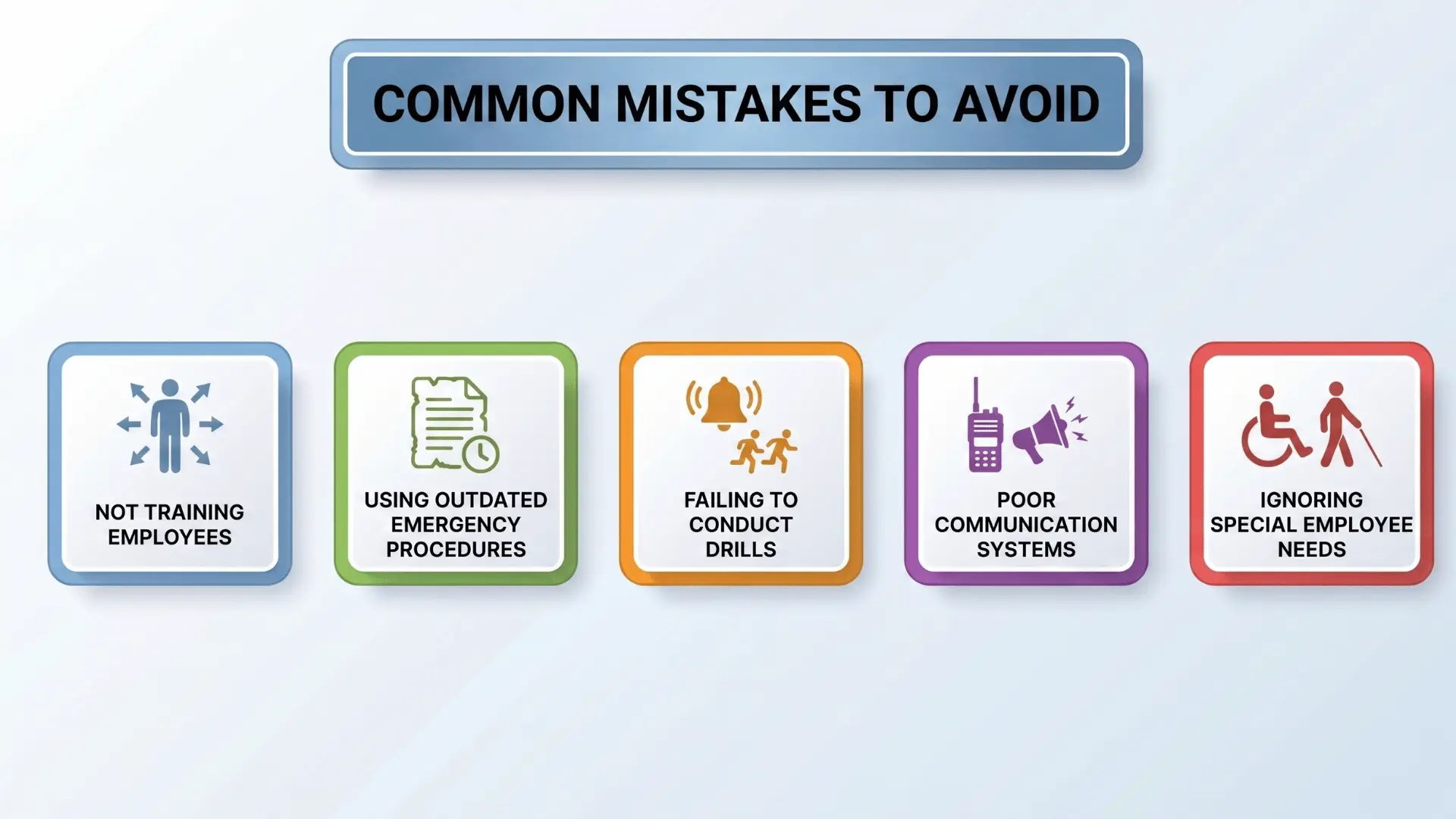
Many workplaces create emergency action plans but fail to maintain or properly implement them. These mistakes can reduce employee safety and create confusion during real emergency situations.
- Not Training Employees: Employees may not know how to respond during emergencies without proper training.
- Using Outdated Emergency Procedures: Old plans may not match current workplace risks or layouts.
- Failing to Conduct Drills: Skipping drills leaves employees unprepared for real emergencies.
- Poor Communication Systems: Weak communication can delay emergency alerts and instructions.
- Ignoring Special Employee Needs: Overlooking special needs can create safety risks during evacuations.
Avoiding these mistakes helps businesses improve emergency preparedness, while regular updates, training, and clear communication make EAP’s more effective.
Conclusion
An emergency action plan helps businesses protect employees, reduce workplace risks, and improve emergency response during critical situations.
Understanding how does an emergency action plan benefit your workplace can help organizations improve safety, reduce downtime, and stay prepared for unexpected emergencies.
A strong EAP improves communication, supports OSHA compliance, and helps employees respond safely during emergencies. Regular training and updated procedures keep workplaces prepared and organized.
Do not wait for an emergency to expose gaps in your workplace safety plan. Create or update your emergency action plan today to protect employees, reduce risks, and keep your business prepared.
Frequently Asked Questions
How Often Should Emergency Drills Be Conducted in the Workplace?
Most workplaces should conduct emergency drills at least once or twice a year to keep employees familiar with safety procedures.
Why Should Workplaces Keep Backup Emergency Contacts?
Backup emergency contacts help businesses communicate quickly if primary communication systems fail.
How to Help Employees With Special Needs During Emergencies?
Provide accessible exits, emergency assistance, and safety training for employees with disabilities or medical needs.