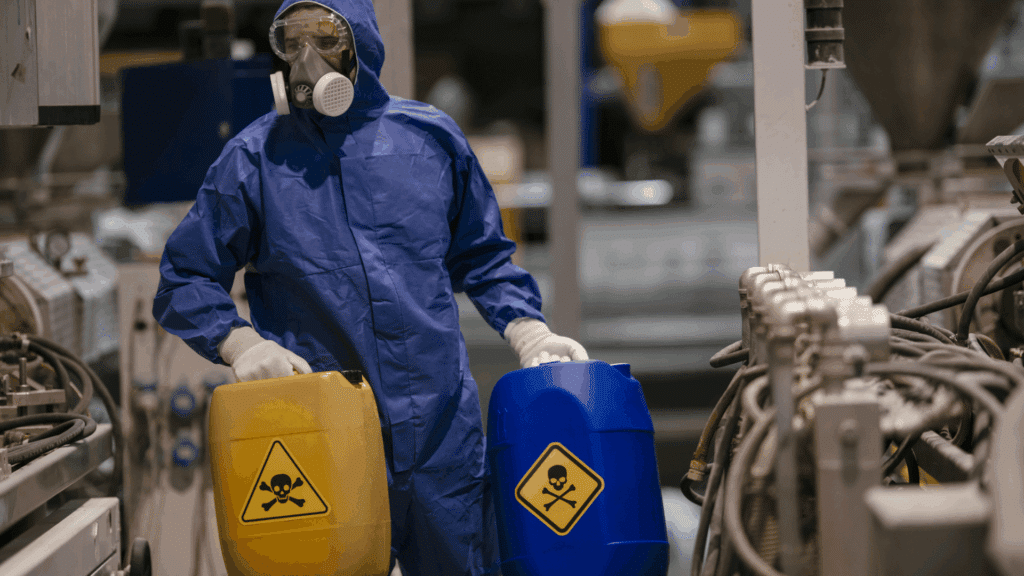

Chemical exposure in the workplace can happen faster than many workers expect. Even brief exposure can lead to serious health risks.
Understanding why you must be cautious of chemical exposure in the workplace is important because even minor exposure can cause serious health problems over time.
Many workers do not notice the early warning signs until symptoms become harder to manage. Medical costs, missed workdays, and safety risks can also create problems for both employers and employees.
This article explains the common causes of workplace chemical exposure, warning signs, high-risk industries, safety practices, emergency response steps, and workers’ compensation rights.
What Is Chemical Exposure in the Workplace?
Chemical exposure in the workplace occurs when workers come into contact with hazardous chemicals or toxic substances in the course of their work.
Exposure can occur by breathing in fumes, touching chemicals, or swallowing contaminated particles. Some chemicals are visible and easy to notice, while others are odorless and invisible.
Common hazardous workplace chemicals include solvents, corrosive acids, alkalis, lead, and asbestos.
These substances can cause burns, nerve damage, and serious long-term health problems.
Exposure may happen suddenly after spills or accidents, or slowly over time through repeated contact.
Long-term exposure can cause serious health problems without immediate warning signs.
OSHA requires employers to provide Safety Data Sheets (SDS) that explain chemical hazards, safe handling procedures, and emergency response procedures.
Why Must You Be Cautious of Chemical Exposure in the Workplace?
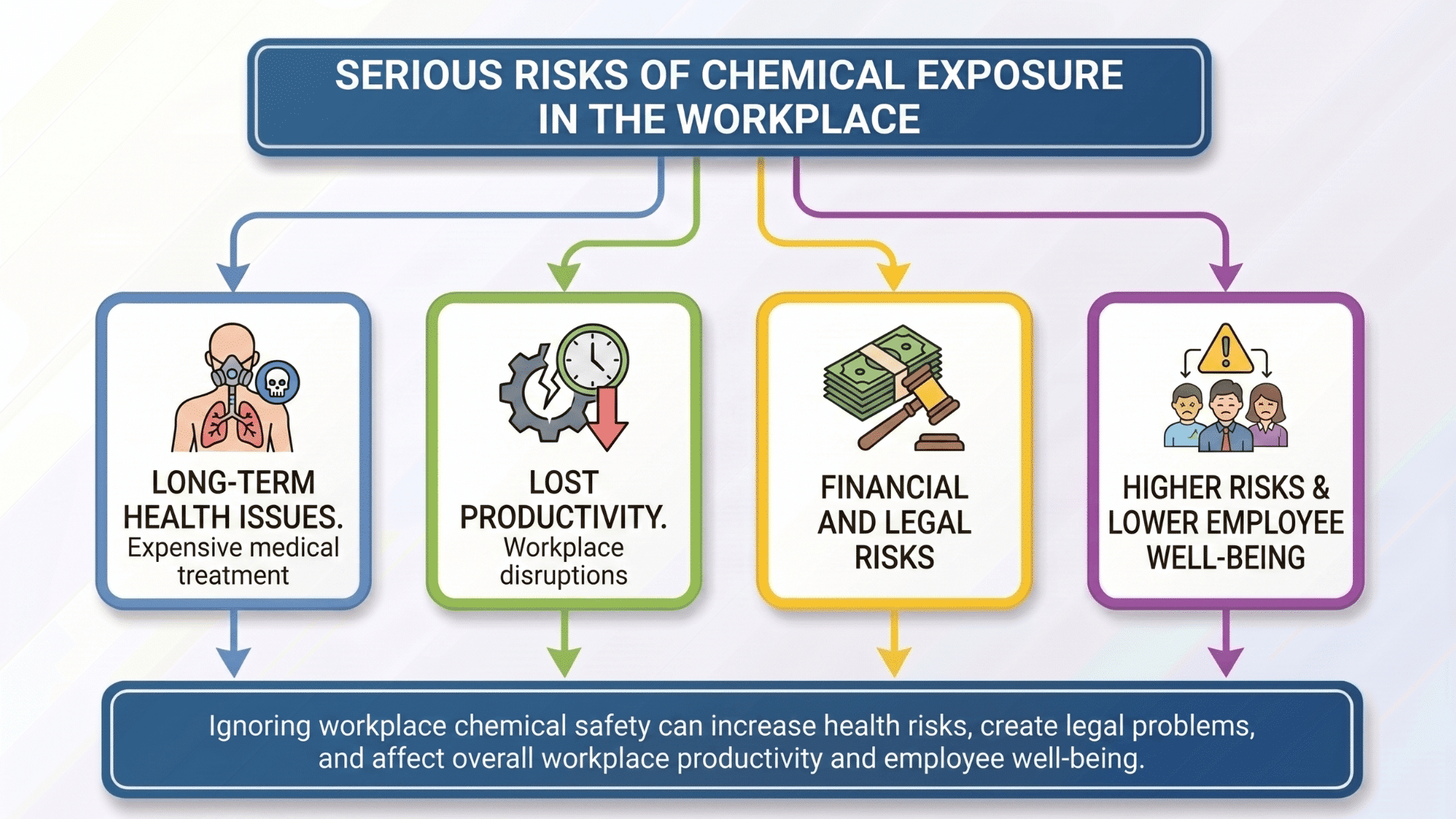
Chemical exposure in the workplace can lead to serious health and safety risks.
Here are some important reasons workers and employers must stay cautious:
- Long-term chemical exposure can cause asthma, skin disorders, nerve damage, and reproductive health problems.
- Some hazardous chemicals do not show immediate symptoms, making health risks harder to detect early.
- Chemical accidents can lead to expensive medical treatment, lost productivity, and workplace disruptions.
- OSHA requires employers to provide proper chemical labeling, worker training, and personal protective equipment (PPE).
- Exposure to chemicals imposes substantial economic costs on individuals and organizations.
These responsibilities come with the legal obligations employers have to protect workers and comply with safety regulations, such as OSHA’s Hazard Communication Standard (HCS).
Common Types of Chemical Exposure and High-Risk Industries
Different types of chemical exposure can affect workers in different ways, especially in industries that regularly handle hazardous substances.
| Type of Chemical Exposure | Description | Industries With Higher Risks |
|---|---|---|
| Inhalation | Breathing in fumes, gases, vapors, or dust particles. | Manufacturing, construction, agriculture, and laboratories |
| Skin Contact | Chemicals can come into contact with or be absorbed through the skin. | Healthcare, cleaning and sanitation, manufacturing |
| Accidental Ingestion | Swallowing harmful chemicals through contaminated hands, food, or surfaces. | Healthcare, laboratories, and cleaning services |
| Eye Exposure | Chemical splashes or fumes can irritate or damage the eyes. | Construction, laboratories, manufacturing, and sanitation |
Major Causes of Workplace Chemical Exposure
Workplace chemical exposure can happen for many reasons. Here are some of the most common causes:
- Lack of Training and Safety Gear: Workers without proper training or protective equipment face higher risks of exposure.
- Equipment Failure: Leaking tanks, faulty valves, or damaged respirators can release hazardous chemicals.
- Poor Ventilation: Toxic fumes can accumulate in areas without adequate airflow.
- Injection Injuries: Needles or sharp objects can inject chemicals directly into the body.
Recognizing these causes early helps employers improve workplace safety, reduce health risks, and prevent chemical-related injuries.
How to Stay Safe: Mitigating Chemical Exposure Risks
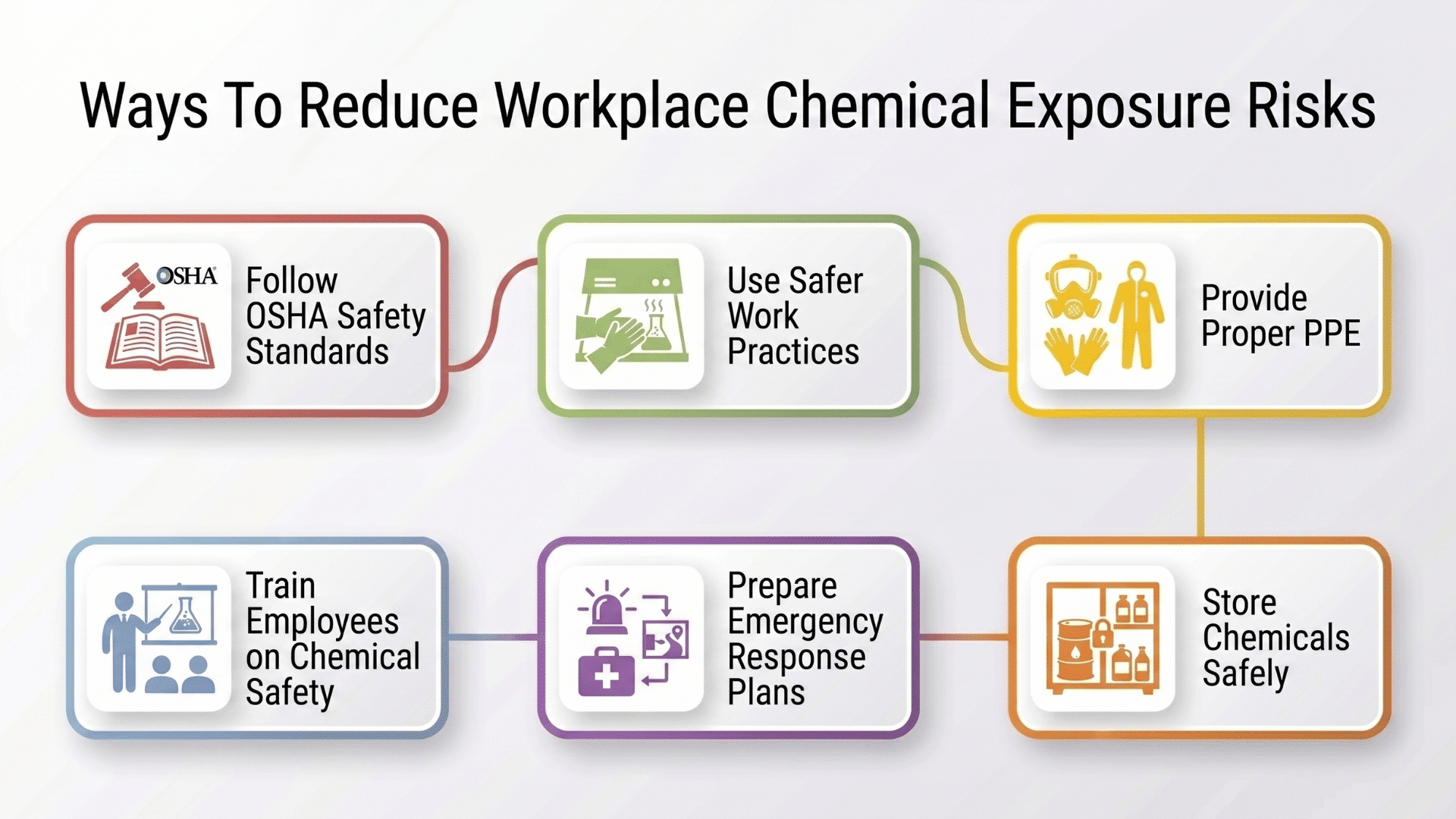
Proper safety measures, training, and protective equipment can help reduce workplace chemical exposure and prevent serious health risks.
1. Follow OSHA Regulations and Safety Standards
OSHA safety regulations help reduce workplace chemical exposure risks and protect worker health. Following these standards improves workplace safety and lowers the chances of accidents.
- Maintain workplace chemical exposure limits required by OSHA.
- Keep Safety Data Sheets (SDS) for all hazardous chemicals readily accessible.
- Regularly inspect chemical storage and handling procedures.
2. Use Safer Work Practices
Safe work practices help minimize direct contact with hazardous substances and reduce long-term health risks.
- Replace dangerous chemicals with safer alternatives whenever possible.
- Use ventilation systems, fume hoods, and isolators to control airborne chemicals.
- Rotate job duties to reduce prolonged exposure to chemicals.
3. Provide Proper Personal Protective Equipment (PPE)
Protective equipment helps reduce injuries caused by chemical splashes, fumes, and direct contact.
- Provide gloves, goggles, masks, respirators, and protective clothing.
- Train workers on the correct use of PPE.
- Inspect, clean, and replace damaged safety equipment regularly.
4. Train Employees on Chemical Safety
Training helps workers recognize hazards and respond properly during emergencies. Well-informed employees are less likely to suffer chemical-related injuries.
- Teach workers how to identify hazardous chemicals.
- Provide instructions for safe handling and storage procedures.
- Train employees on emergency response and first-aid steps.
5. Prepare Emergency Response Plans
Emergency plans help workplaces respond quickly to spills, leaks, and chemical accidents. Fast action can reduce injuries and property damage.
- Create procedures for chemical spill containment and cleanup.
- Provide first aid guidance for chemical burns and exposure injuries.
- Develop evacuation plans for major chemical leaks or emergencies.
6. Store Chemicals Safely
Proper chemical storage helps reduce spills, leaks, fires, and accidental exposure in the workplace. Safe storage practices also make handling and emergency response easier.
- Use clear labels on all chemical containers.
- Keep chemicals in secure and well-ventilated storage areas.
- Separate incompatible chemicals to avoid dangerous reactions.
The Role of Employers and Employees
Employers and employees must work together to reduce workplace chemical exposure risks and maintain safety.
| Responsibility Area | Employers | Employees |
|---|---|---|
| Workplace Safety | Identify hazards and conduct risk assessments. | Follow safety procedures and stay alert to risks. |
| Safety Training | Provide chemical safety training. | Attend training and follow safe practices. |
| Protective Equipment | Supply proper PPE. | Wear PPE correctly when handling chemicals. |
| Hazard Reporting | Maintain hazard reporting systems. | Report spills and unsafe conditions immediately. |
| Emergency Preparedness | Create chemical emergency response plans. | Follow emergency procedures during incidents. |
| Safety Culture | Encourage regular safety checks and communication. | Participate in workplace safety programs. |
Why Chemical Safety Matters In a Workplace
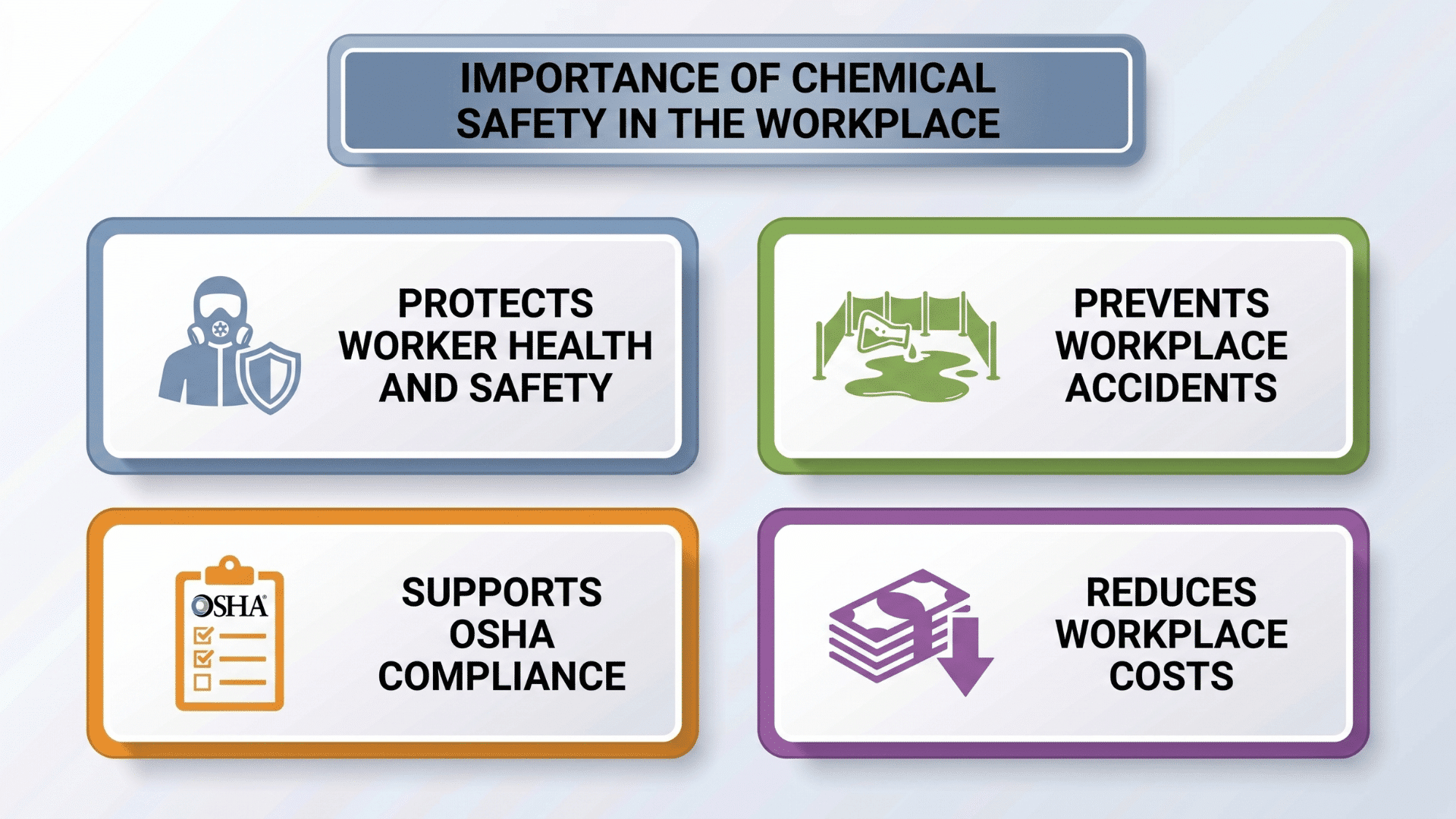
Chemical safety helps protect workers, prevent accidents, and maintain a safer work environment.
- Protects Worker Health and Safety: Exposure to hazardous chemicals can cause burns, breathing problems, poisoning, and long-term illnesses.
- Prevents Workplace Accidents: Improper chemical handling or storage can lead to fires, explosions, and toxic leaks.
- Ensures Regulatory Compliance: Chemical safety practices help workplaces comply with OSHA and other safety regulations.
- Reduces Costs and Improves Productivity: Fewer chemical incidents can reduce medical costs, downtime, and workplace disruptions.
Strong chemical safety practices help protect workers, reduce workplace risks, and maintain regulatory compliance.
Is Workers’ Compensation Available After On-The-Job Chemical Exposure?
Workers exposed to harmful chemicals at work may qualify for workers’ compensation benefits that cover medical costs, lost wages, and recovery expenses.
Employees unable to work due to chemical-related illness or injury may receive wage replacement benefits. Workers’ compensation may also cover medical treatment and rehabilitation costs.
Chemical exposure illnesses may appear months or even years later. Reporting symptoms early can help prevent serious health complications.
If an employer denies the claim or refuses support, workers may need legal guidance to understand their rights and available options.
Warning Signs That Chemical Exposure May Already Be Affecting Workers
Chemical exposure can cause health problems that become worse over time. Here are some common warning signs workers should not ignore:
- Persistent coughing may happen after breathing in chemical fumes or dust.
- Skin rashes, redness, or itching can appear after direct chemical contact.
- Eye irritation or burning may develop in areas with airborne chemicals.
- Fatigue and frequent headaches can result from long-term exposure.
Some symptoms require immediate medical attention.
- Chest pain and breathing difficulty may point to serious chemical exposure.
- Severe burns can happen from contact with corrosive substances.
- Loss of consciousness may occur after exposure to highly toxic chemicals.
Workplace chemicals may be affecting health if symptoms appear during work hours or improve after leaving the job site.
What To Do Immediately After Chemical Exposure
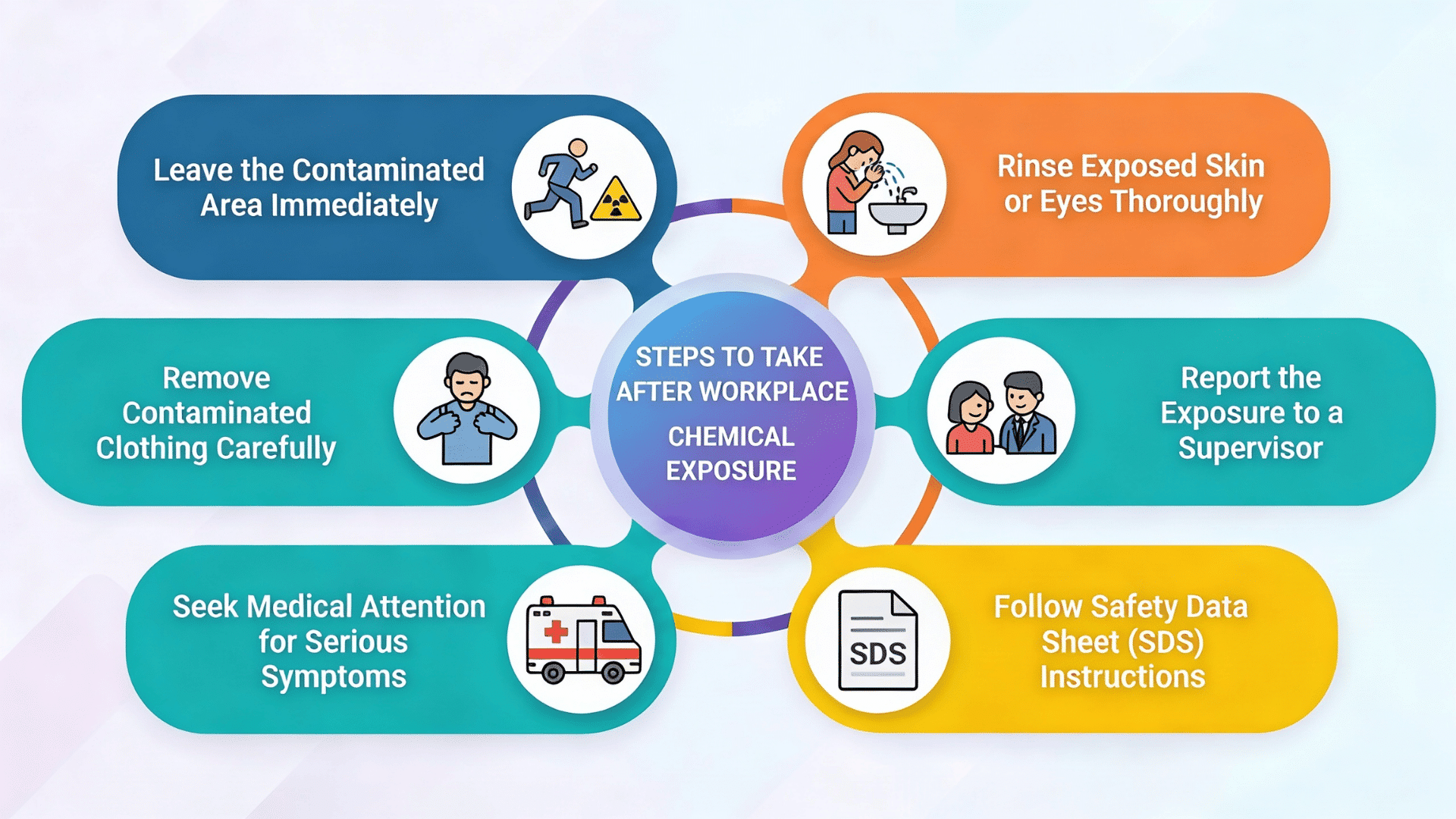
Immediate action after chemical exposure can help reduce serious health risks and prevent the condition from becoming worse.
- Leave the Contaminated Area Immediately: Move to fresh air and stay away from the source of exposure.
- Rinse Exposed Skin or Eyes Thoroughly: Use clean water for several minutes to reduce irritation or burns.
- Remove Contaminated Clothing Carefully: Avoid spreading chemicals to other parts of the body.
- Report the Exposure to a Supervisor: Follow workplace emergency and reporting procedures.
- Seek Medical Attention if Serious Symptoms Appear: Chest pain, breathing difficulty, severe burns, dizziness, or loss of consciousness require immediate care.
- Follow Safety Data Sheet (SDS) Instructions: Review first-aid steps and emergency response procedures for the chemical involved.
Quick action after chemical exposure can help reduce injuries, prevent serious complications, and improve workplace safety.
Conclusion
Chemical exposure in the workplace can create serious health and safety risks when proper precautions are ignored.
Understanding why you must be cautious of chemical exposure in the workplace can help workers recognize hazards early, follow safer work practices, and reduce the risk of long-term health problems.
Employers who provide training, appropriate PPE, and safe chemical-handling procedures can reduce workplace accidents and maintain OSHA compliance.
Workers who report symptoms early and follow safety guidelines can also protect their health and prevent more serious complications.
If workplace chemical exposure may be affecting your health, act quickly. Report the exposure, get medical care, and protect your rights immediately.
Frequently Asked Questions
Can Workplace Chemical Exposure Affect Workers Even when They Wear PPE?
Yes, exposure can still happen if PPE is damaged, used incorrectly, or does not match the chemical hazard. Poor ventilation and long-term exposure can also increase risks.
Are Temporary Workers at Higher Risk of Chemical Exposure?
Yes, temporary workers may face higher risks because they often receive limited training and have less experience with workplace hazards.
Can Chemical Exposure Affect Workers Differently Based on Age or Health Conditions?
Yes, workers with asthma, respiratory problems, or weakened immune systems may react more severely to chemicals. Older workers and pregnant employees may also face increased health risks.