


Starting a new job comes with a mix of excitement and nerves, and one term that often adds to the uncertainty is “probation period.”
If you have ever signed an offer letter and noticed a clause about a 90-day review or a one-year evaluation window, you already have some experience with this practice.
A probation period is the stretch of time when both an employer and a new employee figure out if the role is a good match.
This article explains how probation periods work, how long they usually last, what employee protections continue during this stage, and how rules differ between private employers and federal agencies.
What Is a Probation Period?
A probation period is an initial phase of employment during which an employer evaluates a new hire’s performance, conduct, skills, and suitability for the role. It also gives employees time to decide if the position, workplace culture, and responsibilities match their expectations.
During this stage, managers review factors such as work quality, attendance, communication, teamwork, and the ability to meet job requirements.
The probation length is usually mentioned in an offer letter, employment contract, or employee handbook.
In the private sector, probation periods are generally established by company policies rather than federal requirements, so terms can vary across employers. However, being on probation does not remove an employee’s basic workplace protections or legal rights.
What Are the Key Characteristics of a Probation Period?

A probation period follows a structured approach that helps employers and employees understand expectations from the beginning. These key elements define how performance is reviewed, communication happens, and decisions are made during this early employment stage.
- Defined review timeframe: Companies establish a specific period for assessing a new employee’s progress. The start and end dates help both parties understand when evaluations and employment decisions are expected.
- Role expectations and assessment: Employers review job performance, workplace behavior, attendance, and responsibilities to determine how effectively an employee meets the requirements of the position.
- Ongoing communication: Regular discussions allow managers to share observations and employees to ask questions. Consistent feedback helps address concerns before they become larger workplace issues.
- Final employment outcome: Once the review period ends, employers generally decide whether to confirm employment, extend the evaluation period, or end the employment relationship.
Tip: Keeping written records of goals, feedback, and review discussions creates clarity for both employees and managers throughout the probation process.
Understanding these characteristics helps explain why companies use probation periods and what employees can expect during this time. The next important factor is the length of this evaluation period and how it varies across workplaces
How Long Should a Probation Period Be?
There is no single legal number that applies to every workplace, since duration depends heavily on the type of employer and the role itself.
| Workplace Type | Common Duration | Key Consideration |
| Private companies | 30 to 90 days | Set by internal policy or contract |
| Specialized or senior roles | 3 to 6 months | Longer review for complex responsibilities |
| Federal government roles | Typically one year | Governed by civil service regulations |
A longer probation period is not automatically a warning sign. Some roles, particularly those with steep learning curves or public-sector requirements, are simply built around a longer evaluation window.
What Are the Legal Rules and Official Guidelines Behind Probation Periods?
Once you understand what a probation period is at a basic level, the next layer is understanding how employer policies and workplace laws shape its rules, which can make things confusing for employees and managers alike.
This legal foundation explains what employers can establish through internal policies and which workplace protections apply from the first day of employment.
1. Contractual Nature of Probation Periods
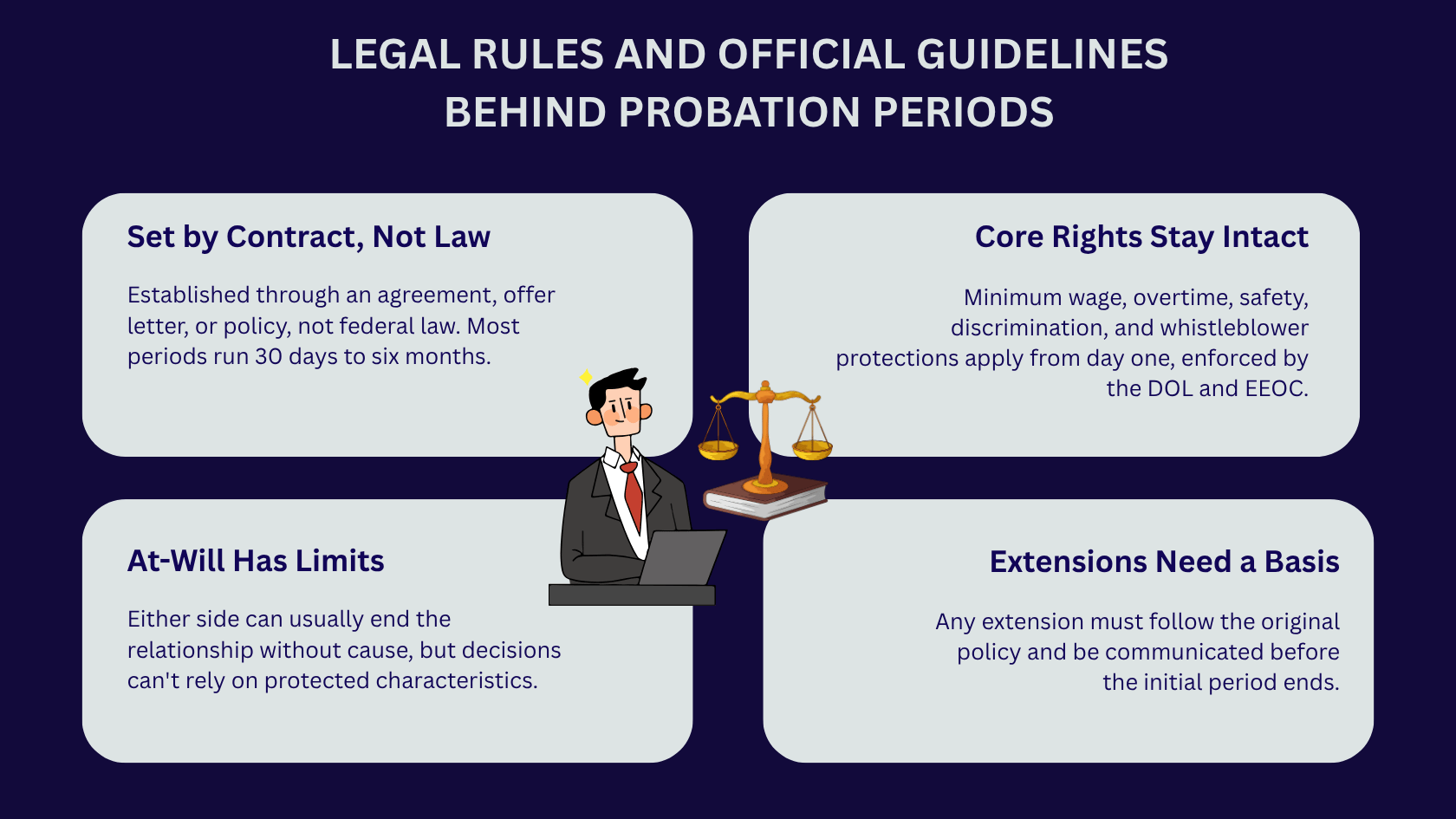
A probationary period is usually established through an employment agreement, offer letter, or company policy rather than by federal law.
Private employers generally determine the length, review process, and roles to which probation applies.
Most probation periods last between 30 days and six months, depending on the position and company practices. Clear written terms help both sides understand expectations, review timelines, and possible outcomes.
2. Employee Rights and Workplace Protections
Starting probation does not reduce an employee’s basic workplace rights. Legal protections related to minimum wage, overtime, workplace safety, discrimination, and whistleblower protections generally apply from the beginning of employment.
The U.S. Department of Labor provides guidance on wage and workplace requirements that apply to employees regardless of probation status.
Similarly, the Equal Employment Opportunity Commission (EEOC) enforces laws that protect employees from unlawful discrimination in hiring, evaluation, and termination decisions.
3. At-Will Employment and Employer Decisions
Many private-sector jobs in the United States follow the at-will employment model, meaning employers or employees can usually end the relationship without a specific reason, as long as the decision does not violate employment laws.
Probation does not create unlimited termination rights. Employers must still comply with legal requirements and avoid making decisions based on protected characteristics or unlawful reasons.
Government roles often follow more formal procedures with documented reviews and specific separation rules.
4. Probation Extensions and Policy Adjustments
A probation extension should follow the terms explained in the original agreement or company policy. Employers should communicate changes clearly and provide updated expectations before the initial review period ends.
When adjusting probation timelines, employers may also need to consider legal responsibilities such as reasonable accommodations for eligible employees. Proper documentation helps prevent confusion and supports fair workplace decisions.
5. Official Guidance and Compliance Requirements
Probation policies often sit between employer discretion and legal obligations. There is no federal requirement that private employers establish probation periods, but companies must still comply with workplace laws when creating and applying such policies.
The Fair Labor Standards Act (FLSA) continues to apply during probation, while the EEOC oversees protections against discrimination.
State laws may also affect areas such as final pay, benefits, or notice requirements. Written probation terms help employers maintain consistent practices and reduce workplace disputes.
How Do Government Probation Rules Differ From Private Employers?
Government probation follows formal federal requirements, while private employers usually create their own policies.
According to the U.S. Office of Personnel Management’s employee rights guidance, federal probationary employees often have limited appeal rights compared with permanent staff.
| Area | Government Employees | Private Employers |
| Rules and oversight | Governed by federal regulations and OPM guidelines. | Usually based on company policies and employment agreements. |
| Probation length | Often one year for federal competitive service roles. | Commonly 30 to 90 days, but varies by employer. |
| Performance reviews | Requires documented evaluations of conduct and performance. | Depends on company review practices and HR procedures. |
| Termination rights | Limited appeal rights during probation. | Follows employment laws and company policies, including at-will rules. |
Federal probation clearly operates under a stricter, more documented system than most private employers use, largely because agencies must follow OPM’s guidance for supervisors of probationers at every stage of the review.
Official Employee Rights and Employer Rights
| Basis | Employee Rights | Employer Rights |
| Evaluation standards | Consistent criteria, no bias tied to a protected characteristic | Can set performance and conduct benchmarks for probation |
| Workplace safety | Full occupational safety protections apply | Must maintain equal safety compliance for all staff |
| Termination | Cannot be dismissed for unlawful or discriminatory reasons | Can end employment without cause in most states |
| Workplace accommodations | Can request reasonable accommodations | Must properly review and respond to requests |
Employees covered under the Americans with Disabilities Act retain this accommodation right fully intact during a probationary period, and employers bear a corresponding duty to respond to it in good faith.
Together, these rights show that probation runs on shared responsibility rather than one side holding all the control.
What Are the Pros and Cons of a Probation Period?
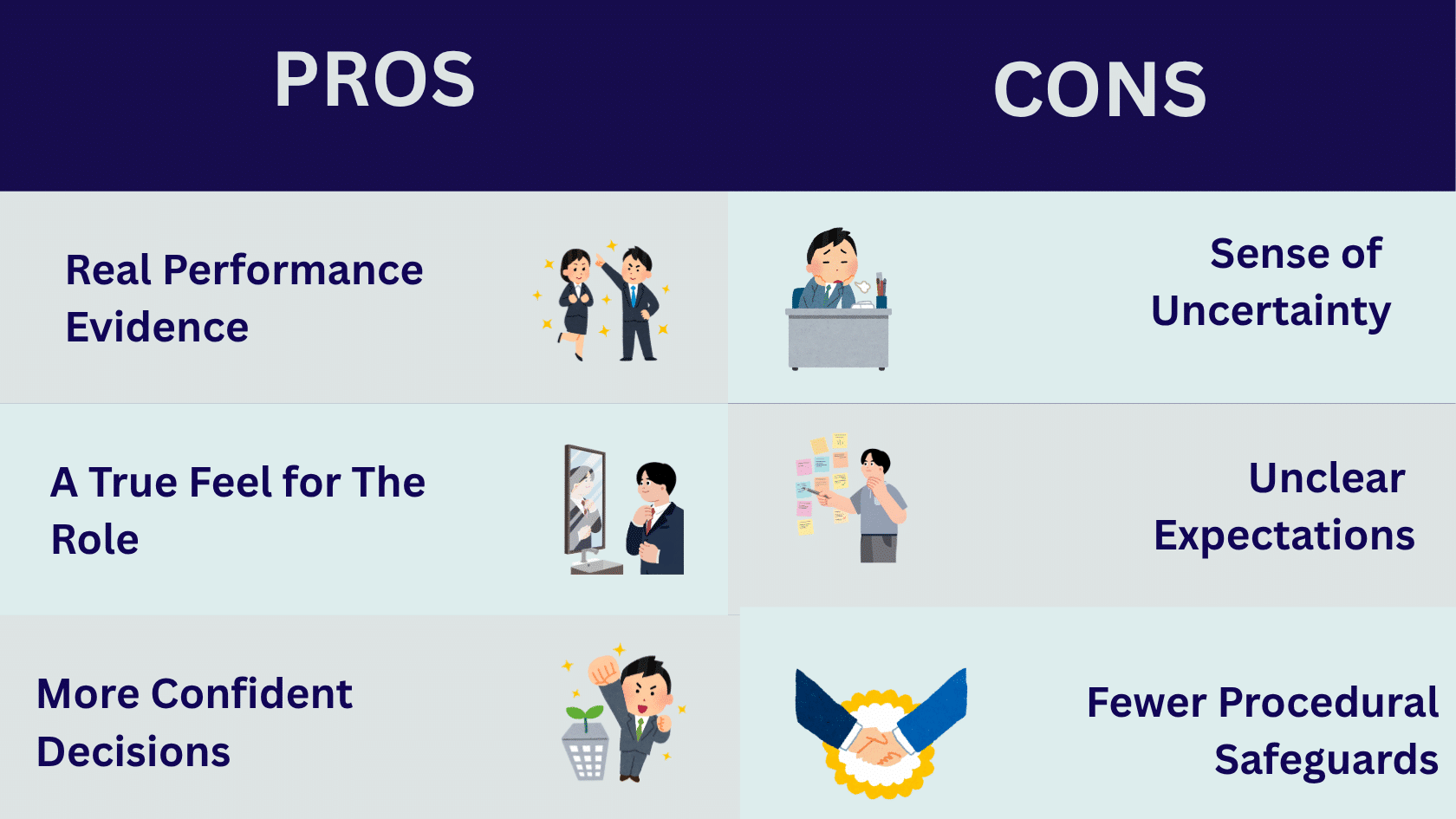
A probation period can benefit both employers and employees by creating a review phase before long-term decisions are made. However, it may also create uncertainty if expectations and communication are not handled properly.
Pros:
- Employers get real evidence of an employee’s skills, work quality, and daily conduct before making a long-term commitment.
- Employees get a genuine feel for the job, the team, and the workplace culture before deciding to stay long-term.
- Regular check-ins during this stage catch performance issues early, when they are easier to address.
- Both sides make a more confident final decision once the review window closes.
Cons:
- Employees often feel less settled during probation, since the role is not yet fully confirmed.
- Without written expectations, employees may not know exactly how their performance is being measured.
- Probationary status can mean fewer procedural steps if an employer decides to end the employment relationship.
- Without a standardized review process, managers may apply different standards to different employees.
Knowing these benefits and concerns helps both sides prepare for the probation process with realistic expectations.
Alternatives and Outcomes: What Comes After Probation
Not every company sticks to a traditional probation model. Some use structured onboarding programs with training and mentorship instead of a fixed pass-or-fail window, while others rely on trial projects or short assessments before a long-term offer, or continuous performance reviews that replace a single evaluation stage with ongoing feedback.
For companies that do use a standard probation period, it typically closes with one of three outcomes. Successful completion means the employee meets expectations and moves forward under standard employment terms.
An extension comes into play when an employer needs more time, and it is only valid if the original contract or policy allows it, paired with a clear new review date.
Employment separation happens when performance falls short, usually with fewer procedural steps than a standard termination, since probationary status carries reduced appeal rights
Final Takeaway
A probation period is best understood as a structured evaluation window that addresses the basic question of what it is, not a stretch of time when workplace rights disappear.
Whether you are hired into a private company or a federal role, the rules regarding a probationary period depend on written policy, applicable law, and clear communication between the parties.
Employees who ask questions early and employers who put expectations in writing tend to get through this stage with far fewer surprises.
Have you gone through a probation period that felt unclear, or one that was handled well? Share what worked or what you wish had been explained better in the comments below.
Frequently Asked Questions
Do Employees Receive Benefits During Probation Periods?
Benefits during probation depend on employer policies and applicable laws. Some companies provide health coverage, paid time off, or other benefits immediately, while others may delay certain benefits if allowed. Employees should review their offer letter and benefits documents to confirm eligibility dates and requirements.
Can Employers Extend A Probation Period?
Employers may extend a probation period if the original agreement or company policy permits it. Any extension should be communicated before the initial period ends, along with updated expectations and a revised review timeline, so employees understand the reason for the additional evaluation time.
Can Employees Request Workplace Accommodations During Probation?
Yes. Employees on probation can request reasonable accommodations when covered by applicable laws. Employers must review these requests properly and cannot ignore legal responsibilities or deny protections simply because an employee is still within the probation period.





One Response