

Not sure what “PIP” means when you hear it at work or in conversations? It can feel confusing because the term is used in different ways depending on the context.
In most workplaces, what PIP stands for becomes important when performance issues come up. It usually refers to a structured process to help improve work performance, not just criticism.
Understanding it clearly can reduce stress and avoid misunderstandings. It also helps you know what to expect if it comes up in your job.
You’ll get a clear view of PIP, how the process unfolds at work, and why it is an important part of employee development.
What Does “PIP” Stand for in the Workplace?
In a workplace context, PIP stands for Performance Improvement Plan. It is a formal process used when an employee is not meeting expected performance standards.
A PIP is designed to address specific performance concerns in a structured way. It helps set clear expectations, goals, and a defined timeline for improvement.
Rather than being only criticism, a PIP also includes support from the employer.
This may involve feedback, guidance, and measurable targets to help the employee improve.
What Should a PIP Form Include?
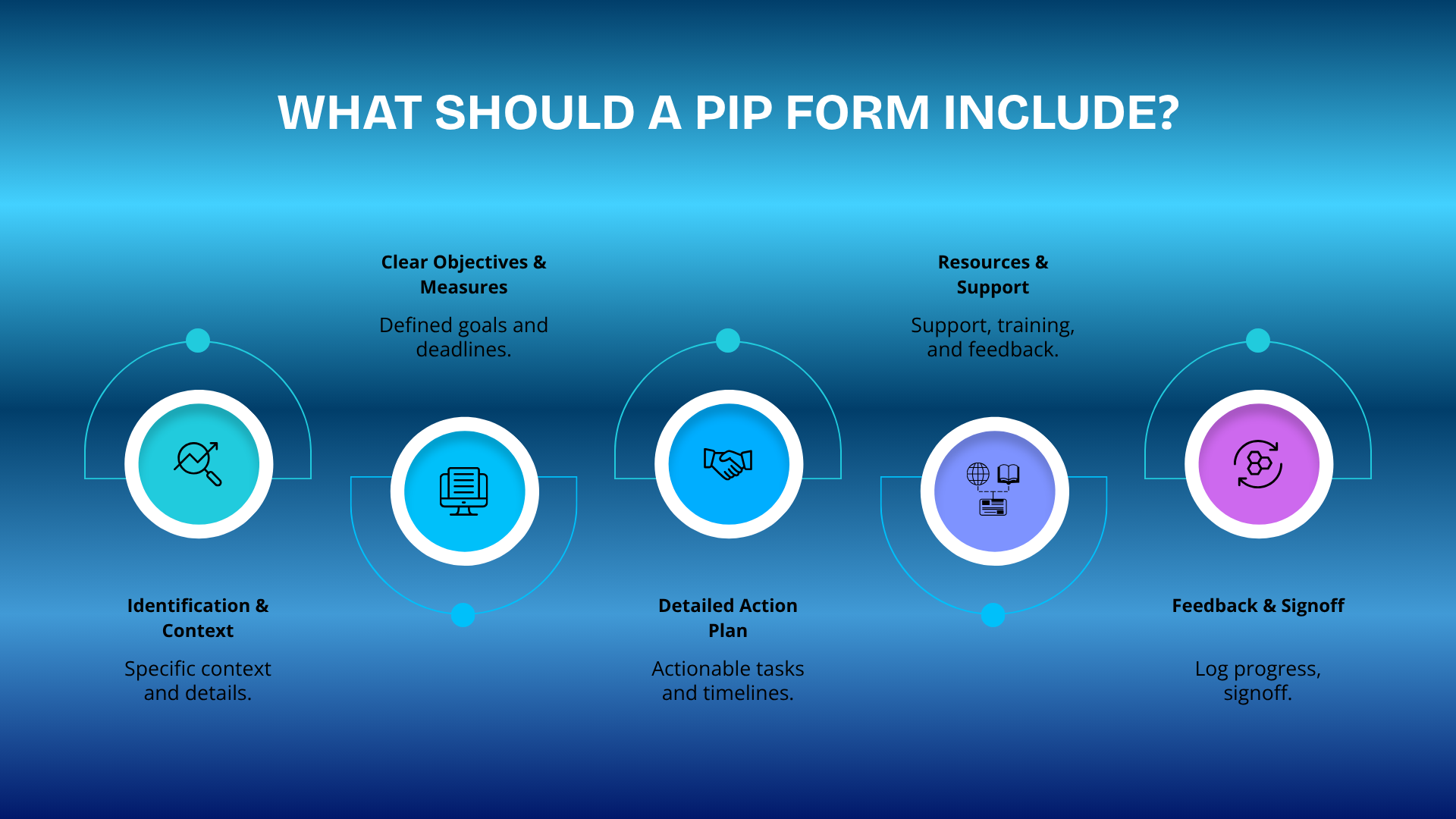
A well-structured PIP form should capture all the essential details needed to guide the employee through the improvement process in a clear, transparent, and fair manner.
It acts as a formal reference point for both the employee and manager, ensuring nothing important is left open to interpretation.
- Employee and role details: Name, designation, department, and manager’s name
- Performance concerns: Specific areas where performance is falling short, backed by examples
- Improvement goals: Clear, measurable objectives the employee needs to achieve
- Timeline: A defined period for improvement (commonly 30, 60, or 90 days)
- Support and resources: Training, tools, or guidance the employer will provide
- Sign-off section: Space for both employee and manager acknowledgment
A complete PIP form removes ambiguity, offering a clear roadmap and a consistent, documented process for everyone involved.
Why Do Employers Use a PIP?
Employers use a PIP when performance issues persist despite informal feedback to add structure rather than leave things vague.
Common triggers include missed deadlines, inconsistent quality, and difficulty meeting core responsibilities. Repeated feedback without improvement is another key sign.
These patterns show that informal support alone isn’t driving change, so a formal process becomes necessary.
A PIP aims to bring clarity, not surprise, by setting clear expectations and providing a structured opportunity to improve.
How Does a PIP Process Work?
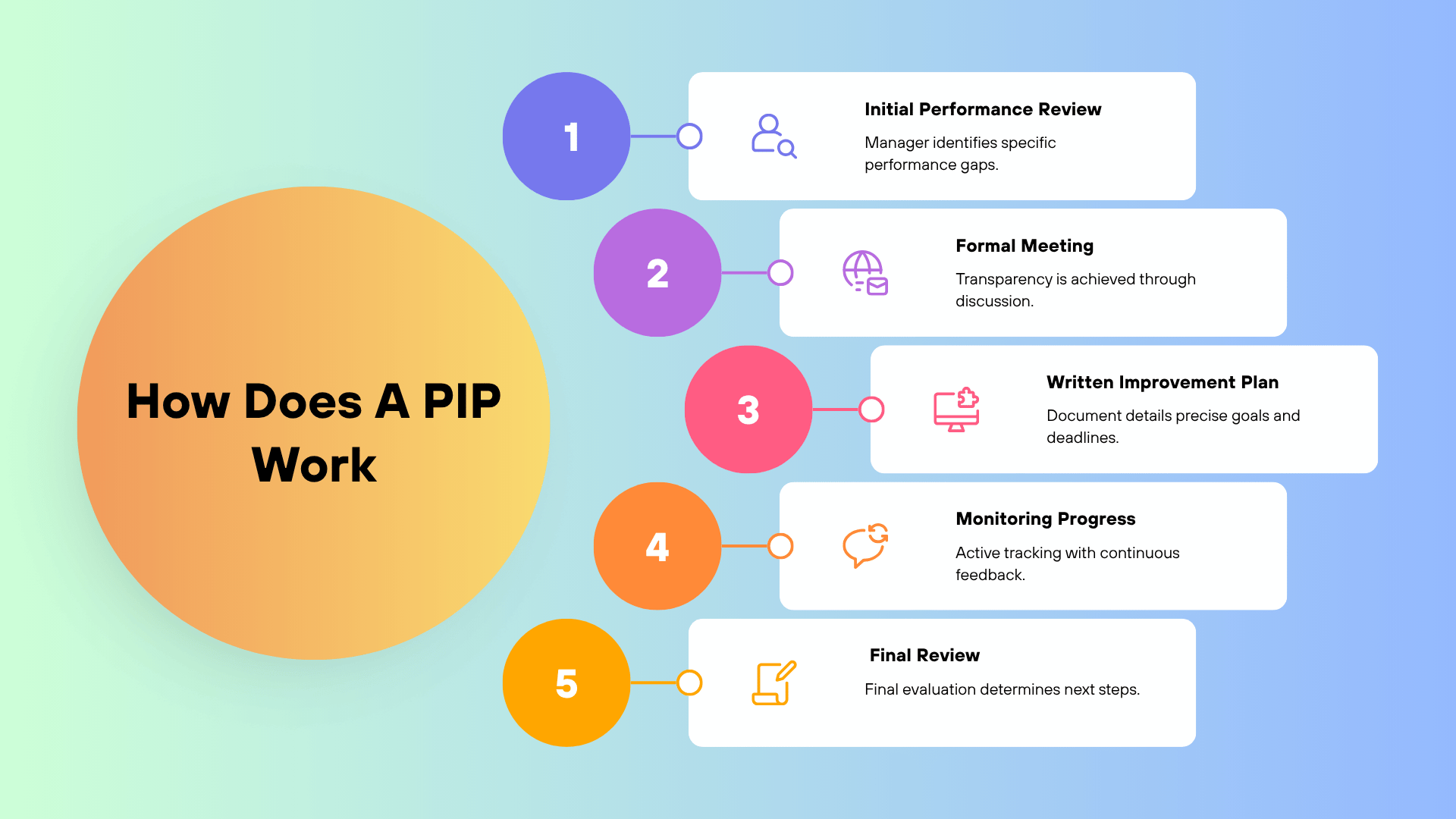
A Performance Improvement Plan usually follows a structured process so both the employee and employer understand expectations clearly.
1. Initial Performance Review
A Performance Improvement Plan begins with an initial performance review. At this stage, the manager carefully identifies where performance is falling short.
They gather specific examples, evidence, or patterns to support their concerns. This ensures the discussion is based on facts rather than assumptions.
2. Formal Meeting
The employee is formally informed of the performance concerns, and the initiation of a Performance Improvement Plan (PIP) is clearly communicated.
This step ensures transparency around the issues being addressed.
During this stage:
- The PIP process is explained in detail
- Performance expectations are clearly outlined
- The manager and employee discuss concerns openly
- Both parties confirm mutual understanding of the issues
This ensures the employee enters the process with complete clarity on what’s expected, why the concerns have been raised, and what a successful path forward looks like.
3. Written Improvement Plan
A formal document is created as part of the Performance Improvement Plan (PIP) process.
This document clearly outlines what is expected from the employee going forward.
It includes what needs improvement and what success will look like in measurable terms. It also sets deadlines for improvement and details the available support and resources.
4. Monitoring Progress
During this stage, the employee works toward the PIP goals with a focus on steady, measurable improvement, while the manager closely monitors progress to keep the plan on track.
Key elements of this stage include:
- The employee focuses on meeting the specific, agreed-upon goals
- Progress is tracked through regular meetings or check-ins
- The manager provides ongoing feedback and support
- Adjustments or guidance are offered if the employee faces challenges
These regular touchpoints keep the employee accountable while ensuring they have the support and feedback needed to succeed during the PIP period.
5. Final Review
At the end of the PIP period, the employer reviews the employee’s performance against the agreed goals.
This evaluation determines whether the required level of improvement has been achieved.
Based on the results, the employer decides the next steps. This may include continuing in the role successfully or taking further action depending on performance outcomes.
What Happens After a PIP?
The final outcome of a PIP largely depends on whether the employee meets the agreed performance goals within the specified review period, as well as the level of improvement and consistency demonstrated throughout the process.
Possible outcomes include:
- Successful completion and return to normal performance expectations
- Extension of the PIP for more time and support
- Role changes or reassignment (in some cases)
- Employment termination if performance does not improve
While this can sound serious, many employees do successfully complete a PIP when expectations are clear and support is used effectively.
What Should You Do if You Are Placed on a PIP?
Being placed on a PIP can feel stressful, but it is important to treat it as a clear roadmap for improvement.
| Helpful Step | What It Means | Why It Matters |
|---|---|---|
| Read the plan carefully | Understand all expectations in the PIP | Keeps focus clear and avoids mistakes |
| Ask for clarification | Check anything unclear with your manager | Prevents misunderstandings |
| Communicate regularly | Stay in touch during check-ins | Ensures alignment and support |
| Track your progress | Monitor improvements against goals | Helps measure performance clearly |
| Focus on steady improvement | Aim for consistent progress | Reduces pressure and improves results |
Conclusion
Understanding what a Performance Improvement Plan means can make a stressful situation feel much clearer and more manageable.
It is not only about identifying performance gaps but also about creating a structured path for improvement. When used properly, it helps set expectations, offers support, and gives employees a fair chance to grow in their role.
In most cases, knowing what does pip stand for helps you respond with confidence rather than confusion. The key is to stay engaged, follow the plan, and focus on steady progress.
Want more simple workplace breakdowns like this? Read our latest guides to stay informed and prepared for every career situation.
Have thoughts or questions? Drop them in the comments below.
Frequently Asked Questions
Is a PIP the Same as Being Fired?
No, a PIP isn’t the same as being fired; it’s a warning and improvement process. However, if performance doesn’t improve, termination may follow in some cases.
Does a PIP affect future job references?
Not directly, since PIPs are internal records, but a resulting termination could still influence future references.
Can you pass a Performance Improvement Plan?
Yes, many employees successfully complete a PIP by meeting the set goals, showing consistent improvement, and engaging with the feedback provided.