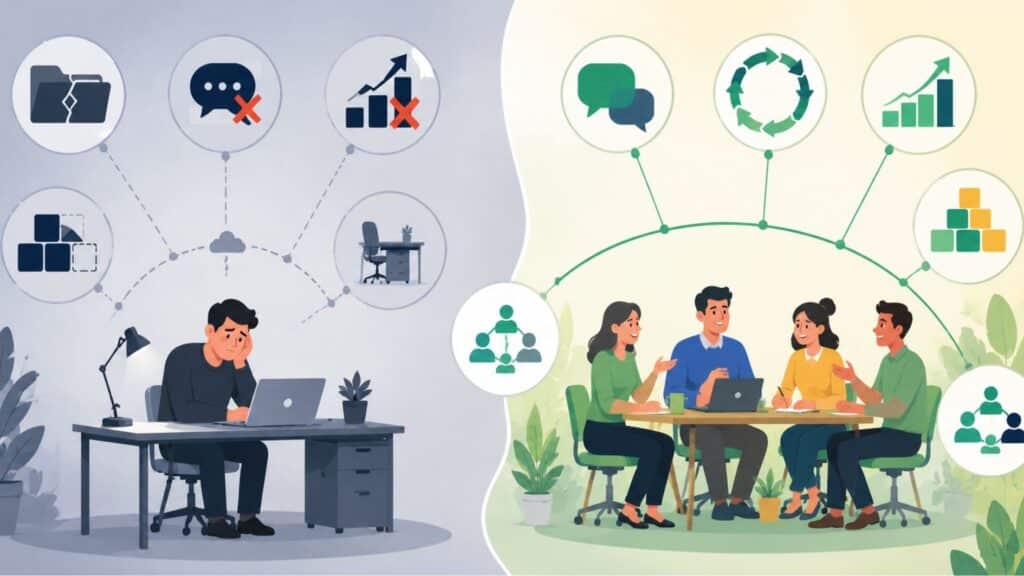


Most teams assume poor performance stems from disengaged employees, but that’s rarely the full story.
The real problem runs deeper: missed deadlines, unclear goals, and workflows that nobody owns. When processes break down, even the most capable teams lose track of priorities and fall behind.
That’s where performance management systems come in.
The right system gives organizations the structure they need to align goals, track progress, and get work moving again without the confusion.
This blog covers the best options out there and explains how they help businesses fix what’s actually broken.
What are Performance Management Systems?
A performance management system is a structured framework that organizations use to evaluate, track, and improve employee performance over time.
Think of it as a coach for your business, setting direction, providing feedback along the way, and keeping everyone focused on the same outcome.
Importantly, a performance management system includes both the strategic framework and the software that brings those processes to life, making them more efficient, scalable, and data-driven.
Three Core Components of Performance Management Systems
Every effective performance management system is built around a few core elements that help employees and businesses stay aligned.
1. Goal Alignment: Individual goals are clearly connected to team and company objectives, so employees understand how their work contributes to broader outcomes
2. Continuous Feedback: Regular check-ins, peer reviews, and manager conversations replace the once-a-year review cycle with something more responsive and useful
3. Performance Data and Analytics: Structured data on goals, feedback, and reviews gives leaders the insight to make fair, informed decisions about talent, compensation, and development
Types of Performance Management Systems
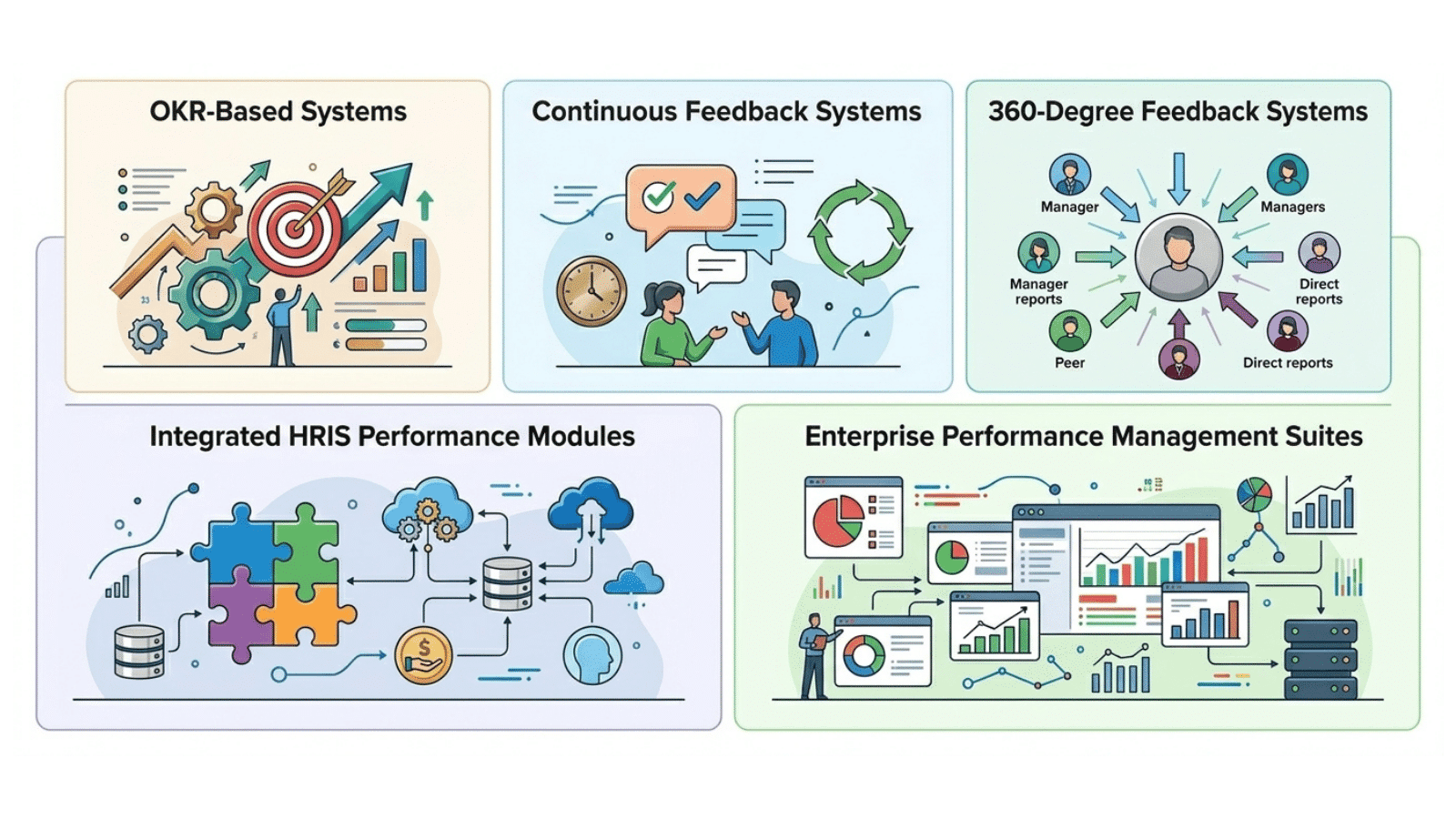
Not every organization needs the same kind of system. Understanding the different types helps you narrow down what actually fits your team’s structure and goals.
1. OKR-Based Systems
OKR stands for Objectives and Key Results. These systems are built around setting ambitious goals at every level of the organization, company, team, and individual, and tracking measurable progress toward them.
Best for organizations operating in fast-moving environments that want a clear line of sight between daily work and strategic outcomes.
Tools like Lattice, 15Five, and Leapsome all have strong OKR functionality built in.
2. Continuous Feedback Systems
These platforms prioritize ongoing, real-time feedback over formal review cycles.
Instead of waiting for an annual appraisal, managers and peers provide regular feedback through check-ins, pulse surveys, and 1:1 meeting tools.
The goal is to make performance conversations a daily habit rather than a once-a-year event. Culture Amp and 15Five are purpose-built for this model.
3. 360-Degree Feedback Systems
360-degree systems collect performance input from multiple sources, the employee themselves, their direct manager, peers, and sometimes even direct reports or external stakeholders.
This provides a more complete and balanced view of performance than a single top-down evaluation can. Most enterprise platforms, including HiBob, Leapsome, and PerformYard, support 360-degree review cycles.
4. Integrated HRIS Performance Modules
Rather than a standalone tool, some organizations opt for performance management as a module within their broader HRIS platform.
This approach keeps all people data, payroll, onboarding, goals, reviews, and compensation in a single system, reducing integration complexity and giving HR a unified view of each employee.
5. Enterprise Performance Management Suites
These are large-scale, highly configurable platforms designed for complex organizations with thousands of employees across multiple regions.
They cover the full performance lifecycle, goal management, continuous feedback, calibration, succession planning, compensation, and integrate across the entire HR and finance technology stack.
Top Performance Management Systems
Performance management has evolved from yearly reviews into a continuous, data-driven process focused on growth and alignment. Here are the leading platforms worth evaluating:
1. Lattice
Lattice is a people-first performance management platform that combines reviews, goal tracking, continuous feedback, and career development into a single tool.
It’s particularly strong for organizations that want to build a culture of regular feedback and employee growth alongside structured review cycles.
It is best for people-first companies focused on culture, development, and engagement
2. 15Five
15Five is built around the idea that performance improves through consistent, lightweight check-ins rather than heavy annual reviews.
It combines weekly check-ins, OKR tracking, 1:1 meeting tools, and performance reviews, with a focus on making both manager and employee experiences simple and habit-forming.
3. Culture Amp
Culture Amp combines performance management with employee engagement surveys and manager coaching capabilities.
Its Skills Coach feature delivers micro-learning to help managers develop leadership skills alongside the performance review process.
Culture Amp’s focus on behavioral science and people analytics makes it ideal for organizations prioritizing manager effectiveness and employee growth.
4. Leapsome
Leapsome is a flexible performance management platform that supports competency frameworks, goal setting, 360-degree reviews, and learning integration.
It allows organizations to build detailed competency frameworks that guide performance reviews, goal setting, and employee development, with AI-generated options and extensive customization.
5. PerformYard
PerformYard focuses on maximum flexibility in performance review design.
It supports custom review cycles, from quarterly check-ins to project-based evaluations, and includes an AI Review Assist tool that helps streamline review writing and analysis.
It’s a strong choice for organizations that have specific, non-standard review structures. It is best for organizations that need highly customizable review processes without a large platform overhead
6. ClearCompany
ClearCompany uses predictive analytics to make performance management future-focused.
Its ClearInsights AI provides actionable talent insights, while custom reviews, goal alignment tools, and collaboration workspaces keep managers and employees connected.
It’s strong for organizations that want to link performance data directly to succession planning and workforce strategy.
Performance Management System Vs Performance Review
Although often used interchangeably, a performance review and a performance management system serve very different purposes. Here’s a clear comparison table:
| Aspect | Performance Review | Performance Management System |
|---|---|---|
| Definition | A single, scheduled evaluation of an employee’s performance | An ongoing process that manages and improves employee performance continuously |
| Timing | Occurs at specific intervals (annual, quarterly) | Continuous and year-round |
| Purpose | Assess past performance and provide formal feedback | Drive ongoing improvement, alignment, and development |
| Feedback Style | Periodic and often formal | Real-time, continuous, and dynamic |
| Components | Appraisal discussion, ratings, documentation | Goals, check-ins, feedback loops, development plans, analytics |
Tips to Choose the Right Performance Management System
Choosing the right performance management system depends on your company’s size, goals, workflows, and budget.
- Company Size: Small businesses often prefer BambooHR or 15Five, while mid-sized companies may benefit from Lattice, HiBob, or Leapsome. Larger enterprises usually require advanced systems such as Workday or SAP SuccessFactors.
- Main Business Need: Different tools focus on different strengths. Some specialize in OKR and goal tracking, while others are better for feedback management, employee engagement, or compensation planning.
- Integration Capabilities: Strong integration with HR, payroll, communication, and project management tools helps avoid manual work and disconnected data.
- Budget and Scalability: Free trials and pilot programs can help compare usability, reporting, and employee adoption before making a long-term investment.
It’s a Wrap
A well-implemented performance management system isn’t just an HR tool; it’s a business strategy.
It keeps your people aligned, gives your managers the data to lead effectively, and creates a transparent, feedback-rich culture that retains your best employees.
Start with your biggest performance management pain point, shortlist two or three tools from the list above, request demos, and check reviews.
Save this blog for later if you’re planning to improve your company’s performance management process or evaluate new systems in the future.
Frequently Asked Questions
What are the 4 Pillars of Performance Management Systems?
The four main pillars of a performance management system are planning, monitoring, reviewing, and rewarding. These stages help businesses track employee goals, progress, performance, and recognition.
What are the 5 C’s of Performance Management?
The 5 C’s are Clarity, Context, Consistency, Courage, and Commitment. Together, they help create stronger communication, fair evaluations, and better team performance.
What are the 4 Phases of Performance Management?
The four phases of project management are initiation, planning, execution, and closure. These phases guide a project from the initial idea through completion and evaluation.