
Workplace issues can become harder to manage when important details are not properly documented. A clear record helps employers track incidents, explain decisions, and maintain consistency during employee discussions.
An employee write up form provides a structured way to document workplace concerns, performance issues, policy violations, and corrective actions. It helps managers record facts, capture employee responses, and maintain accurate records for future reference.
The sections below explain what an employee write-up form includes, how it is structured, common formats, and best practices for proper documentation.
Meaning and Purpose of Employee Write-Up Form
An employee write-up form is a workplace document used to officially record concerns related to employee behavior, performance, attendance, or policy violations. It provides a written record of what happened, when it occurred, and what steps were taken afterward.
The main purpose of this form is to provide clear documentation to support fair workplace decisions. It helps managers communicate expectations, record corrective actions, and track improvements over time.
Unlike informal conversations, written communication provides a consistent reference for both employers and employees. It ensures that important details, employee responses, and follow-up actions are documented in a clear format for future review.
What Can an Employee Be Written Up For?

Employee write-ups are used when workplace behavior, performance, or policy adherence falls below expected standards. They help document issues clearly and set expectations for correction.
- Absenteeism and Tardiness: Frequent late arrivals, early departures, or unapproved absences that disrupt workflow or team schedules.
- Sexual Harassment: Any inappropriate behavior, comments, or actions that create a hostile or unsafe work environment.
- Insubordination: Refusing to follow lawful instructions or showing disrespect toward managers or supervisors.
- Poor Behavior: Unprofessional conduct, workplace conflicts, or actions that negatively impact team morale.
- Low Productivity or Poor Work Quality: Consistently missing targets, producing incomplete work, or failing to meet expected standards.
- Dress Code Violations: Failure to follow company dress guidelines or, where applicable, required uniform standards.
- Acceptable Use Violations: Improper use of company devices, internet access, email, or internal systems.
- Substance Use Issues: Being under the influence of drugs or alcohol during work hours or on company premises.
These categories are typically documented using an employee write-up form to maintain a clear record of incidents and corrective actions.
Core Elements of Employee Write-Up Form
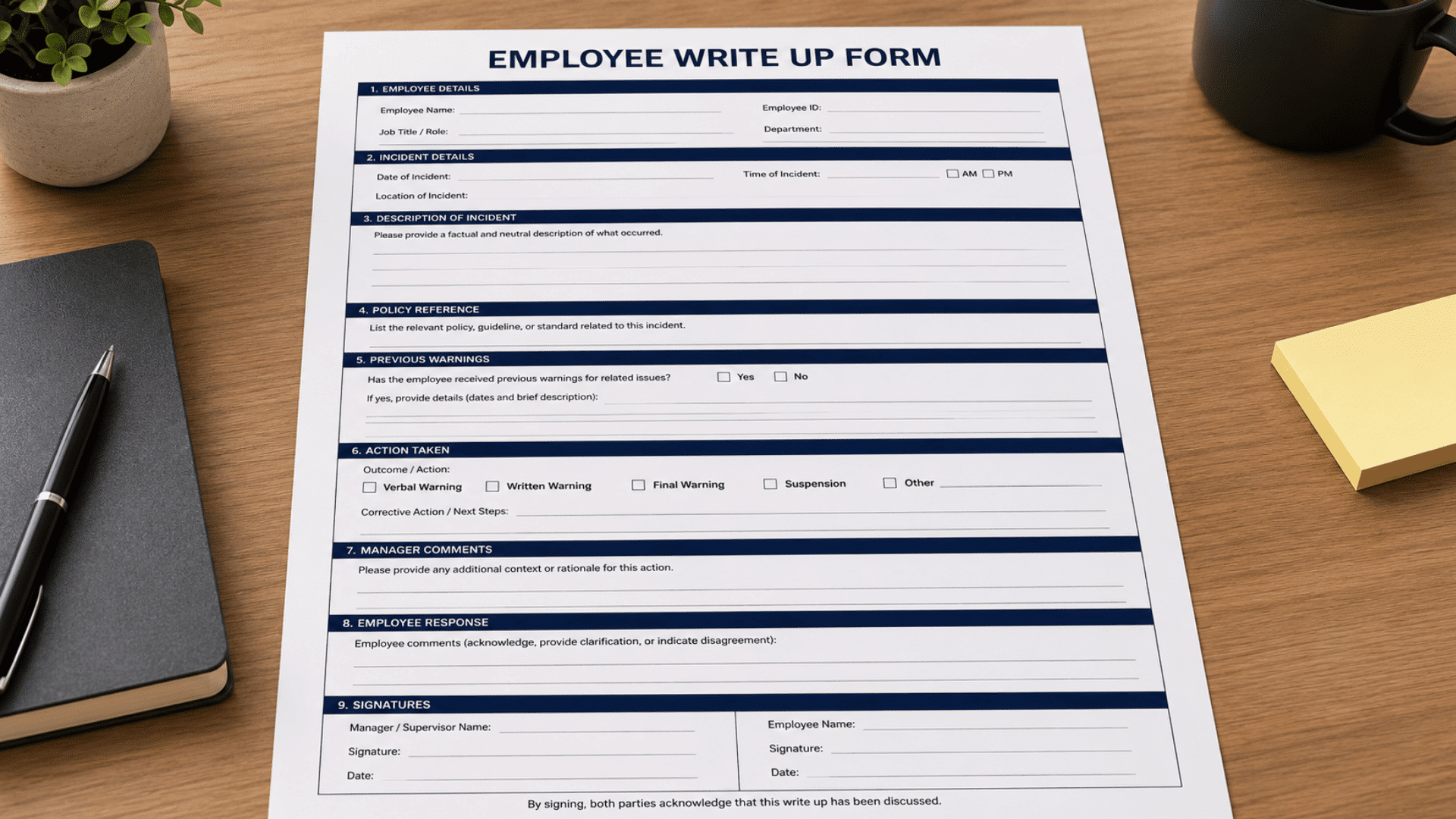
Most formats follow a structured layout to keep documentation precise and easy to review. Each section serves a specific purpose in capturing the full context of an incident.
1. Employee Details
This section records the employee’s basic information to identify the person connected to the write-up. It helps maintain accurate records and prevents confusion when multiple employees or departments are involved.
- Employee name
- Employee ID
- Job title or role
- Department or team
2. Incident Details
This section captures the key information about when and where the workplace concern occurred. It creates a clear record of the event timeline and location for future reference.
- Date of incident
- Time of incident
- Location of incident
3. Description of Incident
This section explains the workplace concern by recording the specific details of what occurred. It should focus on factual information rather than assumptions or personal opinions.
- Specific actions or behaviors involved
- Relevant circumstances
- Results or impact of the incident
4. Policy Reference
This section connects the documented issue with the relevant workplace rule, policy, or standard. It helps show which expectation or requirement relates to the concern.
- Applicable policy name
- Employee handbook reference
- Related workplace standard
5. Previous Warnings
This section documents earlier discussions or corrective actions related to similar concerns. It provides background information when reviewing repeated issues or ongoing performance matters.
- Previous verbal warnings
- Written notices
- Earlier corrective discussions
6. Action Taken
This section records the response decided after reviewing the incident and related information. It outlines the corrective steps and expectations set for the employee.
- Type of warning issued
- Corrective steps required
- Expected improvement timeline
7. Manager Comments
This section gives the supervisor space to add additional details about the incident and the decision made. It can include observations, context, or follow-up notes.
- Additional observations
- Relevant context
- Follow-up details
8. Employee Response
This section allows the employee to provide their explanation or perspective regarding the documented concern. It ensures that their comments are included in the record.
- Explanation of events
- Additional comments
- Clarifications or disagreements
9. Signatures
This section confirms that the write-up document was reviewed by the employee and supervisor. Signatures acknowledge receipt of the document but do not always indicate agreement with its contents.
- Manager or supervisor signature
- Employee signature
- Date of acknowledgment
Structural Flow for a Standard Employee Write-Up Form: Employee Details → Incident Summary → Policy Reference → Supporting Notes → Action Taken → Employee Acknowledgment → Final Signatures
Ideal Employee Write-Up Form Template
The following employee write-up form template provides a structured format for documenting workplace incidents, employee details, corrective actions, and responses.
It can be adjusted based on an organization’s specific documentation needs and internal procedures.
|
Employee Name: [Enter the employee’s full name.] Employee ID: [Enter the employee identification number, if applicable.] Job Title/Role: [Enter the employee’s current job title or position.] Department: [Enter the department or team name.] Supervisor/Manager Name: [Enter the name of the supervisor or manager handling the review.] Date of Incident: [Enter the date when the incident occurred.] Time of Incident: [Enter the time when the incident occurred.] Location of Incident: [Enter where the incident took place.] Description of Incident: [Describe the incident, including relevant facts, actions, and outcomes.] Policy Reference: [List the related workplace policy, rule, or guideline.] Previous Warnings: [Include any previous discussions, warnings, or notices related to the concern.] ☐ Yes ☐ No Action Taken: ☐ Verbal Warning Manager Comments: [Add any additional notes or context from the supervisor.] Employee Response: [Allow the employee to provide comments, clarification, or their response.] Signatures: Manager Signature: _________________________________ Employee Signature: _________________________________ |
| Download the free Employee Write-Up Form as a PDF and use it to document workplace incidents with clarity and structure. |
Format Variations in Practice
Employee write-up forms are used across HR systems in various formats, depending on workflow, accessibility, and approval needs. Each format supports a different level of control and record handling across teams.
- PDF Form: Fixed layout for consistent record-keeping and easy distribution.
- Word Document: An editable structure that allows adjustments to meet internal HR requirements.
- Digital eSign Form: Online approval process with timestamped acknowledgment for faster documentation.
- Printed Form: Physical record option used for on-site or field-based HR handling.
Different formats offer varying levels of control, access, and documentation speed, depending on how the organization manages HR records.
Best Practices for Creating and Presenting Write-Up Forms
A properly prepared write-up form should adhere to consistent documentation practices while ensuring accuracy, fairness, and the appropriate handling of employee information.
- Use Clear Language: Describe incidents, expectations, and actions with specific facts rather than vague or opinion-based statements.
- Follow Workplace Policies: Review company rules and consult HR as needed to ensure the process adheres to internal procedures.
- Include Support Options: Mention available resources such as training, coaching, or improvement plans when corrective action is required.
- Maintain Confidentiality: Share write-up details only with relevant individuals, including the employee, manager, and authorized HR personnel.
- Record Employee Feedback: Allow employees to provide their explanation or response as part of the documentation.
- Complete Follow-Ups: Review progress after corrective actions to confirm expectations are being met.
Following these practices helps create consistent records while maintaining fairness, accountability, and professional workplace communication.
Legal and Compliance Considerations
Employee write-up forms may become part of official employment records and can be reviewed during audits, disputes, or internal evaluations.
| Compliance Area | Best Practice |
| Fact-Based Reporting | Document specific events, actions, and details without assumptions or unsupported claims. |
| Neutral Language | Use professional wording focused on workplace behavior and documented facts. |
| Employee Acknowledgment | Record confirmation through signatures or digital acknowledgment when required. |
| Secure Storage | Protect records with proper access controls and confidentiality measures. |
| Consistent Application | Apply workplace standards equally to ensure fair treatment for all employees. |
Following these practices helps organizations maintain accurate records and support consistent workplace documentation procedures.
Common Mistakes in Employee Write-Up Forms
Errors in documentation can reduce the clarity of a write-up and create confusion during future reviews or workplace discussions. Common mistakes include:
- Using Vague Descriptions: Writing general statements without explaining specific actions, behaviors, or outcomes makes the record unclear.
- Missing Important Details: Leaving out dates, times, locations, or other key facts can make incidents difficult to verify.
- Ignoring Policy References: Failing to connect the issue with a workplace rule or guideline weakens the purpose of the documentation.
- Including Personal Opinions: Using emotional or judgment-based language rather than factual observations can compromise fairness and accuracy.
- Skipping Employee Feedback: Leaving the response section incomplete prevents employees from sharing their perspective or clarification.
Closing Views
Clear documentation helps organizations manage workplace concerns with consistency and fairness. Without proper records, important details can be misunderstood during employee reviews, audits, or future discussions.
An employee write up form provides a structured way to record incidents, employee responses, and corrective actions in one place.
It helps managers maintain accurate information while ensuring employees understand expectations and follow-up steps.
Using a consistent documentation process supports better communication, accountability, and informed workplace decisions.
Have thoughts on write-up practices in your workplace? Drop them in the comments below.
Frequently Asked Questions
How Many Write-Ups Before Being Fired?
In the United States, there is no federal law requiring a specific number of write-ups before termination. Employers can terminate employees at any time in most states under at-will employment rules, as long as the termination is not based on illegal discrimination or retaliation.
What Not to Say when Being Fired?
When conducting a termination, keep the conversation brief, direct, and factual. Avoid making it a debate. Say exactly what is happening, but leave no room for negotiation.
What Should an Employer Never Say to An Employee?
An employer should never make discriminatory remarks, harass an individual, breach legal confidentiality, or invalidate an employee’s feelings.