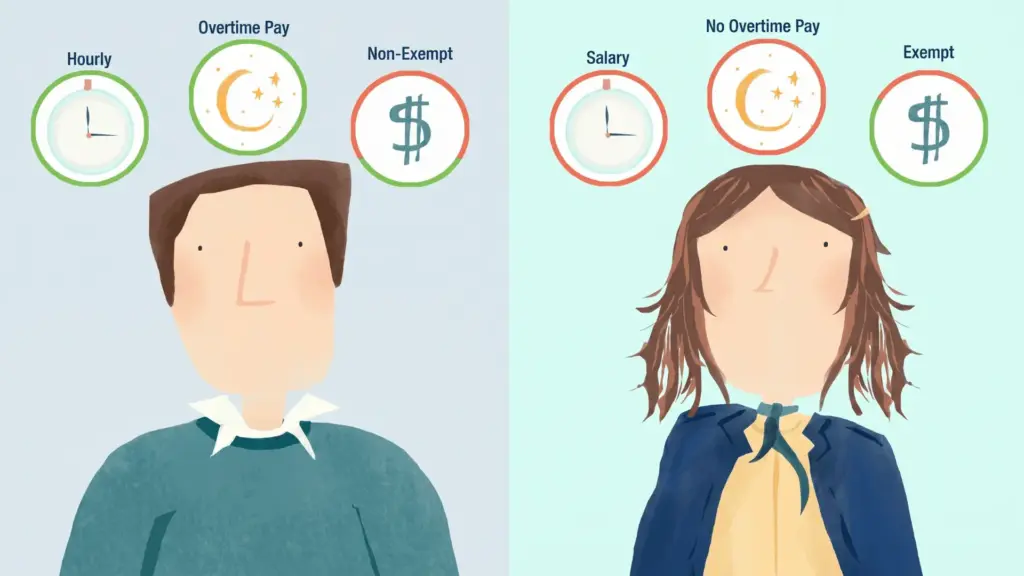


Hiring someone? At some point, you have to decide: employee or contractor. That one word shapes your taxes, your paperwork, and your legal exposure for as long as the relationship lasts.
Most employers assume a signed contract settles it. It doesn’t.
So what are the rules for 1099 employees? That’s exactly what this blog walks through, test by test, so you know where you stand before you hire.
What are the Rules for 1099 Employees?The rules come from two federal agencies, and each one is protecting something different. The IRS protects tax money. The DOL protects wages. Both agencies ignore the contract. They look at how the work actually happens: who’s in charge, who takes the financial risk, and how independent the worker really is. Most reviews start with someone else raising a flag, a worker, a competitor, or a routine audit, and once that happens, the burden falls on the business to prove the classification was right. |
How Does the IRS Define Worker Status?
The IRS test runs on three factors, and no single one decides the case alone. The agency lays this out in its own common-law guidance, weighing all three together to see who really controls the work.
Behavioral Control
The IRS checks whether the business dictates the exact steps, not just the end result. Detailed, ongoing instructions point toward employee status.
Company-provided training on internal methods is another sign. Contractors are expected to bring their own way of working.
Regular evaluations of how the job got done, not just the outcome, add to that signal. Close, ongoing oversight reads as behavioral control.
Financial Control
Contractors typically invest in their own equipment and workspace before a project starts. That upfront cost is a sign of financial independence.
Their earnings can rise or fall based on how they manage the job, and a worker who can lose money looks more like a business owner than an employee.
Type of Working Relationship
Benefits like health insurance or paid leave, plus an open-ended relationship with no clear end date, both point toward employment. Work central to what the business sells adds to that signal.
A written contract can say either thing, but the IRS looks past it. The daily reality decides the outcome, not the paperwork.
What Test Does the DOL Use to Define Workers?
The DOL runs an “economic reality” test under the FLSA: is this worker running their own business, or leaning on yours for a paycheck?
Current as of July 2026: the 2024 six-factor rule below is unenforced since May 2025, and a leaner 2026 rule (control and profit or loss as core) is proposed but not final. Confirmed on the DOL’s own rulemaking page and press release.
- Profit or loss: Can the worker negotiate rate, take on more clients, lose money on a bad job? That’s contractor territory. Same pay no matter what happens looks like staff.
- Investment: Not just whether the worker owns tools, but how that stacks up against what the company has put in. Scale relative to the business is what the DOL actually weighs.
- Permanence: One defined project reads different from three years on retainer with no end date. The longer and more open-ended, the more it looks like employment.
- Control: Who sets the hours and picks the tools? Real independence means the company owns the outcome, the worker owns the process. This even raises questions like whether it’s legal to work 7 days a week.
- Skill and initiative: Skill alone doesn’t make someone a contractor. Running an independent business with that skill does; other clients, own rates, own pitch.
- Integration: Core to what the company sells (the only developer at a software firm) leans employee. Peripheral to the main business leans contractor.
IRS vs. DOL: What’s Different
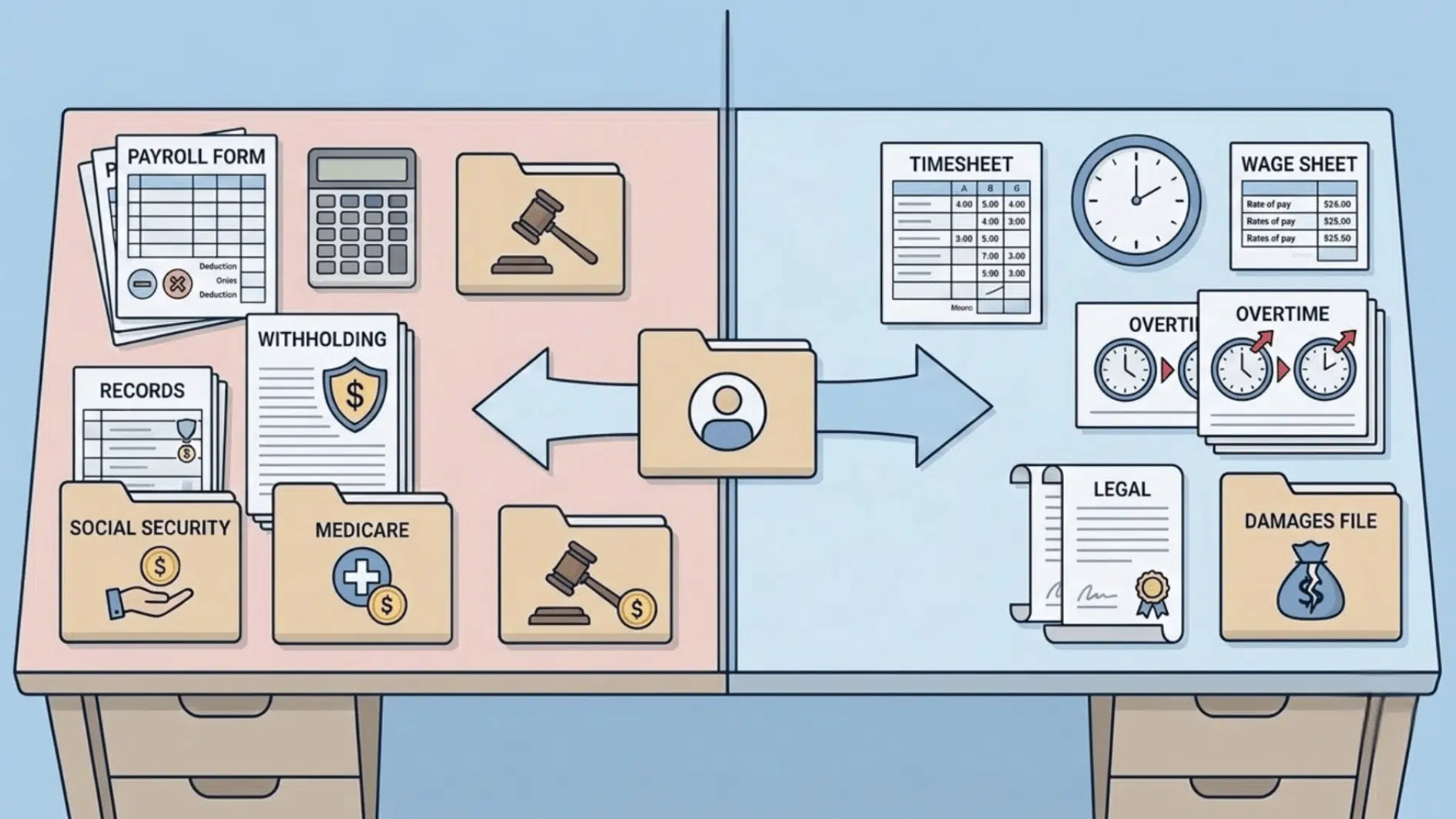
Clearing the IRS test doesn’t mean the DOL test comes out the same way. Here’s what each one actually looks for, and what pushes a worker toward employee status vs. contractor status.
| Category | IRS Test | DOL Test |
|---|---|---|
| Purpose | Tax withholding | Wage and overtime rights |
| Core question | Who controls the work? | Is the worker economically independent? |
| How status gets confirmed | IRS audit, or a Form SS-8 ruling | DOL Wage and Hour Division investigation, or a private lawsuit |
| What a “fail” costs you | Back payroll taxes, Social Security, and Medicare | Back overtime and minimum wage, plus liquidated damages |
| Governing law | Internal Revenue Code | Fair Labor Standards Act, 2024 rule on the books but unenforced, 2026 rule proposed and not yet final |
How to Spot Independent Contractor Misclassification?
Most misclassification isn’t intentional. It builds up from small habits that make a contractor look like staff.
Set schedules, a company email login, and employer-owned equipment are common patterns. A steady paycheck on a fixed schedule, rather than invoices tied to deliverables, is another.
Long, exclusive tenure with a single client and inclusion in internal meetings or performance reviews raise the same concern, as does an engagement with no written scope, where the work is ongoing rather than tied to a specific project.
None of these signs alone proves employee status, but a pattern of two or three together usually does.
What Should You Check Before Hiring a 1099 Contractor?
Getting the classification right before you sign anyone saves you from the harder job of unwinding it later, after the person has been on the job for months.
Score the Role Against Both Tests
Walk the actual day-to-day duties, not the job posting, through the IRS’s three factors and the DOL’s six. A role that looks like a contractor position on paper can still fail once you check what the person will really be doing.
Treat a Close Call as an Employee
When the answer isn’t obvious, the safer default is to hire as an employee, or request an official ruling from the IRS using Form SS-8 before you make an offer.
Put the Reasoning in Writing
Note down, at the time of hire, exactly why the role qualifies as a contractor position. If an agency asks two years from now, a dated explanation holds up far better than a recollection.
Paperwork Employers Need for 1099 Contractors
Hiring a contractor comes with its own paperwork trail, separate from payroll for employees. Missing a step here can trigger an IRS penalty on its own, regardless of how the worker is classified.
- Form W-9: Collect this before the first payment. It confirms the contractor’s name and tax ID. Businesses use their own FEIN instead of a Social Security number.
- Form 1099-NEC: File this by January 31 for any contractor paid $2000 or more in the year.
- Backup withholding: Withhold at a flat rate if a contractor won’t provide a valid tax ID.
- A written agreement: Spell out scope, payment terms, ownership of the work, and how either side can end the deal. Some contracts also add a non-solicitation agreement to stop departing contractors from poaching clients.
- Payment records: Keep contracts, invoices, and payment history in case an agency asks for proof.
How Should Employers Manage 1099 Contractors?
Judge the finished output, not the process, and leave scheduling and tool choices to the contractor, since company-set hours and required equipment blur the line toward employment.
Keep contractors off employee-only benefits and handbooks, since extending either implies an employment relationship.
Review long-term arrangements once a year, since exclusive, open-ended work drifts closer to employee status the longer it runs unreviewed.
What Happens If You Misclassify a Contractor?
Getting worker status wrong doesn’t stay a paperwork issue for long. Once an agency or worker files a claim, it turns into real financial exposure on several fronts.
- Back Wages: Unpaid overtime and minimum wage, plus interest.
- IRS Penalties: Back Social Security, Medicare, and unemployment taxes.
- Benefits Liability: Retroactive claims for health insurance or retirement plans.
- Enforcement Action: Audits and fines from the DOL, IRS, or state agencies. A misclassified worker can also learn how to sue a company directly.
- The Fix: Review the real working relationship, move the worker to payroll, and file Form SS-8 if the role is still unclear.
Wrapping It Up
Worker classification can shift as a working relationship changes. Both agencies judge it on real conditions, not titles.
Build contracts around results, let contractors control their own methods, and check in on long-term deals often. A little review now costs far less than a correction after an agency finds the problem first.
A consistent process protects you whether you’re hiring one contractor or fifty. It’s easier to defend a classification made carefully than one made in a hurry.
Frequently Asked Questions
Does Issuing a 1099 Make Someone an Independent Contractor?
No. A 1099 just reports payments. Status depends on how the work is actually controlled.
Does a Contractor Agreement Prove Worker Status?
Not alone. Agencies look past the contract to the real working conditions.
Can a Contractor Work Full-Time or Long-Term?
Yes, but the longer and more exclusive it gets, the more scrutiny it draws.
Can the Same Person Receive a W-2 and a 1099?
Yes, for genuinely separate roles. Mixing the two for the same duties raises red flags.
Do States Add Extra Rules Beyond the Federal Tests?
Yes. California and other states use an “ABC test” that assumes employee status unless proven otherwise.