


Hiring a lawyer usually starts with paperwork. Most of the time, that paperwork is a retainer agreement, and it can feel confusing the first time you see one.
You want to know what you are agreeing to before you sign anything. A vague clause today can turn into a billing dispute months later, and by then the money is already gone.
In this blog, you will understand what it is, how it works, and what to look for before you put your signature on it.
What is a Retainer Agreement?This agreement is a written contract between a lawyer and a client. It sets the terms of legal representation. It spells out the services the lawyer will provide. It also covers how fees are charged and what happens if either side wants to end the relationship. Most attorneys will not start work without one. The agreement protects both sides. You know the cost and scope upfront. The lawyer has a signed record of what was promised. This kind of agreement is different from a simple invoice. It is a binding contract. Once signed, both the lawyer and the client are expected to follow its terms. |
How Does the Agreement Work?
The agreement follows a set path, and knowing the order helps you spot a step that’s missing. Here is the usual sequence, from your first meeting to the final bill:
- Initial consultation: You meet the lawyer, describe your case, and get a fee estimate.
- Fee structure agreed: You and the lawyer settle on hourly, flat, or retainer-based billing.
- Upfront payment: You pay a set amount, often held in a trust account, before work begins.
- Work begins: The lawyer starts billing against the retainer or working under the agreed terms.
- Regular statements: You get invoices showing hours worked, tasks completed, and funds remaining.
- Replenishment or refund: If funds run low, you may need to add more. If work ends early, unused funds come back to you.
What Should the Agreement Include?
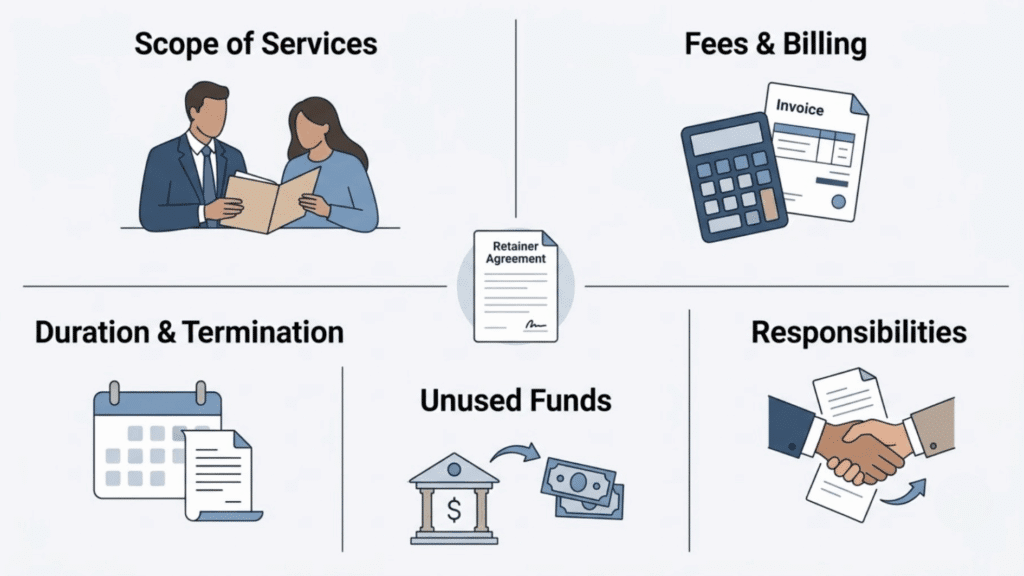
A solid agreement covers several parts, and each one protects you if the case gets messy later. Missing any of these is usually where disputes start.
1. Scope of Legal Services
The agreement should name the exact legal matter the lawyer will handle, not just a general area of law.
It should also state what falls outside that scope, such as an appeal or a separate dispute, and name who at the firm will actually handle your case.
That person’s place in the firm’s structure can affect both the rate you’re billed and how quickly your calls get returned.
2. Retainer Fees, Billing, and Additional Costs
The document must state the retainer amount and the hourly rate that kicks in once that amount runs out.
It should also list costs that sit outside the legal fee itself, such as court filing fees, travel, or expert witness charges, so you are not surprised by a line item later.
Also check how often you will get a statement. Most firms bill monthly, and that statement is your main way of tracking where the money is going.
3. Duration and Termination of Representation
The agreement should state how long representation lasts and how either side can end it early.
Look for an end date or a milestone, like the case reaching resolution, along with the notice period either side must give to walk away.
It should also spell out the conditions under which the lawyer can step back from the case, such as nonpayment on your part.
4. Client and Lawyer Responsibilities
Both sides carry duties under this agreement, and spelling them out avoids confusion once the case is underway.
The lawyer is expected to provide competent representation, keep you updated, and protect any funds you have paid in.
You, in turn, are expected to pay on time, hand over documents when asked, and respond to requests without long delays.
5. Handling of Unused Retainer Funds
Any money left in the retainer after the case ends belongs to you, not the lawyer.
The agreement itself should spell out how that leftover money gets returned and on what timeline, so nobody has to guess once the case closes.
What are the Different Types of Retainers?
Not every retainer agreement works the same way. These three types cover most of what you will run into, and knowing which one you are signing changes what you can expect back at the end.
| Retainer Type | How It Works | Best For |
|---|---|---|
| General or True Retainer | Pays the lawyer to remain available; usually nonrefundable. | Ongoing legal access |
| Advance Fee or Security Retainer | Lawyer bills against upfront funds; unused money remains yours. | Individual clients and hourly work |
| Flat-Fee Retainer | One fixed price covers a defined legal task. | Wills, simple filings, uncontested matters |
Why Do Lawyers and Clients Use Them?
These agreements exist because they solve problems for both sides of the relationship. Here is what each party gains:
Cost clarity
The agreement explains the deposit, billing rates, and covered services before work begins. This can reduce surprises, though the final cost may change as the matter develops.
Guaranteed access
A retainer may reserve the lawyer’s availability and time for a specific matter. The level of access still depends on the terms written in the agreement.
Cash flow
The lawyer receives funds that may be billed against as legal work is completed. How the money is held or earned depends on the agreement and local rules.
Commitment signal
Paying a retainer shows that the client is serious about moving the matter forward. It also confirms that the client is prepared to begin the legal process.
Dispute prevention
Written terms explain the fees, billing method, services, and limits of the lawyer’s work. Clear records can reduce misunderstandings and make later concerns easier to address.
Trust building
A written agreement gives both sides a shared understanding of their duties and expectations. Clear communication and transparent billing can support a stronger working relationship.
What are the Legal and Ethical Considerations of a Retainer Agreement?

Lawyers do not have free rein when it comes to these agreements. State bar rules and professional conduct standards limit what they can charge and how they must handle client funds.
1. Reasonable and Clearly Communicated Fees
A lawyer’s fee must be reasonable in amount, and the fee basis should be communicated to the client in writing before or soon after work begins.
The California State Bar’s Rule 1.5 summary lays out this reasonableness standard in detail, and most other states apply a version of the same test.
2. Trust Account Requirements for Unearned Funds
Money paid as an advance fee retainer stays your property until earned. Lawyers must hold it in a separate trust account, often called an IOLTA account, and cannot mix it with the firm’s own money.
The regulator’s trust accounting rules spell out exactly how that account must be run, and most other states follow a similar structure.
3. Refundability of Unearned Retainer Fees
A contract clause cannot override this rule: unearned money belongs to the client, not the lawyer.
True retainers, paid solely for availability, are the one exception, since most states treat that fee as earned the moment it is paid.
4. Conflicts of Interest and Client Confidentiality
This agreement does not override a lawyer’s duty to avoid conflicts of interest or protect client secrets.
These duties stand on their own, apart from any billing arrangement, and they continue even after the agreement ends.
5. State-Specific Rules and Enforceability
Retainer rules vary by state, since each one regulates its own attorneys.
New York, for example, prohibits nonrefundable retainers outright, with only a narrow exception for a clearly defined minimum-fee clause, while other states allow them if the fee stays reasonable.
New York also layers on extra rules for domestic relations cases, barring fees tied to the outcome of a divorce or custody dispute.
What Should Clients Check Before Signing?
Before signing, read the agreement closely and confirm these points. A few minutes spent checking now can save you a dispute over money or scope later.
- Fee structure: Know if you are paying hourly, flat, or a true retainer.
- Scope of work: Confirm exactly which legal matters are covered.
- Refund terms: Check what happens to unused funds if the case ends early.
- Termination clause: Understand how you or the lawyer can end the relationship.
- Billing statements: Ask how often you will get an itemized invoice.
- Extra costs: Identify any fees not included in the retainer amount.
- Communication plan: Confirm who you will contact with questions and how fast they respond.
Wrapping It Up
This retainer agreement sets the ground rules for your relationship with a lawyer. It covers cost, scope, and what happens to unused funds. Reading it closely before signing protects your money and your case.
Rushed signatures are where most fee disputes start, so slow down before you commit. Compare what the document says against the checklist above, line by line, and raise questions on anything vague before you sign.
If you are about to hire a lawyer, ask for the agreement in writing and hold onto your copy for as long as the case stays open.
Frequently Asked Questions
Is a Retainer Agreement Legally Binding?
Yes. Once both parties sign, it becomes a binding contract. Each side must follow the terms it sets out for services, fees, and termination.
Does It Guarantee Legal Representation?
Not automatically. It sets the terms for representation. A lawyer can still withdraw under specific conditions listed in the agreement or required by state bar rules.
Can a Client Terminate It?
Yes. You can generally end it at any time. You remain responsible for fees earned up to that point and any notice terms in the contract.