

Taxes have a lot of worker categories, and “statutory employee” trips up more people than it should.
Maybe you saw it on a W-2, or a recruiter used it in an offer letter, and you stopped to ask what a statutory employee means. Fair question; it’s not a term most people ever need, until suddenly they do.
This label affects how much money gets taken from a paycheck, which forms get filed, and how deductions work later.
Get the classification wrong, and the tax bill in April can be bigger than expected, or an employer can end up owing back taxes.
One checked box on a W-2 changes a lot more than most people expect. Here’s what it means, who qualifies, and how it plays out at filing time.
What is a Statutory Employee?
A statutory employee is a worker who sits between two categories: an independent contractor and a regular employee.
Under normal rules, this person counts as a contractor, since they control how they do their job, but federal tax law makes an exception.
Under 26 U.S.C. §3121(d)(3), certain workers get treated as employees but only for Social Security and Medicare tax purposes.
This means their employer takes out Social Security and Medicare taxes from their paycheck, just like a regular employee. However, federal income tax does not get withheld the same way.
So this worker gets a mix of both worlds. They keep some freedom like a contractor, but their paycheck gets treated differently because of tax rules.
Who Can Qualify as a Statutory Employee Under IRS Rules
Not every worker can hold this status. The IRS sets three conditions that must all be true before someone qualifies.
- Must Perform the Work Personally: The contract must state or clearly imply that the worker will do the job themselves, not send someone else in their place.
- Must Not Have Major Equipment Investment: The worker cannot own large tools, machinery, or property used for the job. Owning a personal vehicle for deliveries is usually fine.
- Must Work on an Ongoing Basis: The worker must provide services to the same payer regularly, not just complete a single, one-time task.
- Must Fall Into an Approved Job Category: Even if meeting all three conditions above isn’t enough on its own, the job also has to match one of the four categories the IRS lists below.
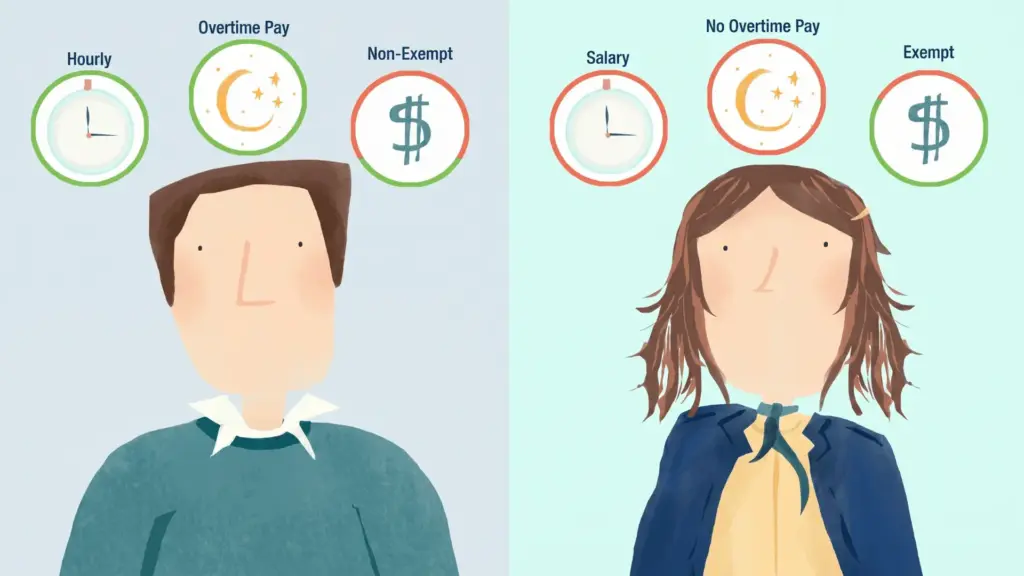
This is a different question from exempt vs. non-exempt employee status, which is about overtime eligibility, not tax withholding. It’s easy to mix the two up since both come from federal labor rules.
The Four Jobs That Qualify (And Nothing Else)
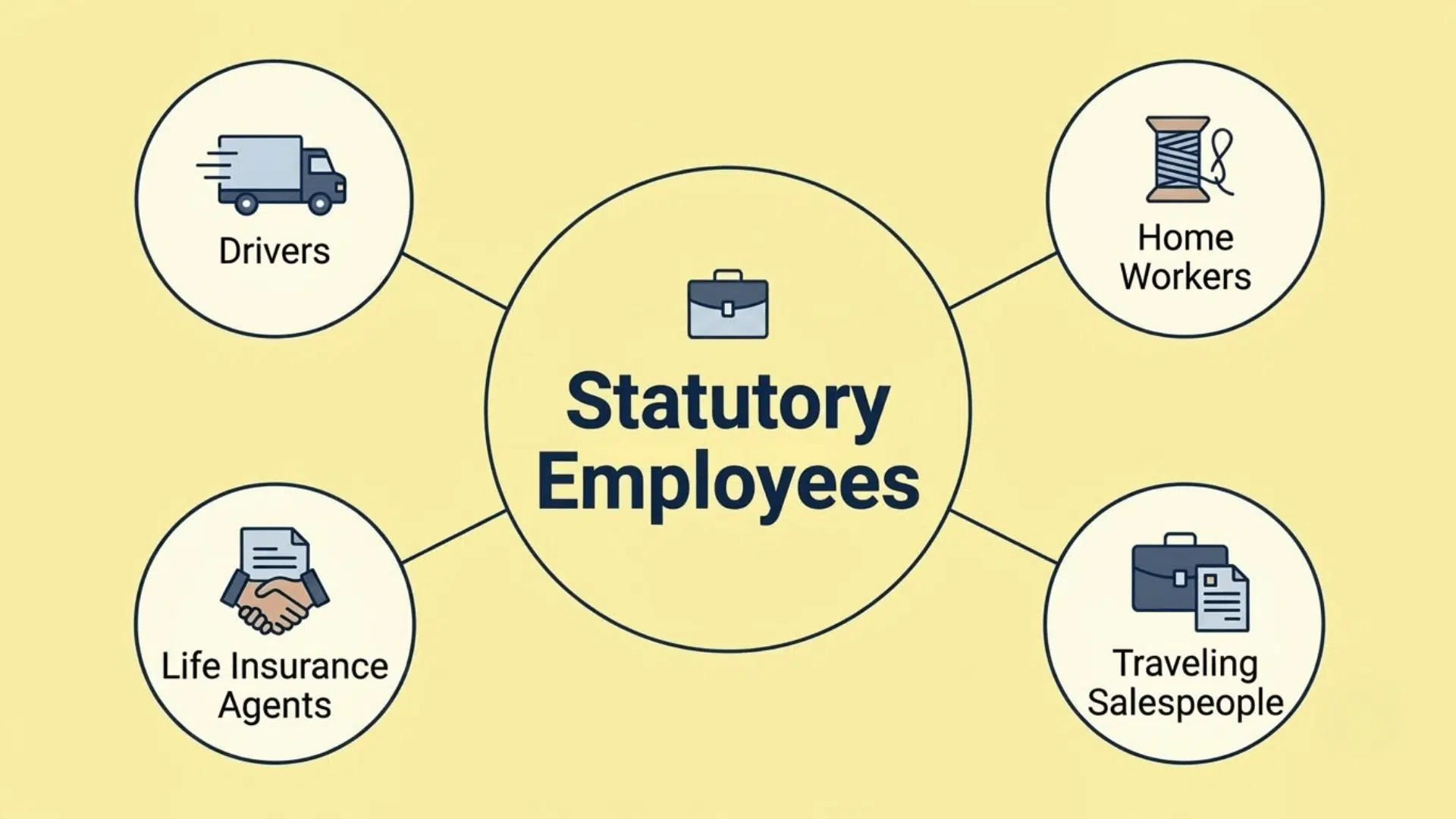
The IRS only allows four specific job types to fall under this status, laid out in Publication 15-A.
If a worker’s job does not match one of these categories, they cannot be a statutory employee, no matter how similar their work looks.
1. Drivers
This covers drivers who deliver meat, produce, bakery goods, or beverages (other than milk), as well as those who pick up and drop off laundry or dry cleaning.
The driver must act as an agent or get paid by commission, not a flat wage.
2. Home Workers
These are workers who complete tasks at their own home using materials or goods supplied by the employer. The employer gives specific instructions on how the finished work should look.
Common examples include sewing, assembling small parts, or packaging items before they get shipped out. The finished goods must then be returned to the employer or a person the employer names.
3. Full-Time Life Insurance Sales Agents
This applies to agents whose main job is selling life insurance or annuity contracts. They must work full-time for one insurance company and cannot mainly sell for other insurers on the side.
Part-time agents or those who split their time across several companies do not qualify under this rule.
4. Traveling or City Salespeople
This covers full-time salespeople who take orders from wholesalers, retailers, or businesses on behalf of one employer. The goods must be for resale or used in the buyer’s business operations.
This role does not include salespeople who sell to regular consumers for personal use. The selling work must also be the salesperson’s main job, not a side task added to other duties.
How Does the Withholding Actually Split?
Statutory employee taxes work a bit differently from regular paychecks. The employer must take out Social Security and Medicare taxes, often called FICA taxes, from every paycheck.
This part works just like a normal job; however, federal income tax does not get withheld the same way. Since the worker is still seen as self-employed for income tax purposes, no automatic income tax comes out of their pay.
FUTA, the federal unemployment tax, only applies to two of the four categories: drivers and traveling or city salespeople. Home workers and full-time life insurance agents are exempt from it entirely.
Because income tax is not withheld, the worker may need to set aside money on their own to cover it later, usually through quarterly estimated payments.
Skip that, and owe more than $1,000 at filing time, and the IRS can add an underpayment penalty on top. This mix of withholding rules is what makes this status feel different from both a regular job and full self-employment.
If the paycheck math still looks confusing, our guide on learning to read a pay stub makes it a lot easier to spot what's being withheld and what isn't.
Statutory Employee Vs Independent Contractor
These two worker types can look similar on the surface, but they are treated very differently by the IRS. Here’s a simple side-by-side look at how they compare.
| Features | Statutory Employee | Independent Contractor |
|---|---|---|
| Tax form at year-end | Gets a W-2, with a special box checked | Gets a 1099-NEC form instead |
| Social Security & Medicare tax | Employer takes this out of the paycheck | Worker pays this on their own |
| Income tax withholding | Not taken out of pay | Not taken out of pay |
| Unemployment tax (FUTA) | Applies to drivers and traveling salespeople only | Never applies |
| How they report income | Uses Schedule C, like a small business | Uses Schedule C too |
| Who controls the work | Employer sets the rules and process | Worker decides how the job gets done |
| Types of jobs allowed | Only 4 specific jobs set by the IRS | Almost any type of job or task |
What are W-2 And 1099-NEC Forms
Every worker gets a tax form at year-end, and the type of form shows how they were classified. A statutory employee receives a W-2 form, just like a regular employee.
On this form, a special box called Box 13 gets checked to mark them as a statutory employee. This tells the IRS to treat their income differently when filing taxes.
An independent contractor, on the other hand, receives a 1099-NEC form instead of a W-2. This form simply reports how much money was paid to them during the year, with no taxes taken out at all.
Both forms report income, but they lead to very different tax steps during filing season.
How Statutory Employees File Taxes

At tax filing time, a statutory employee follows steps that look more like a small business owner than a regular employee.
Schedule C, Not the Wages Line
Income and expenses get reported on Schedule C, the same form self-employed workers use.
This is different from how regular employees file. This form is built for business-style income and expense tracking, not standard wage reporting.
Reports W-2 Income on Schedule C
Even though the income comes from a W-2, it still gets entered on Schedule C instead of the usual wages line on a tax return, transferring the Box 1 amount directly onto Schedule C’s income line.
The W-2 simply confirms the amount earned; Schedule C is where it actually gets processed.
Deducts Business Expenses
Costs like mileage, supplies, or work-related tools can be subtracted from income, lowering the total amount taxed. These deductions are not limited the way they are for regular employees.
Still Owes Income Tax
Since income tax was not withheld earlier, the worker calculates and pays this amount when filing. Some workers set money aside throughout the year to avoid a large payment at once. Skipping this step can lead to a bigger tax bill or penalties later.
No Self-Employment Tax
Unlike regular contractors, statutory employees do not pay self-employment tax, since FICA was already withheld from their paycheck.
For comparison, true independent contractors need to know how self-employment tax is calculated, since that’s the bill a statutory employee gets to skip.
Wrapping It Up
Understanding what a statutory employee means really comes down to one trade-off.
Certain jobs get treated as employees for Social Security and Medicare taxes, even though the worker still functions like a contractor in most ways.
Only specific roles qualify, and the tax forms, withholding rules, and filing steps all follow their own pattern once that status applies.
Still not sure which side of the line a worker falls on? That’s a conversation for a tax professional, not a guess. Misclassification penalties fall on the employer, and they’re not economic.
Frequently Asked Questions
How Do I Know if I’m a Statutory Employee?
Check Box 13 on your W-2. If Statutory Employee is marked, that’s your status. Your employer can also confirm it directly.
Can a Statutory Employee Also Get a 1099-Nec in the Same Year?
Yes. If you also do separate contract work, you could receive both a W-2 and a 1099-NEC in the same year.
Do Statutory Employees Get Benefits Like Health Insurance or Paid Time Off?
Not automatically. This is a tax classification, not a benefits classification, so any benefits are up to the employer.
What Happens if an Employer Misclassifies a Worker as a Statutory Employee?
The employer may owe back taxes, penalties, and interest, and the worker’s filings may need correcting.