
| ⚠️ Advisory:These rules combine federal, state, and local law, and they change often. This is general guidance, not legal advice. Confirm specifics with a qualified employment attorney or the linked government agencies before acting. |
Managing employees is rarely just about following a checklist. A missed form, unclear policy, or small misunderstanding can create problems that affect both the business and the people working in it.
When looking into workplace practices, one thing becomes clear: strong HR systems are built on simple rules applied consistently. HR rules and regulations help companies handle hiring, pay, benefits, safety, and employee concerns with more confidence and fairness.
The right policies do more than meet legal requirements. They give managers a clear direction, help employees know their rights, and create a workplace where expectations are easier to follow.
What Are HR Rules and Regulations?
HR rules are the set of guidelines that tell a company how to treat its people from the day they join to the day they leave.
Some come from federal, state, or local governments. Others are created by the company itself based on its size, industry, and work setup.
There is a real difference between the two: government rules are what a business mustdo by law, while internal policies are what it choosesto do. Breaking a regulation can trigger fines or lawsuits; changing a policy is just paperwork.
Think of them as the ground rules that keep both sides, the employer and the employee, on the same page. When these rules are in place, everyone knows what is expected and how things should work.
Importance of HR Rules
HR rules and regulations provide a clear framework for managing employees, handling workplace responsibilities, and making decisions that align with legal requirements:
- Support Better Decision-Making: HR professionals can make faster and legally informed decisions about hiring, payroll, benefits, and workplace policies by following established rules.
- Reduce Workplace Risks: Proper HR practices help prevent compliance issues, employee disputes, and costly mistakes related to employment decisions.
- Protect Employees and Businesses: Clear regulations create fair workplace standards, support employee rights, and help companies maintain safe working conditions.
- Improve HR Effectiveness: Professionals who understand HR regulations can manage employee needs better while supporting organizational compliance.
Core Federal Employment Rules
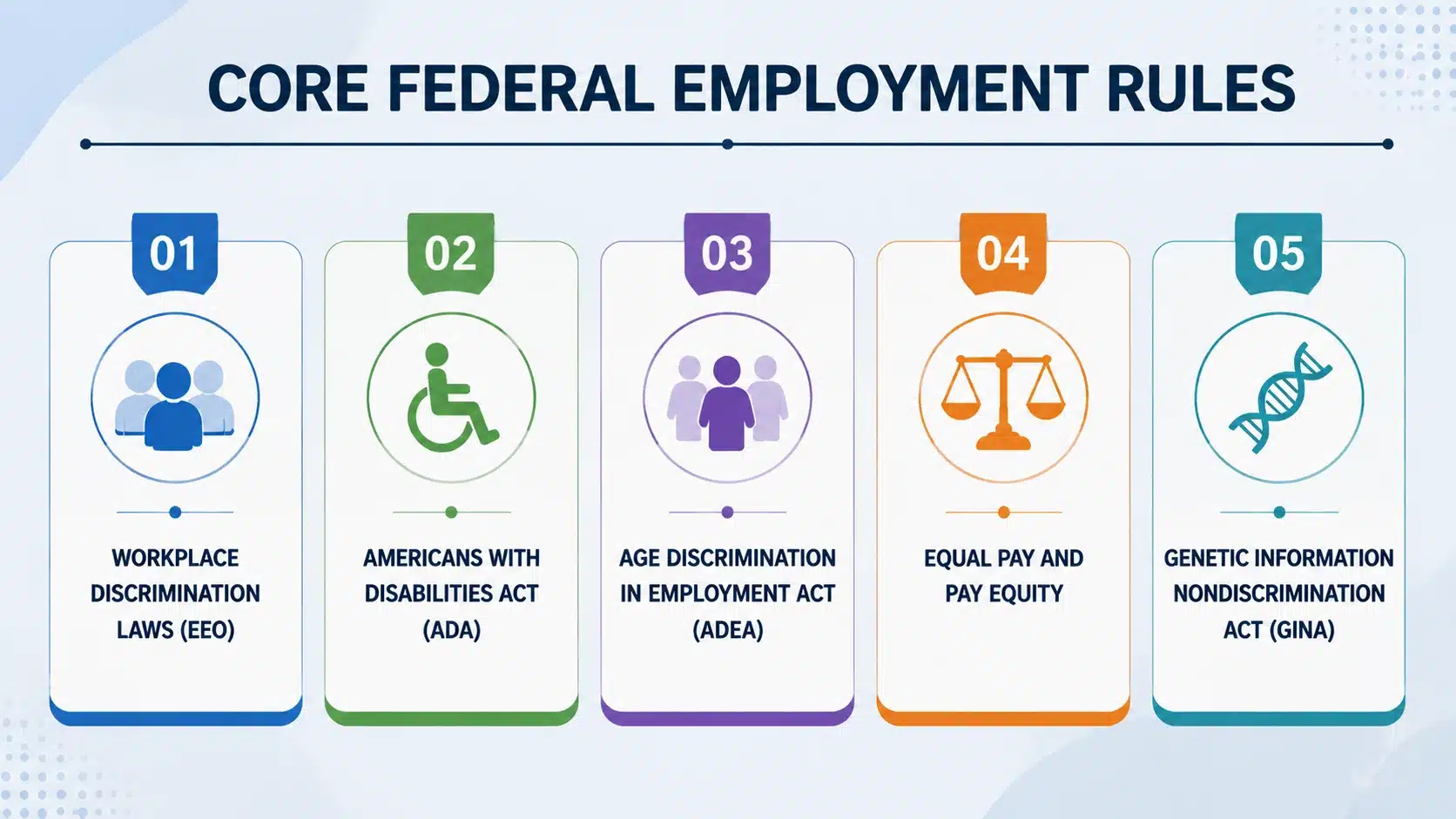
These foundational federal laws apply to almost every employer, whatever the size or industry, and set the baseline for how workers are treated from the first job posting onward.
1. Workplace Discrimination Laws (EEO)
Equal Employment Opportunity laws, enforced by the EEOC, bar discrimination based on race, color, religion, sex, national origin, age, disability, or genetic information.
They apply to organizations with 15 or more employees and cover every stage of the employee lifecycle, from how a job ad is written through to termination.
Legal note: Discrimination claims can arise before hiring, based purely on job-description wording.
2. Americans with Disabilities Act (ADA)
The ADA makes it unlawful to discriminate against qualified workers with disabilities. It also requires employers to provide reasonable accommodation, such as modified equipment or adjusted schedules, unless doing so causes undue hardship.
Religious accommodation follows a similar logic, so a documented request-and-review process protects both the employee and the company.
Advice: Keep a written record of every accommodation request and outcome.
3. Age Discrimination in Employment Act (ADEA)
The ADEA protects workers aged 40 and older from bias in hiring, pay, promotion, layoffs, and training. It applies to employers with 20 or more employees.
Age-coded language in recruiting, like “recent graduate” or “digital native,” is a common and avoidable source of claims that HR should screen out of job posts.
4. Equal Pay and Pay Equity
The Equal Pay Act bans sex-based wage differences for substantially equal work under similar conditions. Many states now go further with broader pay-equity rules.
Auditing pay across comparable roles and documenting the reasons for any gaps is the clearest way to stay defensible if a claim surfaces.
Advice: Run a pay-equity check before, not after, a complaint.
5. Genetic Information Nondiscrimination Act (GINA)
GINA prohibits using genetic information in any employment decision and bars employers from requesting or requiring it from workers or their families.
This includes family medical history and genetic test results. The rule most often trips up wellness programs and medical questionnaires, so screen those carefully before rolling them out.
Wage, Hour, and Leave Rules
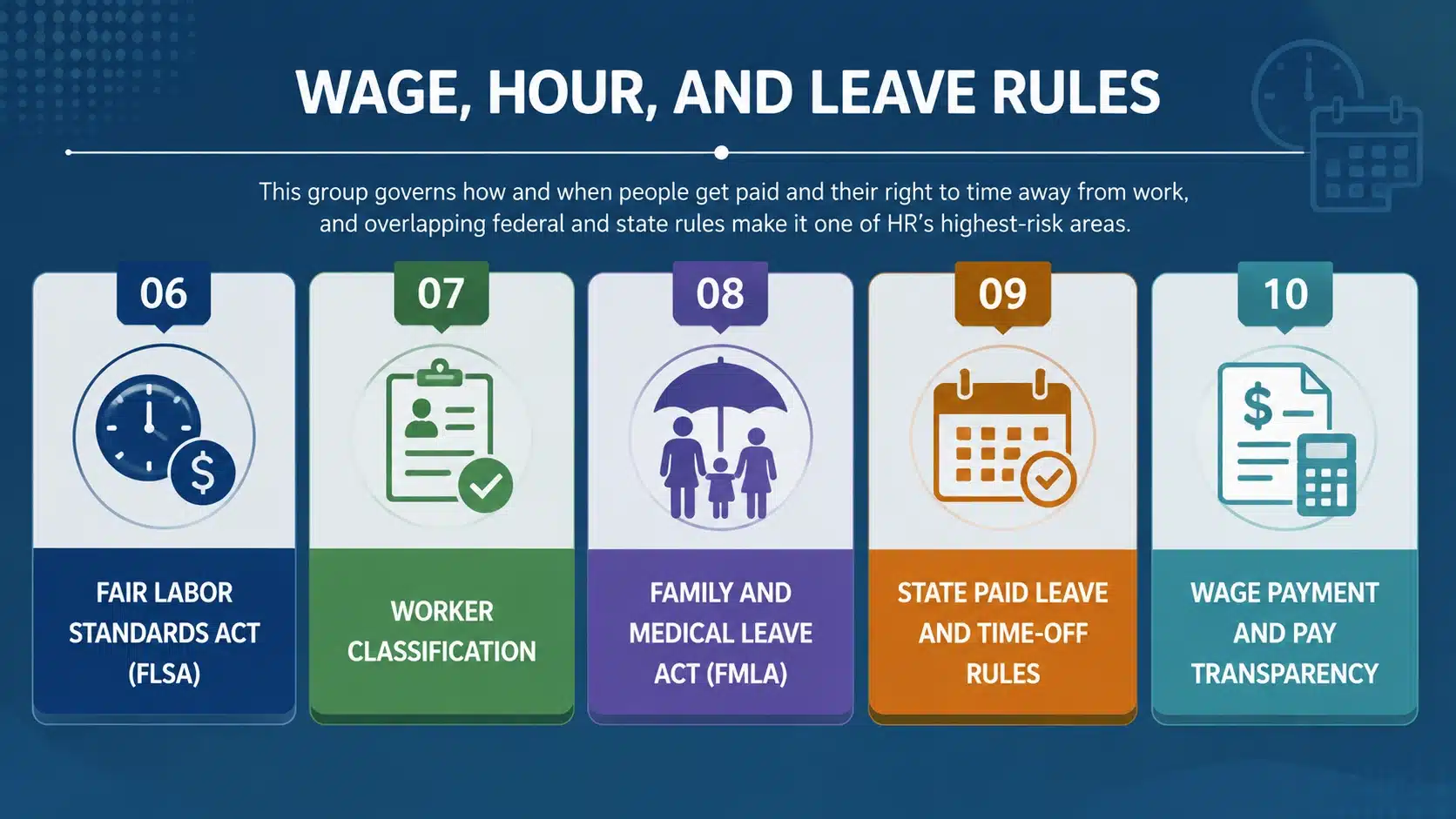
This group governs how and when people get paid and their right to time away from work, and overlapping federal and state rules make it one of HR’s highest-risk areas.
6. Fair Labor Standards Act (FLSA)
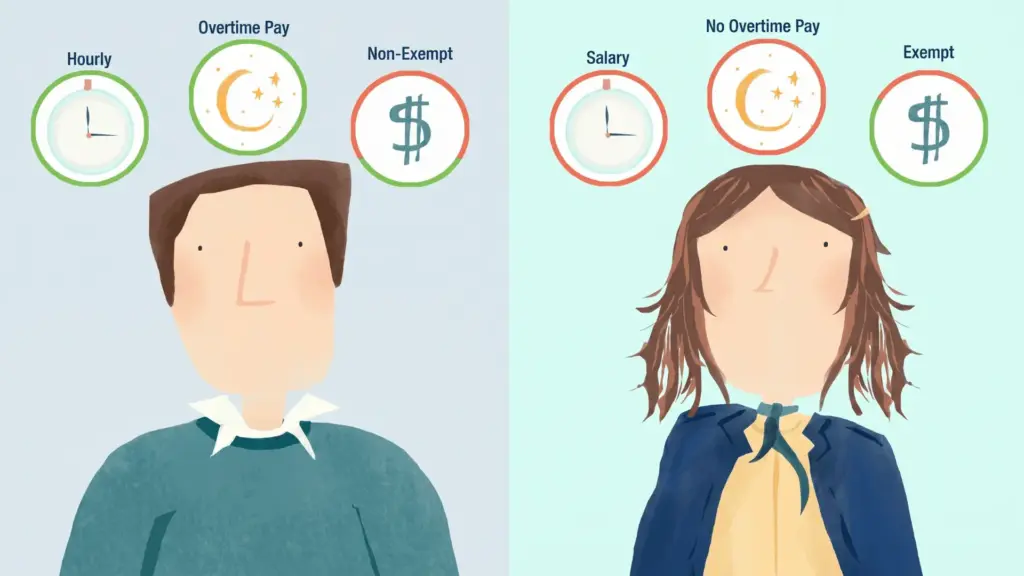
The FLSA sets the 40-hour workweek, the federal minimum wage of $7.25 per hour, overtime at 1.5 times regular pay for non-exempt staff, child-labor limits, and recordkeeping duties.
Where a state sets a higher minimum wage, the higher rate wins. It also requires break time for nursing mothers.
Legal note: Exemption thresholds were updated recently, so re-verify classifications.
7. Worker Classification
Correctly labeling staff as exempt or non-exempt, and as employees or independent contractors, sits at the center of wage compliance. The Department of Labor sets the federal test.
Misclassification can bring unpaid overtime, back taxes, and penalties. The line often turns on how much control the business has over the work, not on job title or how the worker is paid.
Advice: Audit classifications yearly and whenever a role’s duties shift.
8. Family and Medical Leave Act (FMLA)
The FMLA gives eligible employees up to 12 weeks of unpaid, job-protected leave for a serious health condition, a new child, or family care, and up to 26 weeks to care for a covered servicemember.
It applies to employers with 50 or more employees, and eligibility depends on tenure and hours worked, separate from any probation period. Common errors include failing to designate leave and denying reinstatement.
9. State Paid Leave and Time-Off Rules
Federal law does not require paid vacation or sick leave, but a growing number of states and cities do, each with its own accrual, carryover, and usage rules. The Department of Labor tracks state-by-state standards.
Several states also run paid family-leave programs funded through payroll. Multi-state employers need to track obligations wherever their people actually work.
Legal note: Final-paycheck timing and PTO payout rules also vary by state.
10. Wage Payment and Pay Transparency
Beyond the FLSA, states set their own rules on how often workers must be paid, what a pay stub must show, and how fast a final check goes out after someone leaves.
Pay frequency and stub-content requirements vary widely, so building them into standard payroll templates keeps a multi-state operation consistent.
Note: Some states also require accrued PTO to be paid out in the final check.
Employee Benefits Rules
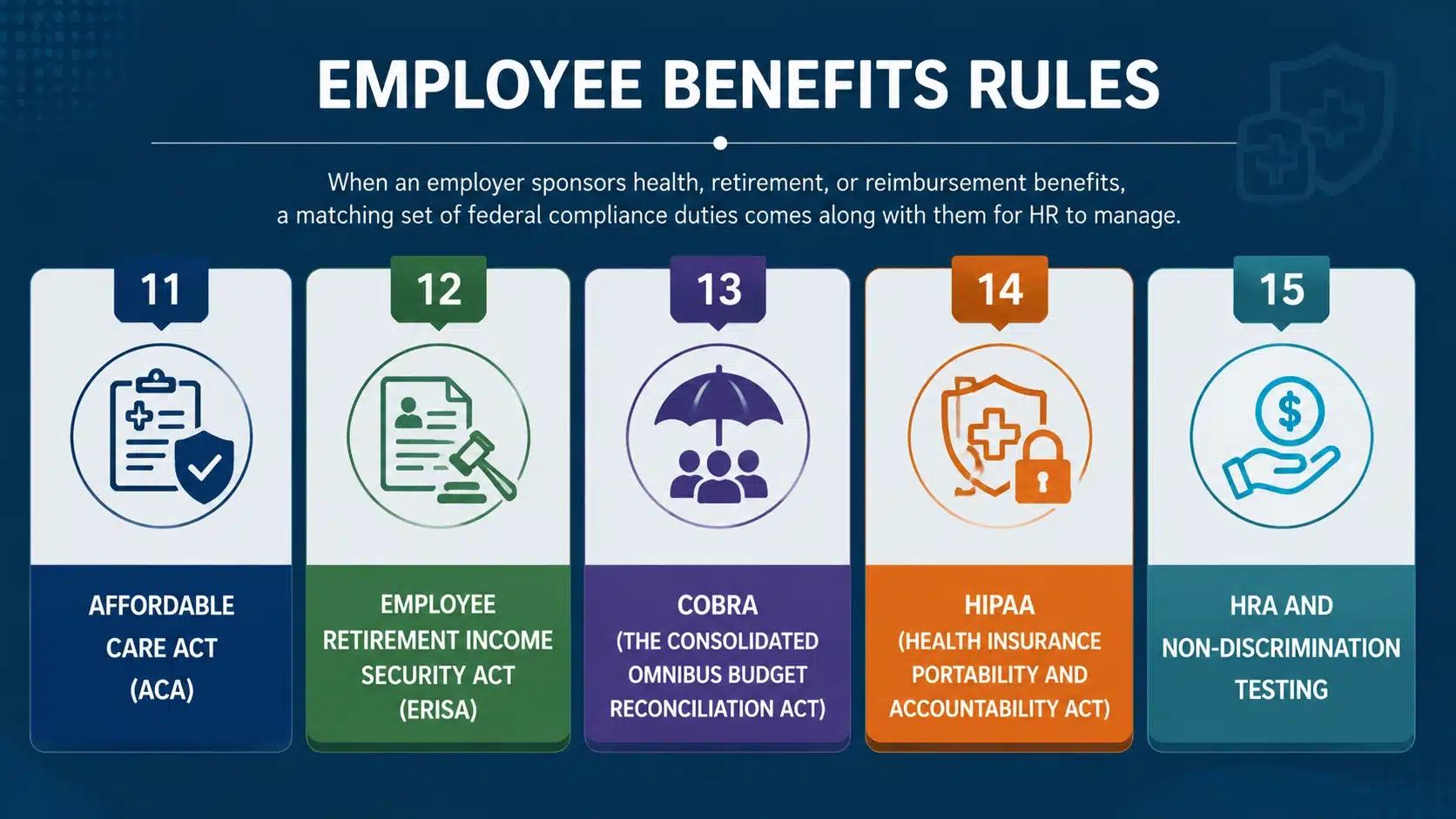
When an employer sponsors health, retirement, or reimbursement benefits, a matching set of federal compliance duties comes along with them for HR to manage.
11. Affordable Care Act (ACA)
The ACA’s employer mandate applies to businesses with 50 or more full-time equivalent employees.
They must offer coverage with minimum essential coverage and minimum value to at least 95% of full-time staff, and report it to the IRS on Forms 1094-C and 1095-C. Falling short triggers IRS penalties.
12. Employee Retirement Income Security Act (ERISA)
ERISA sets standards for employer-sponsored retirement and welfare plans, including fiduciary duties and participant disclosures.
Plans must give every participant a summary plan description. Failing to provide that document within 30 days of a written request can bring fines of up to $120 per day, and 401(k) sponsors must file Form 5500 annually.
13. COBRA (The Consolidated Omnibus Budget Reconciliation Act)
COBRA lets former employees and their dependents keep group health coverage, at their own cost, for a set period after a qualifying event like job loss, reduced hours, or divorce.
It applies to employers with 20 or more employees in the prior year. Missing a required notice deadline triggers tax penalties per beneficiary.
Advice: Automate COBRA notices so deadlines never slip.
14. HIPAA (Health Insurance Portability and Accountability Act)
If an organization offers health benefits, the HIPAA Privacy Rule governs how protected health information is used and shared. PHI covers names, Social Security numbers, and medical records.
Anyone handling it is bound by the rule, and violations can cost up to $50,000 per incident depending on culpability.
15. HRA and Non-Discrimination Testing
Health Reimbursement Arrangements must follow federal and state rules to stay tax-advantaged, and cannot use job classes to discriminate on protected traits.
Many benefits, including retirement plans and HRAs, also need annual non-discrimination testing to confirm they are fair to all staff, not just highly compensated employees.
Advice: Third-party benefits software helps keep HRA handling HIPAA-safe.
Workplace Safety Rules
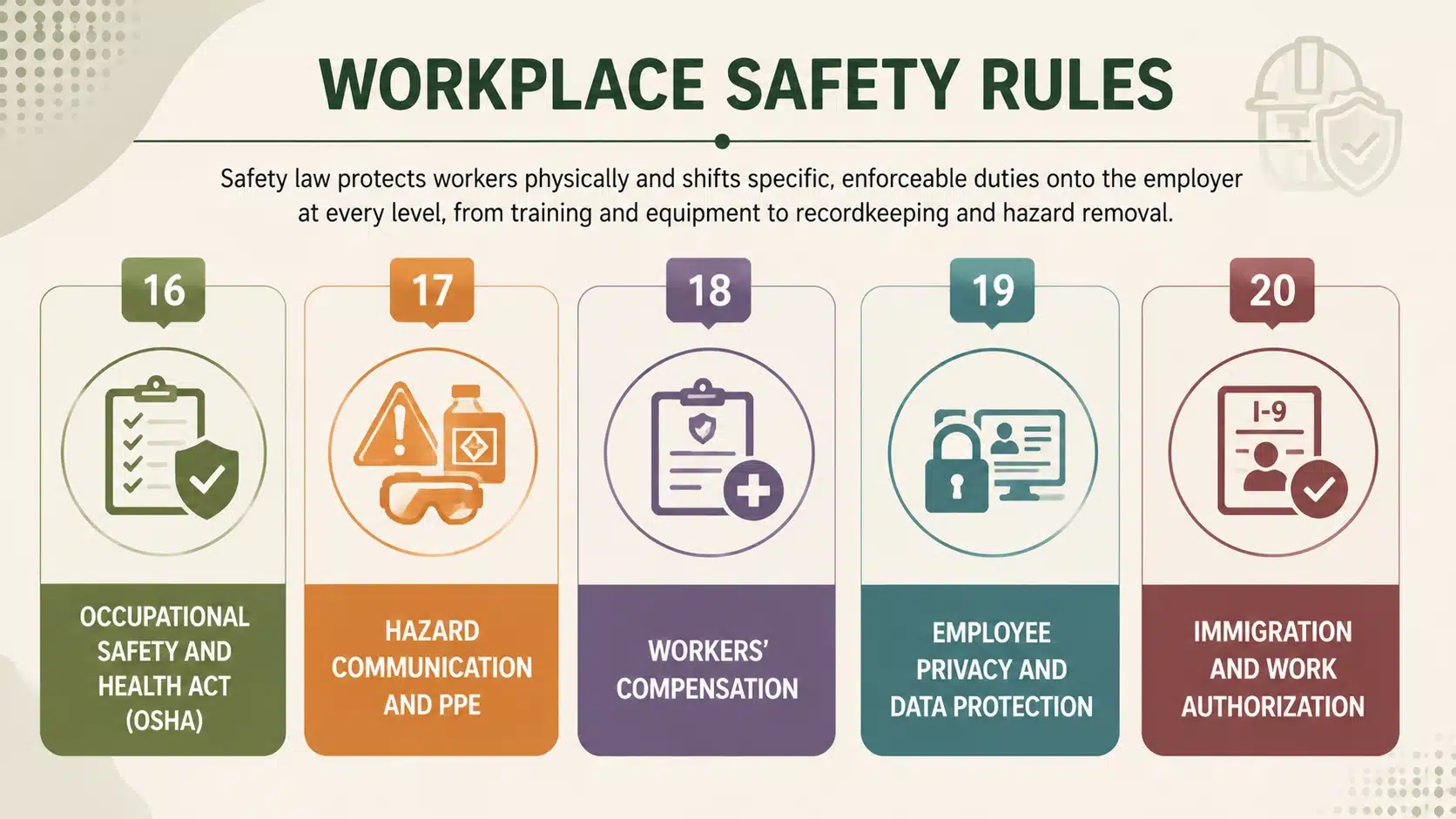
Safety law protects workers physically and shifts specific, enforceable duties onto the employer at every level, from training and equipment to recordkeeping and hazard removal.
16. Occupational Safety and Health Act (OSHA)
OSHA requires a workplace free of recognized hazards, plus safety training, proper equipment, hazard-free machinery, and posted notices.
Workers can request inspections and review injury records without retaliation. As of January 2026, repeated violations can bring fines above $165,000, which makes this one of the costliest areas to neglect.
17. Hazard Communication and PPE
Employers whose staff handle chemicals must keep Safety Data Sheets, label hazardous containers, and train workers under OSHA’s HazCom standard.
Where hazards cannot be removed, the employer must supply the right personal protective equipment and train people to use it. Both usually call for a written program.
18. Workers’ Compensation
Most states require employers to carry workers’ compensation, which covers medical costs and lost wages for job-related injury or illness. Rules and thresholds vary by state.
Specialized federal programs, like the Longshore and Harbor Workers’ Compensation Act, cover maritime and other niche workforces.
Note: Confirm whether coverage is mandatory in each state you operate in.
19. Employee Privacy and Data Protection
Employees hand over Social Security numbers, addresses, and banking details, and the law expects that data to stay protected.
Several states regulate biometric data and monitoring, and California’s CCPA gives workers rights over their personal data. Limiting access and disposing of records properly are baseline safeguards.
20. Immigration and Work Authorization
The Immigration and Nationality Act requires employers to verify identity and work authorization using Form I-9 within three days of a start date.
The challenge is verifying eligibility while avoiding discrimination based on national origin or citizenship status, which is itself unlawful.
Emerging and Situational HR Rules Regulations
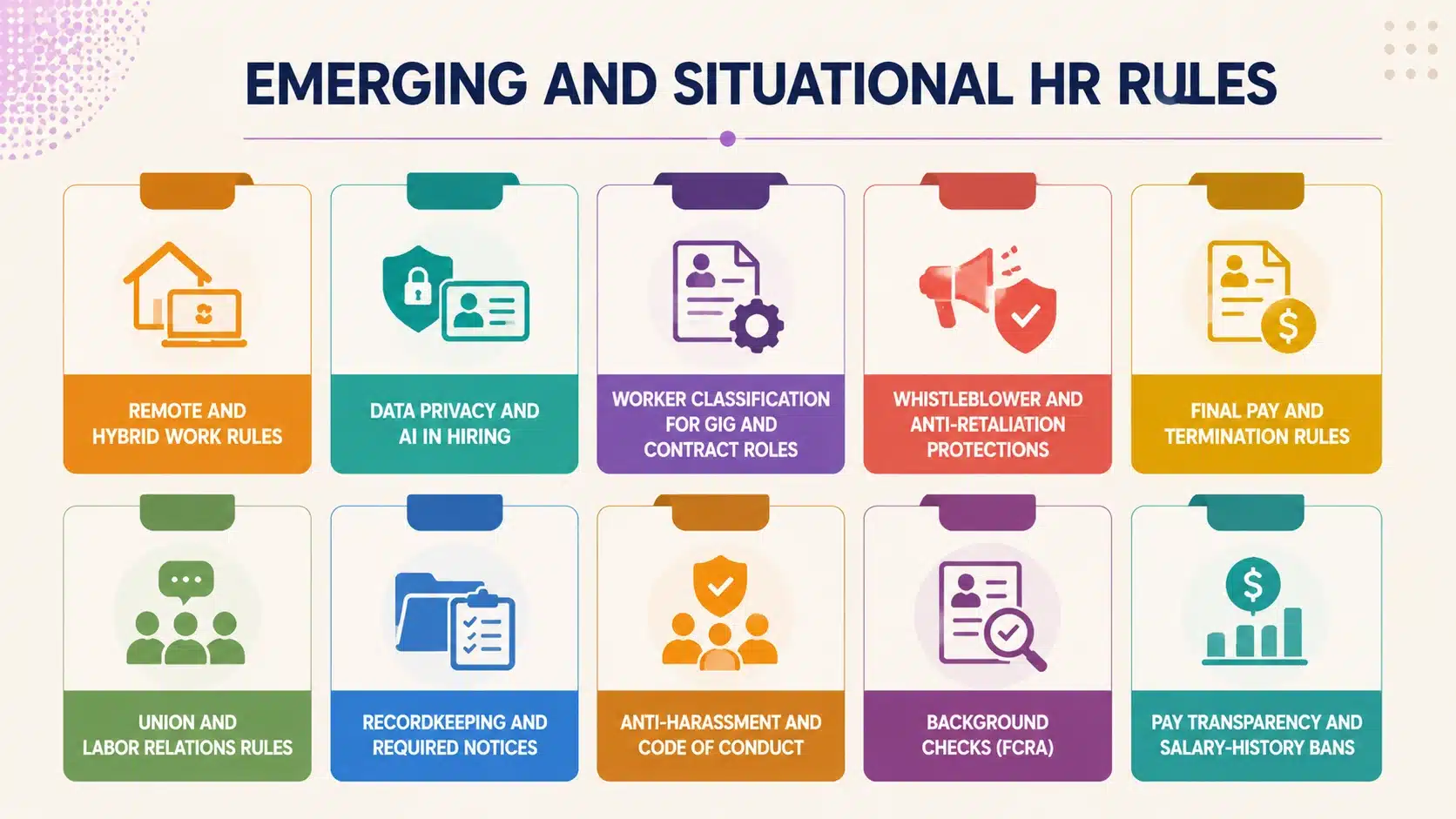
Newer rules address modern work arrangements and the moments where employment ends, rounding out a compliance program past the long-standing federal core.
21. Remote and Hybrid Work Rules
Remote staff can create obligations in states where the company has no office, from income-tax withholding to differing labor and workers’ comp rules.
A written policy should set work hours, availability, equipment, and data-security expectations, and flag which roles qualify. Out-of-state hires deserve a quick jurisdiction check first.
Advice: Confirm tax and labor exposure before approving an out-of-state remote hire.
22. Data Privacy and AI in Hiring
Tools that screen resumes or rank candidates increasingly fall under anti-bias and transparency rules, and the EEOC has confirmed automated tools must still meet existing law.
Data-privacy laws like the CCPA and GDPR shape how applicant and employee data is stored. Human review of any automated hiring decision remains the safest practice.
23. Worker Classification for Gig and Contract Roles
As contract and gig work grows, regulators are scrutinizing whether those workers are truly independent. Getting it wrong echoes the FLSA classification risk but with added state-law tests.
Documenting the working relationship, control, and independence upfront is far cheaper than defending a reclassification claim later.
24. Whistleblower and Anti-Retaliation Protections
Most labor, safety, and environmental laws protect employees who report violations in good faith, and OSHA enforces many of these provisions.
Retaliation, including demotion, schedule cuts, or termination, is itself a separate violation. A clear reporting channel and a no-retaliation policy protect both the worker and the organization.
25. Final Pay and Termination Rules
Offboarding carries its own duties: issuing the final paycheck within the state’s deadline, paying out accrued PTO where required, sending benefit-continuation notices, and, for larger layoffs, meeting the federal WARN Act 60-day notice rule. Consistent, documented exits limit disputes.
Legal note: WARN applies to certain mass layoffs and plant closings; check the thresholds.
26. Union and Labor Relations Rules
Where a workforce is unionized, the National Labor Relations Act shapes bargaining, working conditions, and protected concerted activity.
Even non-union employers are covered when staff act together over workplace issues. Managers should know what counts as protected activity before responding to it.
27. Recordkeeping and Required Notices
Federal law sets minimum retention periods, three years for payroll under the FLSA, and requires certain labor-law posters to be displayed where staff can see them.
Accurate records are the first line of defense in any wage or discrimination dispute, so treat documentation as protection, not busywork.
28. Anti-Harassment and Code of Conduct
Beyond discrimination law, employers must actively prevent and address harassment, and many states mandate scheduled prevention training.
A written code of conduct covering behavior, conflicts of interest, and reporting steps gives everyone the same standard and gives HR a clear basis for consistent action.
29. Background Checks (FCRA)
When a third party runs pre-employment checks, the Fair Credit Reporting Act sets the rules: disclose the intent, get written consent, and follow adverse-action steps before rejecting someone based on a report.
Ban-the-box laws in many states also delay when criminal-history questions may be asked.
30. Pay Transparency and Salary-History Bans
A growing set of states require posting pay ranges and prohibit asking candidates about past salary. These rules aim to close pay gaps and shift negotiations onto role value rather than history.
Standardizing ranges before a role is posted keeps hiring both compliant and consistent.
The Transformational Nature of HR Laws and Regulations
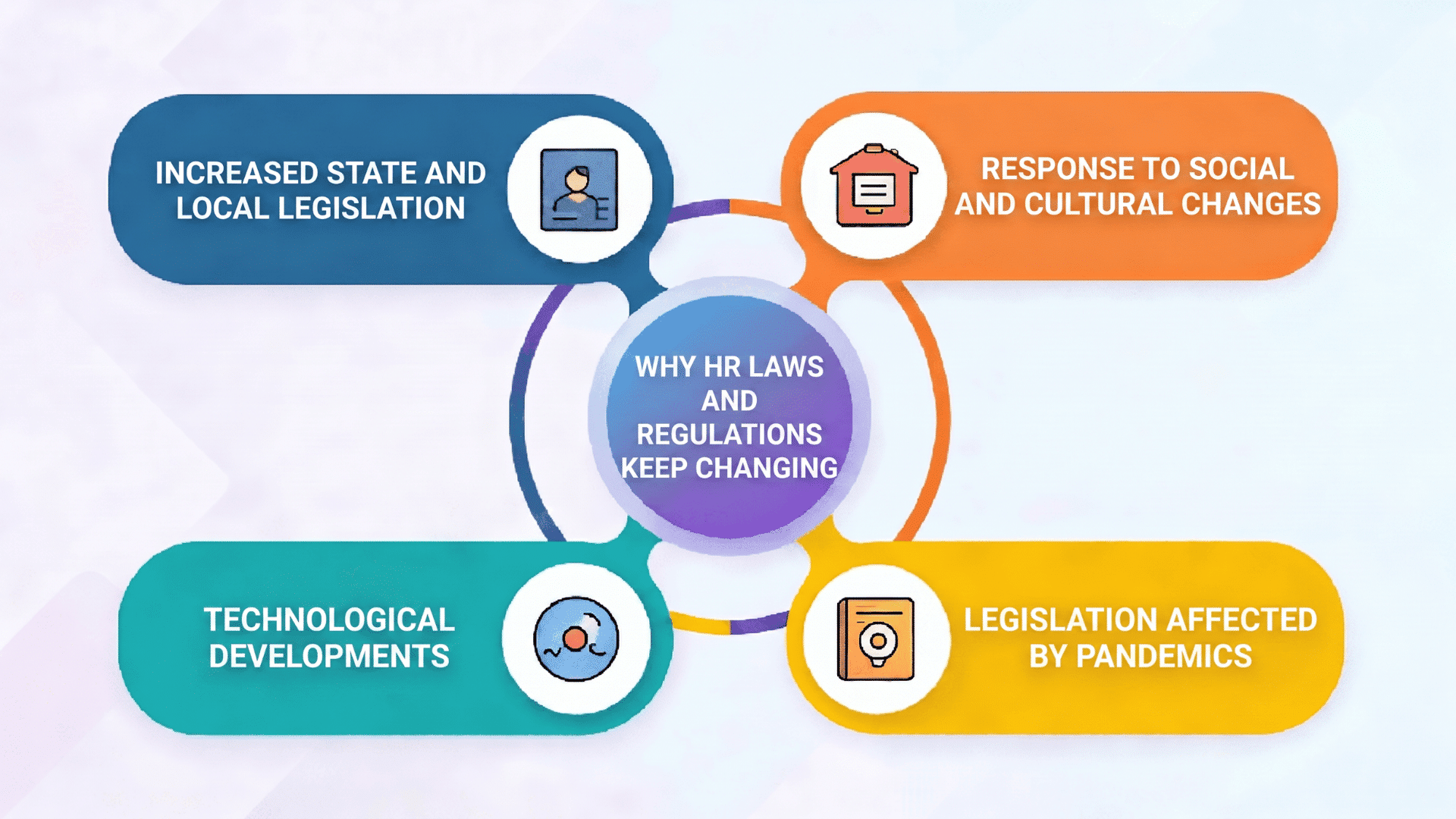
HR laws are constantly evolving, requiring businesses to stay up to date, compliant, prepared, and proactive.
- Increased State and Local Legislation: More laws at the state and local levels focus on employee well-being.
- Response to Social and Cultural Changes: New regulations on diversity, equity, and inclusion (DEI) influence workforce management.
- Technological Developments: Emerging HR issues include cybersecurity, data privacy, and digital workforce management.
- Legislation Affected by Pandemics: COVID-19 and other events have led to rules on remote work, employee health, and safety.
HR laws continue to evolve, and staying up to date helps organizations remain compliant, protect employees, and adapt to modern workplace challenges.
HR Compliance and Its Types
HR compliance means adhering to workplace laws, rules, and policies that apply to both employees and employers. It helps businesses manage hiring, pay, safety, and employee rights in a legal and fair way.
Read the table below to understand the main types of HR compliance:
| Type of HR Compliance | Meaning | Why It Matters |
| Statutory Compliance | Covers basic employment laws like wages, age limits, safety, and discrimination. | Helps avoid legal penalties. |
| Regulatory Compliance | Follows government or industry-specific rules. | Keeps the business compliant. |
| Contractual Compliance | Follows terms in employee, client, or supplier contracts. | Reduces disputes. |
| Union Law Compliance | Covers labor union rules on pay, benefits, and working conditions. | Supports fair worker treatment. |
What Happens If a Company Ignores HR Rules?
Skipping hr rules rarely stays a small issue. It usually starts as a complaint and grows into something that pulls leadership away from running the business.
Ignoring HR rules can bring government fines, back-pay orders, and lawsuits, and OSHA penalties alone can climb past six figures for repeated violations.
Employees who feel wronged also have clear paths to how to sue an employer.
Past the money, non-compliance erodes employee trust, makes hiring harder as word spreads, and invites audits that consume time and legal budget. Handled as routine practice instead of a last-minute scramble, most of this is avoidable.
How to Maintain HR Rules?
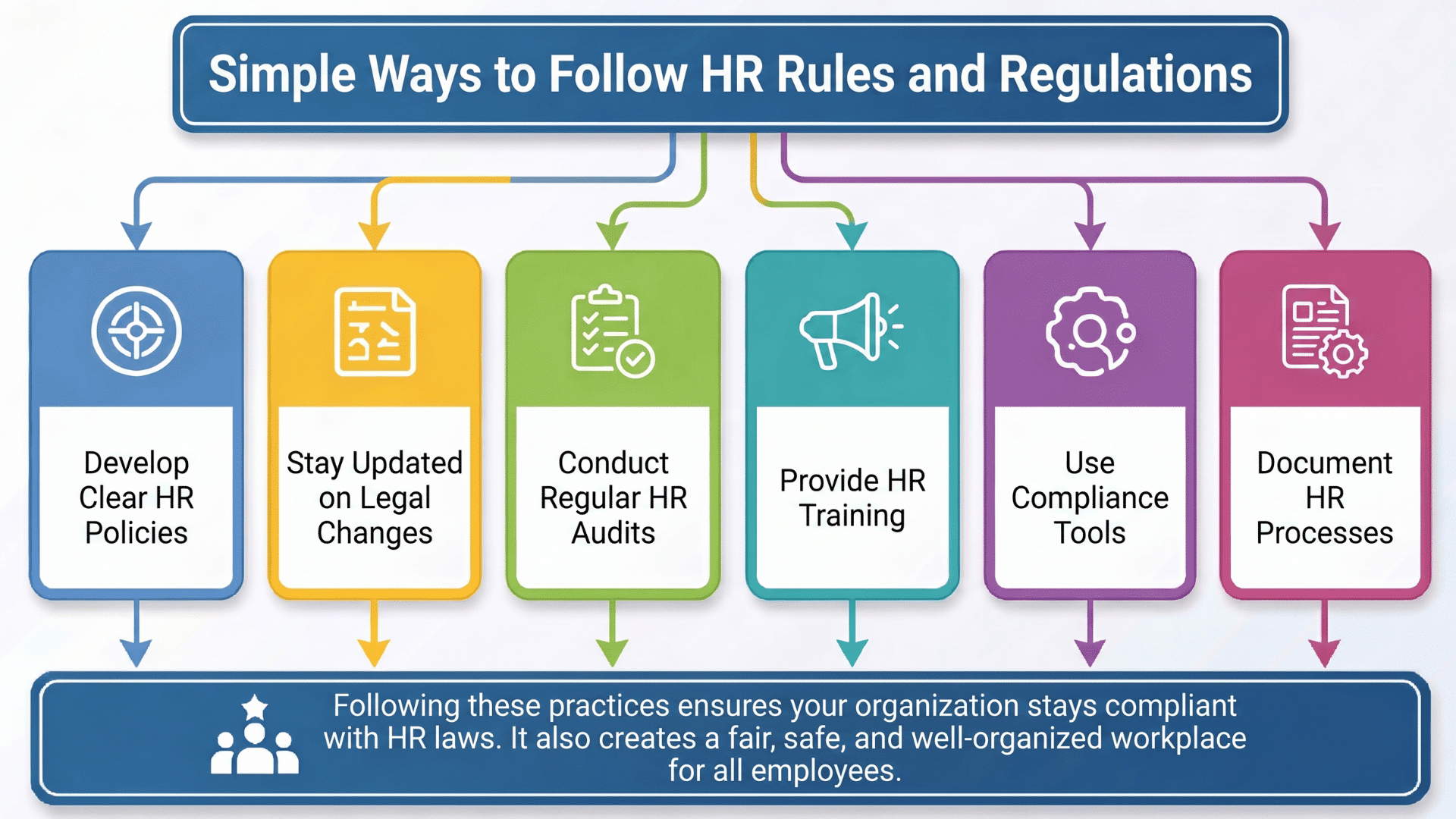
Maintaining HR regulations works best when policies are clear, up to date, and consistently applied.
A few simple practices can maximize their benefits.
- Develop clear HR policies covering hiring, pay, benefits, workplace safety, and employee rights.
- Stay up to date on federal, state, and local HR regulations to remain compliant.
- Conduct regular audits to identify gaps and ensure policies are properly implemented.
- Provide HR training to improve awareness and consistent application of rules.
- Use compliance software or tools to track changes and simplify updates.
- Document all HR processes to maintain accountability and transparency.
- Regular review and monitoring help protect employees, reduce risks, and support fair HR practices.
With consistent application, HR rules strengthen compliance and create a fair, organized workplace.
Emerging Trends in HR Compliance 2026
HR compliance in 2026 focuses on technology, privacy, and changing workplace models. AI hiring tools require stronger transparency, bias checks, and human review to support fair decisions.
Employee data security is becoming a major concern as more HR processes move online. Remote and hybrid work rules continue evolving around taxes, payroll, safety, and multi-state requirements.
Worker classification remains under review as regulators examine contractor relationships. Companies are also prioritizing mental health, workplace well-being, and ESG reporting as important parts of modern compliance practices. Staying updated helps businesses manage new obligations effectively.
Final Takeaway
Staying consistent with HR rules and regulations helps businesses avoid legal issues, protect employees, and build fair workplace practices.
It also gives HR teams a clear way to manage hiring, pay, benefits, leave, privacy, and safety with fewer mistakes.
When policies are updated and applied properly, the workplace becomes more organized, trusted, and easier to manage.
Start by reviewing your current HR policies and updating any gaps before they become problems.
Which HR rule or regulation do you find the hardest to manage in your workplace? Share your thoughts in the comments below.
Frequently Asked Questions
What Are Employers Not Allowed to Do?
Employers cannot discriminate based on protected traits, retaliate against workers who report violations, withhold legally owed wages or overtime, or ignore safety duties. They also cannot ask certain interview questions about age, religion, disability, or national origin that could signal bias.
What Are the 7 Main Principles of HR?
The commonly cited principles are recruitment and selection, performance management, learning and development, succession planning, compensation and benefits, HR information systems, and HR data and analytics. Together they cover how a company hires, develops, pays, and plans for its people.
What Are Some Common HR Violations?
Frequent violations include misclassifying employees as contractors or exempt, unpaid overtime, incomplete I-9 forms, mishandled leave requests, retaliation, and poor recordkeeping. Most stem from weak documentation or managers applying rules inconsistently rather than deliberate wrongdoing.
What HR Rules Apply When Terminating an Employee?
Termination must avoid discrimination and retaliation, follow any promised process, and meet state final-paycheck deadlines. Employers may also owe accrued PTO payout, COBRA notices, and, for large layoffs, WARN Act notice. Consistent documentation of the reason is the strongest protection against a claim.
Sources
- U.S. Equal Employment Opportunity Commission (EEOC)
- Fair Labor Standards Act (FLSA)
- Family and Medical Leave Act (FMLA)
- Occupational Safety and Health Administration (OSHA)
- Employee Retirement Income Security Act (ERISA)
- HIPAA, U.S. Department of Health and Human Services
- USCIS Form I-9 Central
- WARN Act, U.S. Department of Labor