

Choosing between a pre-tax and Roth 401(k) can affect how much you save today and how much you keep in retirement.
The decision is not just about contributing money, but about deciding when you want to pay taxes and how your future income may be affected.
Understanding employee pre-tax vs Roth options can help you choose a strategy that matches your current financial situation and long-term retirement goals.
By comparing how contributions, employer matches, withdrawals, and tax rules work, you can better understand which option may fit your retirement plans.
What is a Pre-Tax 401(k)?
A pre-tax 401(k) is an employer-sponsored retirement plan that lets you contribute money from your paycheck before federal income taxes are deducted.
This lowers your taxable income today, while your savings grow tax-deferred. You pay income taxes only when you withdraw the money in retirement.
Pre-tax 401(k) contributions help grow retirement savings while lowering current taxable income.
They may benefit employees who expect a lower tax rate during retirement, and it helps to first understand what gross salary is versus taxable income before comparing the two options.
How Pre-Tax Contributions Reduce Taxable Income
When you enroll in a pre-tax 401(k), you choose to contribute either a percentage of your salary or a fixed dollar amount from each paycheck.
Your employer deducts this amount before federal income taxes are applied and deposits it into your 401(k) account, though it’s worth noting this doesn’t affect FICA on paycheck withholding, since Social Security and Medicare taxes are still calculated on the full amount.
The money is then invested according to the options you select, such as mutual funds or target-date funds, where it has the potential to grow over time until you begin taking withdrawals in retirement.
Advantages and Potential Drawbacks
A pre-tax 401(k) can lower your taxes today, but it’s important to understand both the benefits and the trade-offs before deciding.
| Advantages | Potential Drawbacks |
|---|---|
| Lowers your taxable income for the current year. | Withdrawals in retirement are taxed as ordinary income. |
| Reduces your current income tax bill. | Required minimum distributions (RMDs) generally apply. |
| Allows investments to grow tax-deferred. | Early withdrawals may be subject to taxes and penalties. |
| May benefit people expecting a lower tax bracket in retirement. | Future tax rates may be higher than expected. |
What Is a Roth 401(k) and How Does It Contribute at Work?

A Roth 401(k) is an employer-sponsored retirement plan that lets you contribute money after paying income taxes. Because contributions are made with after-tax dollars, they do not reduce your taxable income today.
In return, qualified withdrawals of both your contributions and investment earnings are tax-free in retirement, provided you meet the IRS requirements, a related but distinct idea from what it means to be a tax- exempt individual, which affects your paycheck withholding rather than your retirement withdrawals.
How It Contributes
- After-Tax Contributions: Contributions are made after income taxes are withheld from your paycheck.
- Tax-Free Withdrawals: Qualified retirement withdrawals can be tax-free if IRS rules are met.
- Investment Growth: Contributions grow through your plan’s available investment options.
- Future Tax Benefits: Roth 401(k)s may help if future tax rates increase.
Advantages and Potential Drawbacks
A Roth 401(k) offers tax-free income in retirement, but it may not be the right fit for everyone depending on your current and future tax situation.
| Advantages | Potential Drawbacks |
|---|---|
| Qualified withdrawals in retirement are tax-free. | Contributions do not reduce your taxable income today. |
| Investment earnings can also be withdrawn tax-free if IRS requirements are met. | Your current take-home pay may be slightly lower than with a pre-tax 401(k). |
| Ideal if you expect to be in a higher tax bracket in retirement. | Tax-free withdrawals require meeting age and holding-period rules. |
| No income limits for making Roth 401(k) contributions. | You pay taxes upfront, even if your future tax rate ends up being lower. |
How Does Employer Matching Work?
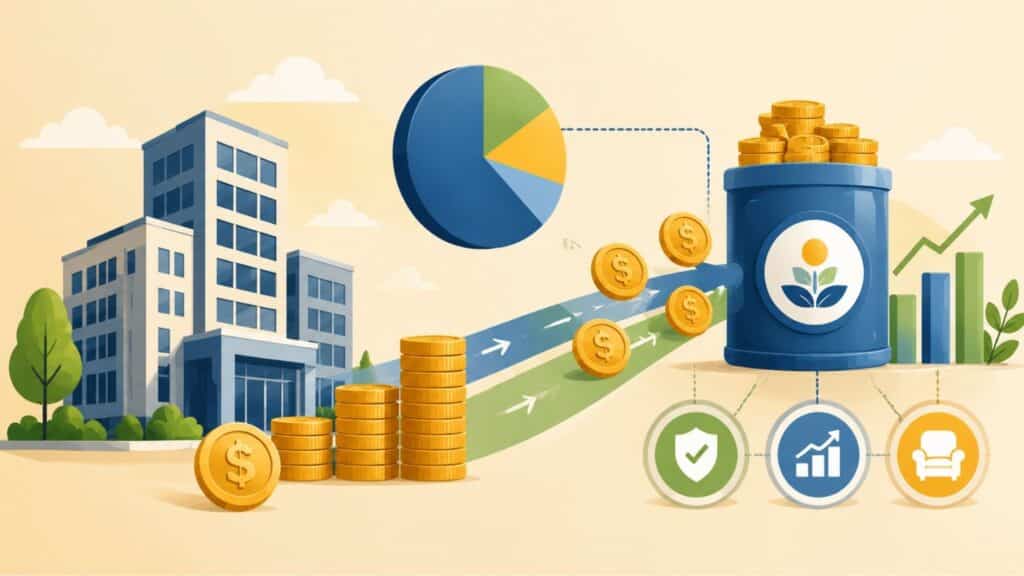
Many employers encourage retirement saving by offering a 401(k) match, meaning they contribute money to your account based on how much you contribute.
A 401(k) match is one of the more valuable employer fringe benefits available, since it’s essentially free money added to your compensation.
For example, an employer might match 50% of your contributions up to 6% of your salary, helping you grow your retirement savings faster.
Employer matches are typically made as pre-tax contributions, so you generally pay taxes on those funds when you withdraw them in retirement. Some plans may offer Roth matching options.
Contributing enough to receive the full employer match can maximize your retirement savings since the match is part of your overall compensation.
Employee Pre-Tax vs Roth 401(k): Key Differences
This table highlights how pre-tax and Roth 401(k) contributions differ in taxes, paycheck impact, and retirement benefits.
| Difference | Pre-Tax 401(k) | Roth 401(k) |
|---|---|---|
| Tax Treatment | Contributions are made before taxes, reducing taxable income today. | Contributions are made after taxes, so there is no upfront tax deduction. |
| Take-Home Pay | May increase your paycheck amount because less income is taxed. | May slightly reduce your paycheck because taxes are paid before contributions. |
| Retirement Withdrawals | Withdrawals are taxed as ordinary income in retirement. | Qualified withdrawals are tax-free after meeting IRS rules. |
| Future Tax Expectations | May be better if you expect a lower tax rate in retirement. | May be better if you expect the same or higher tax rate later. |
| Tax Savings Timing | Provides tax benefits now through lower taxable income. | Provides tax benefits later through tax-free withdrawals. |
| Investment Growth | Earnings grow tax-deferred but are taxed when withdrawn. | Earnings grow tax-free and can be withdrawn tax-free if qualified. |
Note: The information about Roth and pre-tax 401(k) differences is based on the IRS Roth comparison chart, which explains how contributions, tax treatment, and withdrawals vary between retirement plan options.
What Happens When You Withdraw Money?

Withdrawals are taxed differently based on your 401(k) type. Pre-tax 401(k) withdrawals are generally taxed as income, while qualified Roth 401(k) withdrawals are tax-free if IRS rules are met.
1. Qualified Withdrawals
Tax rules depend on your account type. Pre-tax 401(k) withdrawals are taxed as ordinary income, while Roth 401(k) withdrawals are tax-free when you meet age and holding-period requirements.
Qualified withdrawals can help you avoid unnecessary tax costs. Understanding whether your withdrawal qualifies allows you to plan your retirement income and estimate how much money you will keep after taxes.
2. Early Withdrawal Rules
Early withdrawals may have extra costs. Taking money out before age 59½ may result in income taxes and a 10% penalty unless you qualify for an exception under IRS rules.
Some IRS-approved exceptions allow penalty-free early withdrawals, though income taxes may still apply depending on your account type.
3. Required Minimum Distributions (RMDs)
RMD rules affect retirement withdrawals. Traditional 401(k) accounts require withdrawals after a certain age, while Roth 401(k) rules may differ based on current retirement account regulations.
Missing required withdrawals can lead to tax consequences and penalties. Keeping track of RMD deadlines helps you follow IRS requirements and manage your retirement savings more effectively.
The IRS outlines the age and timing rules for required minimum distributions, helping you avoid penalties for missed withdrawals.
Can You Split Contributions Between Both?
Yes, you can split your 401(k) contributions between pre-tax and Roth options if your employer’s plan allows both, giving you flexibility to balance tax savings today with potential tax benefits in retirement.
Most plans process this split automatically through simple payroll software, so you don’t need to manually divide each paycheck yourself.
This approach lets you diversify your tax strategy by getting some tax savings today while building a source of potentially tax-free income for retirement.
You can split contributions between both options to balance current tax savings with potential tax-free income in retirement. The right mix depends on your income, tax bracket, and future goals.
What 401(k) Contribution Option is Right for You?
Your choice depends on your current tax situation, expected retirement income, and whether you want tax savings now or later. The Department of Labor’s Savings Fitness post walks through this kind of planning in more depth
1. When Pre-Tax Makes Sense
A pre-tax 401(k) may be a good option if you want tax benefits today and expect your tax rate to be lower in retirement.
- You are currently in a higher tax bracket and want to reduce taxable income.
- You expect your retirement income to be lower than your current earnings.
- You want to keep more of your paycheck while saving for retirement.
- You are in your peak earning years and want immediate tax savings.
2. When Roth Makes Sense
A Roth 401(k) may be a better option if you prefer paying taxes now in exchange for tax-free income later.
- You expect your tax rate to be higher in retirement.
- You are early in your career and currently have a lower income.
- You want tax-free withdrawals from your retirement savings.
- You prefer more predictable taxes instead of future tax uncertainty.
| Example Comparing both: A $5,000 401(k) contribution can affect taxes differently depending on whether you choose a pre-tax or Roth option. A pre-tax 401(k) lowers your taxable income today, while a Roth 401(k) offers the benefit of tax-free qualified withdrawals later. The right choice depends on your current income, future tax expectations, and retirement goals. Consider when you prefer to receive the tax benefit before choosing an option. |
Conclusion
The choice between employee pre-tax vs roth contributions depends on your income, expected tax rate, and retirement goals.
Knowing employee pre-tax vs. Roth differences allows you to make a more informed decision about your retirement savings strategy.
There is no single option that works best for everyone. Your ideal choice may change as your career, income, and financial priorities evolve.
Have you chosen a pre-tax or Roth 401(k) option, and why? Share your experience and thoughts in the comments.
Frequently Asked Questions
Can I Change My 401(k) Contributions from Pre-Tax to Roth?
Yes. Most plans let you change your contribution type at any time going forward. The change only applies to future paychecks, not past contributions.
Is a Roth 401(k) the Same as a Roth IRA?
No. A Roth 401(k) is employer-sponsored with higher contribution limits and no income cap. A Roth IRA has lower limits and phases out at higher incomes.
When Might a Roth 401(k) Be Less Beneficial?
There is no specific age at which a Roth 401(k) stops being worth it. Instead, the decision depends on factors such as your current tax bracket, expected retirement tax rate, and how long your money has to grow.