


FICA comes off every paycheck, automatically, whether you understand it or not. Many people don’t; they just notice the money is gone
This article breaks down what FICA actually is, what it’s funding, what the 2026 rates look like, and how to spot it on your pay stub
Once you know the numbers, your pay stub stops looking like a mystery.
What Does FICA Mean on a Paycheck?
FICA stands for the Federal Insurance Contributions Act. It is a federal payroll tax that funds two programs: Social Security and Medicare.
Every time you receive a paycheck, a fixed percentage is automatically withheld under FICA before you see a single dollar.
Per the IRS, this withholding is mandatory for most wage earners.
On your pay stub, FICA appears as two separate line items:
- Social Security Tax (sometimes labeled “OASDI”, Old-Age, Survivors, and Disability Insurance)
- Medicare Tax (sometimes labeled “Fed Med/EE”)
Both deductions are listed under the “Taxes Withheld” section of your pay stub. If you only see one combined “FICA” line, your employer is grouping them; the split still applies underneath.
What Does FICA Pay For?

The two line items on your stub fund entirely different programs, and both affect you eventually, whether that feels real right now or not.
1. Social Security Benefits
Social Security covers retirement income, disability payments, and survivor benefits for dependents of deceased workers.
When you contribute to Social Security through FICA, you are building credits toward your own future eligibility. Learn more at the Social Security Administration.
2. Medicare Benefits
Medicare provides health insurance coverage for people aged 65 and older, and for certain younger individuals with qualifying disabilities.
Your Medicare contributions go directly toward funding this coverage. Details on covered services are available at Medicare.
What are the Current FICA Tax Rates?
The rates below reflect the current federal FICA structure. Both employees and employers have defined contribution obligations.
Employee FICA Tax Rates & Employer FICA Contributions
Employers match the employee contribution dollar-for-dollar, bringing the combined FICA contribution on any wage to 15.3%.
| Tax Type | Employee Rate | Employer Rate | Applied To |
|---|---|---|---|
| Social Security | 6.2% | 6.2% | Wages up to the annual wage base limit |
| Medicare | 1.45% | 1.45% | All wages, no cap |
| Total FICA | 7.65% | 7.65% | — |
Social Security Wage Limit
Social Security tax only applies to wages up to a set annual cap, called the wage base limit.
For 2025, it was $176,100; for 2026, that limit is $ 184,500, & it keeps increasing every year, per the Social Security Administration.
Earnings above this threshold are not subject to Social Security tax. Medicare has no such cap.
Additional Medicare Tax for High Earners
Earners above certain income thresholds owe an Additional Medicare Tax of 0.9%:
| Filing Status | Threshold |
|---|---|
| Single / Head of Household | $200,000 |
| Married Filing Jointly | $250,000 |
| Married Filing Separately | $125,000 |
This additional 0.9% is the employee’s responsibility only; employers do not match it.
How FICA Affects Your Paycheck?
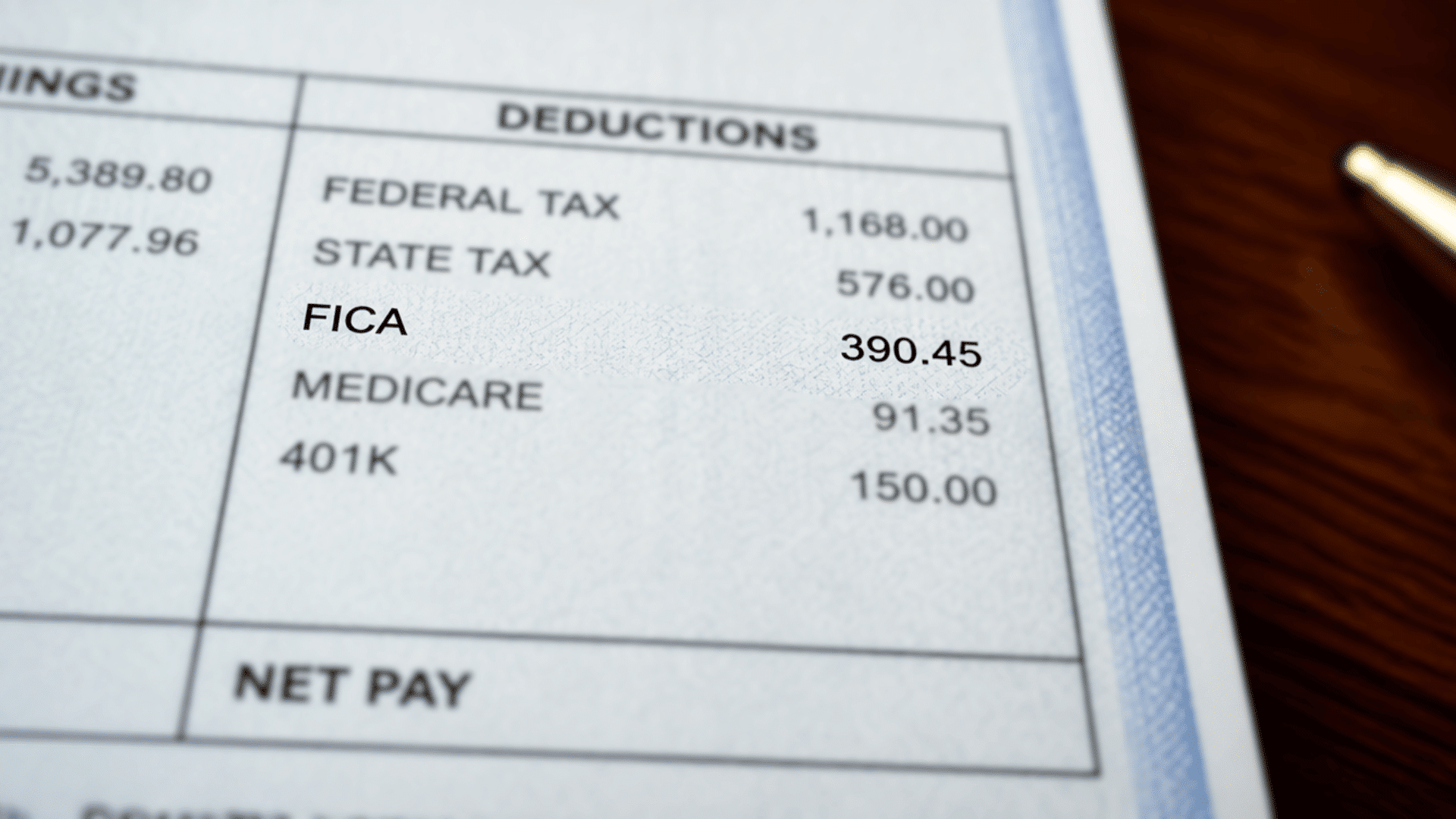
FICA is one of the first deductions applied to your gross pay. Understanding this helps explain the gap between what you earn and what you take home.
The amount withheld depends entirely on your gross wages.
The table below shows how FICA deductions scale across common income levels, using the standard 7.65% employee rate.
| Annual Gross Income | FICA Withheld (7.65%) | Monthly Impact |
|---|---|---|
| $30,000 | $2,295 | ~$191/month |
| $60,000 | $4,590 | ~$383/month |
| $100,000 | $7,650 | ~$638/month |
For earnings above the wage base limit, only the 1.45% Medicare portion continues to apply.
How to Calculate FICA Tax?
Calculating FICA is straightforward once you know the applicable rates and wage limits. The formula stays consistent for most earners, with one exception for those who cross the Social Security wage base during the year.
Simple FICA Calculation Formula
- Social Security Tax = Gross Wages × 6.2% (up to the annual wage base limit)
- Medicare Tax = Gross Wages × 1.45%
- Total FICA = Social Security Tax + Medicare Tax
For the IRS’s official withholding guidance, refer to IRS Publication 15.
Calculation Mistakes to Avoid
Once annual wages exceed the wage base limit, Social Security withholding stops; do not continue applying the 6.2% beyond that point.
High earners should also account for the additional 0.9% Medicare surcharge.
Note that pre-tax deductions, such as 401(k) contributions, reduce taxable income but not FICA wages.
Who Has to Pay FICA Taxes?
Most working individuals pay FICA, but the rate and structure differ depending on their employment type.
| Who | Social Security Rate | Medicare Rate | Total | Notes |
|---|---|---|---|---|
| Employees | 6.2% | 1.45% | 7.65% | Employer matches this amount |
| Employers | 6.2% | 1.45% | 7.65% | Paid separately; not deducted from employee wages |
| Self-Employed | 12.4% | 2.9% | 15.3% | Pays both halves via Self-Employment Tax; 50% is deductible |
Self-employed individuals pay the full 15.3% because there is no separate employer to cover the other half. They can deduct the employer-equivalent portion when filing their annual tax return.
Can You Change Your FICA Withholding?
FICA withholding is set by law and cannot be adjusted by employees. Here is what you can and cannot control:
- Federal income tax withholding: Adjustable via a revised Form W-4 submitted to your employer. Has no effect on FICA.
- Under-withholding on federal tax: May result in taxes owed at filing. FICA is unaffected; it is always withheld at the statutory rate.
- FICA stops mid-year: Once wages exceed the Social Security wage base, the 6.2% Social Security deduction stops. Medicare continues.
Are There Any FICA Exemptions?
FICA applies to most wages, but certain categories of workers may qualify for an exemption.
Students and Certain Nonresident Aliens
Students working for their own school may be exempt, provided the role is incidental to their education.
Certain nonresident aliens on F-1, J-1, M-1, or Q-1 visas may also qualify, subject to visa conditions.
Religious Exemptions
Members of qualifying religious groups that oppose public insurance programs and provide for their own members may apply for exemption.
This can extend to self-employed individuals and employees of affiliated organizations.
Other Limited Exceptions
- Family Employees: Children under 18 working in a parent’s sole proprietorship are exempt; the threshold is under 21 for domestic service.
- State and Local Government Employees: Some are covered under alternative public pension systems and are exempt from the Social Security portion.
- Certain Railroad Workers: Falls under the Railroad Retirement Tax Act rather than FICA.
Conclusion
FICA is fixed and mandatory, and it applies to almost every paycheck. The rate won’t change based on your income, filing status, or preferences.
But knowing where the cap is, how to spot it on your stub, and what happens if you’re self-employed means you’re not just watching money disappear.
You understand exactly where it’s going.
Frequently Asked Questions
Can FICA Taxes Be Refunded if I Overpay?
If you work multiple jobs and collectively exceed the Social Security wage base, you can claim a refund for the excess Social Security tax withheld when filing your return.
Are FICA Taxes Deductible on a Personal Tax Return?
Employees cannot deduct their share of FICA, but self-employed individuals can deduct the employer-equivalent share when filing taxes.
Do FICA Contributions Affect My Future Social Security Benefit Amount?
Yes, your Social Security benefit is calculated based on your lifetime earnings record, which is built through your FICA contributions.
Is FICA Withheld on Tips and Bonuses?
Yes, tips reported to your employer, and bonuses are treated as wages and are subject to FICA withholding.