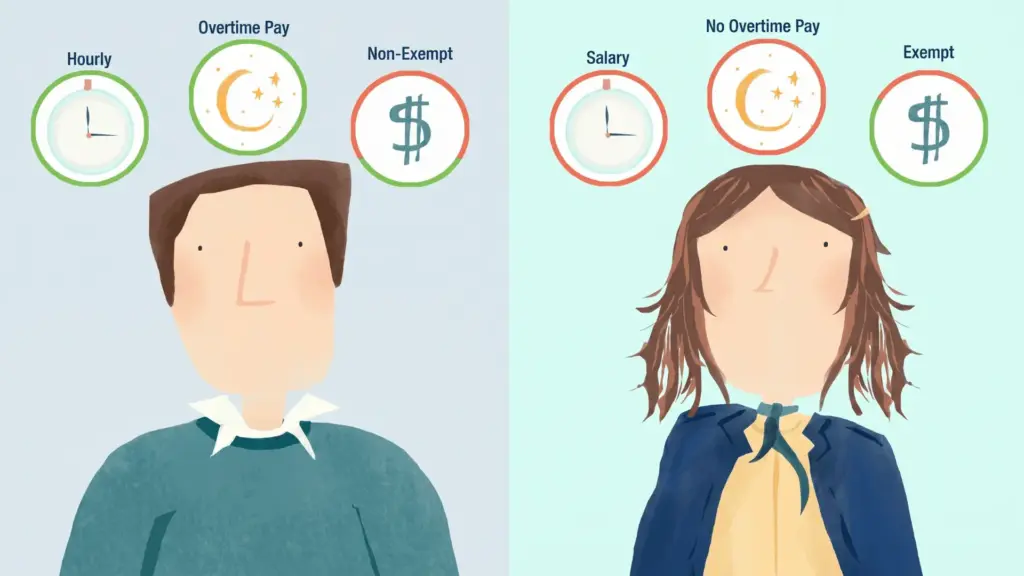


To answer “what is an employee?”, understanding the legal framework and duties is important.
It determines who is entitled to workplace protections, benefits, tax treatment, and other legal rights. So, if you are confused about if you are one or not, then this is the right place for you.
This blog will take you through the easy way of understanding the meaning of an employee under the IRS and DOL, so that you can evaluate if you are one or not.
What is an Employee?
An employee is a person hired by an employer to perform work in exchange for wages or a salary under an employment relationship.
Unlike independent contractors, employees typically work under the employer’s direction and may be entitled to legal protections, workplace benefits, and tax withholding requirements under federal and state laws.
According to the reports from the Internal Revenue Service (IRS), worker status is determined by the level of behavioral control, financial control, and the overall relationship between the worker and the business, not simply by a job title or written contract.
What Makes Someone an Employee Under the Law?
The IRS and the Department of Labor each run their own analysis, and a worker can pass one but fail the other. If you’re trying to figure out someone’s status, you have to check both.
How the IRS Considers Someone as an Employee
This is the IRS’s common-law test, and it applies even without a written agreement saying “employee” anywhere in it. The IRS weighs three factors:
- Behavioral control: The employer controls how, when, and where the work is performed, including schedules, tasks, and training.
- Financial control: The employer controls how the worker is paid and typically provides the tools and covers business expenses.
- Relationship type: The overall relationship, including contracts, benefits, and the ongoing nature of the work, helps determine employee status.
| DOL consideration for an Employee: Unlike the IRS, the U.S. Department of Labor uses the economic reality test under the FLSA to classify a worker. The main question is whether the worker is economically dependent on the employer or operates an independent business. The DOL looks at how much control the business has over the worker and how the work is completed. It also considers whether the worker can increase profits or suffer losses through personal business decisions. |
Employee vs. Independent Contractor: What’s the Difference?
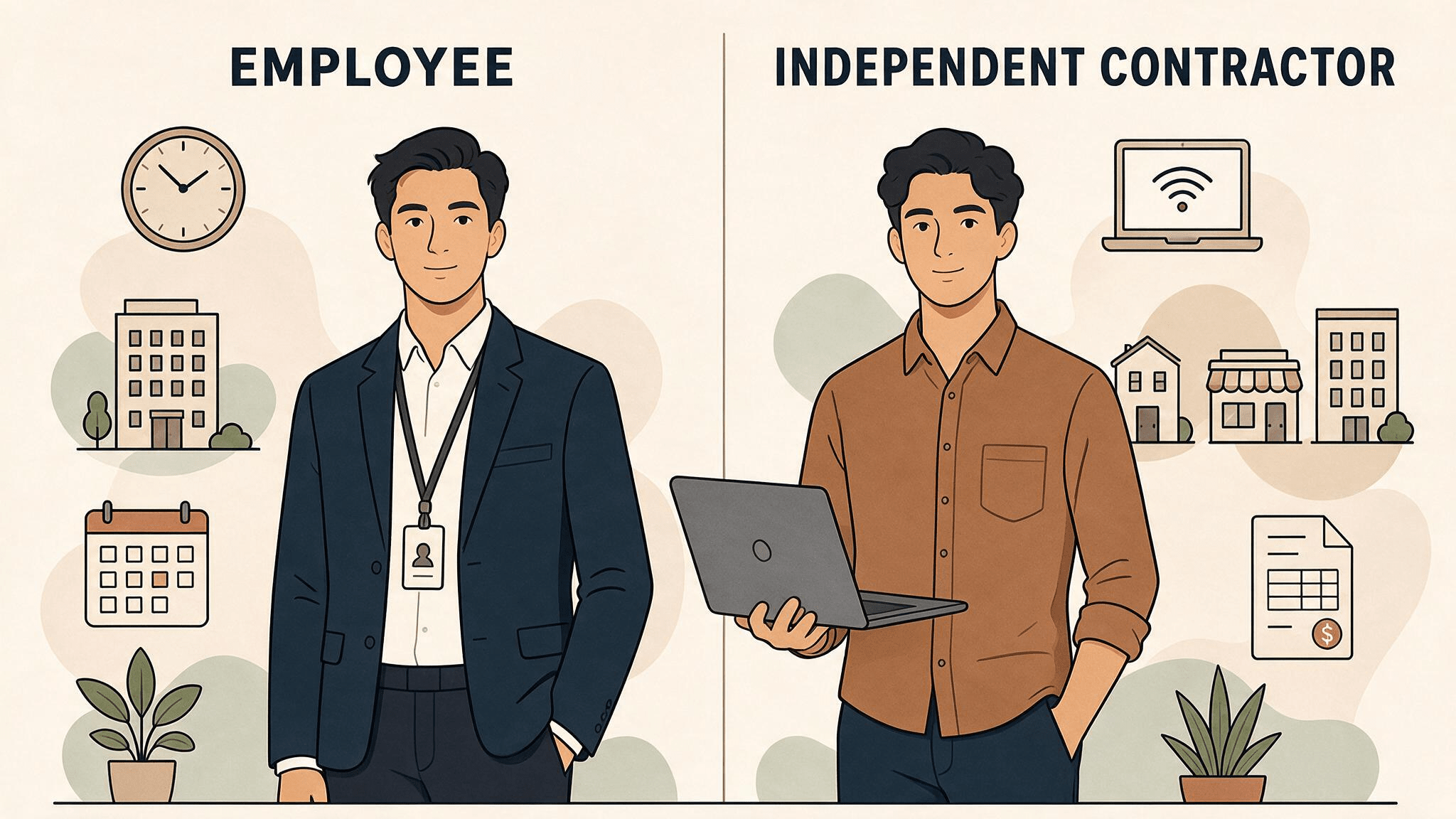
The U.S. Department of Labor also notes that employee classification affects wage protections, overtime eligibility, and other rights under federal labor laws.
| Factor | Employee | Independent Contractor |
|---|---|---|
| Work control | Employer sets how, when, and where. | Worker controls how work is done. |
| Payment | Regular wages or salary. | Paid by project or invoice. |
| Taxes | Withheld by the employer. | Paid by the worker. |
| Benefits | May receive workplace benefits. | Usually receives no benefits. |
| Legal protection | Covered by employment laws. | Has fewer labor protections. |
| Work period | Usually ongoing. | Usually project-based. |
Source: U.S. Department of Labor, IRS
What Types of Employees Are There?
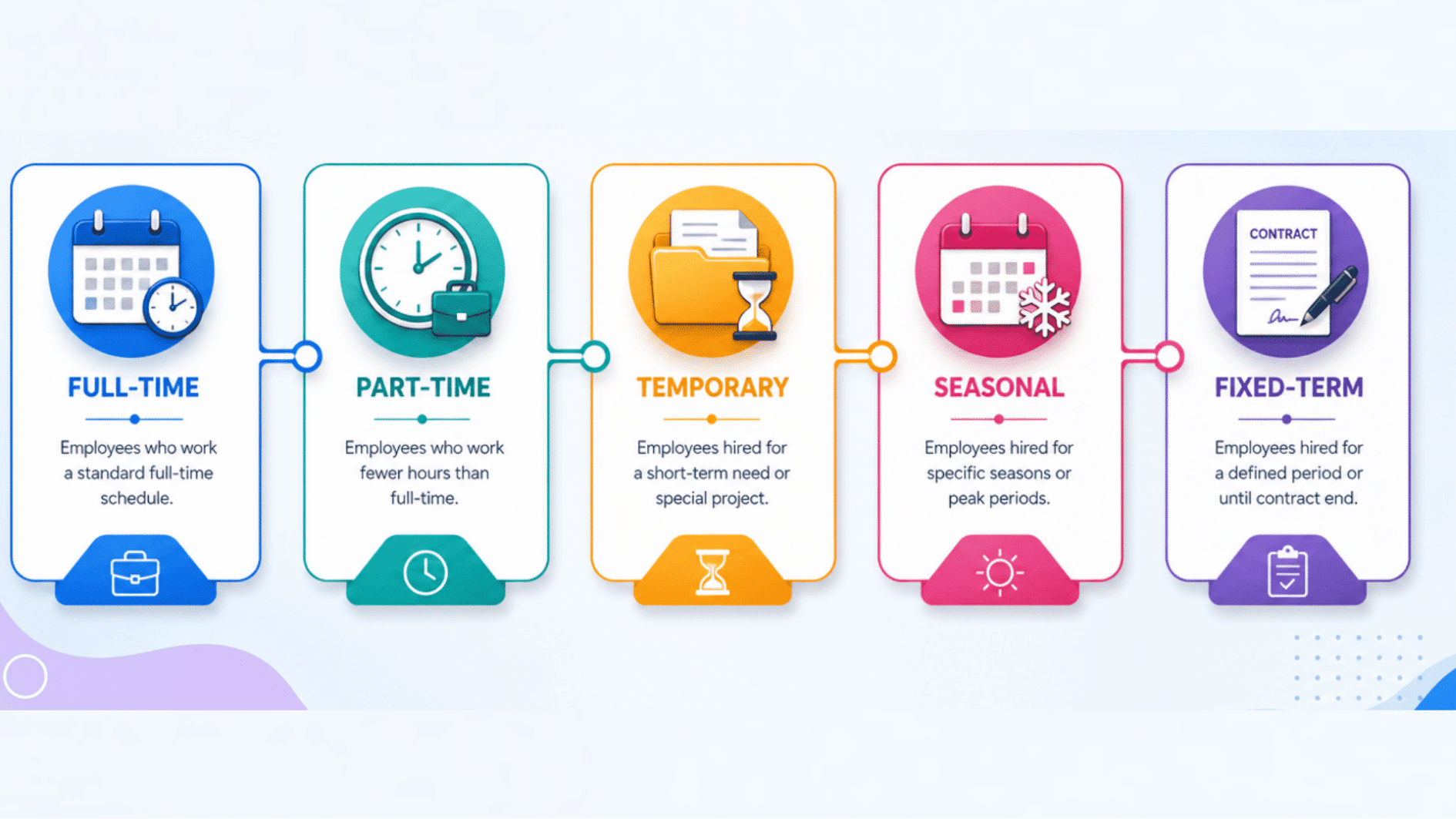
Employees can be classified under different types based on their work schedule, the length of their employment, or the type of job they perform.
Not every employee works the same way, and the label matters for benefits, scheduling, and which laws apply. Here’s how the main categories break down in practice.
1. Full-Time Employees
Full-time employees usually work between 35 and 40 hours each week, although employers may define it differently. These workers often follow a regular schedule and hold an ongoing position within the company.
They are more likely to receive health insurance, paid time off, retirement benefits, and other workplace perks.
A marketing manager working a standard 40-hour week is a common example.
2. Part-time Employees
Part-time employees work fewer hours than full-time staff, but no single cutoff applies to every workplace. Their hours may remain consistent or change depending on staffing needs.
Access to health insurance, paid leave, and retirement plans varies by company policy and applicable law.
For example, a retail associate may work 20 hours each week without receiving the same benefits as full-time coworkers.
3. Temporary Employees
Temporary employees are hired to meet a short-term business need.
They may cover an employee’s leave, support a special project, or help during a period of increased workload. The company may hire them directly or through a staffing agency.
An administrative assistant working for three months while another employee is on parental leave is a typical example.
4. Seasonal Employees
Seasonal employees are hired during predictable periods when a business needs extra staff. Their work is connected to a particular season, holiday, tourist period, or annual event.
Retailers may hire additional cashiers for the holiday season, while hotels may add workers during peak travel months.
Some seasonal employees return each year, but continued work is not always promised.
5. Fixed-term Employees
Fixed-term is a different type of employment. It’s not about a busy season; it’s a contract with a set end date, often for a defined project.
A software developer hired on a one-year contract falls into this bucket, and the job ends when the contract does, unless both sides agree to renew it.
What Rights Does an Employee Have?
Employee status triggers specific federal protections that contractors don’t get.
As per the U.S. Department of Labor, federal laws protect eligible employees’ rights related to wages, overtime, family and medical leave, workplace safety, and other employment standards.
- Minimum wage and overtime pay under the FLSA, if non-exempt
- A safe workplace under OSHA standards
- Protection from discrimination and harassment based on protected characteristics (Title VII, EEOC-enforced)
- Job-protected leave under the FMLA, if eligible
- Protection from retaliation for reporting violations
If your role involves overtime eligibility specifically, our exempt vs. non-exempt employee guide breaks down the salary and duties tests in detail.
What are an Employee’s Responsibilities?
Employees are responsible for performing their job duties. Check out the following workplace policies and meet the expectations of their employer.
Perform assigned job duties
Complete the tasks and responsibilities included in your role accurately and on time. Make sure your work meets the standards set by your employer.
Follow company policies
Understand and follow the rules, procedures, and guidelines set by the company. These policies help maintain an organized and fair workplace.
Maintain a professional and respectful attitude
Treat coworkers, managers, clients, and customers with respect. Professional behavior helps create a positive and cooperative work environment.
Protect confidential company information
Keep sensitive business, employee, and customer information private. Do not share confidential details with unauthorized people.
Follow workplace health and safety rules
Follow safety procedures and use equipment correctly to reduce workplace risks. Report unsafe conditions or hazards as soon as possible.
Communicate honestly about work progress and any issues
Provide clear, accurate updates on your tasks and responsibilities. Inform your manager when problems or delays may affect your work.
Key Takeaways
While searching for what is an employee, you may have gotten confused. Employee status affects pay, legal protections, and employer responsibilities.
Taking the time to classify workers correctly can help businesses avoid costly compliance issues while ensuring employees receive the rights they’re entitled to.
When there’s uncertainty, it’s always worth reviewing the latest IRS and U.S. Department of Labor guidance before making a classification decision.
Frequently Asked Questions
Who Counts as An Employee?
Anyone whose work is controlled by the business paying them counts as an employee, based on the IRS’s behavioral, financial, and relationship factors, regardless of job title or contract language.
Can an Employee Also Be an Independent Contractor?
Yes, for a different employer or a genuinely separate line of work, but not for the same role with the same company at the same time. Doing so risks a misclassification finding.
Is a W-2 Worker Always an Employee?
Generally yes. A W-2 signals the employer already withheld payroll taxes, which is standard practice for employees, while contractors receive a 1099 and handle their own taxes.