

Receiving a legal notice can create uncertainty, especially when it arrives without warning and involves a dispute that needs attention. Many people ask: what is a cease and desist, and what steps should they take after receiving one?
These notices often involve claims related to intellectual property, contracts, personal disputes, or business matters.
Knowing the difference between a formal legal directive and a simple request to stop an action can help avoid poor decisions.
This article explains what such a notice means, how it differs from a warning letter, and the important steps to consider when responding
What Is a Cease and Desist Order?
A cease-and-desist order is a binding directive issued by a court or government agency requiring someone to stop a specific activity.
It’s typically issued when conduct violates a law or regulation, such as a company breaching environmental rules.
Unlike a private warning, it carries legal weight the moment it’s issued and is used across labor, securities, and education law.
That’s what separates it from a letter, which has no legal force. With an order, a court or agency has already stepped in, so noncompliance is a direct violation.
Orders are typically issued after verified legal findings or in cases of urgent enforcement needs. They are not advisory and require immediate compliance to avoid penalties.
Cease and Desist Order vs. Cease and Desist Letter
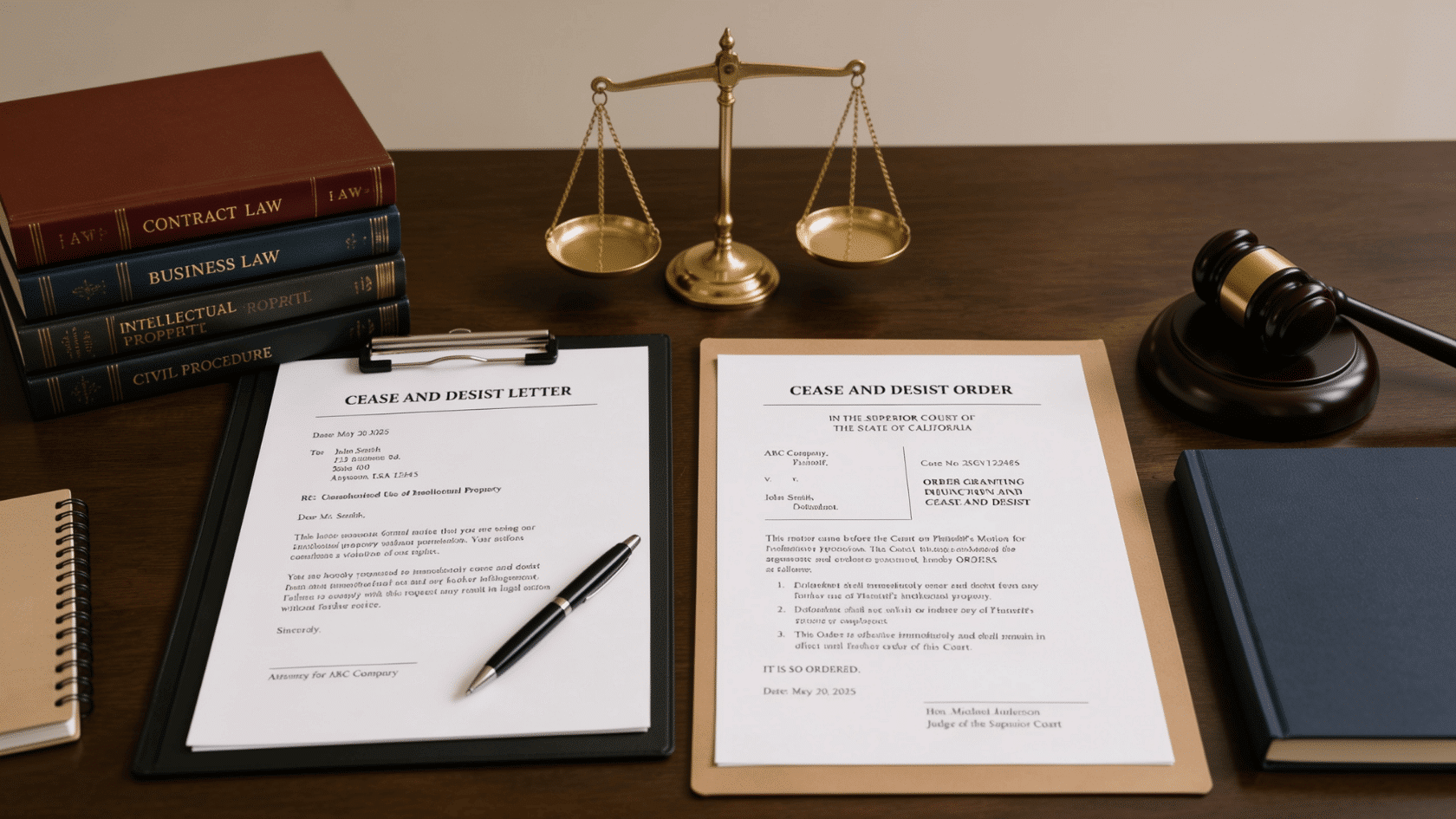
These cease and desist terms get used interchangeably, but they are not the same legally and carry very different levels of legal force and consequences.
| Aspect | Cease and Desist Letter | Cease and Desist Order |
|---|---|---|
| Issued by | Anyone, often via an attorney | Court or government agency |
| Legal force | None on its own | Legally binding |
| Consequence if ignored | No automatic penalty | Contempt, fines, injunctive relief |
| Common form | Warning letter | Injunction or restraining order LegalMatch |
| Purpose | Pressure before legal action | Court-mandated, already enforceable |
A letter is a warning, not a ruling, so it doesn’t create a legal order. It is not enforceable on its own and does not carry immediate legal penalties.
But ignoring it isn’t risk-free and can backfire or be used as evidence later. It may also strengthen the other party’s case if the dispute escalates.
Common Situations Where a Cease and Desist Order Is Used

A cease-and-desist order is generally issued when a court or government authority requires someone to stop a specific activity.
These situations can involve legal rights, business operations, personal disputes, or regulatory concerns:
1. Intellectual Property and Unauthorized Use
Intellectual property disputes often arise when protected materials are used without permission. This may involve trademarks, copyrights, patents, or other legally protected assets.
The affected party may seek legal action to stop activities such as:
- Using a brand name without authorization
- Copying protected creative work
- Selling products that violate intellectual property rights
2. Contract and Non-Compete Violations
Contract disputes may occur when one party fails to follow agreed terms or continues actions restricted under an agreement.
These matters are common in employment and business relationships involving:
- Breaches of confidentiality agreements
- Violations of non-compete terms
- Failure to follow contractual obligations
3. Defamation and Reputation Disputes
Reputation-related disputes involve harmful statements or content that may damage an individual’s or business’s public image.
Legal action in these cases may focus on stopping:
- False claims or accusations
- Harmful online statements
- Repeated publication of disputed information
4. Debt Collection Practices
Consumer protection laws regulate how debt collectors communicate with individuals. In some cases, a person may request that collection activities stop when contact methods violate legal requirements.
These situations may involve:
- Excessive or repeated communication
- Improper collection methods
- Contact after a valid written request
5. Regulatory, Business, and Commercial Disputes
Businesses may face enforcement actions when their activities violate regulations or create legal concerns. These matters often involve operations, competition, or industry requirements.
Examples include:
- Regulatory noncompliance
- Unfair business practices
- Misuse of trade secrets or confidential information
6. Harassment and Personal Conduct Issues
Certain situations involving repeated unwanted behavior may require formal action to prevent further contact or conduct.
These matters may involve:
- Persistent unwanted communication
- Threatening or intimidating behavior
- Continued workplace or personal harassment
The type of dispute determines the appropriate legal response and the steps required to address the issue. This can include negotiation, compliance measures, or further court involvement.
How Does a Cease-and-Desist Order Actually Get Issued?
A cease-and-desist order follows a formal legal process involving investigation, evidence review, and approval by a court or government authority.
It is issued only when legal requirements are met, and immediate action is considered necessary.
- Investigation and Legal Filing: The process begins when authorities or affected parties identify a possible violation and submit evidence through a lawsuit, petition, or administrative proceeding.
- Evidence Review and Approval: A judge or agency reviews whether the claim has legal merit, whether potential harm exists, and whether issuing an order serves the public interest.
- Type of Order Issued: A summary order may be issued before a hearing in urgent situations, while a final order usually follows a hearing or formal review.
- Service and Enforcement: Once approved, the order is formally delivered to the recipient. Ignoring it can lead to fines, contempt proceedings, or other legal penalties.
- Order vs. Letter: A cease-and-desist letter is a warning requesting action, while an official order is legally binding and requires compliance.
Understanding this process helps explain why a formal order carries greater legal authority than a warning letter.
What Happens if You Violate a Cease-and-Desist Order?
Violating a cease-and-desist order triggers direct legal consequences, not just the threat of a future dispute.
Since reaching an order already required a judge or agency to find a violation, ignoring it constitutes a new infraction under an existing ruling.
- Contempt of court: Disregarding a court-mandated order can carry serious penalties, including being held in contempt.
- Fines: Depending on the agency involved, violations may result in financial penalties.
- Other enforcement actions: In specialized contexts, such as trade disputes under Section 337, agencies can pursue additional remedies beyond standard fines.
This is sharply different from ignoring a letter alone, which carries no automatic penalty since no court or agency has ruled yet.
What to Do if You’re Served with a Cease-and-Desist Order?
Once issued, an order is legally binding and must be followed right away, not treated as a casual or optional warning. Here’s what to do:
- Know the type of order. A summary order is issued without a hearing, so you must request one before the deadline, or it becomes final.
- Call an attorney first. Avoid negotiating directly, since the order carries legal authority.
- Get clarity on the limits. Your attorney will confirm deadlines and what conduct is restricted.
- Choose your next step. Depending on the case, you can comply or look into appeal options.
Acting quickly and involving an attorney can limit your legal exposure while protecting your rights.
Final Takeaway
A legal notice demanding that an action stop should always be reviewed carefully, as the response can affect future outcomes.
Taking time to understand the claims, deadlines, and available options helps prevent avoidable mistakes.
Review the details, gather relevant documents, and consider speaking with an attorney before taking action. Early legal guidance can help you choose an appropriate response and handle the matter more effectively.
Have questions about handling a legal notice? Share your situation in the comments below.
Frequently Asked Questions
Can A Cease-And-Desist Order Be Issued Without A Warning Letter First?
Yes, a court or agency may issue an order directly in urgent situations. A prior warning letter is not always required before enforcement action.
Does A Cease-And-Desist Order Expire On Its Own?
No, it usually remains active until a court or agency removes it, modifies its terms, or resolves the underlying legal matter.
Can You Negotiate The Terms Of A Cease-And-Desist Order After It’s Issued?
Generally, no. Changes usually require formal legal procedures, such as requesting a hearing, filing an appeal, or seeking court approval.