
Knowing child labor laws is important for employers, parents, and young workers. These rules limit work hours, job duties, and employment conditions for minors.
Official U.S. and New York government resources explain the requirements by age and type of work. They also provide work-hour information, employment certificate details, and employer resources.
Federal and state rules can apply at the same time, with the stricter standard taking priority. This blog covers official U.S. and New Yorklaws, including work-hour limits and employer responsibilities.
What are Child Labor Laws?
Child labor laws help protect minors from unsafe work conditions while supporting fair and age-appropriate employment. These laws define when minors can work, how many hours they can work, and what types of jobs they can perform.
In the United States, child labor rules are mainly covered under the Fair Labor Standards Act (FLSA), which sets federal standards for employing minors.
New York State has its own child labor requirements that provide additional protections for young workers.
Child Labor Laws in New York
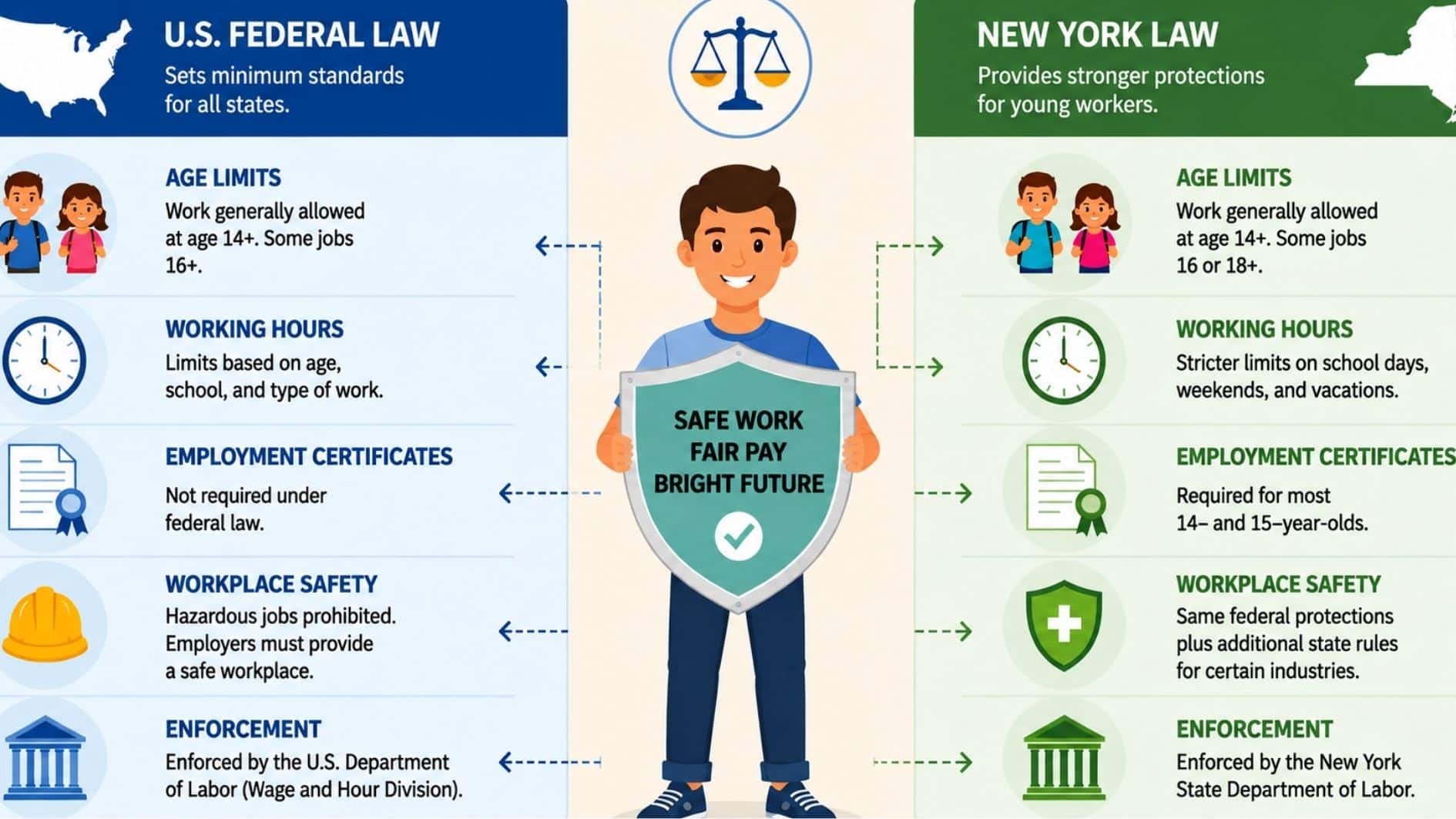
New York often has stricter requirements related to work hours, employment certificates, and workplace responsibilities.
Employers in New York must follow both federal laws and New York State child labor rules. If the two laws have different requirements, employers must follow the rule that provides stronger protection for the minor
Before many minors can begin working in New York, they must obtain anemployment certificate, commonly known as working papers.
These certificates help confirm that the minor meets the age requirements for employment under New York child labor laws and that the employer is following required rules for young workers
Know About the Work Hours and Age Limits
New York limits how many hours minors can work based on their age and whether school is in session.
Under 14 Years Old
Minors under 14 generally cannot work in most jobs covered by child labor laws. Only certain permitted activities may be allowed, and similar restrictions continue during school breaks and non-school days.
Some exceptions may apply to work such as acting, newspaper delivery, or certain tasks in a family-owned business.
Ages 14–15 Years Old
When school is in session, minors ages 14 to 15 can generally work up to 3 hours on a school day and 18 hours during a school week.
On non-school days, they may work up to 8 hours per day and 40 hours per week.
Ages 16–17 Years Old
During school sessions, minors aged 16 to 17 can generally work up to 4 hours on a school day before another school day.
Longer hours may be permitted on weekends and holidays within legal limits. On non-school days, they may work up to 8 hours per day and 48 hours per week.
18 Years and Older
Once a worker turns 18, child labor hour restrictions no longer apply. Work schedules are then governed by the employment laws that apply to adult workers.
Child Labor Laws in Major US States
In the United States, The FLSA sets basic requirements for employing minors, including minimum age rules, work-hour limits, and restrictions on hazardous jobs.
|
State |
Work Hours for Ages 14–15 |
Work Hours for Ages 16–17 |
|---|---|---|
|
California |
Up to 3 hours on school days, 18 hours per school week. During breaks: up to 8 hours/day and 40 hours/week. |
More flexible hours, but restrictions apply for hazardous jobs and certain late-night work. |
|
Texas |
Up to 3 hours on school days, 18 hours per school week, and up to 8 hours on non-school days. |
No federal hour limit, but hazardous occupations are restricted. |
|
Florida |
During school weeks: up to 3 hours on school days and 15 hours per week. Longer hours allowed during school breaks. |
Restrictions mainly apply to hazardous jobs and certain work hours. |
|
Illinois |
Up to 3 hours on school days, 18 hours per school week, and 8 hours per day during breaks. |
Longer work hours are allowed, but hazardous work is prohibited. |
|
Pennsylvania |
Up to 3 hours on school days, 18 hours per school week, and 8 hours on non-school days. |
Generally fewer restrictions, but hazardous occupations are not allowed. |
|
Ohio |
Federal limits generally apply: 3 hours per school day and 18 hours per school week. |
Can work longer hours but cannot perform hazardous work. |
|
Georgia |
Federal hour limits apply: 3 hours on school days, 18 hours per school week, and 8 hours on non-school days. |
No federal hour limit, but hazardous work restrictions apply. |
|
Michigan |
Up to 3 hours on school days and 18 hours per school week during school periods. |
Longer hours allowed, but hazardous jobs are restricted. |
|
North Carolina |
Up to 3 hours on school days, 18 hours per school week, and longer hours during school breaks. |
More flexible schedules, with restrictions on hazardous work. |
|
Arizona |
Federal hour limits generally apply for ages 14–15. |
No federal hour limits, but hazardous occupation rules apply. |
|
Colorado |
Work-hour limits apply during school weeks and vary by school schedule. |
Longer work schedules are allowed, but hazardous jobs are restricted. |
|
Massachusetts |
Limits apply based on school schedule, with restrictions on daily and weekly hours. |
Additional rules may apply for work permits and allowed occupations. |
|
Virginia |
Federal limits generally apply: 3 hours on school days and 18 hours per school week. |
More flexible hours, but hazardous occupations remain restricted. |
|
Washington |
State rules apply based on school schedule, season, and type of employment. |
Work-hour restrictions and permitted jobs vary by age. |
Employer’s Responsibilities for Employing Minors
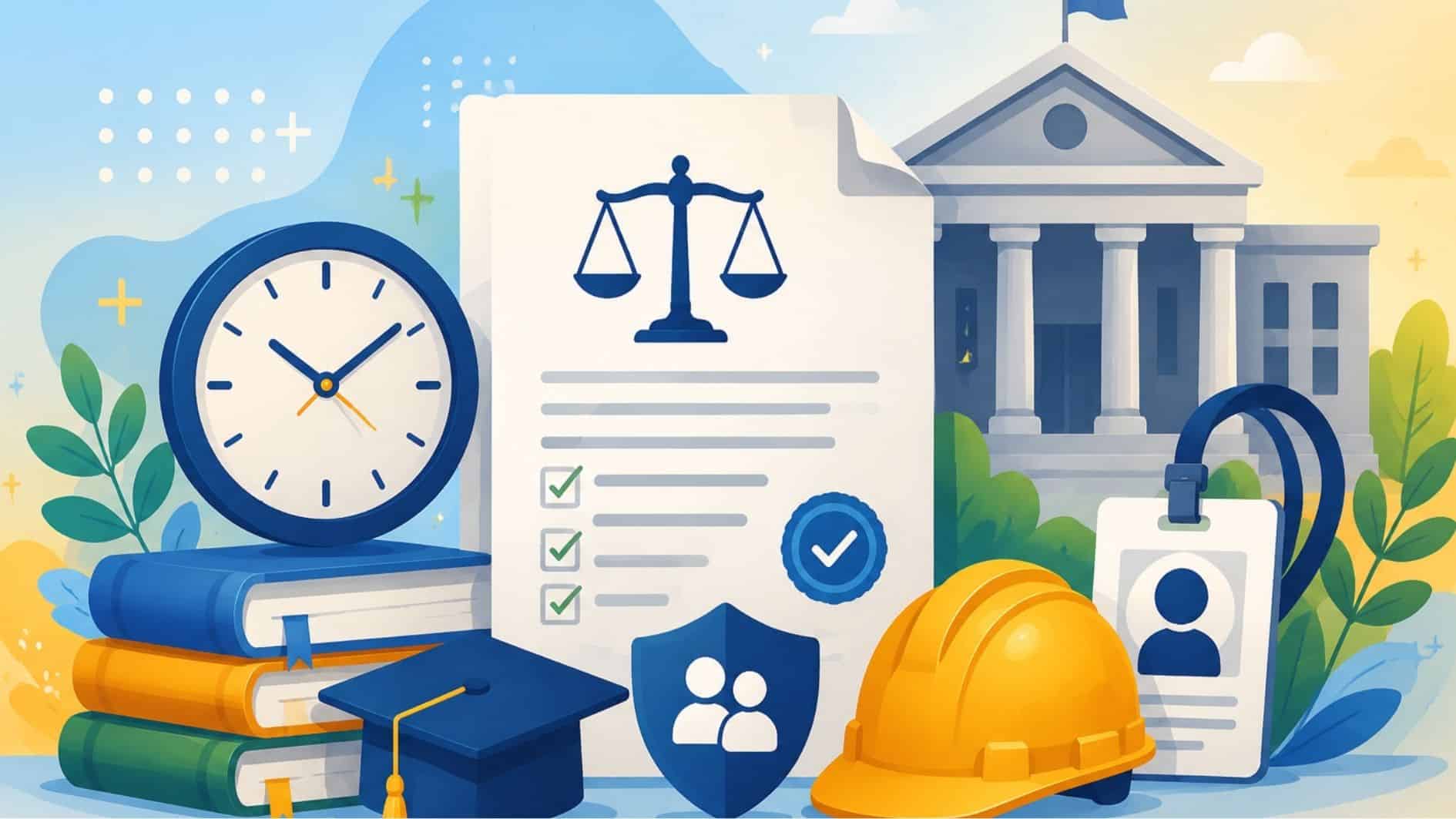
Employers who hire minors have additional responsibilities to ensure that young workers are employed legally and safely. Following these laws helps protect minors while also helping businesses avoid violations and penalties.
Verify the Worker’s Age
Before hiring a minor, employers should confirm the employee’s age and figure out which child labor rules apply.
Age affects several things at once: the type of work the minor can legally do, the number of hours they can work, and whether extra paperwork is required before their first shift.
Follow Work-Hour Restrictions
Employers must make sure minors don’t work beyond legal limits. A young employee’s schedule depends on their age, whether school is in session, the time of day, and any state-specific rules in addition to federal law.
Maintain Required Records
Employers need to keep certain records on file for every minor employee.
This includes proof of age, employment certificates or work papers where the state requires them, and a copy of the employee’s work schedule and other employment details.
Provide a Safe Workplace
Employers have to protect young workers on the job. That means providing proper training and supervision, keeping minors away from prohibited hazardous tasks, and ensuring the workplace meets safety standards.
Display Required Labor Law Posters
Employers must display certain workplace posters so employees can see and understand their rights. These posters cover labor standards, safety rules, and other workplace requirements that minors and adult employees alike should know.
The Takeaway
Child labor laws are not just about setting restrictions; they create a balanced environment where young people can gain work experience without compromising their safety or education.
For employers, understanding these requirements helps build responsible hiring practices and ensures young workers have opportunities in a lawful, supportive workplace.
As employment rules can vary between federal and state levels, staying updated through official government resources is the best way to avoid confusion and maintain compliance.
If a business is hiring its first young employee or reviewing existing policies, following these guidelines helps create a workplace where both employers and young workers can succeed
Frequently Asked Questions
Can I Work at McDonald’s if I’m 13?
No, you cannot work at McDonald’s at 13 because the minimum hiring age is usually 14 or 16.
What Jobs Can a 14-Year-Old Do in California?
In California, a 14-year-old can work in specific non-hazardous entry-level jobs, such as a retail clerk, fast-food crew member, or office assistant.
What’s the Longest Shift a 16-Year-Old Can Work?
Under federal law in the United States, there is no maximum limit on the number of hours or the length of a shift a 16-year-old can work
What is the Minimum Wage for Teens in the USA?
The federal youth minimum wage in the USA is $4.25 per hour for teen workers under 20 years old.