

Protected characteristics shape some of the most important anti-discrimination rights in the U.S. They encompass various traits and statuses, but the specific protections depend on the law and context involved.
That is where things can get complicated. Employment, housing, credit, and state laws do not all use the same list. Knowing the basic legal framework can make those protections easier to apply.
This blog breaks down the main federal protections, the laws behind them, recent legal changes, and the practical steps you can take if discrimination affects you.
How Protected Characteristics Work Under U.S. Law
Anti-discrimination laws generally prohibit certain decisions based on a legally protected trait. For example, an employer covered by Title VII cannot refuse to hire someone because of race or religion.
A landlord covered by the Fair Housing Act cannot reject a tenant because the tenant has children when familial status protection applies.
Federal law sets a baseline. States and cities can provide additional protections, so rights can differ by location.
The U.S. Department of Labornotes that state and local laws may prohibit discrimination for additional reasons.
Who are the Federally Protected Classes?
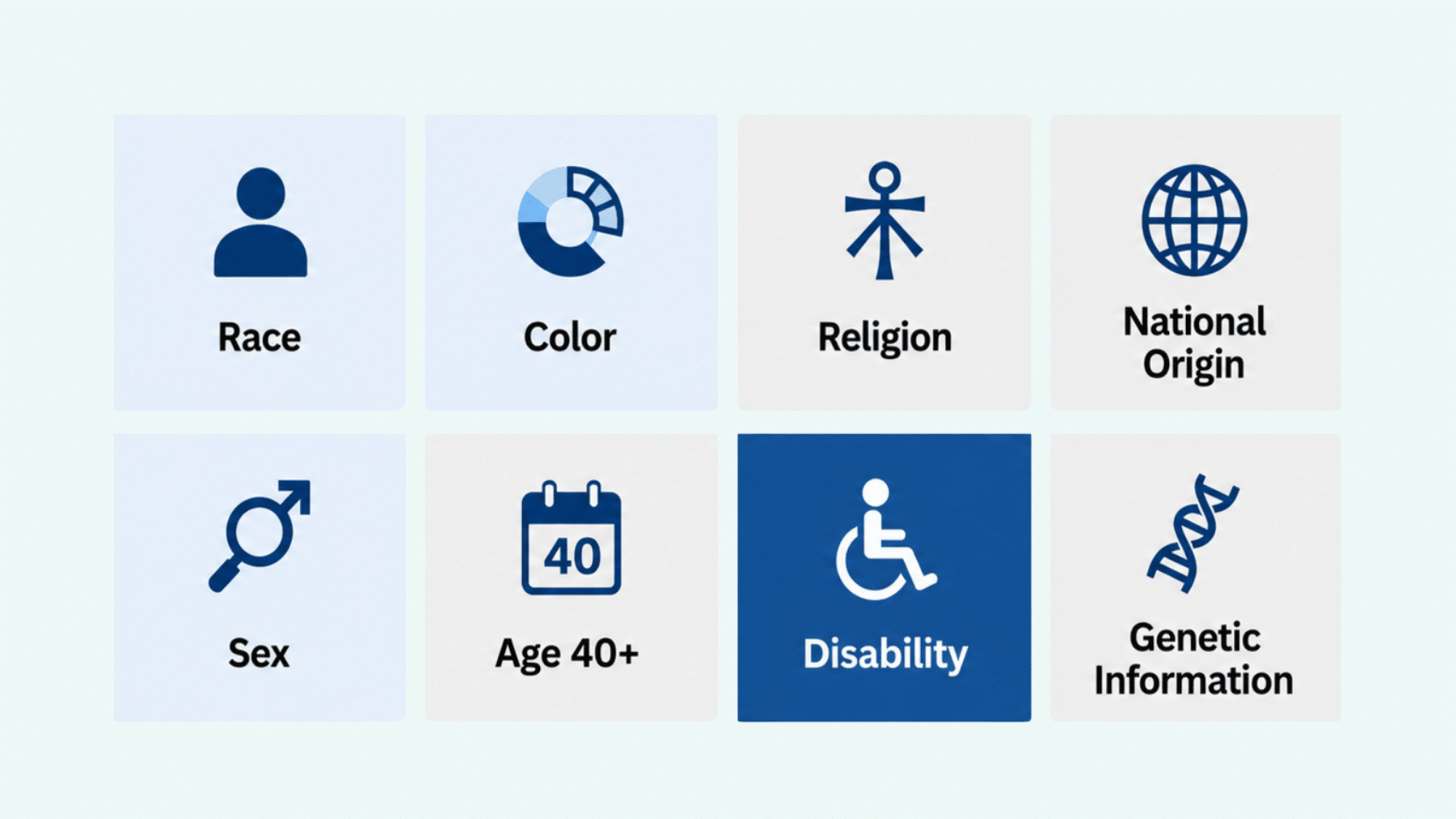
The EEOCworkplace discrimination overview provides the current federal employment list. Retaliation is also unlawful in covered circumstances. It is different from a personal characteristic.
Race
Federal law prohibits employment discrimination based on a person’s race.
This protection applies to decisions involving hiring, pay, promotion, termination, job assignments, training, and other conditions of employment.
Color
Color discrimination involves treating someone unfavorably because of their skin pigmentation, complexion, shade, or tone. Color is listed separately from race under federal employment discrimination protections.
Religion
Employees and job applicants are protected from discrimination based on religion.
Federal protections can also require employers to provide reasonable accommodation for sincerely held religious beliefs, observances, or practices when applicable.
National Origin
National origin protection prohibits employment discrimination connected to a person’s national origin.
Employers cannot use national origin as an unlawful basis for decisions involving hiring, firing, compensation, promotion, or other employment practices.
Sex
Sex discrimination is prohibited under federal employment law. EEOC protections include discrimination related to pregnancy, childbirth, related medical conditions, sexual orientation, and transgender status.
Age
Federal age discrimination protections cover workers and job applicants age 40 or older. Employers generally cannot make covered employment decisions based on a person’s age within this protected age group.
Disability
Federal law protects qualified individuals from employment discrimination based on disability. Covered employers may also have a duty to provide reasonable accommodation for a disability when required by law.
Genetic Information
Employers may not discriminate based on genetic information. The EEOC states that this can include genetic tests, genetic services, and family medical history.
Retaliation
Retaliation is also prohibited under federal employment discrimination laws, but it is not a personal protected characteristic.
Protection can apply when someone files a discrimination charge, reasonably opposes discriminatory conduct, or participates in a discrimination lawsuit, investigation, or proceeding.
Federal Laws That Define Protected Classes
The protections are not based on a single law, but a patchwork of federal, state, and local statutes. Here are the core federal laws that establish the primary protected characteristics:
- Title VII of the Civil Rights Act of 1964: Prohibits discrimination based on race, color, religion, sex, or national origin. It generally covers employers with 15 or more employees.
- Pregnancy Discrimination Act of 1978: Protects employees from discrimination related to pregnancy, childbirth, or related medical conditions.
- Age Discrimination in Employment Act of 1967: Protects workers and applicants aged 40 or older from age discrimination. It generally covers private employers with 20 or more employees.
- Americans with Disabilities Act of 1990: Prohibits disability discrimination and may require reasonable accommodations. It generally covers employers with 15 or more employees.
- Genetic Information Nondiscrimination Act of 2008: Prohibits discrimination based on genetic information, including genetic tests and family medical history.
Recent Changes in Protected Characteristics Laws
Recent court and EEOC actions have changed federal workplace guidance, but the core Bostock ruling remains in place.
|
Date |
What Changed |
What It Means |
|---|---|---|
|
2020 |
Supreme Court decided Bostock v. Clayton County |
Title VII protects gay and transgender workers from firing based on that status. |
|
May 2025 |
Federal court vacated parts of the EEOC’s 2024 harassment guidance |
The court set aside portions addressing pronouns, bathrooms, and related gender-identity issues. |
|
Jan. 2026 |
EEOC voted to rescind the entire 2024 harassment guidance |
The guidance was withdrawn, but federal anti-discrimination law and Supreme Court precedent remain in force. |
NOTE: The January 2026 EEOC action rescinded the full 2024 harassment guidance, not only selected portions. Bostock itself was not overturned
How Do States Add More Protected Characteristics?
States can protect traits that federal law skips, and many do. Common add-ons include sexual orientation, gender identity, marital status, military status, and political views.
Some states now ban bias based on natural hairstyles through CROWN Act laws. These laws close a gap that older civil rights rules missed.
California, New York, and Illinois have some of the broadest state rules. They stretch across jobs, housing, and schools. The list changes by state, so check your own state’s civil rights office.
What Does Discrimination Actually Look Like?
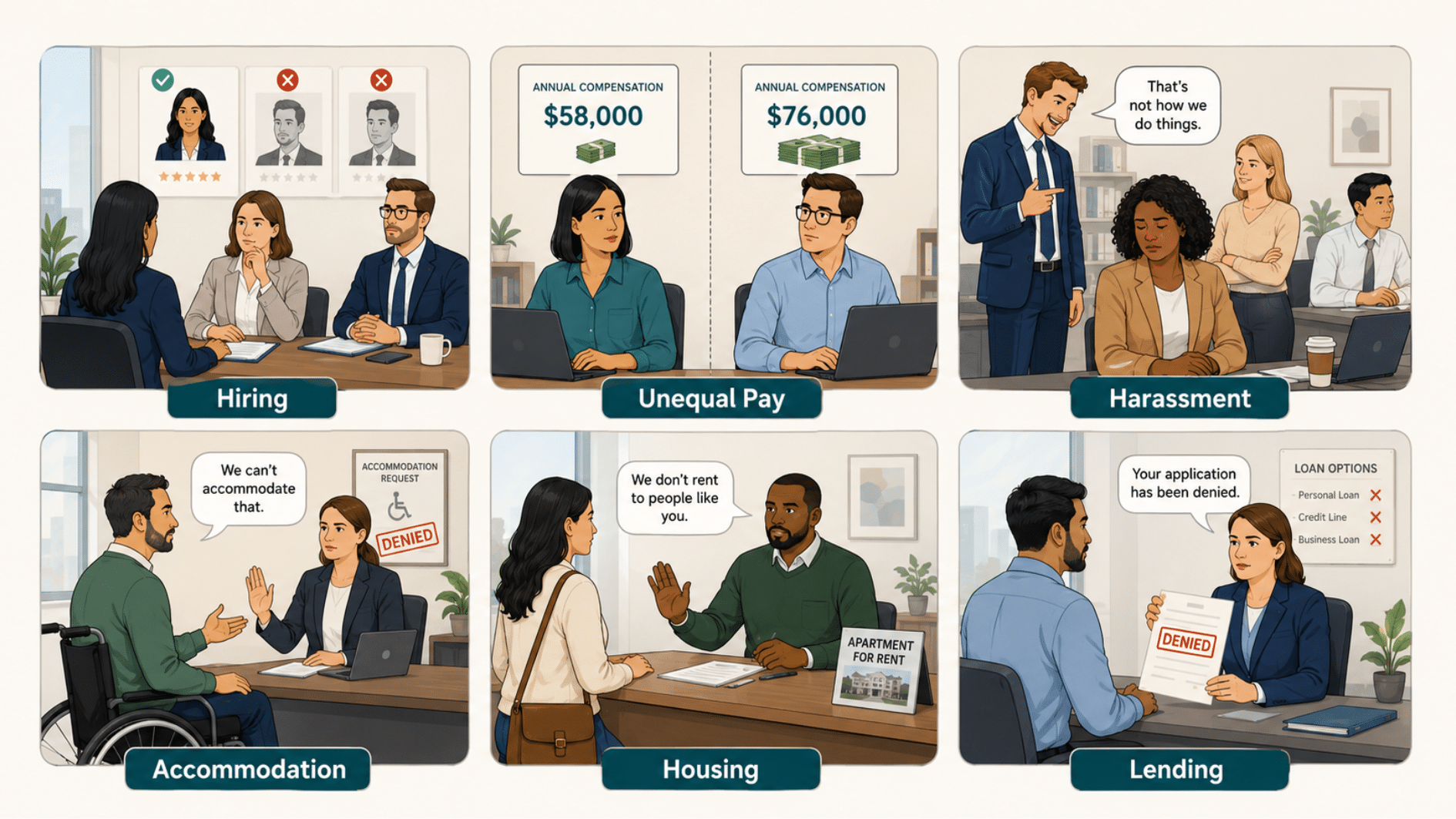
Discrimination can take many forms beyond refusing to hire someone. Depending on the law and situation, it may affect employment, housing, credit, and other areas.
- Employment Decisions: Discrimination can affect hiring, firing, promotions, job assignments, and other workplace decisions.
- Unequal Pay: Paying someone differently because of a protected characteristic may violate anti-discrimination laws.
- Failure to Accommodate: In some situations, covered employers or organizations must provide legally required accommodations.
- Neutral Workplace Rules: A rule that appears fair can still create legal issues if it unlawfully disadvantages a protected group.
- Harassment: Slurs, jokes, insults, or exclusion based on race, religion, disability, or another protected trait may constitute unlawful harassment.
- Housing and Credit: Discrimination can also affect housing decisions, lending, credit terms, and access to certain services
What Should You Do if This Happens to You?
Write down what happened while it’s fresh. Note dates, names, and any messages tied to it. This record beats memory once weeks pass. Next, you can file a charge with the EEOC for workplace discrimination.
Your state’s fair employment office often covers a longer list of traits. A civil rights lawyer can also tell you if your case fits a legal claim before you file.
Knowing your rights makes it easier to act instead of second-guessing what you saw.
The Bottom Line
Protected characteristics exist so a trait you didn’t choose, like your race, age, or disability, can’t be used to shut a door on you.
The list isn’t the same everywhere. Work, housing, and public places each draw their own lines, and states often add more on top of the federal floor.
Don’t assume one master list covers every situation. Check the law that actually applies before you act.
If something at work or in your search for housing felt off, don’t sit on it. Write down what happened today, while the details are still sharp.
Frequently Asked Questions
Can You Be Protected Because of Your Association with Someone in A Protected Class?
Yes. Some laws protect people from discrimination based on their relationship with someone who has a protected characteristic.
Does Religious Protection Include Dress and Work Schedules?
Yes. Religious protection can cover clothing, grooming, holidays, and schedule changes when reasonable accommodation rules apply.
Can an Employer Use Your Family Medical History Against You?
Generally, no. Federal law protects genetic information, including certain family medical history, from being used in employment decisions.
Is Citizenship Status Protected from Employment Discrimination?
In some cases, yes. Federal law protects certain workers from citizenship-status discrimination during hiring and employment.
Do Anti-Discrimination Laws Apply when Employers Use AI?
Yes. Employers can still be responsible if an AI hiring or screening tool discriminates against a protected group.