
Getting a message from HR about a furlough can leave you with practical questions about your next paycheck, your schedule, and your place at the company.
If you are trying to figure out what does furlough mean for your job, the details in your employer’s notice matter. Your work status and company policies can change how the situation affects you.
This blog covers how furloughs work, common reasons companies use them, pay and benefit rules, possible timeframes, and the differences between a furlough, layoff, and reduction in force.
What Does Being Furloughed Mean for Your Job?
Being furloughed usually means an employer has temporarily reduced an employee’s scheduled work or placed the employee in an unpaid work status while keeping the employment relationship in place.
The arrangement can involve no scheduled work for a period or fewer working hours.
Pay treatment, benefit eligibility, and return dates can differ based on employee classification, company policy, plan terms, and applicable employment law.
A furlough is intended to be temporary, but a return date is not always guaranteed. It is worth checking your furlough notice and asking HR exactly how your pay, benefits, and return-to-work plans will be handled.
How Does a Furlough Work?

A company usually places employees on furlough when it needs to lower labor costs for a limited period without immediately ending jobs.
Full Furlough
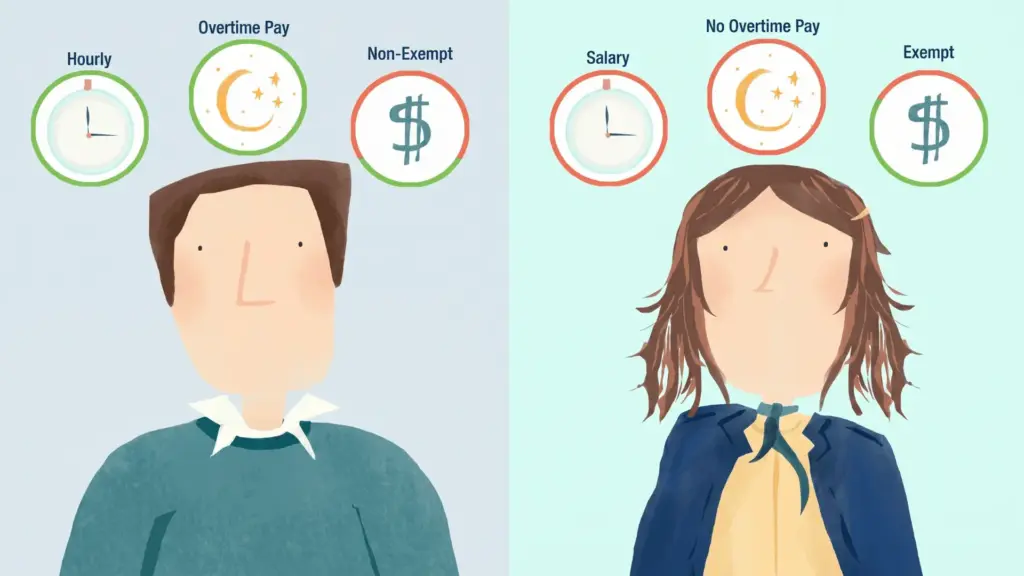
During a full furlough, a nonexempt employee may be scheduled for no work and generally does not receive wages for those unworked hours.
Salaried exempt employees follow different salary-basis rules. If an exempt employee performs any work during a workweek, the full weekly salary is generally due.
A full workweek in which no work is performed may be unpaid.
Reduced-Hours Furlough
A reduced-hours furlough keeps employees working but temporarily cuts their normal schedule. Someone who normally works five days each week might work only three or four.
Salaried exempt employees have different rules. Reducing scheduled hours does not automatically allow an employer to reduce the employee’s salary for a week in which the employee performs work.
Reasons a Company May Furlough Its Employees
Companies usually use furloughs when they expect a business problem to be temporary and want to keep employees available to return later.
- Temporary drop in demand: A business may need fewer workers when orders, customer traffic, or service demand falls for a short period.
- Financial pressure: Lower revenue or cash-flow problems may lead a company to cut payroll costs temporarily instead of eliminating positions immediately.
- Seasonal slow periods: Businesses with predictable busy and quiet seasons may reduce employee hours until customer demand picks up again.
- Supply or production delays: Material shortages, equipment downtime, or shipping problems can leave teams with less work until production resumes.
- Unexpected business disruptions: A site closure, funding delay, or paused project may lead to a short break in scheduled work.
How Long Does a Furlough Typically Last?
Federal WARN rules can matter when a covered employer has a qualifying plant closing or mass layoff.
For WARN purposes, an employment loss can include a layoff lasting more than six months or a reduction in hours of more than 50% in each month of a six-month period.
The six-month rule is not a general maximum length for every furlough. WARN has employer-size and employee-count requirements, and some states have their own notice laws with different rules.
The U.S. Department of Labor’s WARN Act also explains that certain substantial reductions in working hours may qualify.
Furloughs vs. Layoffs: A Quick Glance
Although both situations can leave an employee temporarily or permanently without regular work, they do not usually mean the same thing.
| Factor | Furlough | Layoff |
|---|---|---|
| Employment status | Employee usually remains employed | Employment commonly ends |
| Expected duration | Intended to be temporary | Often indefinite or permanent |
| Regular pay | Reduced or paused based on hours and classification | Regular wages stop after active employment ends |
| Return to work | Return is usually expected | No automatic return is promised |
| Benefits | May continue under plan rules | Active employee benefits often end or change |
| Reason | Often temporary financial or operational pressure | Commonly linked to job cuts, restructuring, or reduced staffing needs |
| New hiring needed | Usually not if the employee is recalled | Former worker may need to be rehired |
The Department of Labor’s WARN Act regulations distinguish a termination from certain temporary layoffs when defining an employment loss.
What Should You Check After Receiving a Furlough Notice?
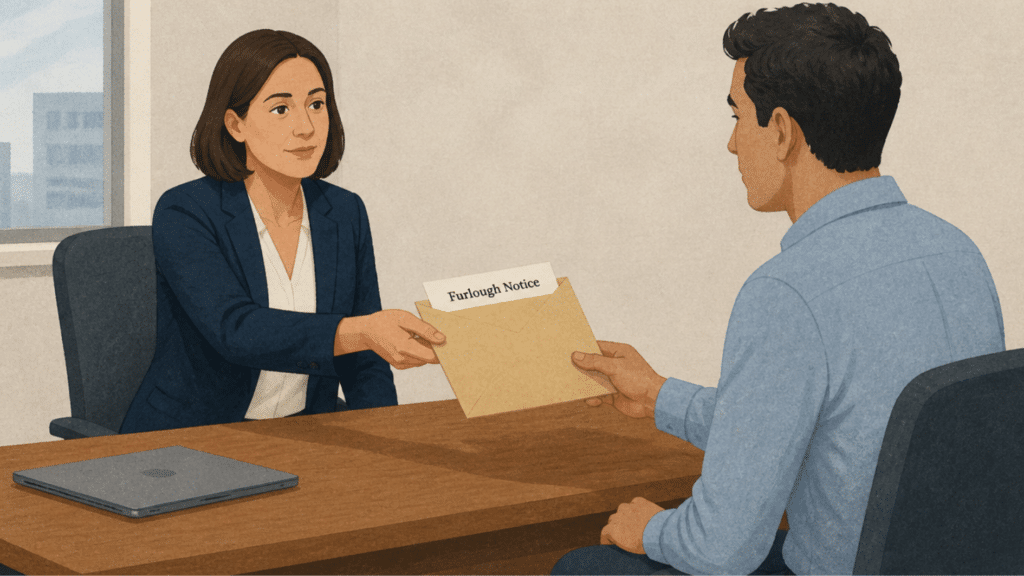
A furlough notice can contain several details that affect your pay, benefits, and return to work. Review the notice carefully, and confirm anything unclear with HR.
- Furlough dates: Check the start date, expected length, and possible return date.
- Work schedule: Confirm if work stops fully or hours are reduced.
- Pay: Ask how wages, salary, PTO, or bonuses will be handled.
- Benefits: Check health insurance, retirement plans, and premium payments.
- Work rules: Ask if emails, meetings, or job tasks are allowed.
- Unemployment: Review your state’s rules for reduced or lost work.
- Outside work: Check company rules on second jobs or freelance work.
- Return updates: Confirm how the company will contact you about returning.
Is a Furlough the Same as a Reduction in Force?
No. A furlough is usually a temporary pause in work or pay, while a reduction in force, often called a RIF, generally removes positions from the workforce.
With a furlough, the employer normally expects employees to return when work, funding, or business conditions improve.
A RIF usually occurs when positions are abolished, or staffing levels are permanently reduced, so affected employees may be separated from the organization.
OPM states that certain longer federal furloughs are treated as RIF actions, including furloughs lasting more than 30 calendar days or more than 22 discontinuous workdays.
Can a Furlough Turn Into a Layoff?
Yes, a furlough can turn into a layoff if the company’s situation changes and bringing employees back is no longer practical. This may happen under conditions such as:
- Business conditions stay weak: Sales, funding, production, or customer demand may not recover as quickly as the employer expected.
- The role is no longer needed: A company may remove certain positions after restructuring its operations or reducing staffing needs.
- The furlough keeps getting extended: Repeated delays in the expected return date may eventually lead the employer to make permanent job cuts.
- Financial problems become long-term: Ongoing financial pressure may force the company to move from temporary cost-cutting to permanent layoffs.
- Federal notice rules become relevant: For certain larger furloughs extending beyond six months, the Department of Labor explains when federal notice requirements may apply.
Do You Get Paid During a Furlough?
Pay during a furlough depends mainly on employee classification and the amount of work performed.
Nonexempt employees must be paid for all hours worked and receive applicable overtime. The FLSA generally does not require pay for hours not worked.
Salaried exempt employees follow different salary-basis rules.
The U.S. Department of Labor states that an exempt employee generally must receive the full salary for any workweek in which the employee performs work. A full workweek with no work may be unpaid.
Final Thoughts
An unexpected change in work can leave a lot to sort through at once. Having the details in writing gives you something concrete to refer to while company plans are still changing.
If you came here asking what does furlough mean, you should now have a clearer way to read your employer’s notice and spot the questions that still need an answer.
Keep copies of HR notices and benefit information, and use your state labor or unemployment agency when a question goes beyond company policy.
Frequently Asked Questions
Can You Collect Unemployment Benefits While Furloughed?
You may qualify for unemployment benefits if a furlough leaves you without work or significantly reduces your hours.
What Happens to Health Insurance During a Furlough?
Health coverage may continue during a furlough, but this depends on the employer’s health plan and how the reduced hours affect eligibility.
Can You Take Another Job While You Are Furloughed?
In many cases, employees can look for or accept other work while furloughed. Still, check your employer’s outside-employment, conflict-of-interest, and confidentiality policies first.