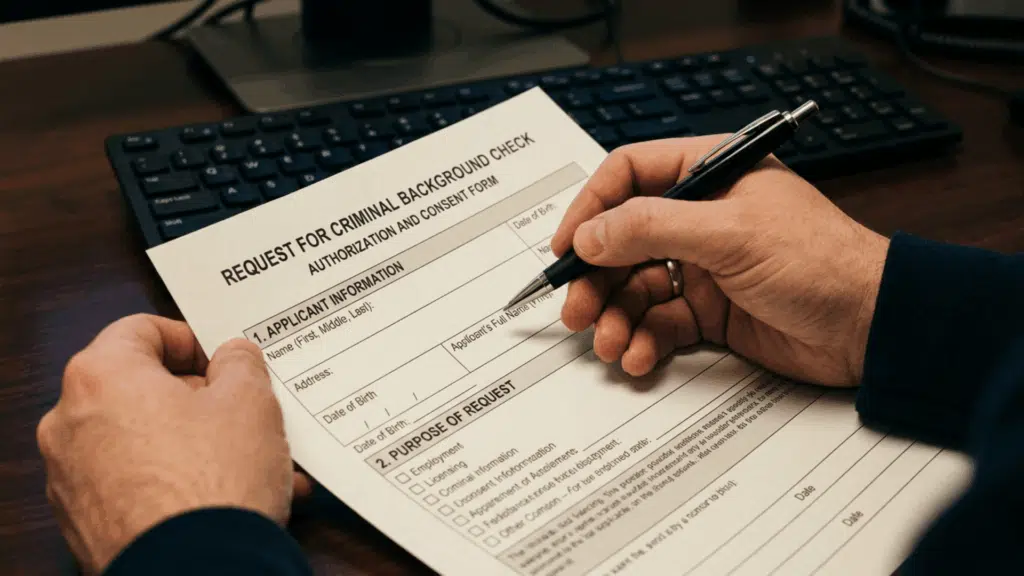

Background checks can feel stressful, especially when you are unsure how much of your past may appear.
Old records can raise concerns during hiring and leave applicants wondering what employers may see.
From years of working with workplace policies and compliance, I have seen how often people ask how far back a background check goes. The answer can depend on the type of record, state laws, the job, and the screening company used.
Memorizing these limits can help applicants prepare and help employers follow fair hiring practices. It can also reduce confusion and unexpected issues during the process.
From criminal records to state reporting limits, it covers what employers can access and the key background check rules Virginia applicants should know.
How Far Back Do Most Background Checks Go?
Most employment background checks typically review about 7 years of history, especially for criminal records and court information. However, no single timeframe applies to every type of background screening.
What Shows Up on a Background Check:
- Criminal History
- Employment History
- Education and Professional Credentials
- Driving Records
A seven-year background check does not mean records disappear after seven years. It only refers to how far back certain information may be reported by consumer reporting agencies.
How Far Do Different Types of Background Checks Go?
Background checks vary in how far back they look, depending on the type of check and applicable state laws.
The table below summarizes the typical lookback periods for common background check types:
| Background Check Type | Typical Lookback Period |
|---|---|
| Criminal background check | Usually 7 years, but convictions may vary by state |
| Bankruptcy check | Up to 10 years |
| Credit history check | Usually 7 years for certain negative information |
| Driving record check | Around 3 to 10 years depending on the state |
| Employment verification | Can cover an applicant’s work history |
| Education verification | Usually verifies lifetime credentials |
| Professional licenses | May verify current and past licenses |
Keep in mind that these timeframes are general guidelines; actual lookback periods can differ based on your state, the position you’re applying for, and the specific screening company conducting the check.
How Far Back Do Background Checks Go by State?
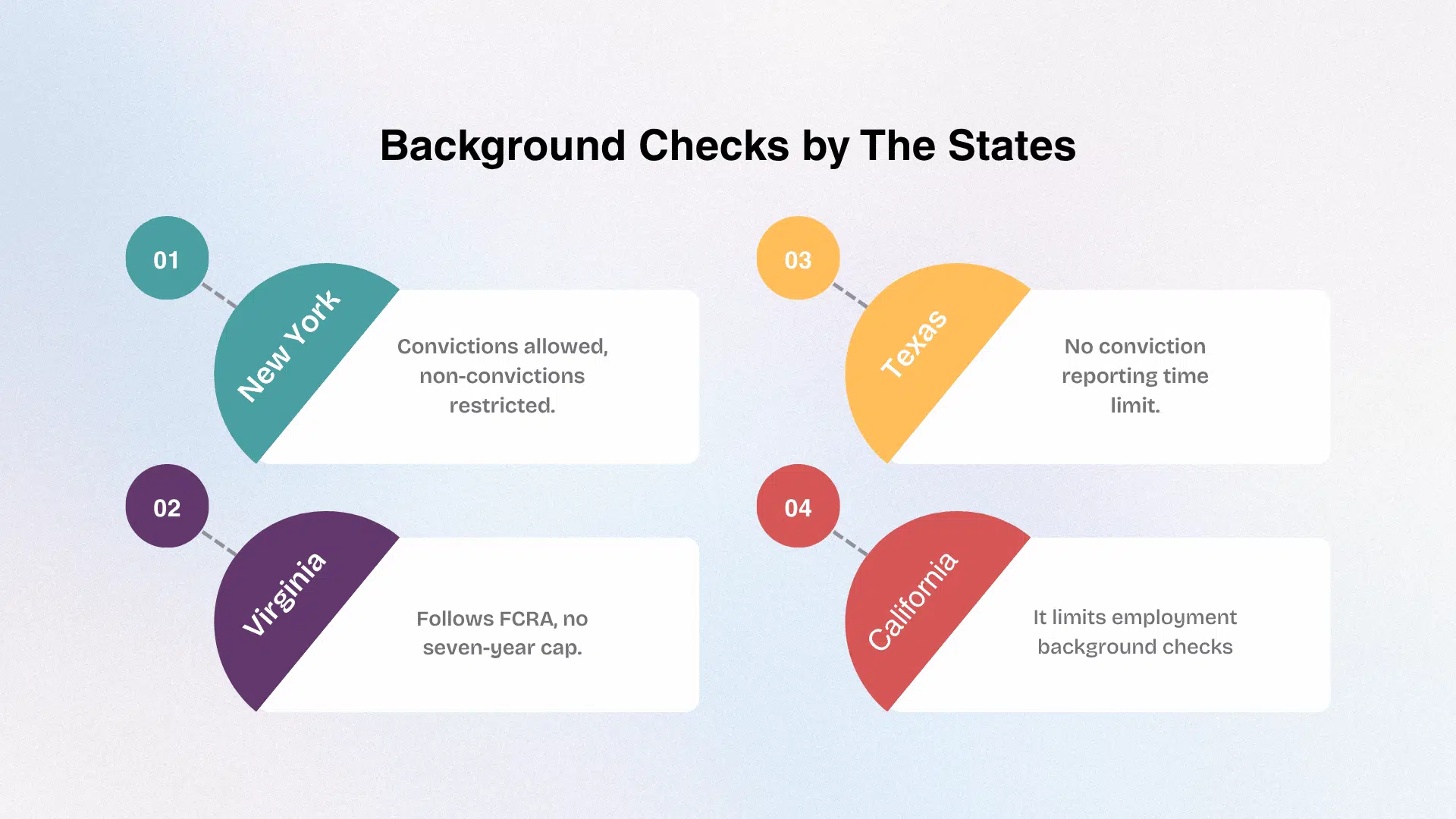
How far back a background check can look isn’t a single national rule; it shifts depending on which state you’re in and what’s being screened. Some states cap most records at seven years, while others let employers dig further back, especially for higher-paying roles.
Understanding these limits matters whether you’re an employer staying compliant or a candidate wondering what will show up.
1. New York
New York allows reporting of criminal convictions regardless of age, but restricts non-conviction information.
Arrests without convictions, along with sealed or dismissed cases, are generally off-limits for reporting.
The state mirrors the federal seven-year rule for non-conviction records, so older unresolved matters rarely surface. Employers must also apply Article 23-A of the Correction Law, adding scrutiny to how convictions factor into hiring.
2. Texas
Texas has no broad seven-year cap on reporting criminal convictions, so older convictions can surface on background checks. This makes its approach more permissive than states with stricter time limits.
For non-conviction items like arrests without conviction, Texas follows federal FCRA rules, keeping the seven-year limit.
So convictions may appear indefinitely, while dismissed matters stay limited, though position type can still affect what’s reported.
3. Virginia
Background checks in Virginia follow federal FCRA rules rather than a universal seven-year criminal reporting limit.
Employers may review criminal history for employment screening, but must comply with applicable federal and state regulations.
The scope depends on record type, screening policy, position requirements, and legal restrictions.
Reports may cover Virginia court records, convictions, pending cases, and employment, education, or driving verification, all subject to fair hiring practices.
4. California
California generally limits most employment background check reporting to seven years, though certain exceptions may apply.
Employers also face restrictions on using arrests that did not lead to conviction, sealed or dismissed records, and other legally protected information.
Under the Fair Chance Act, covered employers typically cannot consider criminal history until after making a conditional job offer.
Lookback on Other States
Background check lookback periods vary by state, with different rules for convictions, non-convictions, and salary-based exceptions.
The table below summarizes key state-specific limits:
| State | Lookback Limit |
|---|---|
| Hawaii | 7 years for felonies, 5 for misdemeanors |
| Kansas | 7 years, salary exceptions apply |
| Maryland | 7 years, salary exceptions apply |
| Massachusetts | 7 years; non-convictions restricted |
| Montana | 7 years; non-convictions restricted |
| New Hampshire | 7 years, salary exceptions apply |
| New Mexico | 7 years; non-convictions restricted |
| Washington | 7 years; salary exceptions apply |
Legal Requirements for Employment Background Checks
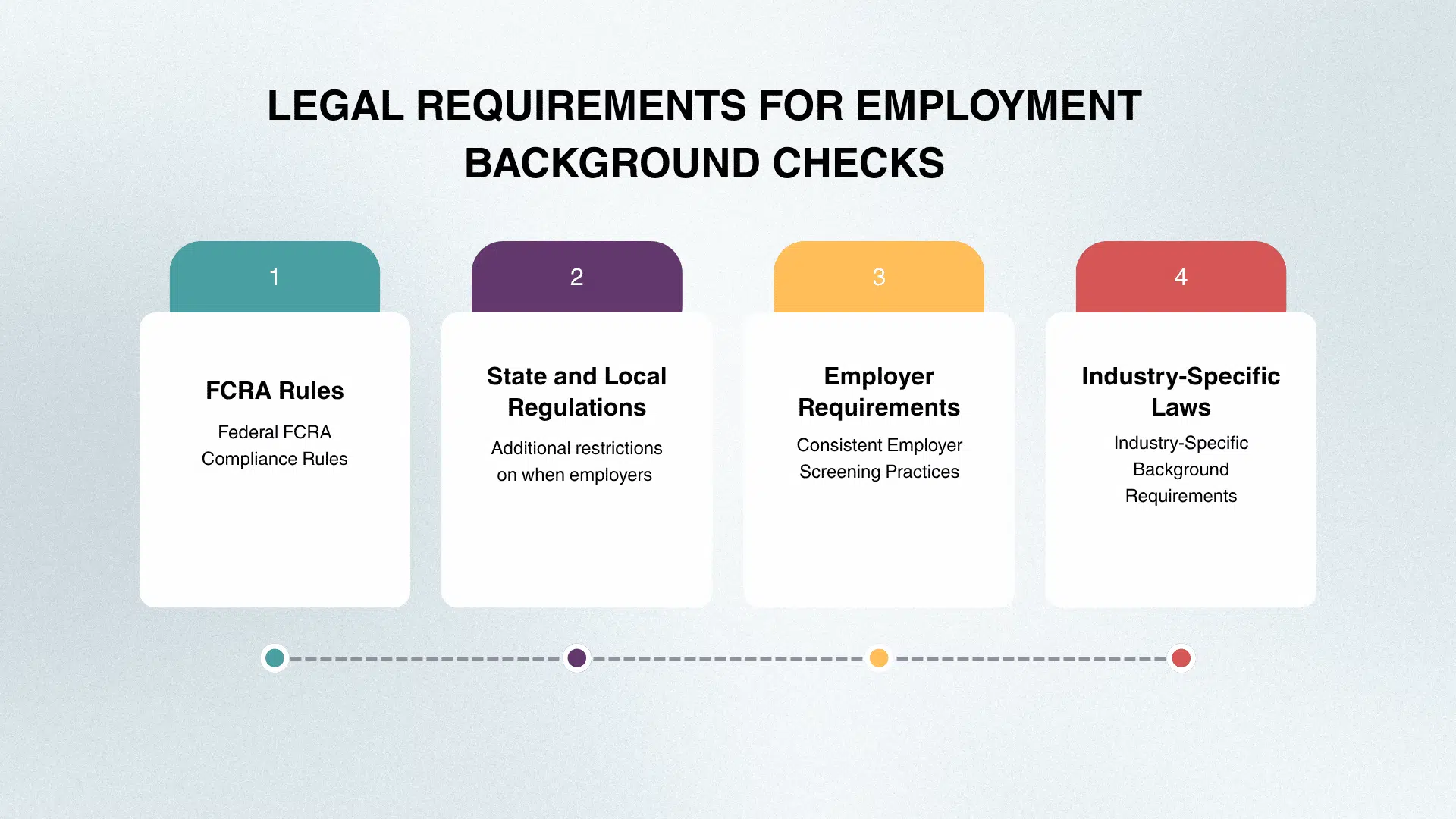
Background checks are governed by several legal rules, and the requirements can change based on the type of screening, location, employer, and industry involved in each case.
- Federal FCRA Rules: When employers use third-party consumer reporting agencies, the FCRA requires disclosure, authorization, and specific procedures before taking adverse action.
- State and Local Regulations: States and municipalities may impose additional restrictions on when employers can request or consider background information.
- Employer Requirements: Employers must use background information consistently and avoid hiring practices that unlawfully discriminate against protected groups.
- Industry-Specific Laws: Some roles and regulated industries may face additional requirements, such as the fingerprint-based Level 2 check, based on federal, state, or local law.
Because background check laws overlap, employers should review the rules that apply to each role and location before screening or using results in hiring decisions.
Background Check Reporting Limits by State
Some states restrict how far back certain criminal records may be reported, while others allow older convictions to remain visible when they are still part of the public record.
| State Category | States | Typical Reporting Limit |
|---|---|---|
| 7-Year States | California, Massachusetts, New York | Certain criminal records are generally limited to 7 years, with exceptions. |
| Indefinite States | Texas, North Carolina | Public convictions may appear indefinitely unless sealed, expunged, or restricted. |
Background Check Limits and Exceptions Vary by Record Type
Different record types can follow different background check lookback periods.
The reporting range often depends on state laws, job requirements, and the type of information being reviewed.
- Salary Exceptions: Some states allow longer reporting periods for higher-paying positions, often when salaries exceed a specified threshold.
- Driving Records: Driving history commonly covers about 3 to 10 years, depending on the state and severity of the violation.
- Education and Employment Verification: These checks may reach further back to confirm previous jobs, titles, degrees, and other credentials.
Because each record type follows different rules, employers and applicants should consider the specific check being conducted rather than relying on one standard time limit.
How Can You Check Your Own Background Report?
Reviewing your own report first puts you in control, letting you catch mistakes, outdated records, or inaccuracies before an employer sees them and draws the wrong conclusion.
Steps include:
- Request a copy of your background report.
- Review criminal, employment, and personal information.
- Check for inaccurate details.
- Dispute incorrect information with the reporting agency.
- Keep documents that support corrections.
Know what’s on your report and fix any errors early so you can address problems on your own terms, before they affect a hiring decision or cost you an opportunity.
Final Thoughts
Knowing how far back does a background check go can help employers make informed hiring decisions while staying mindful of state and federal reporting limits.
From years of working with workplace policies, one lesson stands out: background screening works best when employers focus on job relevance, consistency, and legal compliance rather than simply reviewing every available record.
Candidates also benefit from knowing what information may appear and where restrictions apply. Before making a hiring decision, review the rules that apply in your state and screening process.
Use these limits as a practical starting point for fair, compliant background checks.
Have questions or experience with background checks? Share your thoughts in the comments below.
Frequently Asked Questions
Can a Background Check Be Done without My Permission?
No. Under the FCRA, employers must get your written consent before running a screening for hiring purposes. Refusing consent, though, may lead them to end your application.
What Disqualifies You from A Job in A Background Check?
A job background check may disqualify a candidate for relevant criminal convictions, false credentials, serious employment discrepancies, or job-related driving violations, depending on the role and applicable laws.
Can I Be Screened Again After I’m Already Hired?
Yes. Many employers run periodic or “continuous” checks during employment, especially in regulated fields. These rescreens still require your consent and follow the same fair-hiring rules.