

Think every background check works the same way? That mistake can cause real problems when a job or license has stricter screening rules.
If you are asking what a level 2 background check is, you are likely trying to understand a term that often appears on Florida job forms and agency paperwork.
The wording can sound simple, but it can carry legal and work-related meaning. A basic internet search may leave you with mixed answers because “Level 2” is not used the same way everywhere.
If you rely on a general definition, you may miss what the term means for your situation.
What is a Level 2 Background Check and What Does It Include?
A Level 2 background check is a fingerprint-based screening used for certain jobs, licenses, and regulated roles.
The “Level 2” label doesn’t mean the same thing everywhere; it usually refers to a screening standard set by a specific state, agency, or law, so what gets checked can shift depending on where you’re applying.
It May Include:
- Fingerprints matched with identity information
- Criminal history checks run against state and federal databases
- Criminal records that fall within the rules used by the requesting agency
Fingerprints help match records to the correct person and reduce confusion caused by similar names. An employer may also request separate checks, such as employment verification or other screening.
Those added checks are not automatically part of Level 2 screening.
Level 1 Vs Level 2 Background Check
Level 1 and Level 2 checks differ mainly in how records are searched, which databases are reviewed, and which jobs require stricter screening.
| Point of Comparison | Level 1 Background Check | Level 2 Background Check |
|---|---|---|
| Search method | Usually name-based | Fingerprint-based |
| Record scope | Florida state records | Florida state and national records |
| Fingerprint required | Generally no | Yes |
| Main record source | FDLE statewide criminal history records | FDLE and FBI criminal history records |
| Other screening | May include employment history, sex offender records, and local criminal checks | Reviews state and national criminal history under the rules for the position |
| Typical use | Roles covered by Level 1 screening rules | Roles that Florida law places under stricter screening standards |
| Main difference | State-focused screening using identifying information | Broader criminal record search using fingerprints |
Florida uses Level 2 screening for certain positions covered by law, including roles involving responsibility or trust. The specific screening requirement depends on the law or agency that regulates the job. For a broader look at what drives screening timelines, see how long a background check takes.
What is a Level 2 Background Check in Florida?
In Florida, “Level 2” is a legal standard, not a vendor product tier.
Section 435.04, Florida Statutes, mandates Level 2 security background investigations for employees the law designates as holding positions of responsibility or trust, a phrase that appears throughout Florida’s care, education, and licensing statutes.
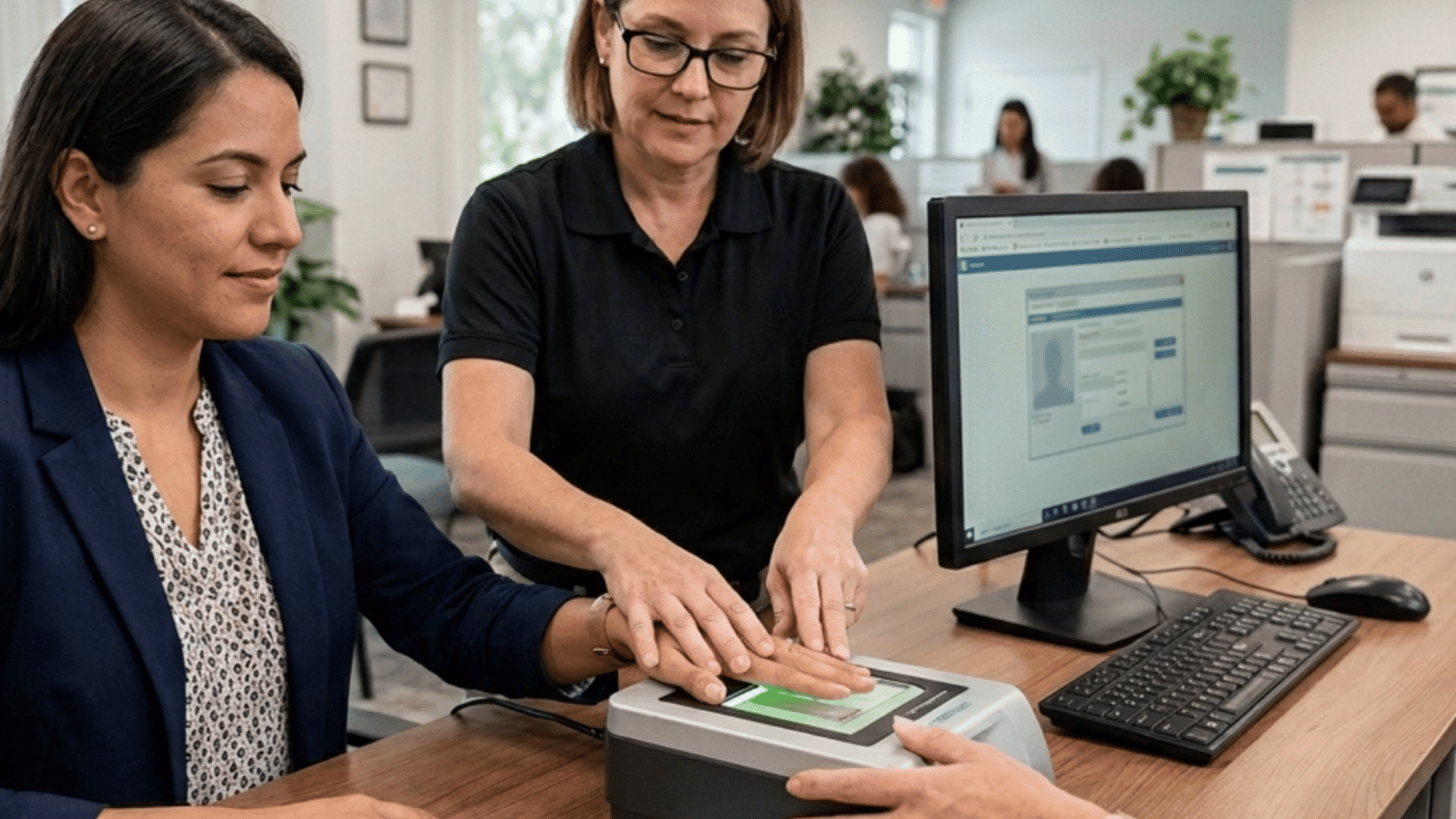
Under state law, fingerprints are submitted electronically to the Florida Department of Law Enforcement for a statewide criminal history check.
The same fingerprints are also used for a national criminal history check through the FBI, which helps confirm that records belong to the correct person instead of relying only on a name match.
Florida requires this screening standard for certain roles where state law sets stricter safety and eligibility rules, including some positions in care, education, and licensed services.
Who Needs Level 2 Screening?
Florida requires Level 2 screening for certain roles where workers provide care, supervision, education, treatment, or licensed services to other people.
1. Healthcare Employees
Certain healthcare workers may need Level 2 screening when employed by facilities or providers regulated under Florida law.
This can apply to positions in nursing homes, assisted living settings, home health services, and other care facilities.
The exact requirement depends on the employer, facility type, and applicable agency rules.
2. Workers Who Provide Care or Services to Children
Employees and some volunteers in child care facilities, family day care homes, child placement programs, and similar services may need Level 2 screening.
Florida uses these checks to review criminal history before a person works in covered roles involving children. Specific screening rules vary by program and position.
3. School Staff and Certain Education Workers
Florida public school employees and people seeking certain educator certificates must complete fingerprint-based screening.
Their fingerprints are checked through the FDLE and FBI as required for the position or certification.
School districts usually manage screening for public school employees, while other education settings may follow separate procedures.
4. Employees Who Work With Older Adults
Some workers providing services to older adults must complete Level 2 screening when their job falls under Florida care-provider requirements.
This commonly affects regulated care settings where employees have direct contact with residents or clients.
Screening rules depend on the facility, job duties, licensing law, and responsible state agency.
5. Rehabilitation and Treatment Facility Staff
Employees, professional clinicians, staff members, and certain volunteers in regulated mental health or treatment programs may be subject to Level 2 screening.
Florida DCF lists several program types that require state and national criminal history review. Requirements can differ based on the service provided and the worker’s role.
6. Certain Licensed Professionals
Some people applying for a professional license or regulated position must pass Level 2 screening before approval or employment.
The requirement depends on the law governing that profession and the state agency handling the license. Applicants should follow the screening instructions issued by the agency responsible for their specific occupation.
If your organization has historically screened through VECHS, check your current obligations with AHCA.
Florida Level 2 Screening Rules and Requirements
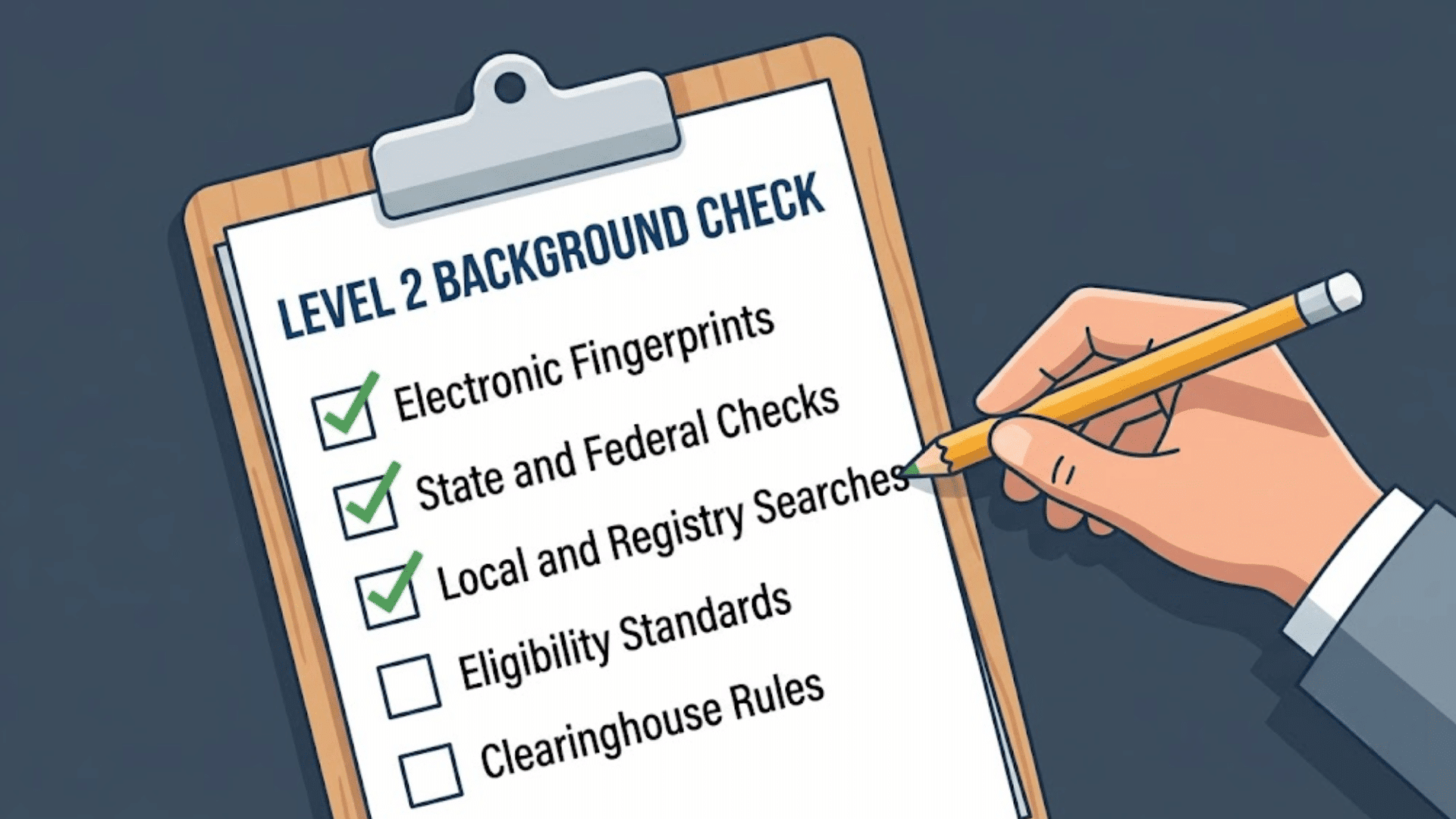
Florida Level 2 screening follows state rules for fingerprint submission, criminal history checks, eligibility review, and agency-specific employment or licensing requirements.
Electronic Fingerprints
Florida law requires Level 2 screening fingerprints to be submitted electronically to FDLE, where they support statewide and national criminal history searches for applicants.
State and Federal Checks
FDLE reviews statewide criminal history records, while fingerprints are also used for an FBI national criminal history check required under Level 2 screening in Florida.
Local and Registry Searches
Florida law also includes local criminal record checks and searches of sex offender or predator registries tied to certain prior residences during the preceding five years.
Eligibility Standards
Screening results are reviewed against offenses listed in Florida law, and certain arrests, pleas, convictions, or unsealed juvenile findings can affect eligibility for covered positions.
Clearinghouse Rules
Many care-provider screenings use Florida’s Clearinghouse, which keeps fingerprints on file and lets participating agencies review screening eligibility for covered employment or licensing purposes across programs.
What Disqualifies You From a Level 2 Background Check?
Florida law lists offenses that may cause a Level 2 screening failure. Understanding what disqualifies you from a Level 2 background check can help you prepare before applying for a regulated role.
- Violent Crimes: Murder, manslaughter, kidnapping, and similar offenses may cause disqualification.
- Sexual Offenses: Sexual battery or registered offender status may block approval.
- Child-Related Crimes: Felony child abuse and other serious offenses may prevent clearance.
- Pending Charges: Unresolved serious charges may delay or stop the process.
- Exemption Requirements: Waiting periods and payment of fines or restitution may be required.
- Proof of Rehabilitation: Work history, treatment records, education, and support letters may help.
- Agency Review: The department overseeing the role makes the final decision.
If a result does not match your history at all, treat it as a possible mixed file and dispute it through the agency’s process; this is more common than people expect, and it overlaps with employment identity theft.
Level 2 Background Check Process and Processing Time
The employer or licensing agency starts the request and gives the applicant fingerprinting instructions.
Fingerprints are collected and submitted electronically. FDLE checks Florida records, and the FBI checks national records.
Fingerprint results are usually ready in 24–72 hours. Results go straight to the requesting agency, not the applicant, for an eligibility review based on the rules for that position.
Total time can run longer than the fingerprint check alone, since agencies often take a few extra business days to complete their review.
Poor fingerprint quality, record matches, or arrest history can also add delay occasionally stretching the process to a few weeks.
Conclusion
A Level 2 background check is tied to jobs and licenses that follow stricter screening rules. The exact requirement can change based on the role, agency, or Florida law that applies.
That is why it helps to look at the rules for the specific position instead of relying on a general answer.
If you still want to know what a level 2 background check is, think of it as a fingerprint-based review of criminal history records.
The final result depends on the standards for that job or license. Before applying, check the official requirements so you know what to expect.
Frequently Asked Questions
Who Pays for Level 2 Screening in Florida?
Florida law allows either the employer or the employee to pay the screening costs. The payment arrangement can depend on the employer or agency. Fingerprint vendor charges may also vary, so applicants should confirm the total cost before scheduling an appointment.
Do Fingerprints Used for Florida Screening Expire?
For screenings handled through Florida’s Care Provider Background Screening Clearinghouse, FDLE retains fingerprints for five years. A renewal must be requested before the retained fingerprints expire. If they are purged, a new screening and fingerprint submission may be needed.
Can an Applicant Complete Screening From Outside Florida?
Yes. Applicants living outside Florida may be able to use approved Livescan providers that support the required fingerprint and photo submission. For DCF-related screenings, the request should first be started through the Clearinghouse before choosing an available provider in another state.