

Relocation of employees has become an important part of workforce planning as organizations move employees to new locations for career opportunities, business needs, or specialized roles.
The process involves several considerations, including company policies, relocation assistance, reimbursement procedures, and employee support.
If you are an HR professional creating a relocation program or an employee preparing for a work-related move, understanding the different aspects of relocation can help make the transition smoother.
This blog explains employee relocation policies, costs, benefits, and relocating employees best practices to help organizations and workers navigate the process effectively.
What is Employee Relocation?
It refers to the process of moving an employee to a different location because of a work-related requirement.
It may involve transferring an existing employee, hiring someone from another area, or assigning a worker to a new office or duty station.
Unlike a personal move, it is connected to an organization’s business needs and may include support such as moving assistance, reimbursement, or relocation benefits.
Companies and government agencies often create relocation policies that explain eligibility, covered expenses, approval steps, and documentation requirements to help employees manage the transition effectively.
Key Elements of an Employee Relocation Policy
A complete policy usually defines the rules and support available during a work-related move. Important elements include:
- Eligibility requirements: Explains which employees qualify for relocation assistance.
- Covered expenses: Lists approved costs such as moving services, travel, temporary housing, or storage.
- Approval process: Describes when employees must receive authorization before spending on relocation.
- Documentation requirements: Specifies receipts, forms, and records needed for reimbursement.
- Repayment conditions: Explains situations where an employee may need to repay relocation benefits.
How Does an Employee Relocation Policy Work?
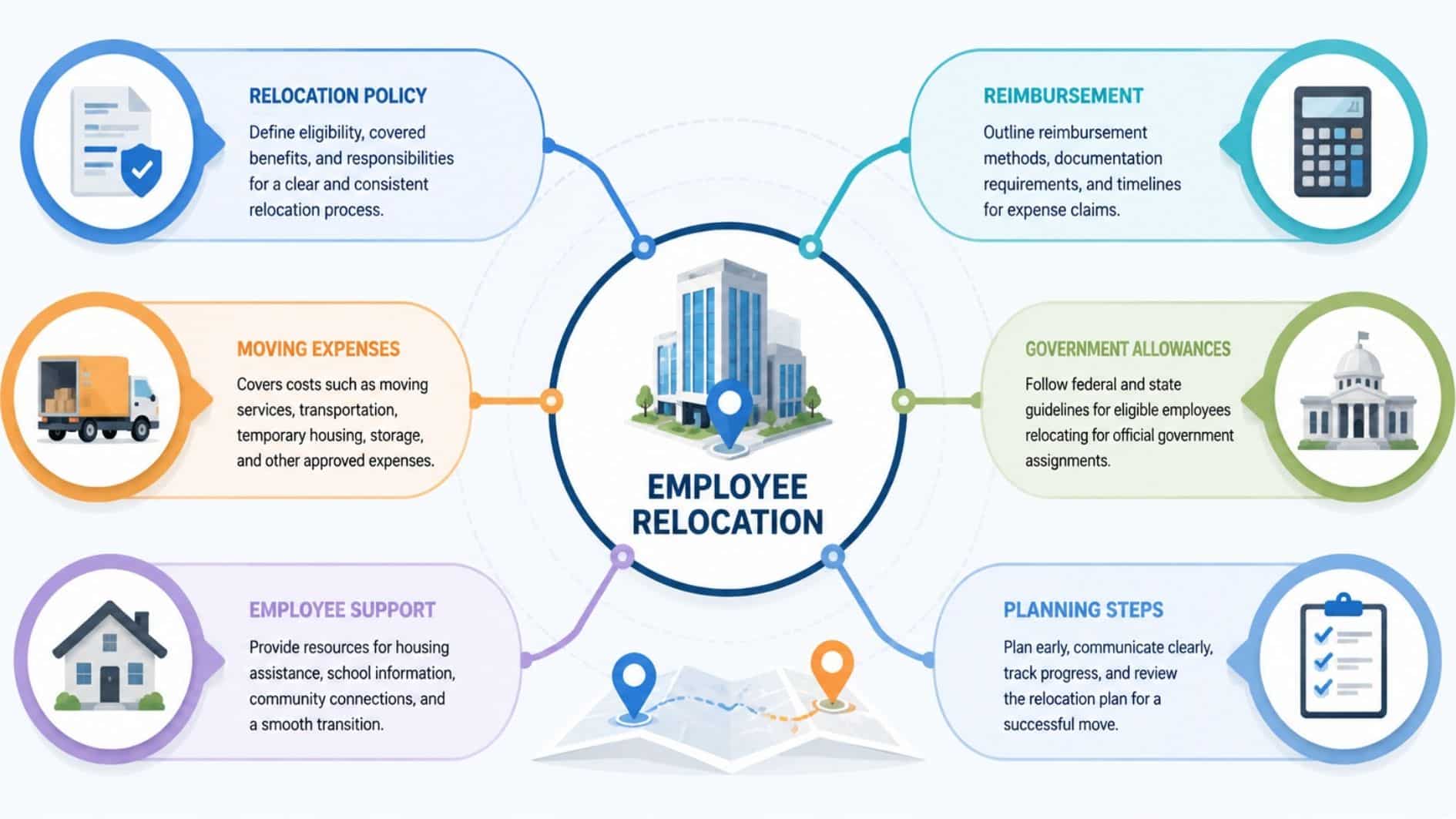
This explains how an organization manages work-related moves, including who qualifies for assistance, which expenses it covers, and how it handles reimbursement.
It gives employees clear guidelines and helps employers make consistent relocation decisions.
A typical policy may include eligibility requirements, approval procedures, covered moving expenses, documentation rules, and repayment conditions if applicable.
A written policy helps reduce confusion by setting expectations before an employee begins the relocation process. (U.S. General Services Administration)
Know the Benefits and Incentives of Relocating an Employee
Employers may also offer relocation incentives to encourage employees to accept positions in new locations, especially for difficult-to-fill roles.
|
Benefit Type |
How It Helps Employees |
|---|---|
|
Lump-sum payment |
Provides a fixed amount employees can use for approved relocation needs. |
|
Managed relocation package |
Employer arranges services such as movers, housing support, or travel assistance. |
|
Temporary housing support |
Helps employees manage accommodation needs before settling permanently. |
|
Travel assistance |
Covers approved travel costs related to the relocation process. |
What Relocation Expenses Are Usually Reimbursed?
Relocation reimbursement covers approved costs that help employees move for work-related reasons. Common reimbursable expenses include:
- Moving-related costs: Professional packing, transportation, and delivery of household belongings.
- Travel expenses: Approved transportation, lodging, and meal costs during relocation travel.
- Temporary living arrangements: Short-term housing support while employees search for permanent accommodation.
- Storage services: Temporary storage of household goods during the transition period.
- Home-finding assistance: Approved travel expenses for searching for a new residence.
Government Employee Relocation Policies and Allowances
Government policies for relocating and supporting employees who move because of an official government assignment or duty station change.
Federal agencies generally follow the Federal Travel Regulation (FTR), which sets guidelines for eligibility, approvals, and reimbursable relocation expenses.
Depending on the employee’s situation and agency rules, relocation assistance may cover costs related to moving household goods, transportation, temporary lodging, and other approved expenses.
Relocating Employees: Best Practices for Employers
These practices help employers create a smoother transition by providing employees with clear guidance, flexibility, and ongoing support throughout the relocation process.
1. Create a Clear Relocation Policy
A well-defined relocation policy helps employees understand eligibility requirements, covered expenses, reimbursement limits, and required procedures before moving.
It should clearly explain what support is available, how employees can request assistance, and what documentation is needed for reimbursement.
A transparent policy also helps employers maintain consistency and avoid confusion during the relocation process.
2. Communicate Early
Employers should share relocation details as soon as possible, including timelines, approval steps, available benefits, and employee responsibilities.
Early communication gives employees enough time to plan their move, understand expectations, and address questions before relocation begins. Regular updates throughout the process can also reduce stress and improve the overall experience.
3. Offer Flexible Support Options
Different employees may need different types of relocation assistance based on their situation, location, and role.
Employers can offer options such as lump-sum payments, managed relocation services, temporary housing support, travel assistance, or customized relocation packages.
Flexible choices let employees use resources in the way that best fits their needs.
4. Provide Ongoing Assistance
Relocation support should continue beyond the moving process.
Helping employees adjust through onboarding support, local area information, workplace integration, and transition guidance can improve satisfaction by drawing on the onboarding best practices used for any new hire’s first weeks.
Continued assistance helps workers settle into their new environment and remain productive after the move.
How Much Does Employee Relocation Cost?
The total cost varies based on the employee’s situation, employer policy, and level of assistance provided.
|
Cost Factor |
What Influences the Expense |
|---|---|
|
Moving distance |
Longer moves usually involve higher transportation and service costs. |
|
Household size |
More belongings may increase packing, labor, and shipping expenses. |
|
Housing needs |
Temporary housing or home-search support can add costs. |
|
Relocation services |
Professional movers and third-party assistance affect the overall budget. |
|
Location changes |
Housing markets, travel distance, and local costs can impact expenses. |
Common Employee Relocation Challenges
It can involve several challenges that may affect the moving experience. Understanding these issues early helps employees and employers prepare better.
Unexpected Moving Costs
Relocation expenses may exceed initial estimates due to additional services, travel needs, or changes during the move. Reviewing covered expenses and limits in advance can help avoid surprises.
Delays in Reimbursement
Employees may face delays when they submit incomplete documents or missing required receipts. Keeping accurate expense records and following reimbursement procedures can help speed up the process.
Housing Difficulties
Finding suitable housing in a new location can be challenging due to availability, cost, or timing. Early research and employer-provided housing support can make the transition easier.
Family Adjustment
Relocation can require families to adapt to new communities, schools, and routines. Employers can support employees by providing local resources and transition assistance, such as the structured content in this new hire orientation guide, adapted for a relocating employee’s family instead of a first-time hire.
Understanding Policy Restrictions
Employees should review relocation policies carefully to understand eligibility, covered expenses, and approval requirements. Communicating with HR before moving helps prevent misunderstandings.
Relocation Checklist for Employees
A clear checklist helps employees stay organized and reduces delays during the relocation process.
-
Review the company’s relocation policy and eligibility requirements before making plans.
-
Confirm which expenses are covered and understand reimbursement limits.
-
Get written approval for relocation benefits or expenses when required.
-
Keep receipts, invoices, and supporting documents for reimbursement requests.
-
Plan the moving timeline, travel arrangements, and temporary housing needs.
-
Update important records, services, and personal information after moving.
-
Complete required relocation forms and submit expenses within the employer’s deadline.
Conclusion
A well-planned employee relocation process helps organizations support workers while managing moving costs, reimbursement procedures, and policy requirements effectively.
Clear guidelines allow employees to understand available assistance and make informed decisions before relocating for work.
Following relocating employees best practices such as transparent communication, proper documentation, and timely support can create a smoother transition for both employers and employees.
If a relocation involves a private company transfer or a government assignment, a structured approach helps reduce challenges and improves the overall relocation experience.
Frequently Asked Questions
Does an Employer Have to Pay for Employee Relocation?
No. Employers are not generally required to provide relocation assistance unless stated in an employment agreement, company policy, or applicable regulations.
Are Relocation Expenses Taxable?
Tax treatment depends on current federal and state tax rules and the type of relocation benefit provided. Employees should review applicable tax guidance or consult a tax professional.
Do Government Employees Receive Relocation Benefits?
Eligible government employees may receive relocation assistance according to agency policies and federal relocation regulations, including approved travel and moving expenses.
What Are the Best Practices for Relocating Employees?
Effective relocation programs include clear policies, early communication, accurate expense tracking, flexible support options, and assistance throughout the transition.