

New Employees often feel lost in their first weeks. That costs you time, money, and good talent.
A strongemployee onboarding processchanges that. It builds confidence, boosts retention, and gets people productive faster.
Done right, it turns nervous new hires into engaged team members. Done wrong, it sends them straight to job boards. Small changes in your process can lead to big improvements in performance and loyalty.
You’ll learn the best onboarding practices, common mistakes to avoid, and how to measure what’s actually working so every new hire gets the start they deserve.
The Importance of Employee Onboarding Process
An effective onboarding process is crucial for setting new hires up for success, driving long-term retention, and ensuring overall company productivity.
Here’s why it matters in the employee lifecycle:
- Increases Employee Satisfaction: New hires feel confident and supported from day one.
- Builds Stronger First Impressions: Sets a positive tone that makes employees feel valued.
- Sets Expectations Early: Clear roles and goals help new hires contribute faster.
- Boosts Engagement: Connected employees stay longer and perform better.
Onboarding tools like TalentLMS streamline the process with personalized learning and real-time tracking, helping new hires succeed and stay engaged.
Best Employee Onboarding Practices to Follow
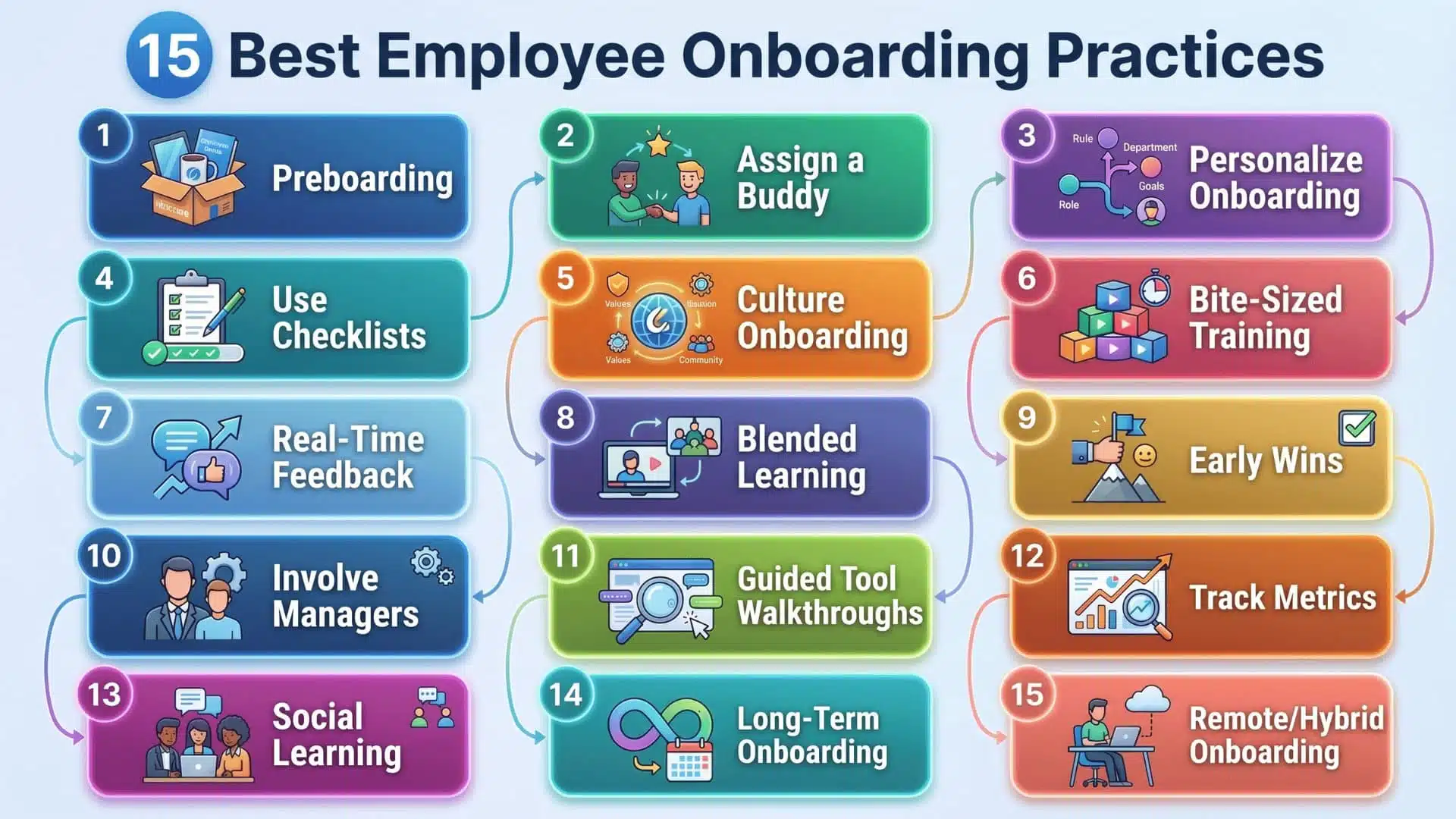
Effective onboarding practices are key to helping new hires integrate smoothly into the company and thrive in their roles.
Here are the best practices to ensure a successful onboarding experience:
1. Start Onboarding Before Day One
Preboarding is a crucial first step in creating a positive experience for new hires and setting them up for success. It helps build excitement and reduces anxiety before the first day.
Combine a strong employee referral program with a solid onboarding process and you reduce that risk from day one.
- Send onboarding kits, logins, organizational charts, and schedules immediately after the job offer
- Include a welcome video from a team member or department head
- Provide early access to company policies and resources
- Set up digital tools and credentials to avoid first-day technical issues
2. Assign a Dedicated Onboarding Buddy
A peer mentor is key to helping new hires navigate company culture, tools, and expectations. It humanizes the onboarding process and provides real-time context.
- Pair new hires with a buddy from a different team to broaden their internal network
- Ensure the buddy introduces them to key tools, processes, and team dynamics
- Schedule regular check-ins to provide ongoing support and guidance
- Encourage the buddy to offer feedback and answer questions informally
3. Personalize Onboarding Paths
Each role requires a tailored approach to ensure new hires succeed. Customizing onboarding journeys based on role, department, or learning style makes the process more effective.
- Create role-specific onboarding paths with relevant content and training
- Use microlearning to cater to different learning styles and keep content digestible
- Include onboarding journey maps with clear milestones aligned with department goals
- Offer specialized training, such as technical system walkthroughs for engineers or brand workshops for marketers
4. Use Checklists and Clear Timelines
Clear timelines and checklists help new hires stay organized and on track. Structuring their first 30, 60, and 90 days sets clear expectations and promotes steady progress.
- Create structured timelines with key milestones for the first 30, 60, and 90 days
- Use checklists to track task completion and reinforce expectations
- Leverage TalentLMS Skills to monitor progress and track skill development throughout onboarding
5. Prioritize Culture Onboarding
Culture is best understood through experiences, not just documents. Incorporate engaging sessions to immerse new hires in your company’s values, rituals, and DE&I initiatives.
- Integrate culture-focused sessions early in the onboarding process
- Offer informal onboarding activities like lunches, virtual coffee chats, or storytelling sessions
- Highlight internal communities to help new hires feel connected and included
6. Deliver Training Through Bite-Sized Content
To avoid information overload, deliver training in short, manageable segments. TalentLMS helps break content into bite-sized courses, allowing learners to progress at their own pace.
- Use short, modular courses to maintain focus and engagement
- Include quizzes and self-checks to reinforce learning
- Encourage self-paced learning to promote better retention and flexibility
7. Enable Real-Time Feedback Loops
Real-time feedback is essential for refining the onboarding process and ensuring new hires feel supported. Use regular check-ins to adjust content and pacing based on their input.
- Conduct surveys or pulse checks at weeks 1, 2, 4, and beyond
- Ask questions about their onboarding experience, role clarity, and tool access
- Use feedback to adjust the onboarding process and address any concerns promptly
- Continuously improve content and pacing to better align with new hires’ needs
8. Blend Self-Paced and Live Training
A mix of self-paced learning and live interactions ensures flexibility while maintaining engagement. Use a Learning Management System (LMS) like TalentLMS to balance both methods.
- Deliver asynchronous courses through your LMS to allow flexible learning
- Schedule live webinars and Q&A sessions via video conferencing tools
- Organize regular check-ins with team leaders and managers to reinforce expectations
9. Provide Early Wins and Hands-On Tasks
Assign small, meaningful tasks early to help new hires gain confidence and feel like they’re making an impact.
- Give new hires tasks they can complete within the first two weeks to build momentum
- Let them contribute to projects or assist in team meetings to foster a sense of purpose
- Reinforce skills by letting them take on responsibilities early in their onboarding journey
10. Involve Managers Actively
Managers play a key role in ensuring successful onboarding. Equip them with the right tools and training to make the experience engaging and supportive.
- Provide targeted training and resources like customizable templates and role-specific checklists
- Encourage managers to take an active role in delivering onboarding experiences
- Ensure managers are involved from day one to provide ongoing support and guidance
- Equip managers with tools to track progress and offer real-time feedback to new hires
11. Introduce Company Tools with Guided Walkthroughs
Interactive demos and videos are more effective than static handbooks for introducing company tools.
- Use interactive demos or videos to guide new hires through core tools like chat, video conferencing, and project management systems
- Embed tool walkthroughs directly into your LMS lessons using screenshots or screen recordings
- Allow new hires to explore tools hands-on, reducing confusion and accelerating their learning process
12. Track Onboarding Metrics
Monitoring key metrics helps assess the effectiveness of your onboarding process and identify areas for improvement.
- Track total training time during the first 14 days to gauge engagement
- Monitor completion rates of onboarding modules to ensure all essential content is covered
- Keep an eye on pending courses to ensure new hires are progressing and completing tasks on schedule
- Use LMS analytics to generate reports and adjust the onboarding process as needed
13. Use Shadowing and Social Learning
Encouraging new hires to learn from their peers fosters knowledge sharing and team bonding.
- Arrange shadowing opportunities where new hires observe different teams in action
- Use discussion boards to encourage peer conversations and support
- Organize group learning sessions to foster collaboration and shared learning experiences
14. Reinforce Onboarding Beyond 30 Days
Onboarding shouldn’t end after the first month. Extend the process to ensure long-term success and growth.
- Continue training, mentorship, and progress reviews for at least 90 days
- Include optional development opportunities like career-path modules and long-term growth plans
- Provide structured development plans that outline the next steps for growth and advancement
15. Address Onboarding for Remote and Hybrid Teams
Onboarding for remote and hybrid teams requires unique practices to ensure a smooth experience.
- Establish clear communication protocols to keep everyone on the same page
- Schedule virtual social sessions to help remote hires connect with the team
- Arrange regular check-ins with managers and buddies to provide ongoing support
- Ensure easy access to a digital knowledge base for self-service learning and resources
Measuring the Effectiveness of Your Onboarding Program
Knowing if your onboarding efforts are truly working is just as important as implementing them. Tracking the right metrics helps you spot gaps and keep improving.
Monitor time-to-productivity, course completion rates, satisfaction surveys, and manager feedback. Also track LMS module access, onboarding chat participation, and peer collaboration data.
This mix of qualitative and quantitative insights helps identify strengths and gaps. Regular tracking keeps your onboarding aligned with both employee and business goals.
Common Onboarding Mistakes to Avoid
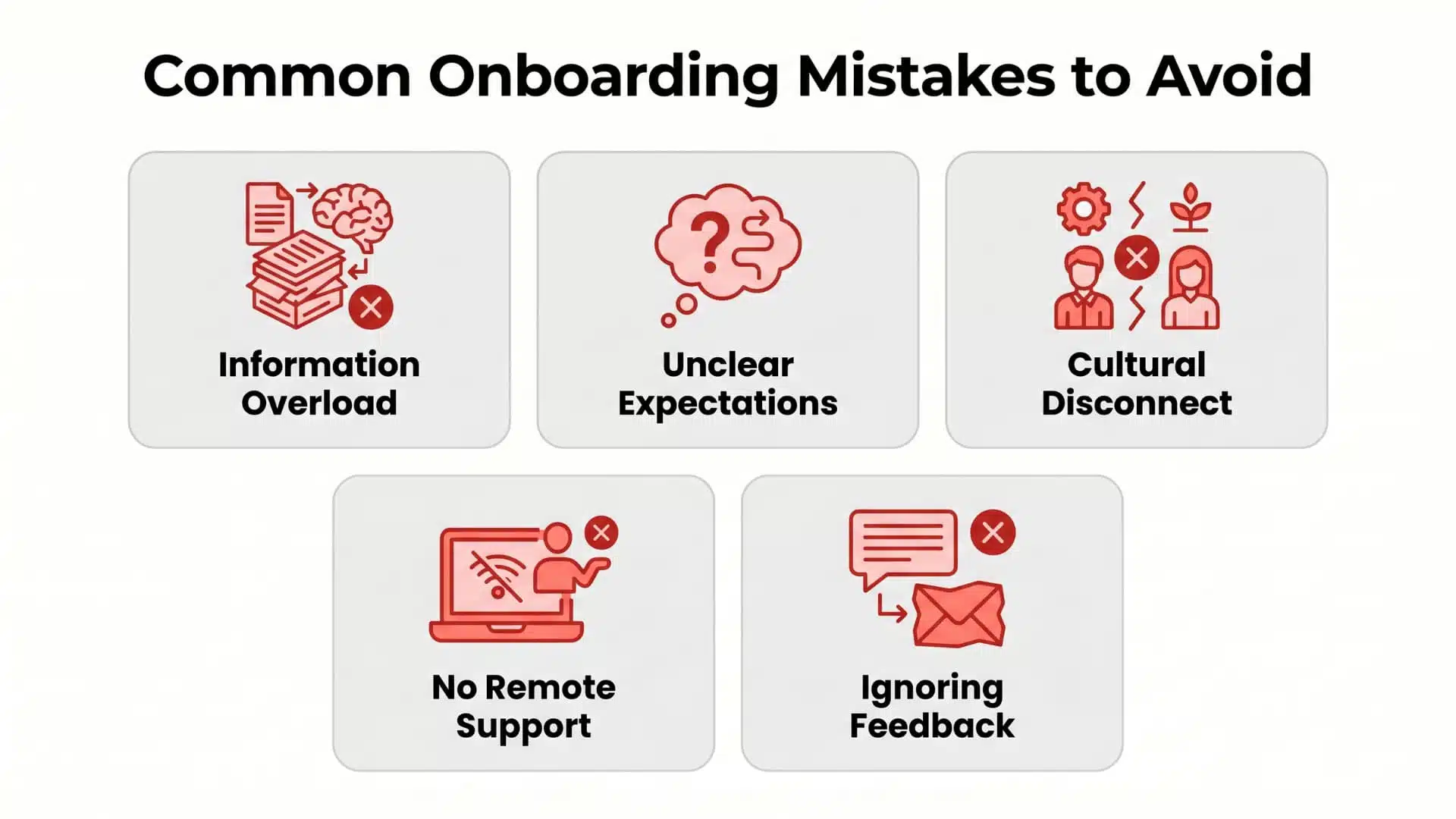
A poor onboarding experience can lead to disengagement, confusion, and higher turnover. Avoid these mistakes to ensure a smoother transition and a more engaged workforce:
- Overloading new hires with information: A phased approach helps them absorb key details at a comfortable pace.
- Unclear role expectations: Ensure new hires understand their responsibilities and the impact they have from day one.
- Cultural disconnect: Introduce company values through team interactions and leadership messaging to build a sense of belonging.
- Lack of support for remote and hybrid employees: Ensure structured support to help them integrate effectively.
- Ignoring feedback: Collect insights through surveys and discussions to refine and improve the onboarding process.
Avoiding these mistakes ensures new hires feel supported and engaged from the start. A smooth onboarding process leads to better retention, performance, and overall job satisfaction.
What Are the Best Tools for Digital Onboarding?
Choosing the right tools is one of the most overlooked onboarding best practices.
Platforms like BambooHR, Workday, and Rippling help centralize paperwork, training, and communication in one place.
Look for tools that offer automation, e-signature support, and progress tracking.
When software handles the logistics, HR teams can focus on building real connections with new hires from day one.
Conclusion
A greatemployee onboarding processis not a one-time event. It is an ongoing investment in your people and your business.
When done well, it reduces turnover, builds confidence, and gets new hires contributing faster.
Pair it with strong employee retention strategies and every step you improve adds up to a more engaged team.
You do not need a complete overhaul to see results. Small, consistent improvements make a big difference over time.
Start by auditing your current process today. Pick one gap, fix it, and build from there. Your next great hire deserves a strong start. Give them one.
Frequently Asked Questions
How Long Should Onboarding Last?
Onboarding typically lasts anywhere from a few weeks to several months. Simple roles may need 2–4 weeks, while complex ones can take 3–6 months or more.
What are the 5 Pillars of Onboarding?
The five pillars of onboarding are compliance, clarification, culture, connection, and check-in. Together, they ensure new hires understand their role, feel welcomed, align with company values, and receive ongoing support throughout their journey.
How Can We Improve Remote Onboarding?
Remote onboarding works best with virtual meetings, digital mentorship, and interactive e-learning. Regular check-ins and a strong digital knowledge base keep remote hires connected and supported.