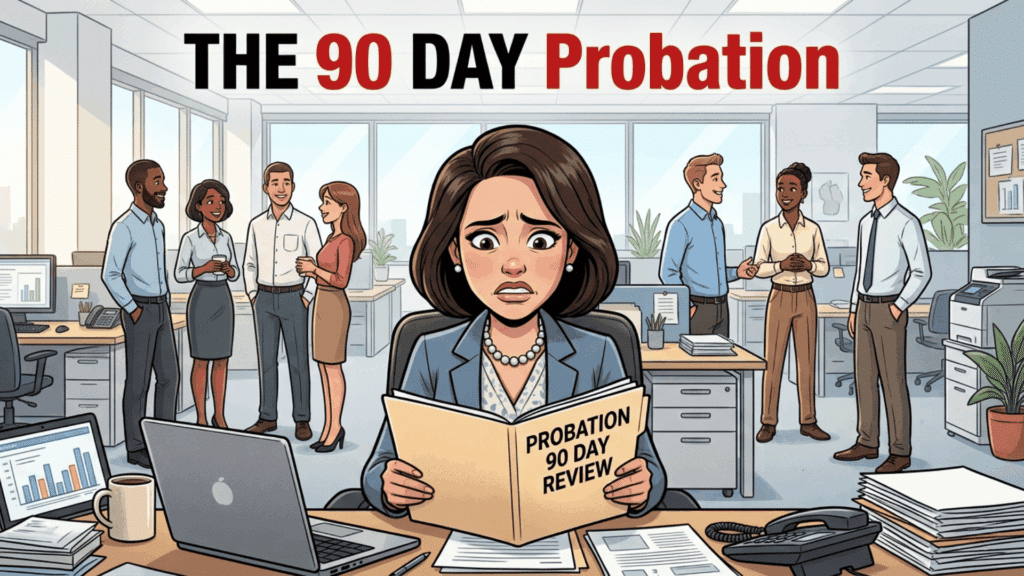

Starting a new hire can feel uncertain. You need enough time to assess performance, set expectations, and spot problems before they grow.
A well-planned 90 day probation period gives managers a clear structure for reviews, feedback, training, and documentation. It also helps employees know exactly what is expected from day one.
From years of creating HR templates and documentation, this process becomes easier when goals, review dates, and responsibilities are clearly laid out.
With the right structure, HR teams can stay consistent, reduce confusion, and make fair decisions with better records.
Find practical steps for planning, managing, recording, reviewing, and completing an employee probation period.
What Is a 90 Day Probation Period?
A 90-day probation period is a defined introductory phase that starts on an employee’s hire date, allowing employers to assess job fit and performance while the new hire learns the role, team, and workplace expectations.
It follows the same core rules as any probation period, applied within a focused three-month timeframe.
The period usually focuses on:
- Job performance
- Attendance and reliability
- Quality and accuracy of work
- Communication
- Required skills
- Training progress
- Workplace conduct
- Ability to meet role-specific goals
The employee should know exactly what is being assessed from the beginning.
How to Set Up a 90 Day Probation Period
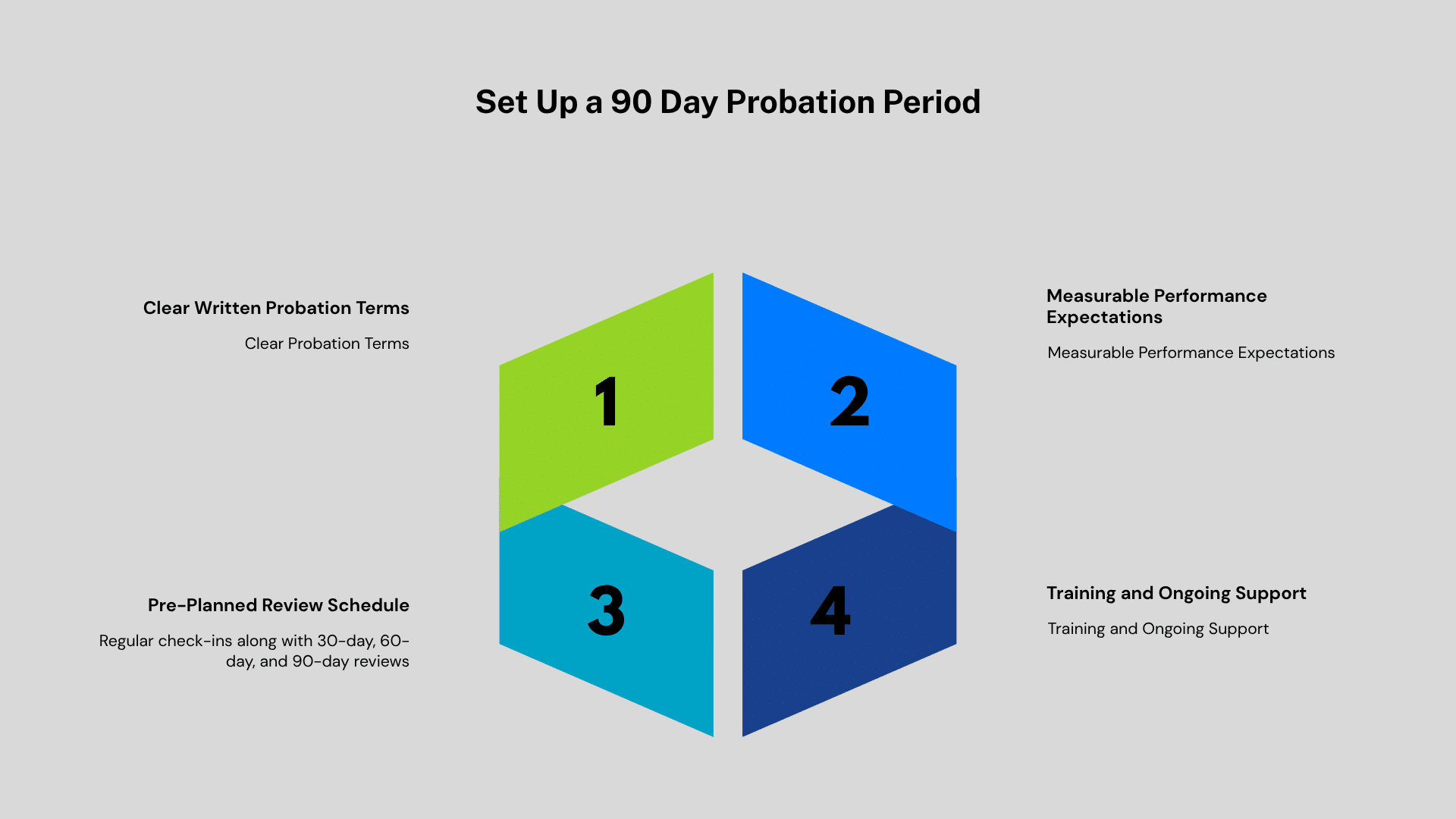
A well-structured 90 day probation period begins before the employee’s first day, giving HR and managers clear expectations, review points, documentation, and support from the start.
- Clear Written Probation Terms: Document the start and end dates, covered employees, assessment criteria, review schedule, responsible managers, possible outcomes, and extension conditions.
- Measurable Performance Expectations: Define role responsibilities, performance targets, deadlines, quality standards, attendance requirements, competencies, and SMART goals from the beginning.
- Pre-Planned Review Schedule: Arrange regular check-ins along with 30-day, 60-day, and 90-day reviews so progress and performance concerns can be addressed early.
- Training and Ongoing Support: Provide job-specific instruction, systems training, workplace policies, coaching, mentoring, and other resources employees need to meet expectations.
Setting these four elements early helps HR and managers run a consistent, transparent probation process while giving new hires clear expectations, timely feedback, and appropriate support.
How to Manage the 30, 60, and 90 Day Probation Timeline
Breaking a 90 day probation period into three stages helps managers track progress, address issues early, and prepare for the final review.
| Probation Stage | Main Focus | Key Actions |
|---|---|---|
| Days 1 to 30 | Onboarding | Explain responsibilities, set goals, provide training, introduce key contacts, and hold regular check-ins. |
| Days 31 to 60 | Progress review | Assess performance, reliability, communication, training progress, and skill gaps. Address concerns and agree on improvement actions. |
| Days 61 to 90 | Final assessment | Review goals, performance records, feedback, training, and unresolved concerns before making the final probation decision. |
How to Document Performance During Probation
Documentation is one of the most important parts of managing a probationary employee.
A manager should record significant discussions and performance information throughout the period rather than trying to reconstruct everything shortly before the final review.
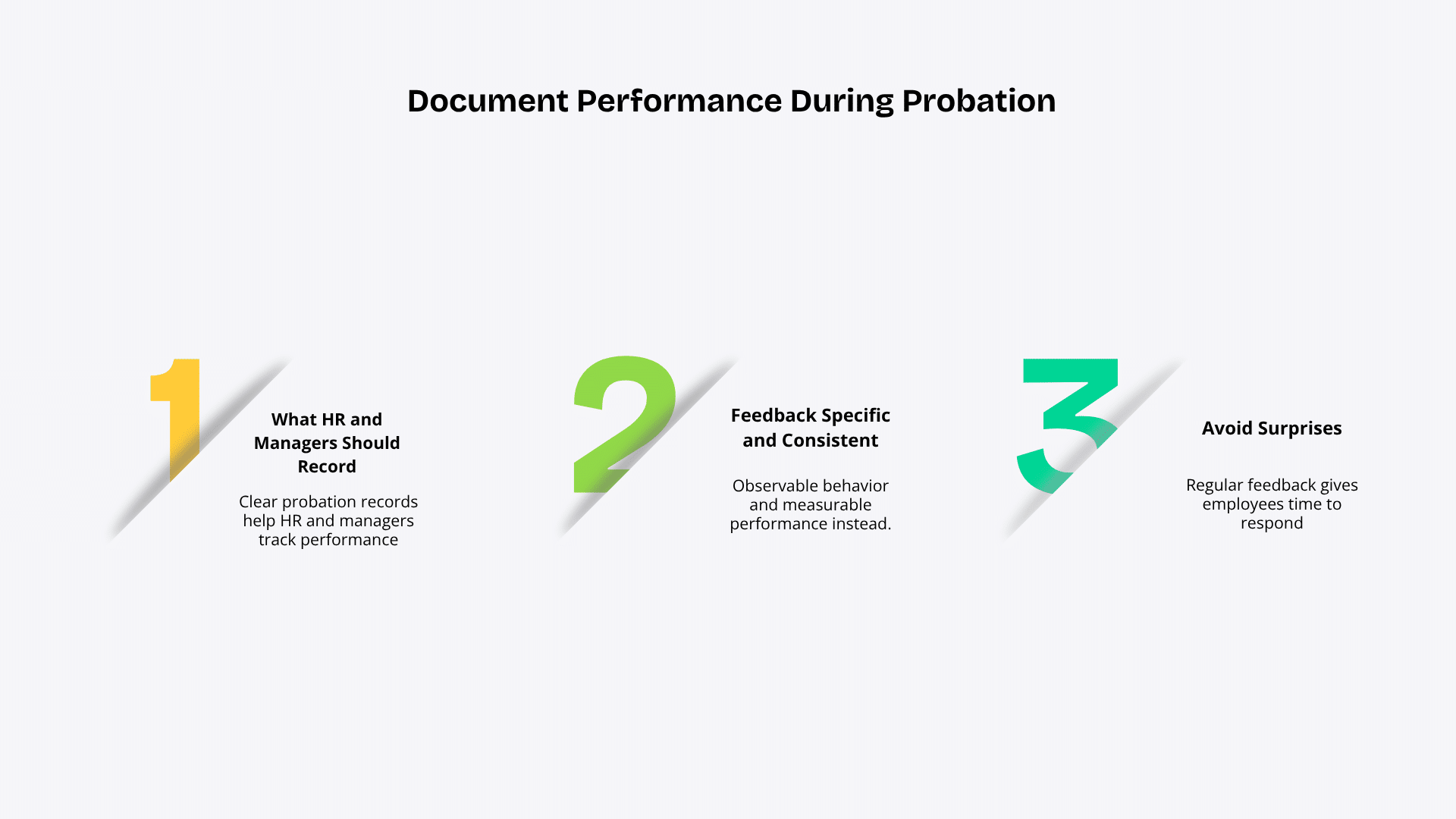
What HR and Managers Should Record
Keeping clear probation records helps HR and managers track performance fairly, support feedback discussions, monitor agreed improvements, and maintain consistent documentation throughout the employee’s probationary period.
Useful records may include:
- Goals and performance standards
- Completed training
- Dates of check-ins
- Examples of strong performance
- Missed expectations
- Feedback provided
- Employee explanations or comments
- Additional training offered
- Improvement actions
- Follow-up dates
- Progress against agreed actions
Keep Feedback Specific and Consistent
Vague comments such as “not a good fit” or “needs a better attitude” offer little value in probation records.
Managers should document specific, observable behavior and measurable performance instead.
Rather than writing “needs to improve reliability,” record the exact attendance, deadline, or scheduling issue, explain why it matters, and state the improvement expected, including any deadline or follow-up review date.
Avoid Surprises at the Final Review
Address serious performance concerns as soon as they appear, not at the final review.
Regular feedback gives employees time to respond, correct mistakes, request training or support, and demonstrate progress before probation ends.
This approach also helps managers maintain clear records and ensures the final decision reflects the employee’s performance across the entire probationary period.
How to Conduct the 90 Day Probation Review
The final probation review should summarize the employee’s progress across the full 90 days, using documented evidence, manager feedback, team input, and employee comments to support the decision.
- Review Performance Against Original Goals: Compare results with the expectations set at the beginning using completed work, performance data, training records, observations, feedback, and agreed KPIs.
- Gather Feedback From Those Who Worked Closely With the Employee: Collect specific input from relevant colleagues or supervisors on communication, reliability, collaboration, work quality, and daily performance.
- Hold a Two-Way Review Conversation: Give the employee space to discuss achievements, challenges, training needs, workload, role clarity, support, development goals, and questions.
- Document the Final Assessment: Record performance findings, relevant feedback, manager comments, employee comments, agreed next steps, and the final probation outcome.
A structured final review helps HR make a fair, evidence-based decision while giving the employee a clear record of performance, feedback, and agreed next steps.
What Happens at the End of a 90 Day Probation Period?
After a 90 day probation period, there are usually three possible outcomes: successful completion, extension, or ending employment.
If the employee meets the required standards, HR can confirm successful completion, and the manager can set longer-term goals and development priorities.
If performance needs more time to assess or improve, the probation period may be extended where company policy, employment terms, and applicable law allow.
The extension should clearly explain the reason, duration, required improvements, available support, and next review date. If the employee does not meet the expected standards, the organization may consider ending employment.
Before doing so, HR should review the employment contract, internal policies, documented performance records, applicable employment law, and any relevant employee protections.
Download our ready-to-use Probation Period Template now and start managing employee evaluations with ease.
Pros and Cons of Probation Period
Probationary periods can help employers assess new hires before making longer-term decisions, but they may also create confusion and legal risks if policies are unclear.
| Pros | Cons |
|---|---|
| Gives employers time to assess job performance and suitability. | Employees may view probation as a form of discipline. |
| Allows additional training and supervision during early employment. | The term may negatively affect employee engagement or the company’s perception. |
| May provide flexibility around certain benefits, subject to legal requirements. | Employees may misunderstand their employment status after probation ends. |
| Helps employers identify performance concerns early. | Poorly worded policies may increase the risk of employment disputes or wrongful termination claims. |
HR Best Practices for Probationary Periods
A well-managed probation period gives new employees clear direction, regular feedback, and the support they need to settle into their role and perform with confidence.
- Set clear expectations: Make sure employees know what is expected from the start. Outline measurable targets, key responsibilities, workplace behaviors, and important tasks during onboarding.
- Check in regularly: Do not wait until probation is nearly over to discuss progress. Schedule 30-, 60-, and 90-day reviews to discuss performance and goals openly.
- Offer practical support: Give new employees the training, coaching, and guidance they need to improve. Regular support can also help them feel more comfortable asking questions.
- Deal with concerns early: Address performance or behavior issues as soon as they appear. Early conversations give employees time to respond, improve, and avoid bigger problems later.
- Confirm successful completion: Once probation is completed successfully, provide written confirmation. This gives both the employee and employer a clear record of the outcome.
A fair probation process works best when expectations stay clear, feedback comes early, support remains consistent, and successful completion is formally confirmed with a written letter.
Conclusion
A well-managed 90 day probation period gives HR teams a way to support new hires, track progress, and make employment decisions.
From my experience creating HR templates and documentation, the best processes are clear, consistent, and easy to follow.
Simple goals, scheduled reviews, timely feedback, and records help managers stay organized while giving employees a chance to succeed.
The real value comes from structure. When everyone knows what to expect, reviews become more useful and final decisions feel informed.
Use the templates and review steps in this blog to strengthen your probation process from day one. Start today by setting clear goals, review dates, and documentation standards.
How does your team manage probation reviews? Share your approach in the comments.
Frequently Asked Questions
What Happens If You Miss a Day of Work During the Probationary Period?
Missing a workday during probation does not automatically mean termination. Employees should notify their manager promptly, explain the absence, and follow workplace attendance procedures.
Can You Call Off During a 90-Day Probation Period?
Yes, you can call off during a 90-day probation period, but frequent or unexcused absences may raise concerns about reliability and affect your employment.
Can Remote Employees Have a Probation Period?
Yes, remote employees can complete a probation period using scheduled virtual check-ins, measurable goals, documented feedback, and clear communication about performance expectations and responsibilities.