
Running a business without knowing the rules can feel risky. One missed requirement can lead to fines, complaints, or lawsuits.
That is why understanding legal requirements for employers matters so much. It protects both your business and your team.
After years of building workplace policies across different industries, I have seen how confusion around these rules often causes the biggest headaches for growing companies.
Compliance does not have to feel overwhelming once you know where to start. The major laws, employer responsibilities, common mistakes, and practical steps to stay compliant come next.
What are Legal Requirements for Employers?
Employer legal requirements are the federal and state laws that govern how businesses treat their workers. These rules cover pay, safety, benefits, and fair treatment.
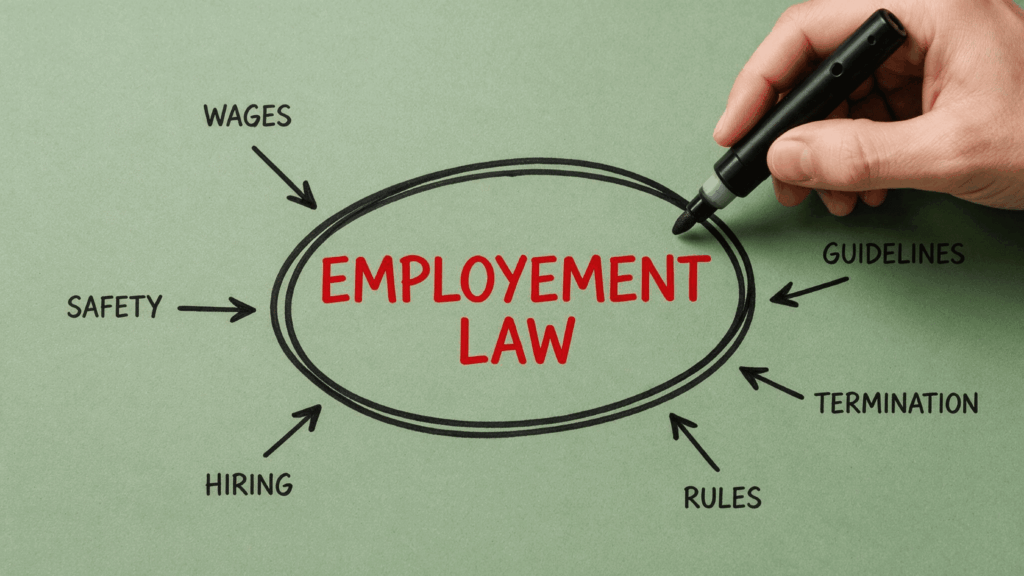
These obligations apply throughout the entire employment relationship. This includes the hiring process, day-to-day management, and even how termination is handled at the end.
Requirements are not identical for every business. They can change based on company size, industry, location, and how workers are classified. Several federal agencies help enforce these laws.
The Department of Labor oversees wage and safety rules, OSHA focuses on workplace safety, and the EEOC handles discrimination complaints.
Employer Legal Obligations Across Federal Laws
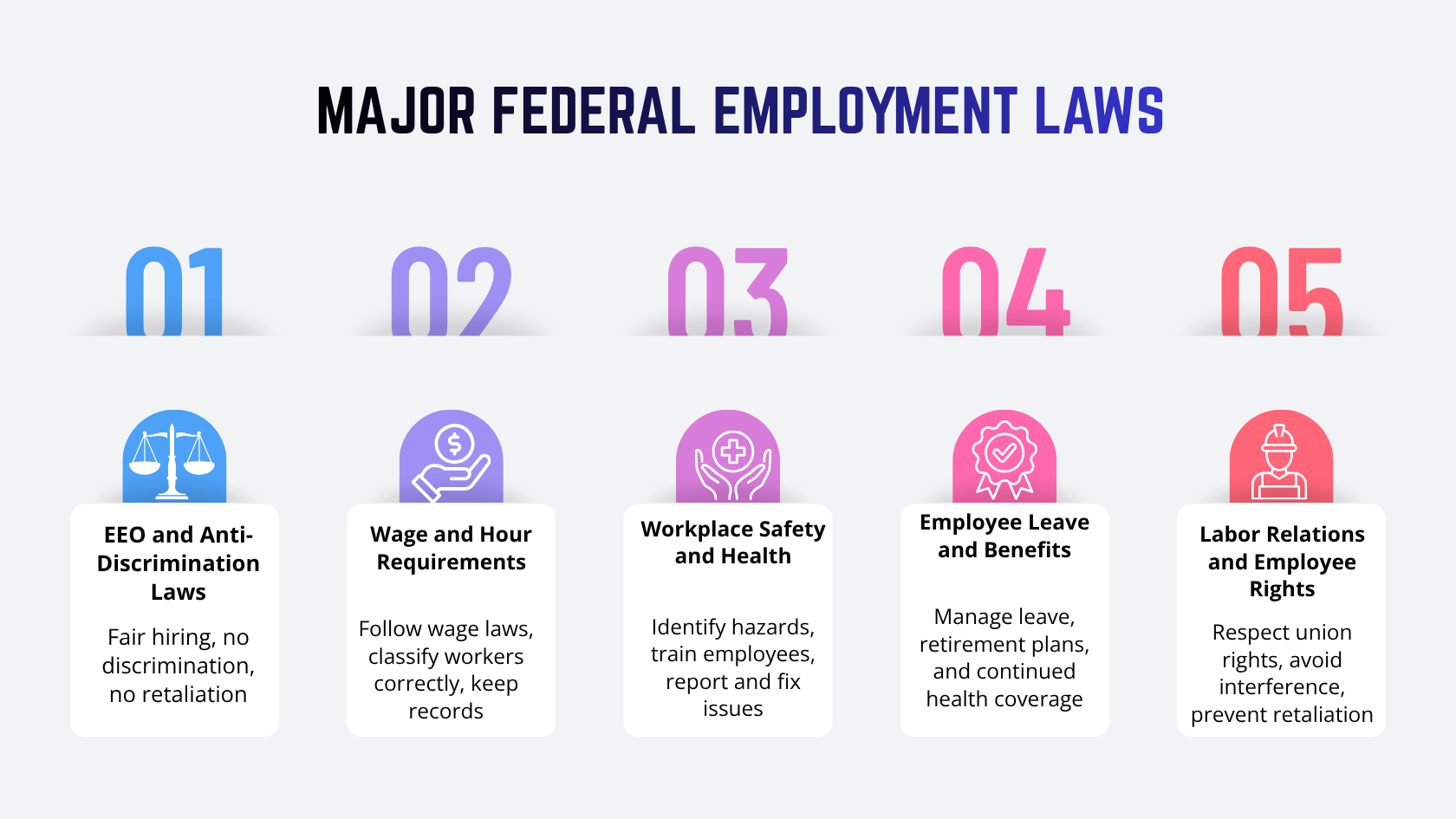
Federal workplace laws establish clear responsibilities for employers, from fair employment practices to wage compliance and workplace safety.
Understanding these obligations helps organizations reduce legal risks and maintain compliant HR systems.
1. Equal Employment Opportunity and Anti-Discrimination Laws
Federal law prohibits discrimination in hiring and employment decisions under Title VII, the ADA, the ADEA, and the Equal Pay Act. These laws apply across most workplaces.
Employers must maintain fair hiring practices and provide reasonable accommodations when needed. Preventing harassment and protecting employees from retaliation are also core responsibilities.
2. Wage and Hour Requirements
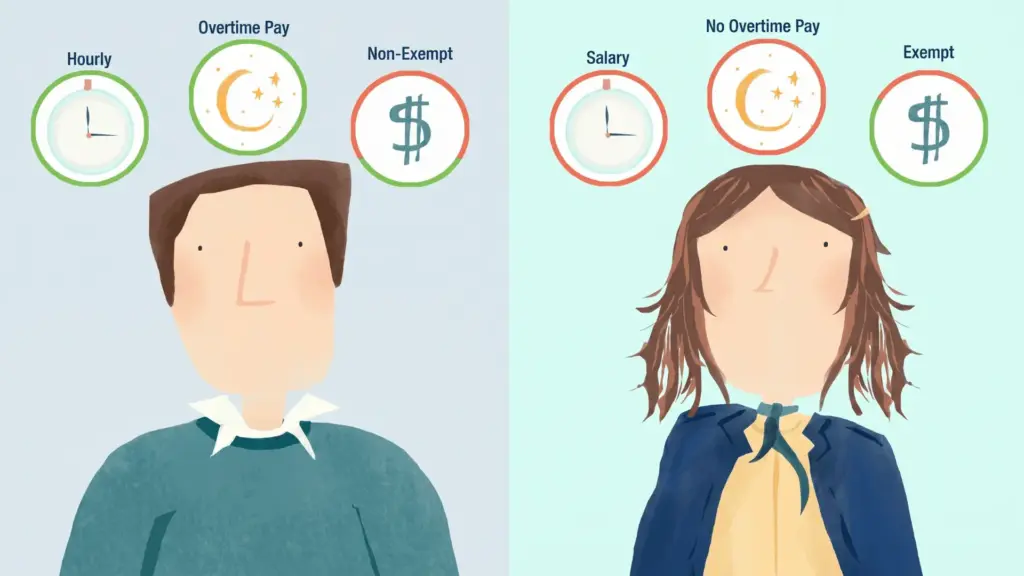
The FLSA sets minimum wage, overtime pay, and child labor standards for covered employees. Employers must also maintain accurate payroll records to stay compliant.
Employers must correctly calculate overtime pay at one and a half times the regular rate for non-exempt employees who work more than 40 hours in a workweek.
Advisor Note: “Many wage disputes occur because of poor recordkeeping rather than intentional violations. Clear time tracking procedures can prevent costly compliance problems.”
3. Workplace Safety and Health Responsibilities
OSHA requires employers to identify workplace hazards and provide a safe working environment. Regular safety training helps employees recognize and avoid potential risks.
Employers must consistently follow established health and safety standards. They are also responsible for reporting incidents and correcting hazards once they are identified.
4. Employee Leave and Benefits Compliance
The FMLA provides eligible employees with job-protected unpaid leave for qualifying medical and family reasons. ERISA governs employer duties around retirement and benefit plans.
COBRA requires certain employers to offer continued health coverage after employment ends. Properly managing eligibility and documentation is necessary across all three laws.
5. Labor Relations and Employee Rights
The NLRA protects employees’ rights to organize and take part in collective bargaining. Union participation also falls under these federal protections.
Employers cannot interfere with protected employee activities or retaliate against workers for exercising these rights.
Compliance Reminder: “Employment laws often overlap. A workplace decision involving pay, leave, discipline, or termination should be reviewed carefully to avoid violating multiple legal protections.”
Difference Between Labor Law and Employment Law
Labor law and employment law are often used interchangeably, but they cover distinct areas of the working relationship, and knowing the difference helps employers apply the right rules correctly.
|
Category |
Labor Law |
Employment Law |
|---|---|---|
|
Focus |
Collective rights of groups of workers |
Individual rights of employees |
|
Main Area |
Union formation and collective bargaining |
Wages, safety, benefits, and discrimination |
|
Key Law |
National Labor Relations Act (NLRA) |
FLSA, Title VII, ADA, FMLA, and similar laws |
|
Applies To |
Union and non-union workplaces engaging in collective activity |
All employers and employees, regardless of union status |
This distinction gives employers a clearer path to compliant, defensible policy decisions that hold up when questioned by regulators, employees, or legal counsel.
What Are Employers Not Allowed to Do?
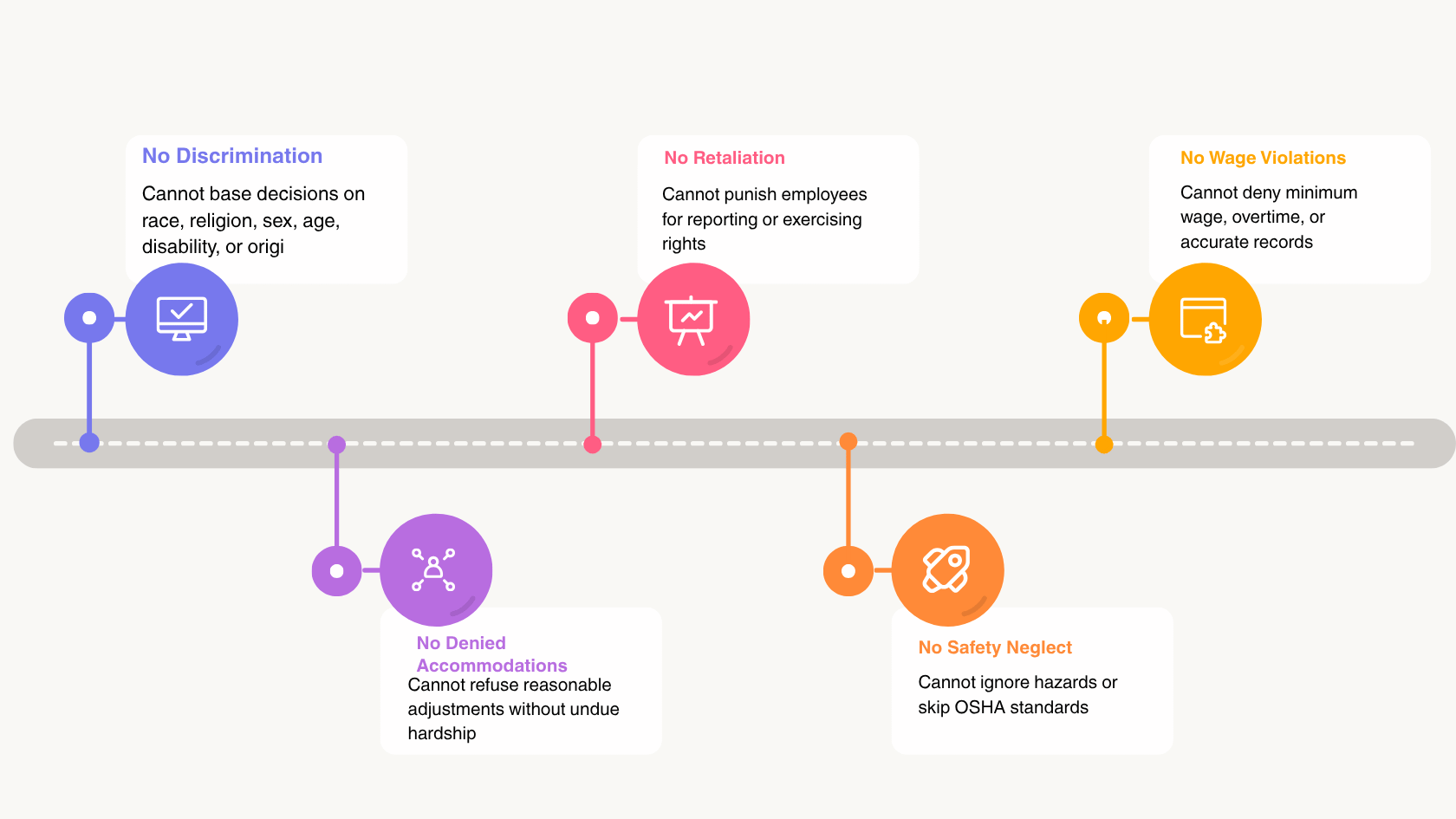
Employers must follow workplace laws that protect employee rights, prevent unfair treatment, and ensure lawful employment practices. The following actions are generally prohibited:
- Discriminate in Employment Decisions: Employers cannot base hiring, pay, promotion, or termination decisions on protected traits such as race, religion, sex, age, disability, or national origin.
- Deny Required Accommodations: Employers cannot refuse reasonable workplace adjustments for qualified disabilities or sincerely held religious beliefs unless they create undue hardship.
- Violate Wage and Hour Rules: Employers cannot deny minimum wage, overtime pay, accurate time records, or require employees to work unpaid hours.
- Retaliate Against Employees: Employers cannot punish workers for reporting violations, filing complaints, discussing wages, or exercising protected workplace rights.
- Ignore Safety and Compliance Duties: Employers cannot overlook workplace hazards or fail to follow required safety standards, including OSHA regulations.
Disclaimer: This information provides general employment law guidance and should not replace advice from a qualified attorney. Workplace obligations may vary based on state laws, industry requirements, and individual circumstances.
How Employers Can Stay Compliant With Employment Laws
Employers must do more than follow workplace laws during daily operations. They must also maintain required notices, protect employee rights, update policies, and create systems that support ongoing compliance:
|
Compliance Requirement |
What Employers Must Do |
|
Display Required Workplace Notices |
Post federal workplace posters covering wage rights, safety requirements, and anti-discrimination protections where employees can easily see them. |
|
Maintain Safety Information |
Keep OSHA safety notices visible and provide employees with required workplace health and safety information. |
|
Provide Wage and Hour Information |
Display FLSA notices about minimum wage, overtime rights, and other required pay-related protections. |
|
Protect Employee Reporting Rights |
Do not retaliate against employees who report workplace violations, safety concerns, or illegal practices through proper channels. |
|
Keep Policies Updated |
Review workplace policies regularly and update them when federal or state employment laws change. |
|
Train Employees and Managers |
Provide training on harassment prevention, workplace safety, wage rules, and consistent policy enforcement. |
|
Seek Professional Guidance |
Consult HR professionals or employment attorneys when handling complex decisions involving discipline, termination, benefits, or compliance risks. |
Advisor Note: “Compliance is strongest when employers build regular review processes instead of waiting for a complaint or legal issue to reveal gaps.”
What Happens If Employers Fail to Meet Legal Requirements?
Employers who fail to meet legal requirements can face fines, lawsuits, and government investigations. Penalties often depend on the type of violation and how long it continued.
Wage and hour violations can result in back pay, liquidated damages, and interest owed to affected employees.
Discrimination or harassment claims can trigger EEOC investigations, legal settlements, and reputational damage. Some cases also result in mandatory policy changes or employee retraining programs.
Safety violations reported to OSHA can lead to citations, workplace shutdowns, or steep financial penalties. Left unresolved, these issues put both employees and business operations at ongoing risk.
Final Thoughts
Meeting legal requirements isn’t about memorizing every rule. It comes down to building habits that keep your business fair, safe, and protected.
From my own experience working with different organizations, the companies that stay ahead of compliance are the ones that treat it as an ongoing practice, not a one-time checklist.
Start small if you need to. Review one policy this week, check your current worker classifications, or confirm your required posters are up to date.
Taking that first step now can save you significant time, money, and stress later. What compliance challenge has your business faced? Share your experience in the comments below.
Frequently Asked Questions
What Are the Most Common Employment Law Violations?
Wage and hour violations top the list, especially unpaid overtime and misclassification. Discrimination complaints, safety violations, and improper termination practices also account for a large share of employer legal disputes each year.
Do Small Businesses Have to Follow the Same Employment Laws as Large Companies?
Not always. Many federal laws, including the FMLA and ADA, only apply once a business reaches a certain employee count. However, most wage and safety laws apply regardless of company size.
How Often Should Employers Review Their Compliance Practices?
Employers should review compliance practices at least once a year or whenever employment laws change. Regular audits of policies, classifications, and documentation help catch gaps before they become costly legal problems.