

Job applications often include a field for employees supervised, and it’s not always clear how to answer it.
Maybe you led a project but never had the title of “manager.” Maybe you trained new hires over a summer without officially supervising anyone.
This trips up a lot of people because most job applications never explain what they’re actually asking.
In this blog, I’ll break down what does employees supervised mean, what counts as supervising someone, and how to answer it.
What Does Employees Supervised Mean?
Employees supervised refers to the number of people who reported directly to you in a previous job. Employers use this information to understand your leadership responsibilities and the scope of your role.
For example, if you supervised 4 customer service representatives, your employees supervised count would be 4. The goal is to provide an accurate and honest reflection of your supervisory experience.
It’s a headcount of who you gave tasks to, checked on, and were in charge of each day. Job applications ask for this number to get a quick read on your leadership.
Why Do Job Applications Ask for Employees Supervised?
Recruiters ask this question to quickly understand the level of responsibility you’ve handled in previous roles. The number alone isn’t the focus.
- Measures Leadership: Shows whether you’ve been responsible for guiding, directing, or overseeing other employees.
- Evaluates Responsibility: Indicates the size of the team you were accountable for and the level of trust placed in you.
- Compares Candidates: Gives hiring managers a consistent way to compare applicants with similar job titles but different supervisory experience.
- Matches Job Requirements: Helps employers determine if your experience aligns with roles that involve managing or supervising staff.
- Assesses Decision-Making: Suggests whether you’ve handled responsibilities such as assigning work, monitoring performance, or approving schedules.
- Supports Hiring Decisions: Provides context about your previous role, making it easier for recruiters to assess your readiness for leadership positions.
What Counts as Supervising Someone?
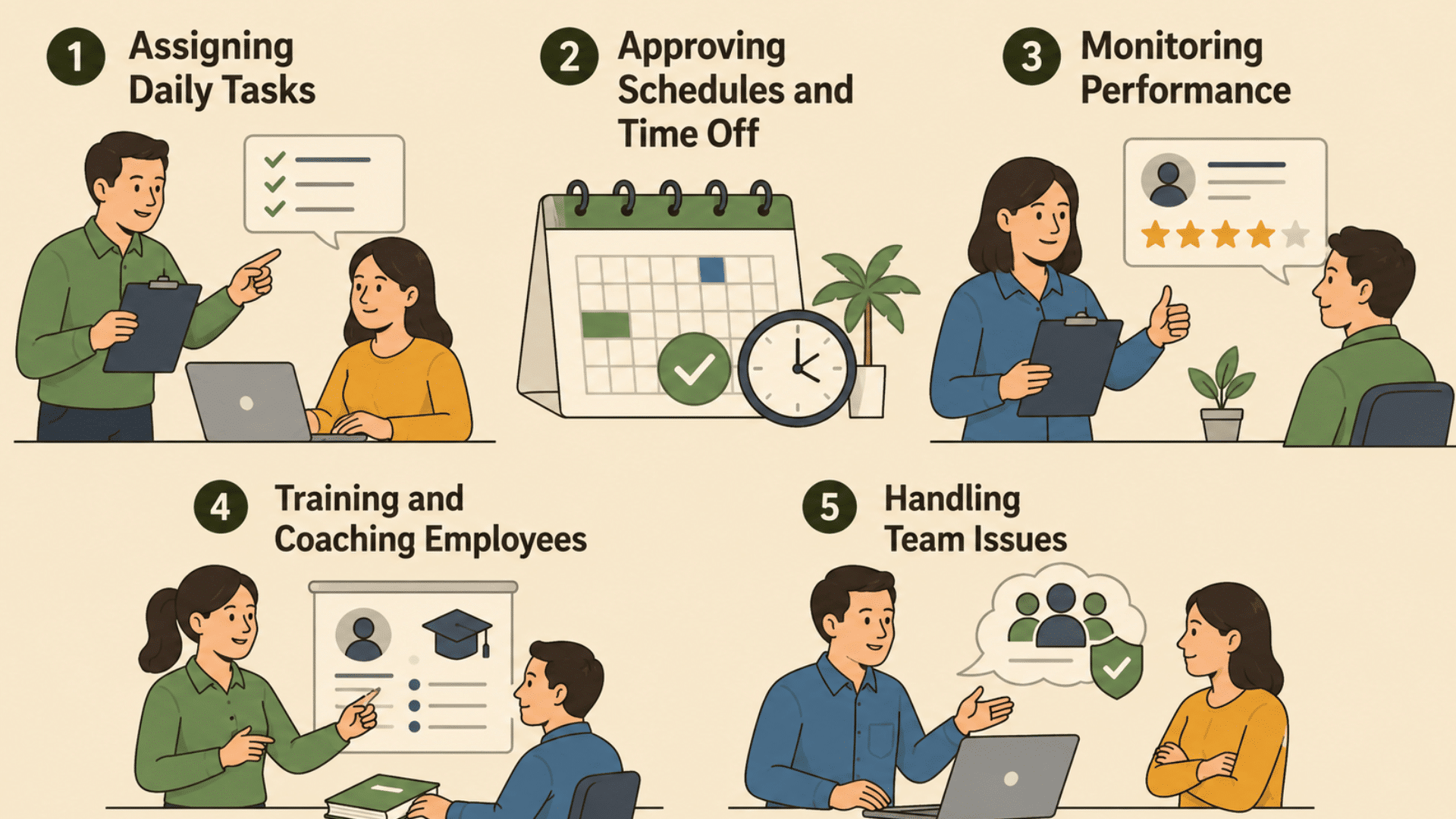
Supervising someone involves more than simply working alongside them. In most workplaces, it means having responsibility for directing, evaluating, or overseeing another employee’s work.
1. Assigning Daily Tasks
Giving employees work assignments or delegating responsibilities is one of the clearest signs of supervision.
If you regularly decide who handles specific tasks, set priorities, or ensure work is completed on time, you are performing a supervisory function even if your job title does not include “manager.”
It’s worth knowing the difference between this and micromanagement, since healthy supervision and micromanagement aren’t the same thing.
2. Approving Schedules and Time Off
Supervisors often create work schedules, approve vacation requests, and manage shift changes to keep operations running smoothly.
Having the authority to make or approve these decisions typically counts as supervising employees because it directly affects how the team works.
Regularly coordinating shifts and managing attendance is another sign of supervision, as it shows responsibility for the team’s daily operations.
3. Monitoring Performance
Reviewing employees’ work, providing feedback, and conducting performance evaluations are common supervisory responsibilities, and knowing how to manage employee performance well is often what separates a title from actual supervisory experience.
Even if formal reviews are handled by HR, regularly assessing work quality and helping employees improve demonstrates an active supervisory role.
4. Training and Coaching Employees
Onboarding new hires, teaching workplace procedures, and coaching employees through daily tasks are important supervisory duties, and following solid onboarding best practices is itself a form of supervisory experience worth mentioning.
If you are responsible for helping team members learn their roles and improve their performance, that experience may qualify as supervision.
5. Handling Team Issues
Supervisors are often the first point of contact when employees have questions, workplace concerns, or conflicts.
Strong conflict management skills are one of the clearest signs that someone has been operating in a supervisory capacity, even informally.
Enforcing company policies, resolving routine issues, and supporting team members in their day-to-day responsibilities are all common supervisory responsibilities.
Responding to employee concerns and keeping the team productive are key supervisory responsibilities. Being the person employees turn to for guidance is another sign that you supervise their day-to-day work.
Employees Supervised Meaning in Different Job Types
The Bureau of Labor Statistics tracks how first-line supervisor roles vary by industry, which shows why a “normal” team size changes depending on the field.
Full-Time and Part-Time Employees
If full-time or part-time employees reported directly to you, they generally count as employees supervised. This is true whether you oversaw a small team or a larger department.
Interns and Contractors
Interns and contractors may count if you were responsible for assigning their work, monitoring progress, or evaluating their performance. Simply collaborating with them does not usually qualify as supervision.
Temporary and Seasonal Staff
Employees hired for a limited period, such as holiday workers or seasonal staff, can be included if they reported directly to you during their employment.
Volunteers
Volunteers may be counted if your role involved directing their daily activities, assigning tasks, or overseeing their work. This is more common in nonprofit organizations, schools, and community programs.
Remote and Hybrid Employees
If remote or hybrid employees reported to you and you were responsible for their day-to-day oversight, they should be included in your supervised headcount.
Employees Supervised vs. Managed: What’s the Difference?
Before listing the number of employees you supervised, it helps to understand how supervision differs from management.
| Aspect | Employees Supervised | Employees Managed |
|---|---|---|
| Main Focus | Guides employees as they complete daily responsibilities. | Directs overall team performance and objectives. |
| Primary Role | Ensures work is completed correctly, on time, and according to company standards. | Sets goals, priorities, and direction for teams or departments. |
| Support Level | Provides daily support, instructions, and problem-solving help. | Makes higher-level decisions about staffing, budgets, and operations. |
| Work Interaction | Works closely with employees during daily tasks and shifts. | Oversees supervisors, teams, or larger business units. |
| Common Positions | Often seen in frontline roles like shift leads and supervisors. | Common in roles like managers, department heads, and directors. |
How Do You Count Direct vs. Indirect Reports?
Knowing the difference between direct and indirect reports helps you answer the employees supervised question correctly. In most cases, employers want the number of direct reports, not everyone in your department.
Direct reports are employees who report to you personally. If you assign their work, provide feedback, or oversee their daily performance, include them in your supervised employee count.
Indirect reports work under another supervisor who reports to you. Although they may be part of your department, they usually are not included unless the application specifically asks for indirect reports.
For example, if you supervise 2 team leaders, and each team leader oversees 3 employees, you have 2 direct reports and 6 indirect reports. On most job applications, you would report 2 employees supervised.
How to Answer the Employees Supervised Question?

The best answer is always an honest one that reflects your actual supervisory experience. How you respond depends on your role and the information the application requests.
1. If You Supervised Employees
Enter the number of employees who reported directly to you. If there’s space for additional details, briefly mention the type of team or role you supervised. A strong resume words list can help you find the right action verb to pair with that number.
Be specific whenever possible. For example, instead of writing only “10,” you could state “Supervised 10 retail associates” to give recruiters a clearer picture of your experience.
For federal jobs specifically, the Department of Labor’s post on writing a federal resume recommends listing supervisor details and hours worked alongside your duties.
2. Add Context When Possible
If the application includes a comments section, explain your supervisory experience with a short statement such as, “Supervised 8 customer service representatives across two shifts.”
If space is limited, keep your description concise and focus on the team size and your primary responsibility. A clear, factual statement is usually more effective than a lengthy explanation.
3. If You Had No Direct Reports
If you haven’t supervised employees, answer honestly based on your experience. Employers value accuracy over exaggeration.
Many employers hire candidates without formal supervisory experience. Strong communication, teamwork, and reliability can be just as valuable.
If you’ve trained new hires, coordinated tasks, or supported your team, mention those experiences elsewhere in your application to demonstrate your leadership potential
What If You’ve Never Supervised Anyone?
Not everyone has formal supervisory experience. If you haven’t supervised employees, answer honestly and highlight any leadership responsibilities you’ve taken on.
- Write “0” Honestly: If you’ve never had direct reports, enter 0 if the application asks for the number of employees supervised. Honesty is always better than guessing or exaggerating.
- Use “N/A” When Appropriate: If the field doesn’t apply to your previous role and allows text instead of numbers, writing N/A is generally acceptable.
- Highlight Informal Leadership: Mention experiences such as training new hires, mentoring coworkers, leading projects, or coordinating shifts elsewhere in your application or resume.
- Focus on Achievements: Emphasize measurable results, teamwork, problem-solving, and project ownership to demonstrate leadership potential beyond supervision.
- Be Ready to Explain: If asked during an interview, briefly explain your role and discuss any leadership responsibilities you handled, even without direct reports.
| Final Checklist and Employee Scripts: Before speaking with a supervisor, employees can prepare by noting the issue, gathering relevant details, and deciding what they want to address. Keeping communication clear and professional can help make workplace discussions more productive. A simple written record of conversations and follow-ups can also help track the steps taken to resolve the concern. |
Conclusion
Now that you understand what does employees supervised mean, answering this field is much easier. It’s simply an honest count of the people who reported directly to you.
Count your direct reports, note whether interns or contractors fit that description, and don’t inflate the total to sound bigger.
If you’re building toward a supervisory role next, it’s worth looking into leadership growth examples to see what that path can look like in practice.
Before your next job hunt, spend five minutes reviewing your last two roles. Jot down the real headcount for each, so you’re never stuck on this field again.
Frequently Asked Questions
Should You Mention Employees Supervised in a Cover Letter?
It’s optional, but a strong number can strengthen your case. Mention it briefly if the role you’re applying for specifically requires supervisory or management experience.
Can You Combine Supervised Numbers from Two Different Jobs?
No. List each job’s supervised count separately, since applications usually ask about a specific role. Combining totals across jobs can look inflated or unclear to recruiters.
Is “Employees Supervised” Different on LinkedIn?
Yes. LinkedIn allows more narrative detail, like team makeup or achievements, while a job application usually just wants a direct-report number in a single field.