

Ethical decisions often appear in ordinary moments, such as recording time, sharing information, or reviewing a complaint.
Seeing both ethical and unethical sides helps clarify the difference between an honest mistake, poor judgment, and deliberate misconduct.
This blog covers workplace ethics and decisions made by employees and company leaders. Each one shows how the same workplace situation can be handled in two very different, ethical and unethical ways.
How Workplace Ethics Look in Daily Decisions
Workplace ethics refers to the standards people follow when making work-related decisions. Common principles include honesty, fairness, respect, privacy, accountability, and safety.
These standards apply to routine choices such as reporting work hours, handling customer data, giving feedback, approving expenses, and responding to complaints.
A decision may seem minor, but it can affect coworkers, customers, company records, and workplace trust.
The EEOC received 88,531 new discrimination charges in fiscal year 2024, a 9.2 percent rise from the prior year. Clear ethics help HRs review reports on a fair basis.
Some poor choices break policy without breaking a law. Discrimination, retaliation, false records, bribery, or deceptive advertising may carry legal consequences.
Workplace Ethics Examples in Real Situations
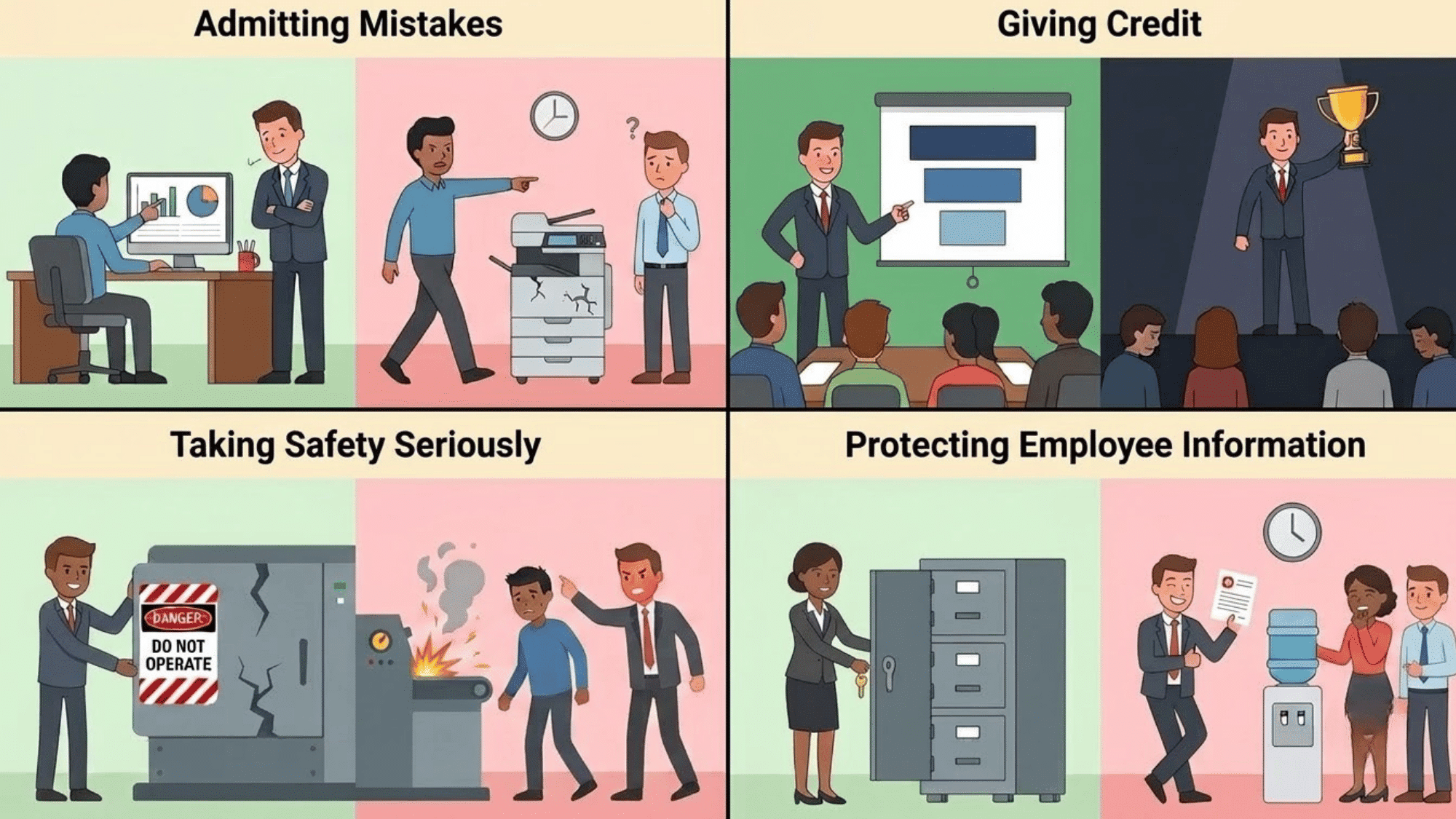
Broad values make more sense beside familiar decisions. These comparisons show two different responses. Each item includes a responsible choice and a non-ethical choice.
1. Recording Work Hours Accurately
Time records affect employee pay and the accuracy of company records. Employees and managers should make sure all required working time is recorded.
Ethical: An hourly worker records the extra time spent closing after the final customer leaves.
Non-ethical: A manager asks staff to clock out before finishing required cleanup.
2. Submitting Honest Expense Claims
Expense reports should reflect costs that were actually incurred for approved business purposes. Personal spending should remain separate from company reimbursement requests.
Ethical: An employee removes a personal meal from a travel claim.
Non-ethical: The employee lists personal purchases as client expenses and hopes no one checks.
3. Admitting a Work Mistake
Mistakes can happen in any role, but the response matters once an error is found. Reporting the problem promptly gives the company a chance to correct it before further harm occurs.
Ethical: A payroll worker reports a calculation error and helps correct the records.
Non-ethical: The worker hides it and lets a coworker take the blame.
4. Giving Accurate Project Updates
Project updates help managers plan deadlines, staffing, budgets, and client expectations. Accurate reporting gives decision-makers a realistic view of the work still required.
Ethical: A team lead reports a likely delay and explains the remaining work.
Non-ethical: The lead reports false progress to avoid questions from senior staff.
5. Giving Credit to the Right People
Recognition should reflect who actually completed or contributed to the work. Giving proper credit supports trust and prevents one person from benefiting unfairly from another person’s effort.
Ethical: A manager names the employees who prepared a successful proposal.
Non-ethical: The manager presents the work as a personal achievement.
6. Protecting Employee Information
Employee records often contain sensitive details that should only be accessed for valid work purposes. Careful handling helps protect privacy and reduces unnecessary exposure of personal information.
Ethical: HR limits payroll, medical, and complaint records to people with a valid work reason.
Non-ethical: A supervisor shares details from an employee’s private leave request.
7. Handling Customer Data Carefully
Customer files may contain contact details, financial records, purchase history, or other private information. Employees should access only the information required to complete their assigned responsibilities.
Ethical: A salesperson opens only the records needed for an assigned account.
Non-ethical: The employee searches private files out of curiosity or shares details with a friend.
8. Disclosing a Conflict of Interest
Personal relationships or financial interests can affect the fairness of workplace decisions. Disclosing a conflict allows another person to review or handle the decision independently.
Ethical: A hiring manager says an applicant is a relative and steps away from the decision.
Non-ethical: The manager hides the relationship and gives the relative special treatment.
9. Refusing Improper Gifts or Payments
Large gifts or payments can influence purchasing decisions or create the appearance of favoritism. Employees should follow company rules when vendors offer money, benefits, travel, or valuable items.
Ethical: A buyer reports an expensive vendor gift and follows company policy.
Non-ethical: The buyer accepts money or benefits in return for awarding a contract.
10. Using Company Property Responsibly
Company cards, equipment, accounts, and supplies are provided for approved work purposes. Employees are responsible for using those resources according to company rules.
Ethical: An employee uses a company card only for approved costs, respecting the workplace ethics.
Non-ethical: The employee hides personal purchases under a vague expense category.
11. Hiring Through Job-Related Standards
Hiring decisions should focus on the requirements of the role and the applicant’s qualifications. Using consistent criteria gives candidates a fair basis for comparison.
Ethical: Interviewers ask the same role-based questions and compare answers against stated requirements.
Non-ethical: A manager relies on assumptions tied to a protected trait.
12. Making Promotion Decisions Fairly
Promotion standards should be connected to job performance, qualifications, and business needs. Applying the same criteria helps prevent favoritism from deciding who advances.
Ethical: A company compares skills, results, experience, and role needs.
Non-ethical: A supervisor changes the standards so a favored employee receives the position.
13. Applying Rules Consistently
Workplace rules should be applied fairly when employees face similar circumstances. Managers should review the facts before deciding how a policy applies to each case.
Ethical: Similar attendance issues receive similar responses after the facts are reviewed.
Non-ethical: One worker is written up while a manager’s friend faces no response.
14. Responding to Harassment Reports
Harassment reports should receive a serious and appropriate response from managers or HR. Ignoring a concern can discourage reporting and allow harmful behavior to continue.
Ethical: A manager listens, records the report, and sends it through the stated process.
Non-ethical: The manager calls the behavior a joke and tells the employee to ignore it.
15. Handling Accommodation Requests Respectfully
Managers should send accommodation requests through the correct review process instead of making immediate assumptions.
Ethical: A supervisor sends a disability or religious accommodation request to the proper contact.
Non-ethical: The supervisor mocks or rejects it without reviewing the facts.
16. Taking Safety Reports Seriously
Safety concerns can place employees, customers, and company property at risk. Reports about damaged equipment or unsafe conditions should be checked before work continues.
Ethical: A supervisor pauses work after damaged equipment is reported.
Non-ethical: The supervisor tells staff to keep using it so production does not slow down.
17. Making Truthful Customer Claims
Customers rely on sales information when deciding what to buy or sign. Product claims should match what the company can reasonably provide.
Ethical: A salesperson explains a product’s real limits before purchase.
Non-ethical: The salesperson makes an unsupported promise to close the sale.
18. Selecting Vendors Fairly
Vendor decisions can affect company costs, service quality, and business risk. Using shared criteria helps keep personal relationships from influencing purchasing decisions.
Ethical: A purchasing team compares price, quality, service, results, and risk under shared standards.
Non-ethical: A decision-maker selects a friend’s company without revealing the relationship.
19. Keeping Financial Records Accurate
Financial records should reflect transactions in the correct amount and reporting period. Changing figures to improve results can mislead leaders, investors, auditors, or regulators.
Ethical: A finance worker records a loss in the correct reporting period.
Non-ethical: A leader asks that it be delayed so current results look stronger.
20. Reporting Product or Service Problems
Serious defects can affect customer safety, satisfaction, and company liability. Employees should report known problems so they can be reviewed before reaching more customers.
Ethical: A worker reports a serious defect before the product reaches customers.
Non-ethical: A manager hides it because repairs may hurt the monthly target.
21. Avoiding Retaliation After a Complaint
Employees should be able to raise concerns without being punished for reporting them. Work assignments, schedules, feedback, and reviews should continue to follow fair standards.
Ethical: A manager keeps schedules, assignments, feedback, and reviews fair after a discrimination report.
Non-ethical: The manager cuts shifts or raises scrutiny because the report was made.
22. Respecting Lawful Pay Discussions
Pay discussions can help employees understand compensation and raise shared workplace concerns. Managers should not punish covered employees simply for discussing wages or working conditions.
Ethical: A manager allows covered workers to discuss wages without punishment.
Non-ethical: The employer threatens staff for comparing pay or asking together for better conditions.
23. Reporting Suspected Wrongdoing
Employees may notice conduct that violates policy, regulations, or legal requirements. A suitable reporting channel gives the concern a chance to be reviewed based on facts.
Ethical: An employee shares factual concerns through a reporting channel that fits the issue.
Non-ethical: A manager pressures the worker to withdraw the report or blocks contact with a regulator.
24. Correcting Harmful Rumors
False workplace rumors can damage reputations, working relationships, and future opportunities. Managers should avoid spreading unverified claims and correct false information when appropriate.
Ethical: A manager corrects false information before it harms an employee’s reputation.
Non-ethical: The manager repeats the rumor to isolate someone they dislike.
25. Using AI Tools Without Exposing Private Data
AI tools can create privacy and security concerns when employees enter confidential information. Workers should follow company rules and remove sensitive details before using an approved system.
Ethical: An employee removes confidential details and follows company rules before using an approved AI tool.
Non-ethical: The employee uploads private customer, worker, or company information into an unapproved system.
What Employees Can Do After Seeing Unethical Behavior
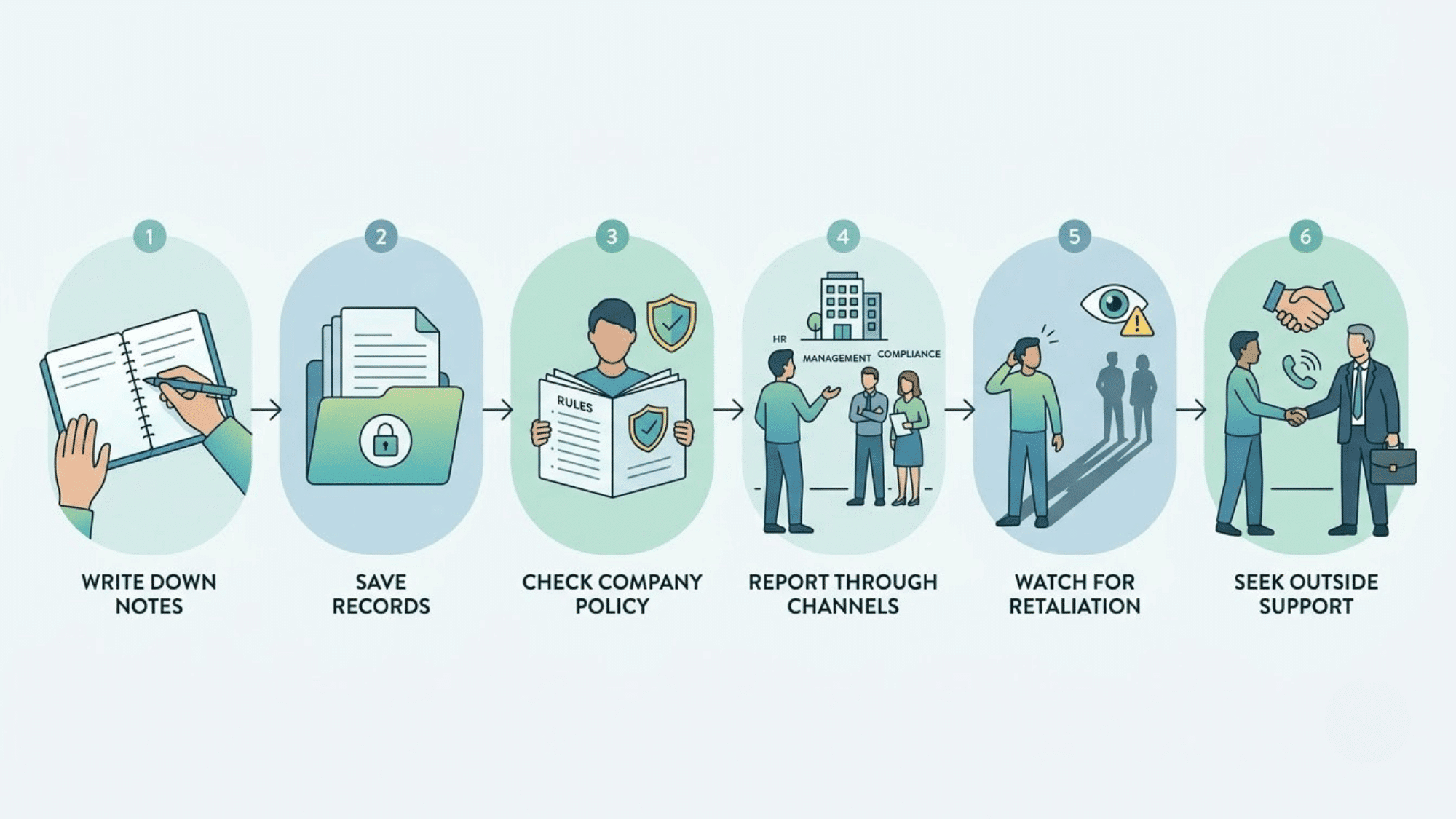
The right response depends on the facts. A careless mistake may need a conversation, while harassment, false records, bribery, retaliation, or immediate danger may call for formal reporting.
- Write down what happened: Record dates, statements, witnesses, and any changes that followed. Keep the notes factual and avoid adding guesses.
- Save relevant records: Keep emails, messages, schedules, or documents that support the concern and may lawfully be retained for workplace ethics violations.
- Check company policy: Read the reporting procedure, code of conduct, and anti-retaliation rules before making a formal complaint.
- Report through the right channel: Contact a manager, HR, ethics hotline, or another listed person. State what happened, who was involved, and the response you are requesting.
- Watch for retaliation: Note sudden schedule cuts, exclusion, threats, lower ratings, or unusual scrutiny after the report.
- Seek outside support when needed: A union representative, employment attorney, or government agency may help when the issue involves safety, discrimination, wages, fraud, or retaliation.
Final Thoughts
Ethical concerns can feel uncomfortable, especially when the right response is not immediately clear. Looking at the facts calmly can help you separate a one-time mistake from a serious or repeated problem.
You do not need to solve every issue alone or react before you are ready. Clear notes, company policies, and the right reporting channel can give you a practical starting point.
Workplace ethics is built through everyday choices, not only major decisions. When employees and leaders act honestly and accept responsibility, everyone can feel more secure speaking up.
Frequently Asked Questions
Is Every Non-Ethical Workplace Action Illegal?
No. Some actions may be unfair, dishonest, or against company policy without breaking the law. Discrimination, fraud, retaliation, bribery, and wage violations may have legal consequences.
Can an Employee Make an Anonymous Ethics Report?
Sometimes. Many company hotlines accept anonymous reports, but some agencies may require personal details. Anonymous reporting can also limit follow-up.
Should HR Review Every Workplace Ethics Complaint?
Yes. HR should assess each report based on the facts, urgency, and possible risk. The response may range from a policy reminder to a formal investigation.