

Texas workers and employers often need to check both state and federal wage laws. Unlike many states, Texas does not set a higher hourly wage or raise its rate each year based on inflation.
Instead, the minimum wage in Texas generally follows the federal rate.
This blog explains what is minimum wage in Texas, tipped wages, overtime requirements, exemptions, employer responsibilities, and options for workers who believe they have been underpaid.
What is Minimum Wage in Texas?
The minimum wage in Texas is $7.25 per hour in 2026 for most covered, nonexempt employees.
Texas follows the federal minimum wage established under the Fair Labor Standards Act FLSA, which has remained at $7.25 per hour since July 24, 2009. Different pay rules may apply to certain workers.
Tipped employees may receive a direct cash wage of $2.13 per hour, provided their tips bring their total earnings to at least the required minimum wage.
Eligible workers under age 20 may be paid a training wage of $4.25 per hour during the first 90 consecutive calendar days of employment.
In addition, most covered nonexempt employees who work more than 40 hours in a workweek must receive overtime pay at a rate of at least 1.5 times their regular rate of pay.
Does Texas Follow the Federal Minimum Wage?
Yes, the federal minimum wage 2026 generally applies in Texas because the state does not set a separate, higher minimum wage.
Section 62.051 of the Texas Labor Code requires covered employers to pay employees the federal minimum wage established under Section 6 of the FLSA.
The FLSA sets federal rules for:
- Minimum wages
- Overtime pay
- Hours worked
- Employer records
- Child labor
This means that if Congress changes the federal rate, the Texas rate would normally change with it unless state lawmakers change the law.
The U.S. Department of Labor’s state wage table, revised July 1, 2026, continues to list Texas at the federal rate.
How to Calculate Minimum Wage for Tipped Employees in Texas
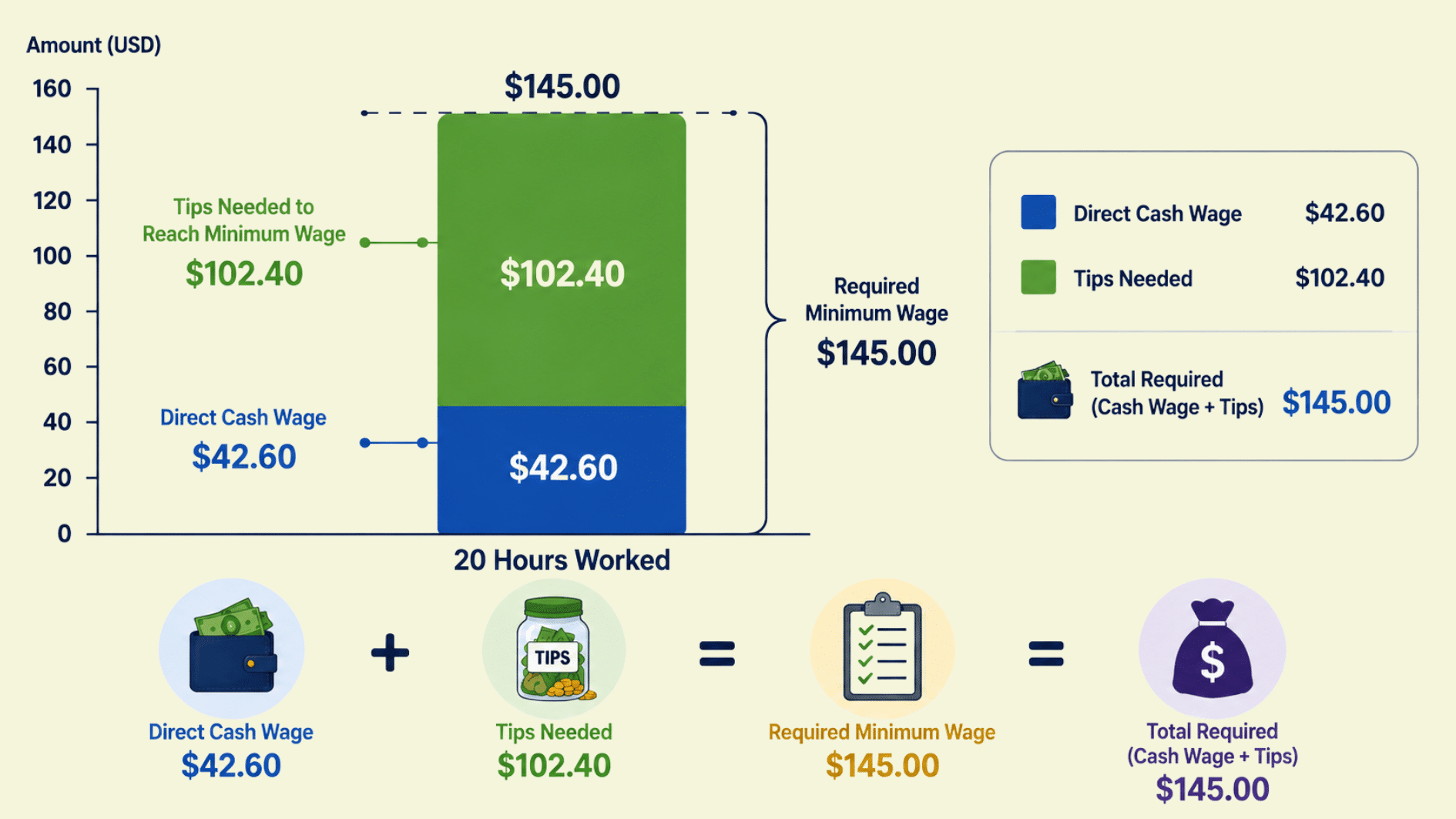
Under Texas and federal wage rules, employers may use a tip credit when paying eligible tipped employees.
This allows a lower direct cash wage, provided the employee’s wages and tips together meet the applicable minimum wage. Here’s how the calculation works :
| Item | Calculation | Amount |
|---|---|---|
| Hours worked | 20 hours | 20 hours |
| Direct cash wage | 20 × $2.13 | $42.60 |
| Required minimum wages | 20 × $7.25 | $145.00 |
| Tips needed to reach minimum wage | $145.00 − $42.60 | $102.40 |
| Employer responsibility | If cash wages + tips are less than $145.00 | Employer must pay the shortfall |
Who May Be Exempt From Minimum Wage Rules?
Most hourly employees are covered, but some jobs and workers may qualify for exemptions. Texas law also lists exemptions involving some religious, educational, charitable, nonprofit, domestic, agricultural, and recreational work.
Possible exemptions include:
- Executive, administrative, and professional employees
- Outside sales employees
- Computer professionals
- Agricultural and livestock workers
- Seasonal amusement or recreational workers
- Babysitters and companions
- Students and student-learners
- Workers employed by close family members
- Inmates working during confinement
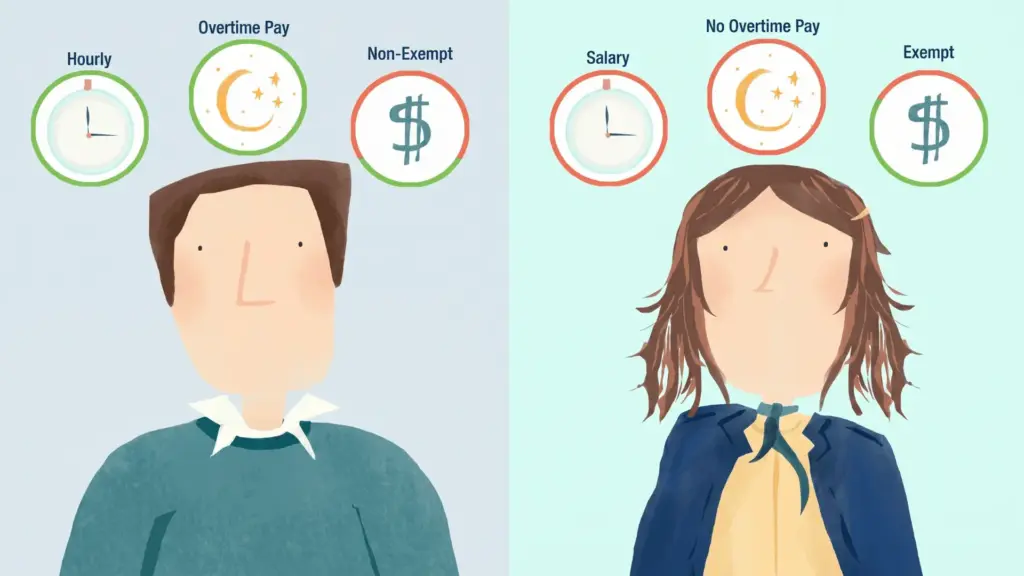
Understanding the broader exempt vs. non-exempt rules helps clarify why these specific roles are treated differently.
Overtime Pay Rules and Working Hours in Texas
Texas mainly follows federal overtime law. Covered, nonexempt employees must generally receive at least 1.5 times their regular rate for hours worked beyond 40 in one workweek.
A worker earning $7.25 per hour would normally have an overtime rate of at least $7.25 × 1.5 = $10.88 per hour.
Overtime is based on the workweek, not the number of hours worked in one day.
Federal law does not automatically require extra pay for weekends, holidays, or night shifts unless those hours push the employee above 40 hours or an employment agreement promises higher pay.
Some employees are exempt from overtime because of their duties, pay method, occupation, or industry.
Do Federal Contract Workers Have a Different Rate?
Some employees performing work on covered federal contracts may qualify for a higher minimum wage.
Federal contractor requirements have changed in recent years, and the correct rate depends on the applicable executive order and contract terms.
For certain contracts covered by Executive Order 13658, the minimum wage increased to $13.65 per hour on May 11, 2026, with a $9.55 rate for eligible tipped workers.
Workers should review the notice posted at their workplace or contact the US Department of Labor, as not all federal contracts follow the same rules.
Minimum Wage Guidelines for Texas Employers

Covered Texas employers must pay at least the required minimum wage and follow applicable federal and state payment rules.
Employers should also:
- Track all hours worked.
- Pay overtime when required.
- Keep accurate payroll records.
- Give workers a written earnings statement.
- Avoid unauthorized paycheck deductions.
- Display required workplace posters.
- Make up any shortage in a tipped employee’s wages.
| Can Texas Cities Set a Higher Minimum Wage: Texas law generally prohibits cities, counties, and other political subdivisions from setting a private-employer minimum wage higher than the wage required by state law. Texas Labor Code Section 62.0515 contains the state rule limiting local minimum-wage requirements. |
The Bottom Line
Don’t just trust your paycheck. Check it against what the law says you should get.
The rules matter more than what your boss tells you. Here’s the thing: most pay problems aren’t tricky or hidden. Maybe your tips didn’t add up to enough.
Maybe your overtime pay vanished because someone called you a “manager.” Either way, that’s a real problem, not something to ignore.
This average settlement unpaid wages resource breaks down real cases and outcomes if you’re weighing whether a claim is worth pursuing.
If your pay looks wrong, file a claim with the Texas Workforce Commission. Do it soon. The clock starts on your missed paycheck, not the day you noticed.
Frequently Asked Questions
Are Breaks Required in Texas?
Texas law generally does not require employers to provide adult employees with meal or rest breaks. However, breaks lasting 20 minutes or less must usually be paid, while duty-free meal periods may be unpaid.
Is Required Training Paid?
Required training usually counts as paid working time under federal law. Training may be unpaid only when it occurs outside regular hours, is voluntary, is unrelated to the job, and involves no productive work.
Is Travel Time Paid?
An employee’s normal commute between home and work is usually unpaid. However, travel between job sites during the workday generally counts as paid working time.