

I’ve reviewed hundreds of pay stubs over my 14 years in HR, and the question I hear most often is the same one you’re probably asking right now: what does FIT on my paycheck actually mean?
I’ve seen the confusion cost people real money: misreading withholdings, filing taxes wrong, or panicking over a number that’s actually normal.
In this piece, I’ll break down what determines your FIT amount, plus the other deductions you’ll likely spot alongside it.
What Does FIT Mean?
FIT tax stands for Federal Income Tax. It is the amount an employer withholds from each paycheck and sends to the Internal Revenue Service on the employee’s behalf.
Instead of paying the full tax amount at the end of the year, employees pay it gradually through payroll withholding.
This helps spread the cost across each pay period.
The employer then uses the employee’s Form W-4 information and the current IRS withholding tables to calculate the FIT amount to be deducted from that paycheck.
Getting those details right starts with filling out your W-4 accurately when you’re hired or when your situation changes.
For example: an employee earning $1,200 per week may first have pre-tax deductions removed, such as traditional 401(k) contributions or eligible health insurance premiums.
Factors That Affect FIT Withholding
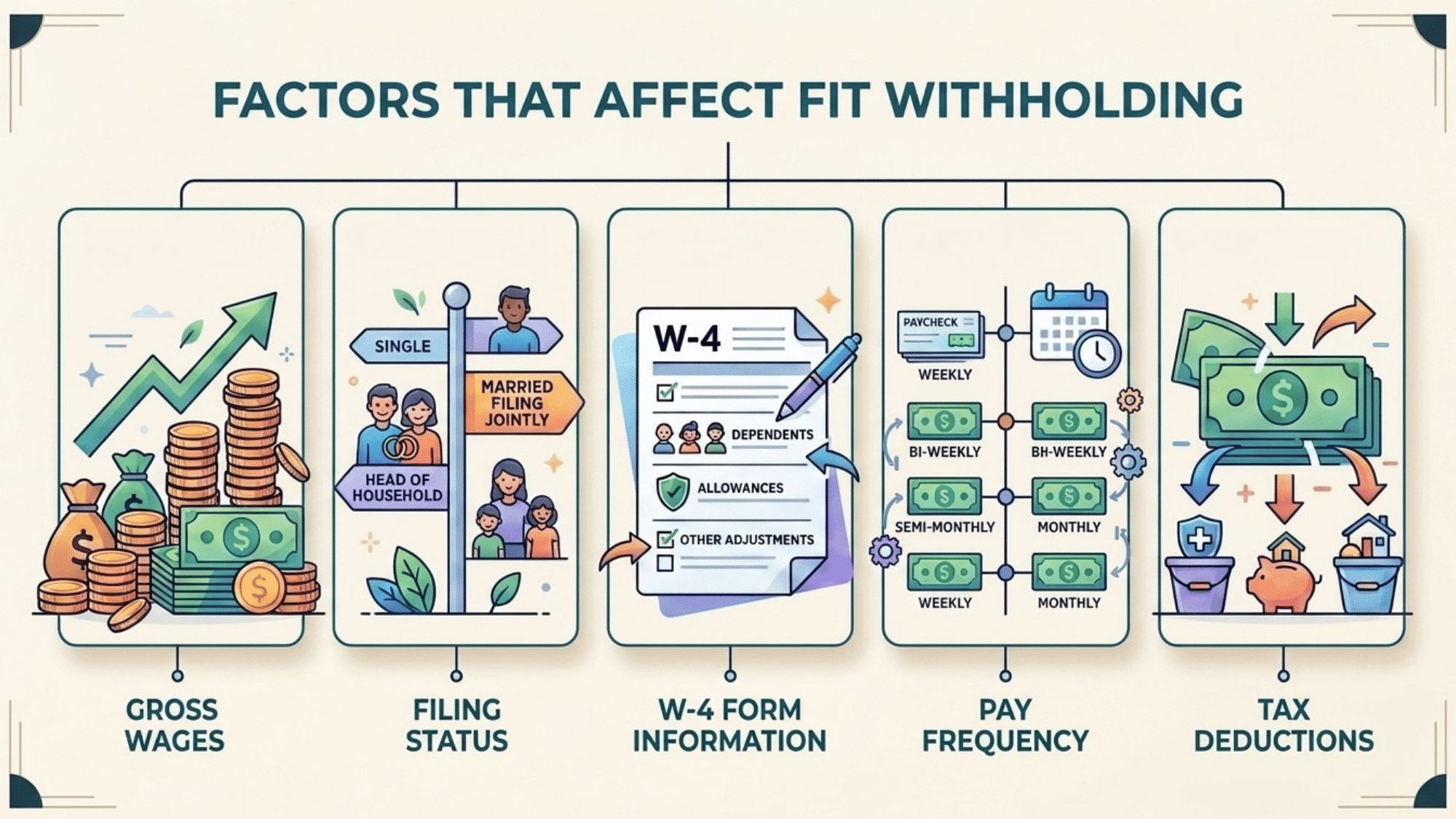
Several factors determine how much federal income tax is withheld. Because every employee’s financial situation is different, two people earning the same salary may still have different FIT withholding amounts.
- Gross wages: Higher earnings usually increase federal tax withholding.
- Form W-4 details: Dependents and adjustments change the amount withheld.
- Filing status: Tax status affects how much is taken from pay.
- Pay frequency: Payment schedules change the deduction on each paycheck.
- Pre-tax deductions: Some benefits reduce taxable income before withholding is applied.
- Extra withholding: Employees may request an additional amount to be withheld from each paycheck.
- IRS tax tables: Employers use current tables and Form W-4 details.
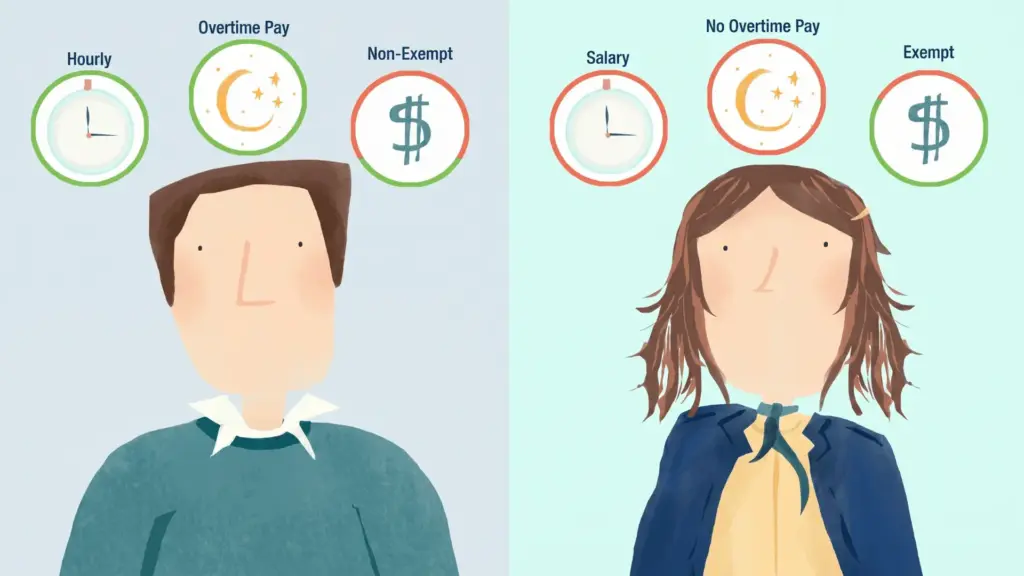
Salaried employees who qualify as exempt often see steadier FIT amounts each pay period, since exempt vs non-exempt status affects whether pay is fixed or tied to hours worked.
Reasons FIT is Deducted
Federal income tax operates under a “pay-as-you-go” system. Instead of collecting taxes once a year, the IRS requires employers to withhold estimated taxes from employee wages throughout the year.
The money withheld is credited toward your annual tax liability.
When you file your federal tax return, the IRS compares the amount already withheld with the amount you actually owe.
If too much was withheld, you may receive a refund. If too little was withheld, you may need to pay the remaining balance.
What are FIT Taxable Wages?
FIT taxable wages are the portion of your earnings used to calculate federal income tax withholding. They may be lower than your total gross pay.
Gross Pay is Not Always Fully Taxable
Certain deductions are taken out before federal income tax is calculated.
Pre-Tax Deductions Reduce Taxable Wages
Traditional 401(k) contributions, eligible health insurance premiums, and HSA or FSA contributions may lower the amount subject to FIT.
Withholding Can Differ Between Employees
Two people with the same salary may have different FIT amounts because their pre-tax deductions are not the same.
Your Pay Stub May Show Both Amounts
Check the gross pay and federal taxable wages lines to see the difference.
FIT Is Based on The Taxable Amount
Federal withholding is calculated after eligible pre-tax deductions have been subtracted from gross earnings.
Some non-cash perks work the opposite way and raise your taxable wages instead of lowering them imputed income basics explain why a benefit like employer-paid life insurance can still show up as extra tax owed.
Can Your FIT Withholding Be Zero?
Yes, in certain situations, no FIT is withheld at all.
Employees with low enough taxable wages may owe nothing once the standard deduction is applied, since the IRS withholding tables don’t require withholding below a certain income threshold.
Retirees living solely on Social Security income often fall into this category as well, since that income is typically not subject to FIT in the same way wages are.
Claiming additional dependents or adjustments on Form W-4 can also reduce withholding to zero for some employees, even if their income wouldn’t otherwise qualify.
If your FIT shows as zero unexpectedly, reviewing your W-4 is the best first step.
Other Taxes and Deductions You May See on Your Paycheck
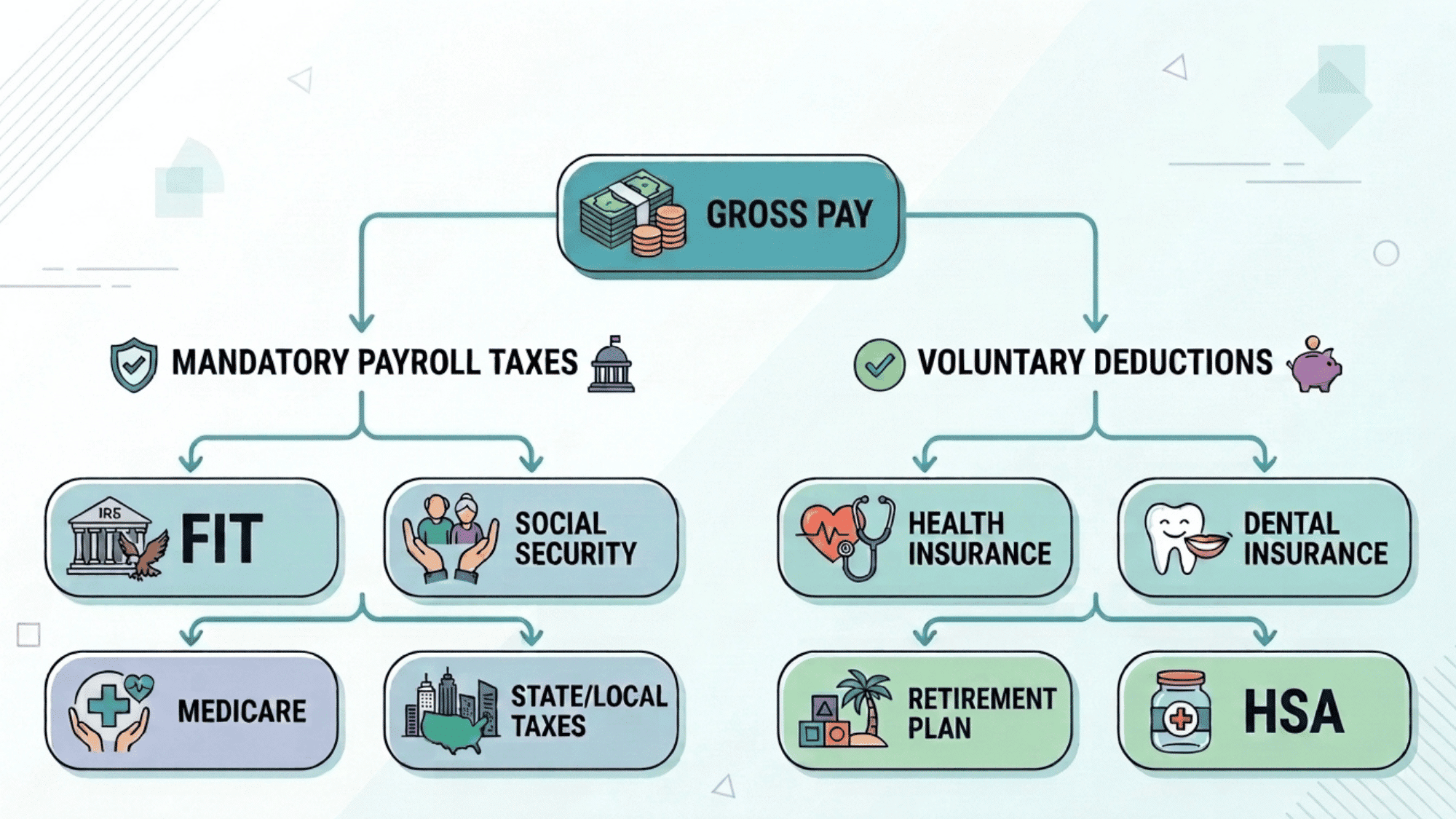
Learning the meaning of FIT tax is only one of several pay stub deductions. There are several other mandatory and voluntary deductions that together determine your final take-home pay.
1. Mandatory Payroll Taxes
Mandatory payroll taxes are deductions that employers are generally required to withhold under federal laws. The IRS and Social Security Administration provide detailed guidance on how these payroll taxes work.
- Federal Income Tax (FIT): Helps cover federal government programs and services through income tax withholding.
- Social Security: Often labeled OASDI on pay stubs, this deduction is withheld at a fixed 6.2% of wages, regardless of income level, and funds retirement, disability, and survivor benefits administered by the Social Security Administration.
- Medicare: Withheld at a fixed 1.45% of wages, this deduction supports the federal Medicare program that provides health coverage for eligible individuals.
- State Income Tax: Collected by states that impose an income tax on employee earnings.
- Local Income Tax: Required only in certain cities, counties, or municipalities that levy local income taxes.
Note: Social Security and Medicare together are commonly referred to as FICA taxes, but they are separate from federal income tax (FIT).
2. Voluntary Paycheck Deductions
Voluntary deductions are benefits or contributions that employees choose during enrollment rather than taxes required by law. Some may also reduce taxable income when they qualify as pre-tax benefits.
- Health insurance premiums: Employee contributions toward employer-sponsored medical coverage.
- Dental insurance helps cover the costs of routine and preventive dental care.
- Vision insurance: Covers eye exams, glasses, and contact lenses.
- Traditional 401(k) contributions: Retirement savings are deducted before FIT in most cases.
- Health Savings Account (HSA): Pre-tax contributions used for eligible medical expenses.
- Flexible Spending Account (FSA): Allows you to set aside pre-tax money for qualified healthcare expenses
- Life insurance: Employee-paid premiums for employer-sponsored life insurance coverage.
- Union dues: Contributions made by union members to support union activities and representation.
- Charitable donations: Optional payroll deductions directed to approved charitable organizations.
Note: The voluntary deductions available on a paycheck depend on the employer’s benefits package and the options selected by the employee.
State Deductions and Withholding
State income tax may appear as a separate deduction from FIT on a paycheck. The amount goes to the employee’s state government rather than the IRS.
Each state sets its own tax rates, income brackets, and withholding rules. Some states use a flat rate, while others charge higher rates as taxable income increases.
Employees may need to complete a separate state withholding form when starting a job. The employer uses this information, along with earnings and pay frequency, to calculate the deduction.
The IRS confirms that Form W-4 controls federal income tax withholding. State deductions follow separate state rules, so employees should check their pay stub and state tax agency guidance for accuracy.
Wrapping It Up
FIT is just federal income tax, nothing more mysterious than that. Once you can name it on your stub, the other deductions get easier to sort out too.
That’s the real value here: you know what’s normal, so you can spot what isn’t.
There’s a difference between a standard withholding and something like lowering employee pay without proper notice, and you should never have to guess which one you’re looking at.
If a number doesn’t add up, ask HR before you assume the worst. Check your stub every pay period; it takes two minutes and saves you a headache later.
Frequently Asked Questions
Can FIT Change After a Bonus?
Yes, Bonuses may be withheld differently, so the FIT amount can be higher than on a regular paycheck.
Is FIT the Same on Every Pay Schedule?
No, Weekly, biweekly, and monthly payrolls can produce different withholding amounts for each paycheck.
What Should I Do if FIT Looks Incorrect?
If you are still asking what “FIT” on your paycheck means, review your W-4 and contact payroll or HR for clarification.