
A good team activity should do more than fill time. It should get people talking, thinking, and working together without feeling forced.
A team-building scavenger hunt does exactly that by mixing clues, challenges, creativity, and friendly competition. It can work in the office, outdoors, across a city, or even online for remote teams.
The activity can be shaped around different goals, from helping new employees connect to improving communication between departments.
This blog covers practical ideas for a team building scavenger hunt, what materials each one needs, suitable team sizes, how to play, and example challenges.
How Does a Team Building Scavenger Hunt Help in Team Bonding?
A team building scavenger hunt helps improve team bonding by creating opportunities for employees to communicate, cooperate, and build trust in a relaxed setting.
Working toward a shared goal encourages team members to listen to each other, recognize different strengths, and support one another, similar to how a set of team building questions can spark conversation before a hunt even starts.
By sharing challenges and celebrating progress together, teams can develop stronger connections, better collaboration, and a more positive workplace relationship.
It can work in the office, outdoors, across a city, or even online for remote teams, alongside other team building games you might already be running.
Team Building Scavenger Hunt Ideas
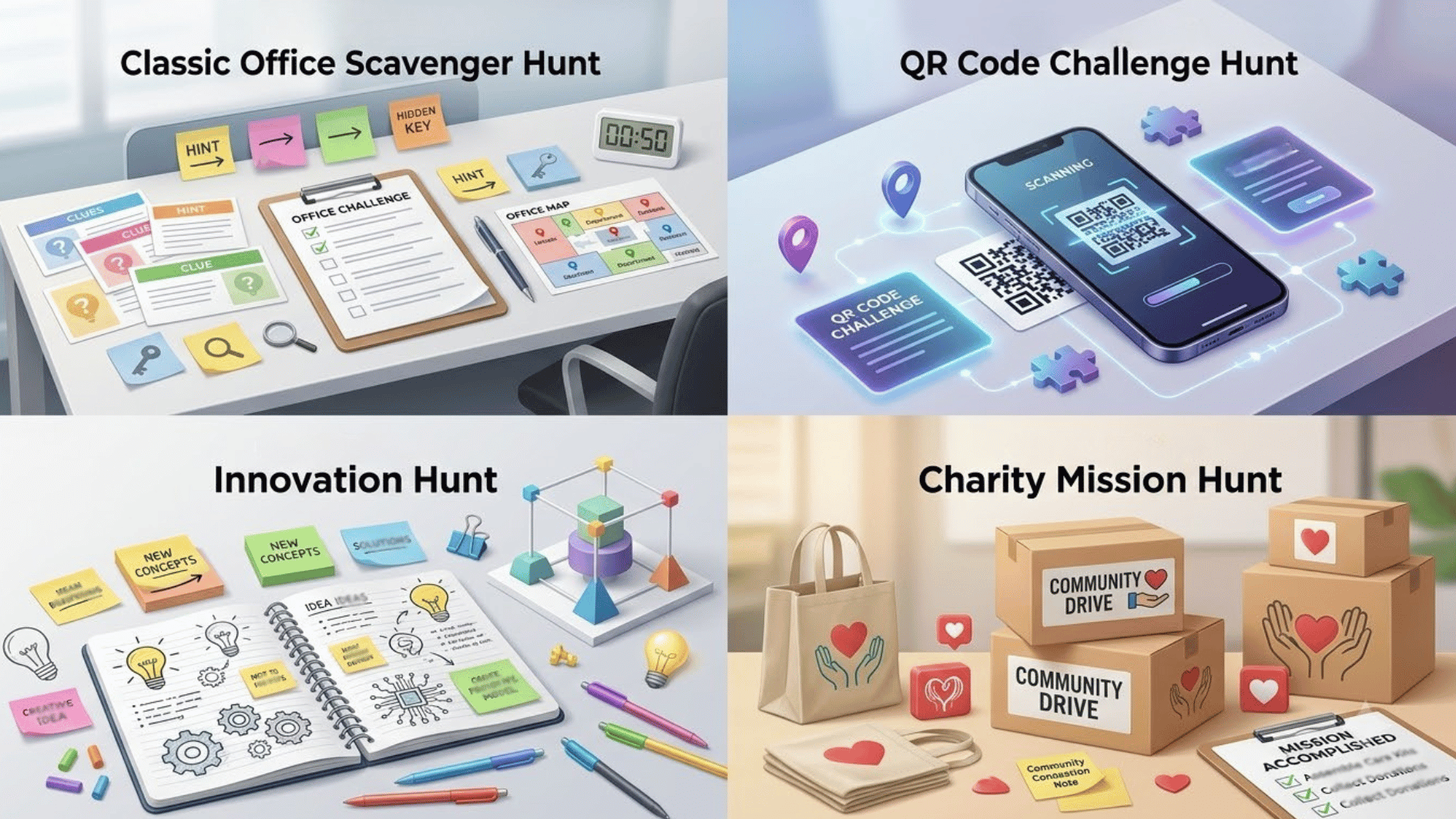
These ideas can be adapted for offices, outdoor spaces, remote teams, and company events. Each one includes the materials, team size, playing steps, and a sample challenge.
1. Classic Office Scavenger Hunt
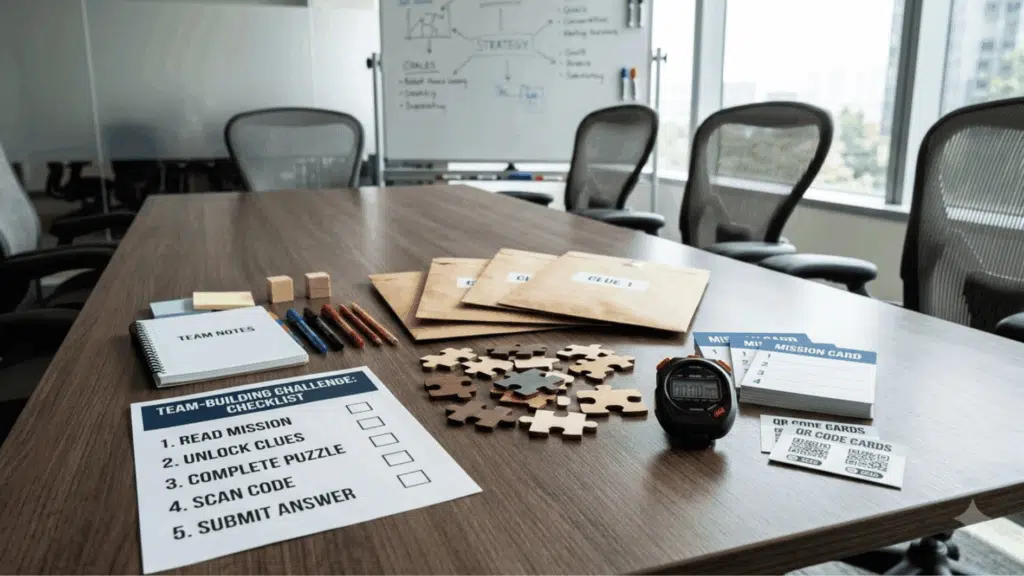
A classic office scavenger hunt is one of the easiest ways to bring coworkers together. Teams solve clues, explore different areas of the workplace, and complete tasks before time runs out.
- Materials Needed: Printed clue sheets, pens, and a timer.
- Team Size: Four to six people.
- How to Play: Teams follow a series of clues that lead them to different office locations. Each completed clue unlocks the next challenge until they reach the finish.
- Example Challenge: Find the conference room with the oldest meeting schedule and solve the riddle hidden inside.
2. Photo Mission Hunt
A photo mission hunt gives teams a list of creative scenes, workplace moments, or themed poses to capture. It works well for company events, off-site days, and mixed groups.
- Materials Needed: Smartphones, a mission list, and a timer.
- Team Size: Three to five people.
- How to Play: Teams complete each photo mission and submit the images before time runs out.
- Example Challenge: Recreate a well-known movie poster using only office items and team members.
3. Company Trivia Trail
A company trivia trail turns workplace knowledge into a fun challenge while encouraging teams to think and collaborate. It is especially useful for onboarding sessions and company celebrations.
It is especially useful for onboarding sessions and company celebrations, and pairs well with solid onboarding best practices if new hires are involved.
- Materials Needed: Trivia cards, clue sheets, pens, and a timer.
- Team Size: Four to six people.
- How to Play: Teams answer company-related trivia questions, with each correct answer leading them to the next clue or location.
- Example Challenge: Solve a clue that leads to the department where the company’s first product was developed.
4. QR Code Challenge Hunt
A QR code challenge hunt combines technology with teamwork by placing scannable clues around the office or event space. Each scan unlocks the next mission, keeping teams engaged from start to finish.
- Materials Needed: Printed QR codes, smartphones, and a QR code generator.
- Team Size: Three to five people.
- How to Play: Teams scan QR codes placed at different locations to reveal clues, complete the task, and move to the next checkpoint.
- Example Challenge: Scan the QR code near the break room to reveal a riddle leading to the next location.
5. Puzzle Piece Hunt
A puzzle piece hunt keeps teams thinking from start to finish by combining clues with a larger objective. Every completed challenge rewards the team with a puzzle piece needed to finish the final picture.
- Materials Needed: Puzzle pieces, clue cards, and a timer.
- Team Size: Four to six people.
- How to Play: Teams solve clues to collect puzzle pieces hidden at different locations. The first team to complete the puzzle wins.
- Example Challenge: Solve a coded message to earn the next puzzle piece.
6. Escape Mission Hunt
An escape mission hunt combines the excitement of an escape room with the flexibility of a scavenger hunt. Teams work through clues and challenges to complete a mission before time runs out.
- Materials Needed: Mission cards, locked boxes or envelopes, clue sheets, and a timer.
- Team Size: Four to six people.
- How to Play: Teams solve a series of puzzles to unlock clues and complete the final mission within the time limit.
- Example Challenge: Crack a four-digit code to unlock a box containing the next mission clue.
7. Amazing Race Challenge
An Amazing Race challenge takes teams through multiple checkpoints where they complete different tasks before moving to the next stop. It is ideal for office campuses, company retreats, and outdoor team events.
- Materials Needed: Challenge cards, checkpoint markers, smartphones, and a timer.
- Team Size: Four to six people.
- How to Play: Teams race between checkpoints, completing each challenge before receiving directions to the next location.
- Example Challenge: Build a paper tower in two minutes before collecting the next clue.
8. Secret Agent Hunt
A secret agent hunt turns the workplace into a spy mission where every clue brings teams closer to completing their assignment. It encourages observation, communication, and strategic thinking.
- Materials Needed: Mission briefs, clue cards, fake ID badges, and a timer.
- Team Size: Four to six people.
- How to Play: Teams follow a series of secret missions, solve coded clues, and complete tasks to uncover the final objective.
- Example Challenge: Decode a secret message hidden inside an employee directory to identify the next location.
9. Office Detective Hunt
An office detective hunt challenges teams to investigate a fictional workplace mystery using clues, evidence, and witness statements. Every clue helps narrow down the final answer.
- Materials Needed: Case files, evidence cards, clue envelopes, and pens.
- Team Size: Four to six people.
- How to Play: Teams collect evidence, interview designated “witnesses,” and solve the mystery before time expires.
- Example Challenge: Compare three witness statements to identify which one contains the false clue.
10. Department Discovery Hunt
A department discovery hunt encourages employees to interact with teams they rarely meet during a normal workday. It works especially well for larger organizations.
It works especially well for larger organizations, and works even better when paired with a few icebreaker questions work prompts at each stop.
- Materials Needed: Department clue cards, activity sheets, and a timer.
- Team Size: Four to six people.
- How to Play: Teams visit different departments to complete a short task before receiving their next clue.
- Example Challenge: Visit the HR department and answer a question about a company benefit to unlock the next location.
11. Campus Adventure Hunt
A campus adventure hunt takes participants across an office campus or business park through location-based challenges. It combines exploration with teamwork.
- Materials Needed: Maps, clue cards, smartphones, and a timer.
- Team Size: Four to six people.
- How to Play: Teams travel between checkpoints, solving clues and completing activities at each stop.
- Example Challenge: Locate a hidden marker near the main entrance and use its code to solve the next clue.
12. Digital Finder Hunt
A digital finder hunt blends online research with teamwork, making it ideal for remote or hybrid workplaces, and it fits naturally into a broader hybrid workplace strategy if your team already splits time between home and office. Teams solve digital clues instead of searching physical locations.
- Materials Needed: Shared documents, internet access, and video conferencing software.
- Team Size: Three to five people.
- How to Play: Teams complete online missions by searching approved websites, company resources, or shared files.
- Example Challenge: Find the answer to a company value hidden on the intranet homepage.
13. Office Olympics Hunt
An office Olympics hunt combines scavenger clues with quick team challenges at different stations. It adds movement and friendly competition to the event.
- Materials Needed: Challenge cards, office supplies, score sheets, and a timer.
- Team Size: Four to six people.
- How to Play: Teams rotate between stations, completing a challenge before earning the next clue.
- Example Challenge: Toss five paper balls into a bin before receiving the next checkpoint.
14. Innovation Hunt
An innovation hunt encourages creative thinking by asking teams to solve workplace problems through scavenger-style missions. It works well during brainstorming events.
- Materials Needed: Idea cards, sticky notes, pens, and clue sheets.
- Team Size: Four to six people.
- How to Play: Teams complete challenges that require creative ideas, observations, and short presentations.
- Example Challenge: Find a common office item and suggest three new ways it could be used.
15. Customer Travel Hunt
A customer travel hunt helps employees understand how customers interact with the business. It is useful across departments, not just customer-facing teams.
- Materials Needed: Journey maps, clue cards, and task sheets.
- Team Size: Four to six people.
- How to Play: Teams follow clues based on different stages of the customer experience and complete related tasks.
- Example Challenge: Identify the first customer touchpoint and explain why it matters.
16. Charity Mission Hunt
A charity mission hunt combines teamwork with community impact through meaningful challenges. It works well during volunteer days or company social responsibility events.
- Materials Needed: Mission cards, donation boxes, and activity sheets.
- Team Size: Four to six people.
- How to Play: Teams complete service-based missions while collecting clues leading to the final destination.
- Example Challenge: Assemble five care packages before unlocking the next mission.
17. Blindfold Hunt
A blindfold hunt builds trust by requiring teammates to guide one another through simple obstacle or clue-based tasks.
Communication becomes the key to success, in much the same spirit as communication building activities designed to strengthen how coworkers listen to each other.
- Materials Needed: Blindfolds, cones, clue cards, and a timer.
- Team Size: Four to six people.
- How to Play: One teammate is blindfolded while others guide them to complete each challenge safely.
- Example Challenge: Direct a blindfolded teammate to collect the correct colored marker without touching obstacles.
18. Mission Impossible Hunt
A Mission Impossible Hunt gives every team a series of confidential objectives with increasing difficulty. Teams must complete each mission before revealing the next one.
- Materials Needed: Mission envelopes, clue cards, props, and a timer.
- Team Size: Four to six people.
- How to Play: Teams open one mission at a time, complete it successfully, and unlock the next objective.
- Example Challenge: Recover a hidden “confidential file” using only the clues provided.
19. Capture the Clue, Hunt
A capture the clue hunt combines checkpoints, hidden clues, and strategic planning into one fast-paced activity. Teams decide which clues to pursue while competing against others.
- Materials Needed: Clue cards, checkpoint markers, score sheets, and a timer.
- Team Size: Four to six people.
- How to Play: Teams collect clues from different checkpoints and use them to solve the final puzzle before time runs out.
- Example Challenge: Collect five coded clue cards and arrange them to reveal the winning phrase.
20. Time Capsule Hunt
A time capsule hunt encourages teams to collect meaningful items, memories, and answers that represent the company or team. It works well for anniversaries, retreats, and onboarding events.
- Materials Needed: Time capsule box, prompt cards, collection bags, and a timer.
- Team Size: Four to six people.
- How to Play: Teams complete challenges that help them gather items, stories, or messages to place inside a shared team time capsule.
- Example Challenge: Find an item that represents teamwork and write a short explanation of why it matters.
21. Around the World Hunt
An around the world hunt lets teams find different cultures through themed challenges, trivia, and creative activities. It is useful for diverse workplaces and global teams.
- Materials Needed: Country cards, trivia sheets, props, and clue envelopes.
- Team Size: Four to six people.
- How to Play: Teams move through different “country stations” by completing cultural challenges, answering questions, and solving clues.
- Example Challenge: Identify three facts about a country and complete a related food, language, or tradition challenge.
22. Workplace Wellness Hunt
A workplace wellness hunt combines team activities with healthy habits and mindfulness challenges. It works well for employee wellness events and company health weeks.
- Materials Needed: Wellness cards, activity sheets, step tracker, and timers.
- Team Size: Three to six people.
- How to Play: Teams complete wellness-focused tasks, such as movement activities, reflection prompts, or teamwork exercises, to earn points.
- Example Challenge: Complete a five-minute team stretch session and answer a wellness-related question.
23. Memory Lane Hunt
A memory lane hunt helps employees learn more about their coworkers through personal stories, company moments, and shared experiences. It is ideal for anniversaries or team celebrations.
- Materials Needed: Question cards, photo prompts, clue sheets, and a timer.
- Team Size: Four to six people.
- How to Play: Teams solve clues connected to company history, employee experiences, and memorable workplace moments.
- Example Challenge: Match a childhood photo or fun fact with the correct team members.
How Should You Score a Team Scavenger Hunt?
A simple scoring system keeps the event fair and easy to manage. Give points for completed tasks, teamwork, creativity, and speed.
| Scoring Area | Points | Rule |
|---|---|---|
| Completed Task | +5 | Give points for each correct task. |
| Hard Challenge | +10 | Add points for difficult missions. |
| Creative Entry | +5 | Reward original photos or ideas. |
| Teamwork | +5 | Reward full team participation. |
| Fast Finish | +10 | Reward the first team to finish. |
| Rule Break | -5 | Remove points for unfair play. |
| Tie-Breaker | Final task | Use one short puzzle. |
What are Some Good Scavenger Hunt Prize Ideas?
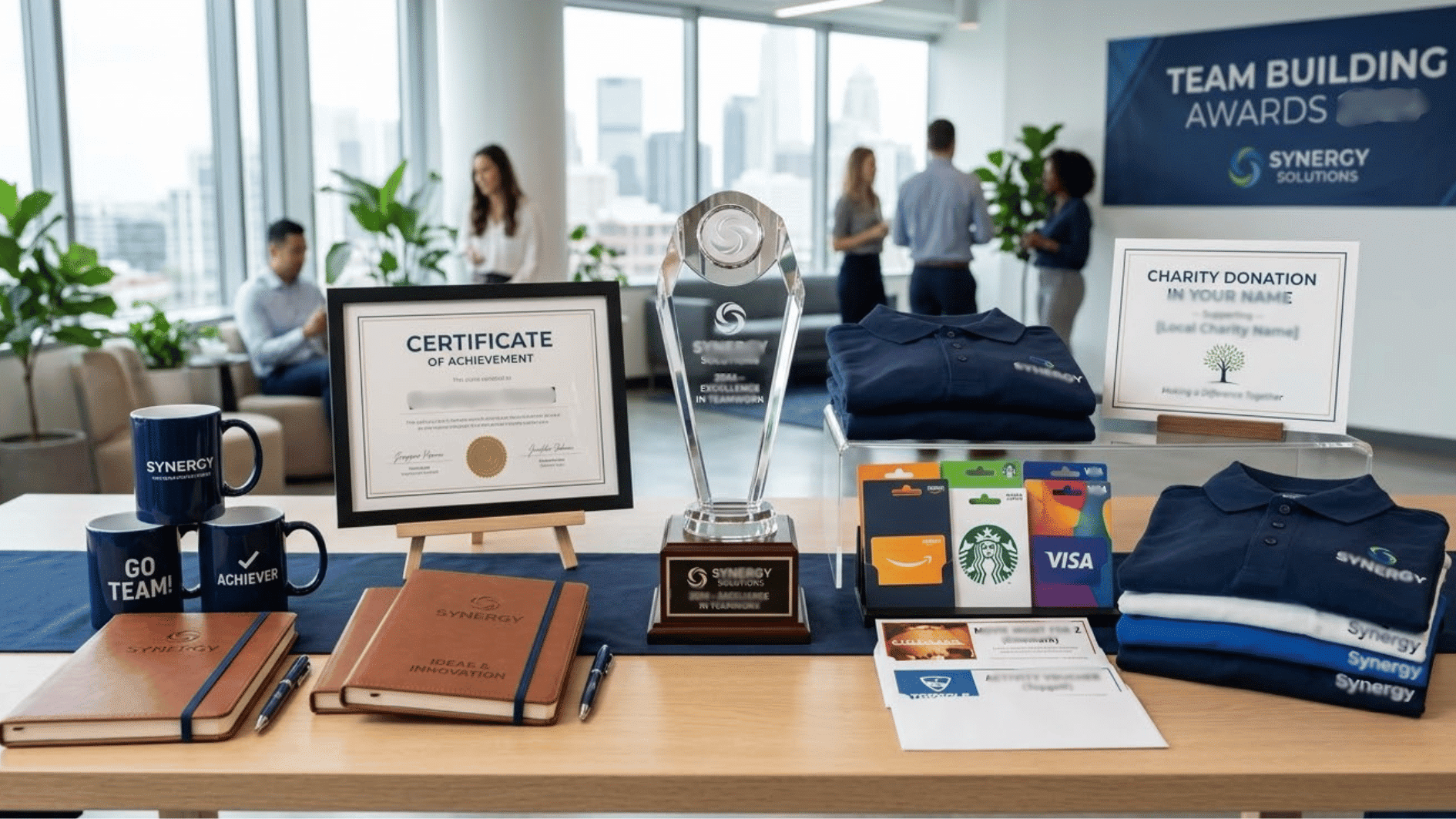
Prizes do not need to be expensive to feel rewarding. Choose options that match the team, workplace culture, and size of the event.
Gift cards
Offer coffee, restaurant, or online shopping gift cards that employees can use based on their personal preferences.
Extra break time
Give the winning team a longer lunch break or bonus time off to relax and enjoy a small reward.
Team lunch
Treat the winners to a shared meal where they can celebrate their achievement and connect outside daily work.
Company merchandise
Award branded items like mugs, shirts, notebooks, or other useful products that employees can enjoy at work.
Desk trophies
Use a small trophy or award that the winning team can proudly display until the next team event.
Experience rewards
Offer memorable rewards such as movie tickets, activity vouchers, or special experiences employees can enjoy together.
Charity donation
Make a donation to a cause chosen by the winning team, creating a reward that supports something meaningful.
Recognition award
Feature the winners in a company email, team meeting, or internal announcement to celebrate their effort.
What Do Communities Suggest for a Successful Hunt?
People who have organized workplace scavenger hunts often share similar advice online. Their experiences highlight ideas that help teams stay engaged, work together, and enjoy the activity.
Keep teams small
Many organizers recommend 4-6 people per team because larger groups tend to leave some members out.- Quora
Focus on collaboration, not speed
Several organizers said the best hunts include tasks that require teammates to share information and solve problems together instead of simply racing to finish. – Quora
Mix different challenge types
Photo missions, puzzles, trivia, and clue-solving activities were repeatedly mentioned as the most engaging combination because they appeal to different personalities and skills. –Quora
Keep the event short
Many commenters suggested 60–90 minutes as the ideal length. Longer hunts often lose energy, while shorter ones can feel rushed. – Quora
The Final Verdict
A team building scavenger hunt can turn a regular workday into a shared experience that feels active and enjoyable. The best events use clear rules, balanced teams, and a mix of simple and creative challenges.
Good planning also helps everyone take part comfortably. When the focus stays on teamwork instead of speed alone, coworkers get more chances to communicate, solve problems, and connect.
Keep the activity easy to follow, choose tasks that suit the group, and finish with a short recap. Do that, and people bring it up at lunch weeks later, which is more than you can say for most training days.
Frequently Asked Questions
Is a Team Building Scavenger Hunt Suitable for Large Groups?
Yes, divide participants into smaller teams.
Can the Same Scavenger Hunt Be Reused?
Yes, but changing the clues and challenges keeps it fresh.
Do All Challenges Need Physical Movement?
No, you can include trivia, puzzles, and creative tasks as well.
Can Employees Use Their Phones During the Hunt?
Only if the phones are part of the rules and activities.
Should Every Team Receive a Prize?
Not necessarily, but small participation rewards can boost morale.