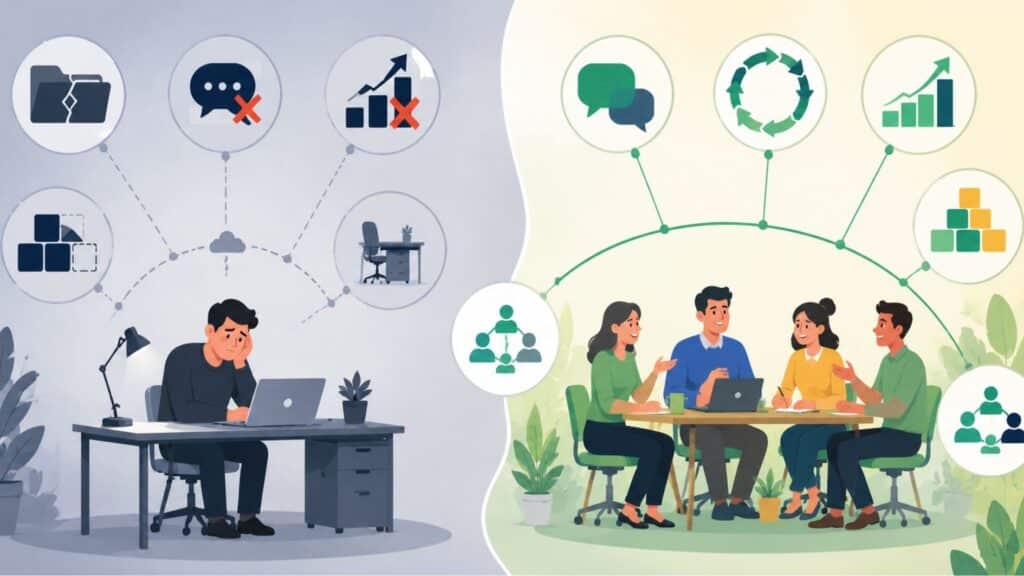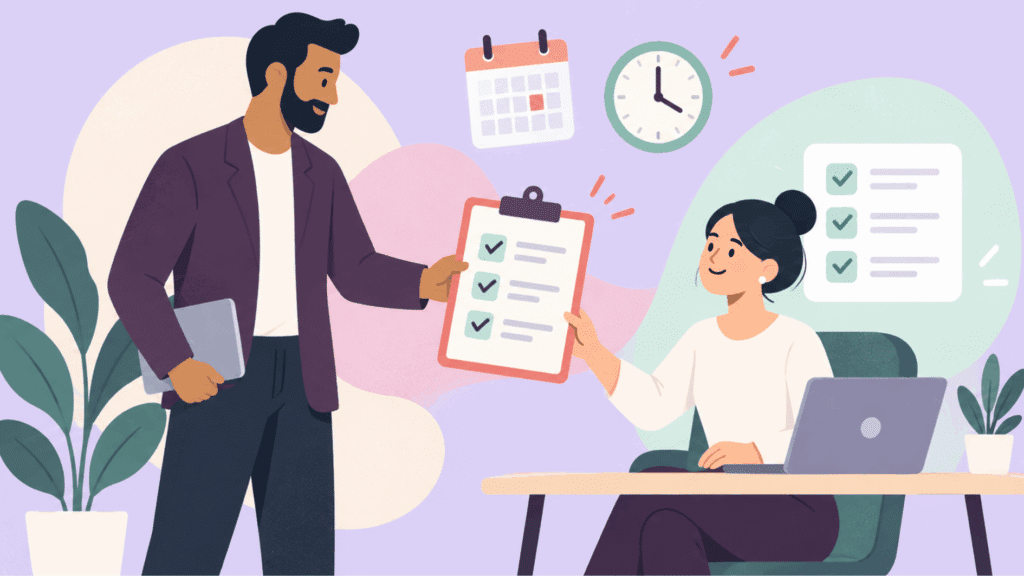


A strong team does not happen by chance. It is built through shared experiences, open communication, and moments that bring people closer together.
Team building games offer one of the most natural and effective ways to create those moments without ever making things feel forced or awkward.
If your team works in an office or across different locations, the right activity can shift the energy and greatly improve how people connect with each other.
This blog covers everything you need to find, plan, and run team-building games that people will actually enjoy and remember.
What Makes a Team Building Game Actually Effective?
Not every game that gets people in the same room actually builds a team. The best team building games share a few key qualities that make them work beyond just being fun.
First, they encourage real communication. Players need to talk, listen, and respond, not just take turns. Second, the game should create a level playing field. No one person should dominate, and no one should feel left out.
Good games also have a clear goal. When everyone works toward a common goal, it naturally fosters cooperation. And the debrief matters too.
A quick conversation after the game helps teams connect the activity to real work situations.
Short rules, inclusive participation, and a shared challenge, those three things together are what separate a truly effective game from just a fun distraction.
Indoor Vs Outdoor Team Building Games
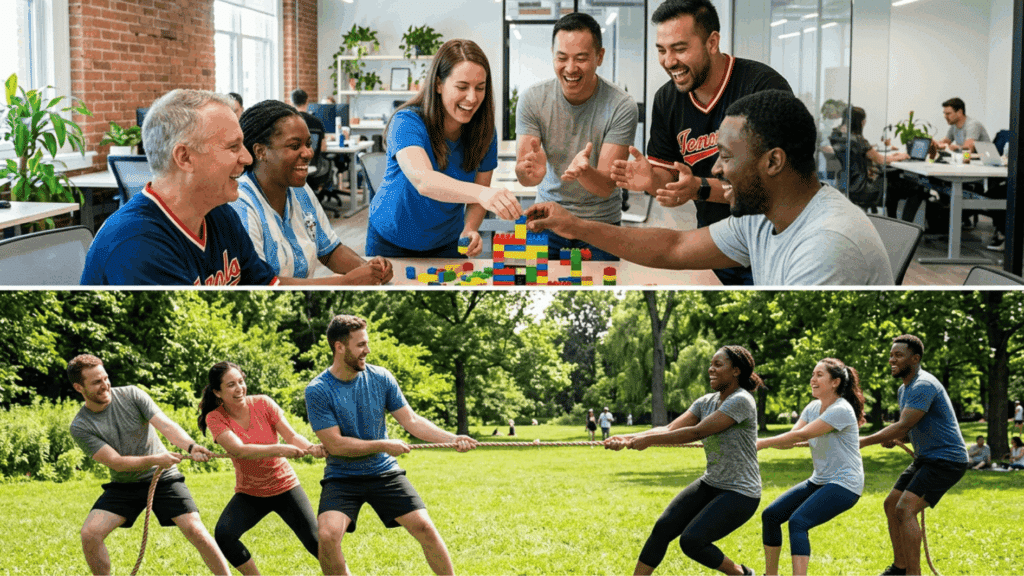
Choosing between indoor and outdoor team building games depends on your space, time, and the kind of experience you want to create for your team.
| Factor | Indoor Team Building Games | Outdoor Team Building Games |
|---|---|---|
| Location | Office, meeting rooms, or virtual setups | Parks, open spaces, and outdoor venues |
| Setup | Minimal setup, easy to organize | May require more planning and materials |
| Time | Usually short and flexible | Can take more time depending on the activity |
| Energy Level | Low to moderate energy activities | High energy and movement-based activities |
| Team Size | Works well for small to medium groups | Suitable for medium to large groups |
| Examples | Trivia, drawing games, storytelling activities | Scavenger hunts, relay races, and outdoor challenges |
| Flexibility | Easy to adjust and repeat | Less flexible due to space and conditions |
| Use Case | Quick meetings, regular team check-ins | Team outings, special events, and team bonding days |
Fun Team Building Games that Aren’t Awkward
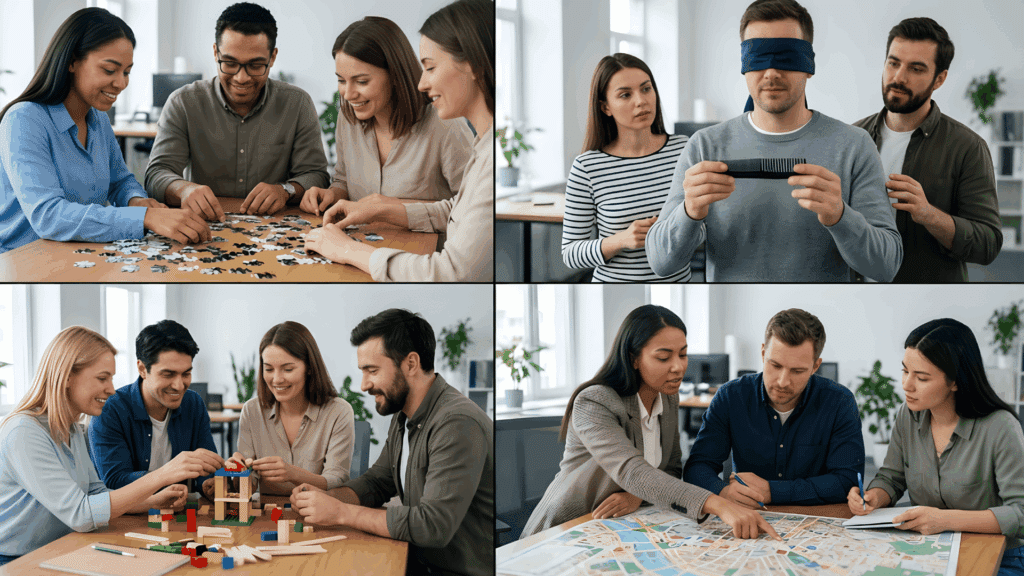
These team building games are designed to keep things interactive. Each idea focuses on improving teamwork while keeping the experience enjoyable and engaging for everyone.
1. Silent Line-Up Strategy Game
This game challenges teams to organize themselves in a specific order without speaking. It pushes participants to rely on gestures, eye contact, and quick thinking.
- Setup Required: Open space, no materials needed
- Main Objective: Improve non-verbal communication and teamwork
- Time Needed: 10–15 minutes
- Team Size: 6–20 participants
- Best For: Icebreakers, communication skills, new teams
2. Emoji Story Creation Game
Teams create a short story using only emojis, then explain it to others. It’s a fun way to blend creativity, interpretation, and teamwork.
- Setup Required: Smartphones or devices
- Main Objective: Boost creativity and storytelling skills
- Time Needed: 10–20 minutes
- Team Size: 3–10 participants per group
- Best For: Creative thinking, remote teams, fun sessions
3. Reverse Brainstorm Challenge
Instead of solving a problem directly, teams think of ways to make it worse. This twist often leads to surprising insights and practical solutions.
- Setup Required: Whiteboard or paper
- Main Objective: Encourage problem-solving through reverse thinking
- Time Needed: 15–25 minutes
- Team Size: 4–12 participants
- Best For: Strategy sessions, innovation, team discussions
4. Desert Survival Ranking Game
Teams imagine being stranded and must rank items based on survival value. It sparks discussion, debate, and group decision-making.
- Setup Required: Printed list of survival items
- Main Objective: Improve decision-making and teamwork
- Time Needed: 20–30 minutes
- Team Size: 4–10 participants
- Best For: Critical thinking, leadership, group discussions
5. Speed Networking Rotation Game
Participants rotate in quick rounds to talk with different teammates. This helps everyone connect quickly.
- Setup Required: Timer and open space
- Main Objective: Help team members connect quickly
- Time Needed: 15–30 minutes
- Team Size: 10–30 participants
- Best For: Large teams, introductions, team bonding
6. Build a Bridge Challenge
Teams work together to build a bridge using limited materials. The focus is on planning, testing ideas, and working as a unit.
- Setup Required: Basic materials like paper, tape, or straws
- Main Objective: Strengthen collaboration and problem-solving
- Time Needed: 20–30 minutes
- Team Size: 3–6 participants per team
- Best For: Hands-on activities, teamwork, creative thinking
7. Caption This Photo Game
Teams look at images and come up with funny or clever captions. It’s light, quick, and always gets people laughing.
- Setup Required: Images or a laptop/phone
- Main Objective: Encourage creativity and humor
- Time Needed: 10–15 minutes
- Team Size: 4–15 participants
- Best For: Light activities, team bonding, quick fun breaks
8. Office Debate Battle Game
Teams take sides on fun or simple topics and present their arguments. It helps people speak up and listen to others.
- Setup Required: Debate topics list
- Main Objective: Improve communication and confidence
- Time Needed: 20–30 minutes
- Team Size: 6–20 participants
- Best For: Communication skills, engagement, group interaction
9. Mystery Object Guessing Game
One player is blindfolded and must guess an object using touch. Others guide or react, making it fun and interactive.
- Setup Required: Blindfold and random objects
- Main Objective: Build trust and sensory awareness
- Time Needed: 10–15 minutes
- Team Size: 4–12 participants
- Best For: Fun icebreakers, trust-building, interactive sessions
10. Team Playlist Creation Game
Teams create a shared playlist based on a theme or mood. It helps people connect through music and shared preferences.
- Setup Required: Music apps or devices
- Main Objective: Encourage collaboration and personal sharing
- Time Needed: 15–20 minutes
- Team Size: 3–10 participants per group
- Best For: Team bonding, creative sessions, relaxed environments
11. Random Talent Showcase Game
Each team member shares a hidden skill or talent with the group. It creates a relaxed space where people feel seen and appreciated.
- Setup Required: Open space, optional props
- Main Objective: Build confidence and strengthen team connection
- Time Needed: 15–25 minutes
- Team Size: 5–15 participants
- Best For: Team bonding, morale boosting, fun sessions
12. Puzzle Relay Race Game
Teams solve puzzles in turns, passing the task along like a relay. It keeps energy high while encouraging teamwork and speed.
- Setup Required: Puzzle sets
- Main Objective: Improve teamwork and problem-solving speed
- Time Needed: 20–30 minutes
- Team Size: 4–12 participants
- Best For: Collaboration, energy boost, group activities
13. Chain Reaction Drawing Game
Each person adds to a drawing without knowing the full idea. The final result is often funny and completely unexpected.
- Setup Required: Paper and pens
- Main Objective: Encourage creativity and teamwork
- Time Needed: 15–20 minutes
- Team Size: 4–10 participants
- Best For: Creative thinking, fun breaks, relaxed settings
14. Memory Wall Challenge Game
Team members write down shared memories or facts and discuss them together. It helps people reflect and connect more deeply.
- Setup Required: Sticky notes or board
- Main Objective: Strengthen team connection and recall skills
- Time Needed: 15–25 minutes
- Team Size: 5–15 participants
- Best For: Team reflection, bonding, group discussions
15. Office Shark Tank Pitch Game
Teams create and present a product idea to the group. It blends creativity, presentation, and teamwork.
- Setup Required: Paper, optional props
- Main Objective: Boost creativity and presentation skills
- Time Needed: 25–40 minutes
- Team Size: 6–20 participants
- Best For: Innovation sessions, leadership, teamwork
16. Secret Compliment Circle Game
Participants write anonymous compliments for each other and share them. It fosters a positive, supportive team environment.
- Setup Required: Paper slips or notes
- Main Objective: Improve positivity and team morale
- Time Needed: 10–15 minutes
- Team Size: 5–20 participants
- Best For: Team bonding, trust building, positive culture
17. Map It out Challenge Game
Teams draw a map from memory and compare results. This activity highlights observation skills and teamwork.
- Setup Required: Paper and pens
- Main Objective: Enhance memory and collaboration
- Time Needed: 15–25 minutes
- Team Size: 4–10 participants
- Best For: Problem-solving, creative thinking, group tasks
18. Time Travel Scenario Game
Teams imagine solving a problem in a past or future setting. It pushes creative thinking and different perspectives.
- Setup Required: Scenario prompts
- Main Objective: Encourage creative problem-solving
- Time Needed: 20–30 minutes
- Team Size: 4–12 participants
- Best For: Innovation, brainstorming, engagement
19. One-Minute Build Challenge
Teams must create something useful in just one minute. The time pressure makes it exciting and fast-paced.
- Setup Required: Simple materials like paper, cups, or sticks
- Main Objective: Promote quick thinking and teamwork
- Time Needed: 10–15 minutes
- Team Size: 3–8 participants per team
- Best For: Fast-paced activities, energy boost, creativity
20. Story Chain Round Game
Each person adds one line to a story in sequence. The story grows in unexpected and often funny ways.
- Setup Required: No materials needed
- Main Objective: Improve listening and storytelling skills
- Time Needed: 10–20 minutes
- Team Size: 4–12 participants
- Best For: Icebreakers, communication skills, fun sessions
21. Office Auction Bidding Game
Teams receive fake money and bid on mystery items or challenges. It adds excitement while encouraging quick thinking and strategy.
- Setup Required: Fake currency and random items
- Main Objective: Encourage strategic thinking and engagement
- Time Needed: 20–30 minutes
- Team Size: 6–20 participants
- Best For: Team interaction, decision-making, fun sessions
22. Code Breaker Puzzle Game
Teams work together to decode hidden messages or solve clues. It keeps everyone focused and engaged in problem-solving.
- Setup Required: Printed puzzles or clues
- Main Objective: Strengthen problem-solving and logical thinking
- Time Needed: 20–30 minutes
- Team Size: 3–8 participants per team
- Best For: Critical thinking, collaboration, focused teams
23. Two-Minute Teaching Game
Each person teaches something simple in a short time. It helps build confidence and keeps the session engaging.
- Setup Required: Optional topic list
- Main Objective: Build confidence and communication skills
- Time Needed: 15–25 minutes
- Team Size: 4–12 participants
- Best For: Public speaking, knowledge sharing, engagement
24. Blindfold Obstacle Navigation Game
One person is blindfolded while another guides them through obstacles. This builds trust and clear communication.
- Setup Required: Blindfolds and simple obstacles
- Main Objective: Improve trust and communication
- Time Needed: 15–20 minutes
- Team Size: 4–10 participants
- Best For: Trust-building, teamwork, interactive sessions
25. Design a Logo Challenge
Teams create a logo based on a theme or idea. It encourages creativity and group collaboration.
- Setup Required: Paper, markers, or design tools
- Main Objective: Boost creativity and collaboration
- Time Needed: 20–30 minutes
- Team Size: 3–6 participants per team
- Best For: Creative thinking, brainstorming, team bonding
26. Guess the Sound Game
Participants listen to different sounds and try to identify them. It sharpens focus and keeps things fun.
- Setup Required: Audio clips or sound sources
- Main Objective: Improve listening skills and focus
- Time Needed: 10–15 minutes
- Team Size: 4–12 participants
- Best For: Icebreakers, attention-building, quick activities
27. Build the Tallest Structure Game
Teams compete to build the tallest structure using limited materials. It tests creativity and teamwork under pressure.
- Setup Required: Materials like paper, straws, or sticks
- Main Objective: Encourage innovation and teamwork
- Time Needed: 15–25 minutes
- Team Size: 3–6 participants per team
- Best For: Hands-on activities, collaboration, creativity
28. Rapid Fire Question Game
Participants answer quick questions in a fast-paced round. It keeps energy high and encourages quick thinking.
- Setup Required: Question list
- Main Objective: Boost quick thinking and engagement
- Time Needed: 10–15 minutes
- Team Size: 4–15 participants
- Best For: Energy boost, icebreakers, team interaction
29. Office Role Swap Challenge
Team members act out different roles or responsibilities. It helps build understanding and empathy within the group.
- Setup Required: Role prompts
- Main Objective: Build empathy and understanding
- Time Needed: 20–30 minutes
- Team Size: 5–15 participants
- Best For: Team awareness, communication, fun sessions
30. Visual Memory Challenge Game
Participants observe an image or object and recall details after a short time. It sharpens focus and memory.
- Setup Required: Images or objects
- Main Objective: Improve focus and memory skills
- Time Needed: 10–20 minutes
- Team Size: 4–12 participants
- Best For: Brain exercises, engagement, quick activities
31. Create a Commercial Game
Teams create and act out a short advertisement for a random product. It mixes creativity, humor, and teamwork.
- Setup Required: Random product ideas or props
- Main Objective: Encourage creativity and collaboration
- Time Needed: 20–30 minutes
- Team Size: 4–10 participants
- Best For: Creative sessions, team bonding, presentations
32. Pass the Clap Rhythm Game
Participants stand in a circle and pass a clap in sequence while maintaining rhythm. It requires focus and coordination.
- Setup Required: Open space
- Main Objective: Build coordination and team focus
- Time Needed: 10–15 minutes
- Team Size: 6–20 participants
- Best For: Energy boost, focus exercises, quick activities
33. Secret Leader Guessing Game
One person leads subtle actions while others try to guess who it is. The group must observe closely.
- Setup Required: No materials needed
- Main Objective: Improve observation and awareness
- Time Needed: 10–20 minutes
- Team Size: 6–15 participants
- Best For: Icebreakers, attention skills, group interaction
34. Paper Airplane Contest Game
Teams design and launch paper airplanes to test distance or accuracy. It adds a playful competitive element.
- Setup Required: Paper sheets
- Main Objective: Encourage creativity and fun competition
- Time Needed: 15–20 minutes
- Team Size: 4–12 participants
- Best For: Light activities, team bonding, fun breaks
35. Office Charades Twist Game
Participants act out workplace-related scenarios while others guess. It keeps the game relatable and engaging.
- Setup Required: Scenario prompts
- Main Objective: Improve communication and creativity
- Time Needed: 15–25 minutes
- Team Size: 6–20 participants
- Best For: Team interaction, fun sessions, icebreakers
36. Category Speed Naming Game
Players quickly name items from a chosen category within a time limit. It creates a fast-paced and engaging atmosphere.
- Setup Required: Category list and timer
- Main Objective: Boost quick thinking and recall
- Time Needed: 10–15 minutes
- Team Size: 4–15 participants
- Best For: Energy boost, brain exercises, quick games
37. Build a Storyboard Game
Teams create a visual storyline using drawings or sketches. It encourages planning, creativity, and collaboration.
- Setup Required: Paper and drawing tools
- Main Objective: Promote creativity and teamwork
- Time Needed: 20–30 minutes
- Team Size: 3–8 participants per team
- Best For: Creative thinking, group collaboration, storytelling
Tips that Make Team Building Games Work Better
Using the right approach and a little preparation can make team building games far more engaging, focused, and genuinely useful for your entire team.
- Clear Goal: Set a clear and specific goal before starting so the team understands what the activity is working toward.
- Full Participation: Actively encourage every team member to take part so no one feels overlooked or disconnected.
- Relaxed Environment: Create a comfortable and pressure-free setting where people feel at ease and open to joining in.
- No Pressure: Avoid putting any individual on the spot, as it can create unnecessary stress and reduce overall participation.
- Mix Activities: Rotate between different types of games regularly to keep sessions fresh and avoid repetition over time.
- End Discussion: Close every session with a short group reflection to help the team draw meaning from the experience.
Conclusion
Team building games can bring a fresh sense of energy into any workplace when used the right way. They help people step out of routine tasks and interact in a relaxed setting.
Over time, this can lead to better understanding between team members and smoother collaboration during daily work.
The key is to choose activities that match your team’s needs, time, and comfort level. Simple games often work better because they keep everyone involved without confusion.
Trying different types of activities can also help you see what your team enjoys the most. Start with one or two ideas from this list and see what works best for your team.
Frequently Asked Questions
How Often Should Teams Do Team Building Activities?
Teams can do them weekly, monthly, or during special events, depending on their schedule and goals. Regular short sessions tend to work better than occasional long ones for building lasting team connections.
Are Team Building Games Suitable for New Employees?
Yes, they help new team members feel comfortable and connect with others quickly and naturally. Low-pressure games make it easier for new people to settle in and open up.
Do Team Building Activities Need a Facilitator?
Not always, as simple games can easily be run by team members without any outside help. Larger sessions may benefit from having a dedicated facilitator to keep things on track.