
Mental health symptoms do not always follow a fixed schedule.
You may manage work normally for days, then need a few hours for therapy or time off when anxiety, depression, or another condition becomes harder to manage.
That is where intermittent FMLA for mental health may come into the conversation.
In this blog, you will learn which mental health conditions may qualify, how intermittent leave is documented, and what information your health care provider may need to supply.
Disclaimer: This blog explains general federal FMLA rules. It is not legal or medical advice. For your own situation, speak with your health care provider, your employer’s leave administrator, or an employment attorney.
Can You Take Intermittent Leave for Mental Health?
Yes, you can. Intermittent FMLA may be used for mental health conditions when symptoms or treatment make it necessary to miss work from time to time.
Instead of taking several weeks off at once, you may use leave in smaller blocks. This can include a few hours for therapy appointments or a full day when symptoms make it difficult to work.
Conditions such as anxiety, depression, PTSD, bipolar disorder, OCD, and other mental health conditions may qualify when they meet the FMLA rules for a serious health condition.
Who Is Eligible for Intermittent FMLA?
To be eligible for intermittent leave under FMLA rules, you generally need to meet these requirements:
- You have worked for your employer for at least 12 months.
- You have worked at least 1,250 hours during the previous 12 months.
- You work at a location where your employer has at least 50 employees within 75 miles.
- Your mental health condition meets the FMLA definition of a serious health condition.
If your condition doesn’t meet that bar, it’s worth comparing short-term disability against FMLA to see whether that path fits your situation better.
Note: If you work remotely, your home is not your worksite. For eligibility, the worksite is generally the office you report to or the location that assigns your work, and remote employees are counted when applying the 50-employees-within-75-miles rule.
What Mental Health Conditions Typically Qualify for FMLA Leave
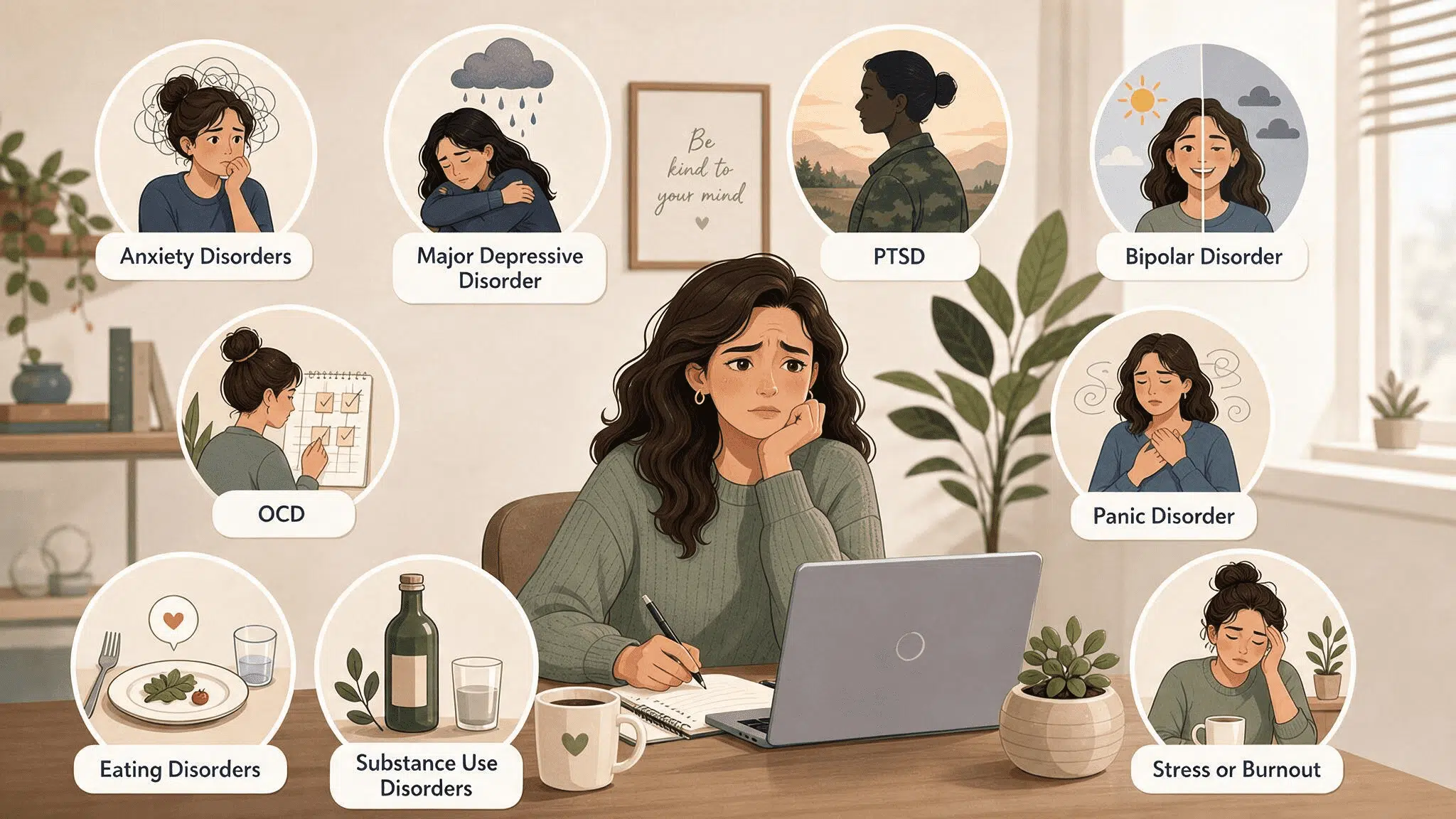
The U.S. Department of Labor notes that chronic mental health conditions, including anxiety and depression, may qualify when they meet the FMLA’s serious health condition requirements.
| Mental Health Condition | Common Care Pattern | When FMLA May Apply |
| Anxiety Disorders | Therapy, medication, regular provider visits | When symptoms cause periods of incapacity and require ongoing treatment |
| Major Depressive Disorder | Therapy, psychiatric care, medication | When the condition affects your ability to work and meets FMLA treatment requirements |
| PTSD | Therapy, psychiatric care, medication | When treatment or recurring symptoms require time away from work |
| Bipolar Disorder | Psychiatric care, medication, regular monitoring | When episodes interfere with your ability to perform your job |
| OCD | Behavioral therapy, medication | When chronic or recurring symptoms prevent you from working |
| Panic Disorder | Therapy, medication, provider visits | When recurring panic episodes cause periods of incapacity |
| Eating Disorders | Therapy, medical monitoring, residential or inpatient treatment | When ongoing treatment or inpatient care is required |
| Substance Use Disorders | Professional treatment or rehabilitation | When leave is needed to receive qualifying treatment |
| Stress or Burnout | Depends on the underlying health condition | Not automatically covered; an underlying condition may qualify if it meets FMLA requirements |
Source: U.S. Department of Labor, Fact Sheet #28O: Mental Health Conditions and the FMLA
Note: A diagnosis alone does not automatically qualify someone for FMLA leave. The condition must meet the FMLA requirements for a serious health condition, such as inpatient care or continuing treatment by a health care provider.
Does Anxiety or Depression Qualify?
Often, yes. Anxiety and depression may qualify for FMLA when they require ongoing treatment and sometimes prevent you from working.
The Department of Labor lists both as examples of chronic mental health conditions that can meet FMLA requirements, and a breakdown of FMLA for depression and anxiety walks through what that looks like in practice.
In general, the condition should:
- Require treatment from a health care provider at least twice a year
- Continue over an extended period
- Cause occasional periods when you cannot work
Work stress, untreated burnout, and a single hard week do not meet that test on their own. That is not a judgment about how difficult those weeks are.
How is Intermittent FMLA for Mental Health Documented?
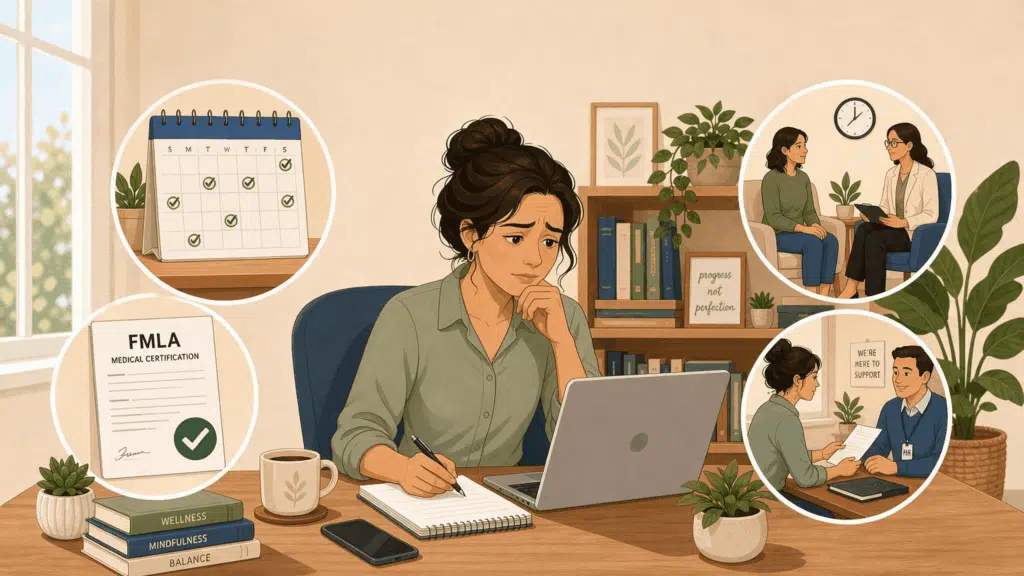
Your employer may ask for a medical certification from your health care provider. For your own health condition, the Department of Labor provides Form WH-380-E as an optional certification form.
The certification generally explains why leave is medically necessary and, for intermittent leave, how often you may need time off and how long each absence may last.
A diagnosis is not required as long as you provide enough medical information to support the need for leave.
The frequency and duration estimate is the part that decides whether your leave actually works. It usually reads something like this:
| Leave Need | Provider’s Estimate |
| Symptom flare-ups | 1 to 2 times per month |
| Length of each flare-up | 1 to 2 days |
| Therapy appointments | 1 appointment per month |
You generally have at least 15 calendar days to return a requested medical certification. If the certification is incomplete or unclear, your employer cannot simply deny the request. It has to tell you in writing what information is missing and give you at least seven calendar days to fix it. Ask for that written notice if you do not get one, because it tells you exactly what your provider needs to add.
How to Request Intermittent FMLA for Mental Health Reasons
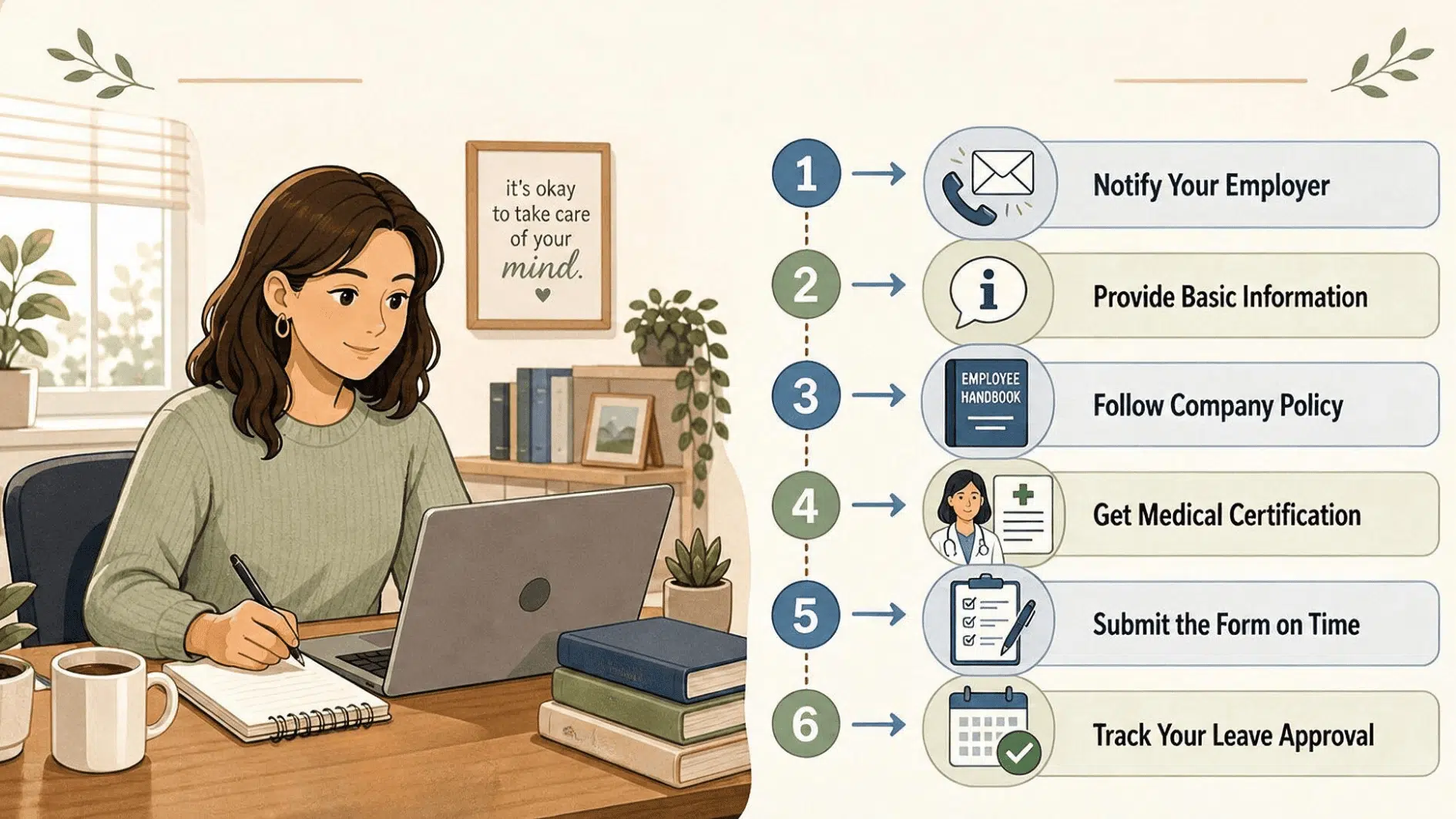
To request intermittent FMLA for mental health, notify your employer, complete any required medical certification, and follow your workplace leave procedures.
Notify Your Employer
Give at least 30 days’ notice for planned leave when possible. For unexpected symptoms, give notice as soon as practical.
Provide Enough Information
Explain that you need time off for a health condition. You do not need to provide your full medical history.
Follow Your Workplace Call-In Policy
Use your employer’s usual process for reporting absences unless unusual circumstances prevent you from doing so.
Ask Your Provider to Complete the Certification
Your provider should explain the medical need for intermittent leave and estimate how often and how long you may need leave.
Return the Certification on Time
If your employer requests medical certification, you generally have at least 15 calendar days to provide it.
Check Your FMLA Designation
Once your employer has enough information, it generally must tell you within five business days if the leave is designated as FMLA leave.
Since standard FMLA protection runs out after 12 weeks, it also helps to know what happens once your FMLA weeks are used up or whether extending FMLA leave is an option in your case.
Conclusion
FMLA coverage depends on the seriousness of the condition, ongoing treatment, and clear medical documentation, not on whether a diagnosis appears on a fixed list.
Pay close attention to the estimated frequency and duration of leave, and keep track of the main deadlines for certification, corrections, and your employer’s designation notice.
A practical next step is to confirm your eligibility with HR in writing, then bring your recent absence pattern to your provider so the certification is based on real information rather than guesswork.
Frequently Asked Questions
Can I Take Intermittent FMLA for Mental Health?
Yes, if you are FMLA-eligible and your mental health condition meets the definition of a serious health condition. You can use intermittent leave in smaller periods for treatment, appointments, or episodes when you cannot work.
How Hard Is It to Get FMLA for Mental Health?
It depends on your eligibility and medical documentation. Your provider generally needs to show that the condition requires inpatient care or continuing treatment and explain why leave is medically necessary.
How Does FMLA for Anxiety Work?
Anxiety may qualify when it requires ongoing treatment and occasionally makes you unable to work. The Department of Labor specifically uses severe anxiety as an example of a mental health condition that may qualify for FMLA leave.
Can I Take FMLA Leave for Anxiety and ADHD?
Potentially. Anxiety, ADHD, or both may support FMLA leave when the condition meets the serious health condition requirements, and your provider documents the medical need for time away from work.