

Many employees start looking into maternity leave only after they become pregnant or begin planning for a new baby. That is often when questions about leave length, pay, eligibility, and job protection begin to come up.
The answer is not always straightforward because time away from work may involve more than one law or benefit.
The amount of leave available can depend on medical needs, employer coverage, and the type of leave an employee qualifies for.
This blog explains how long is maternity leave in California, how different leave programs work together, what California maternity leave laws provide, and what employees should know before requesting leave.
How Long Is Maternity Leave in California?
Eligible employees may receive up to four months of Pregnancy Disability Leave when pregnancy, childbirth, or a related medical condition prevents them from working.`
After the disability period ends, an employee who meets CFRA requirements may take up to 12 weeks of job-protected leave to bond with the baby.
PDL and CFRA usually cover separate periods, so eligible birth parents may take them one after the other. When the full amount of each applies, protected time away from work may reach about seven months.
What are California Maternity Leave Laws?
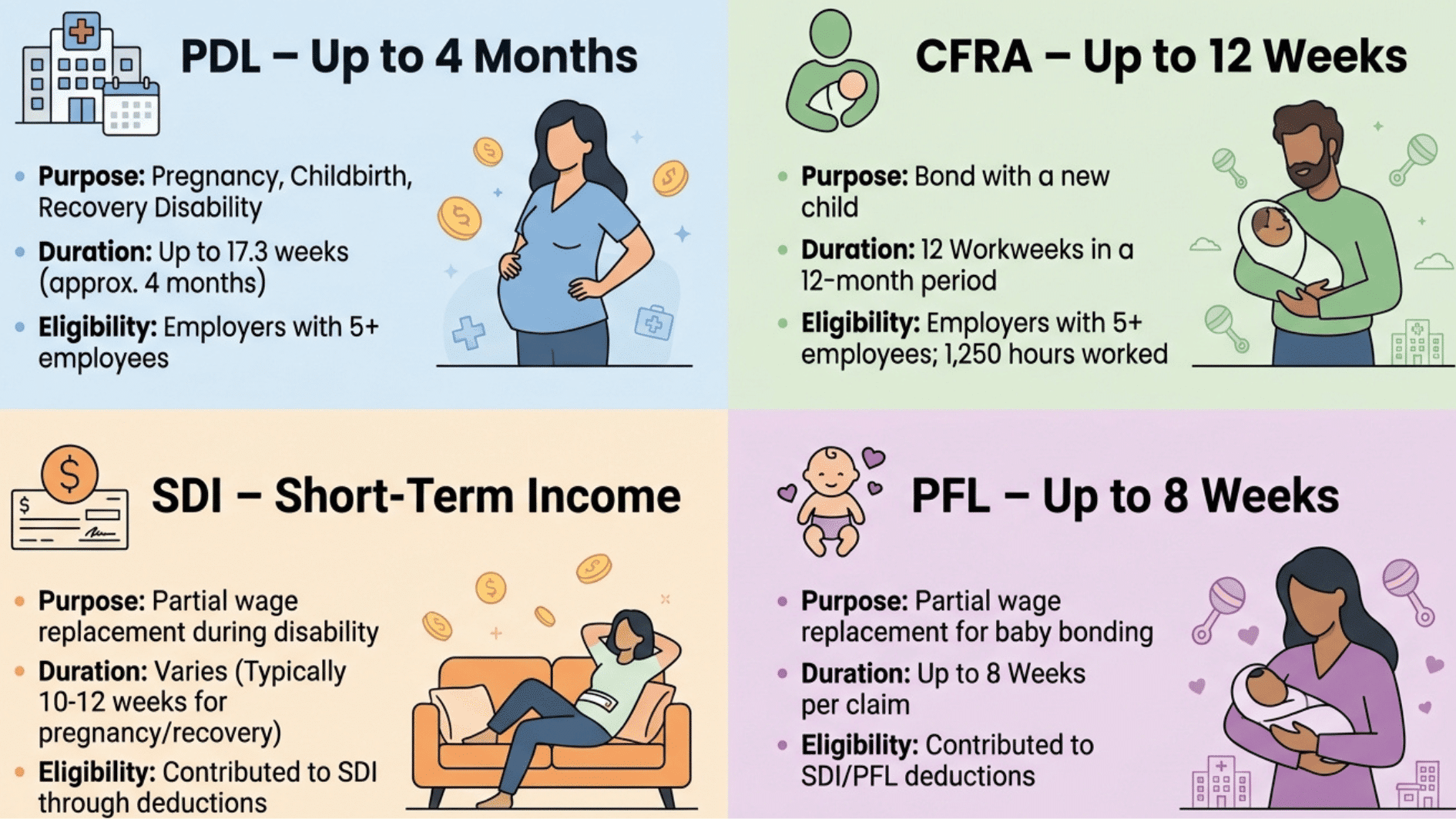
California maternity leave may involve separate programs for pregnancy disability, medical recovery, baby bonding, and wage replacement. Each program has its own purpose, time limit, and eligibility rules.
1. Pregnancy Disability Leave (PDL)
Employees who are disabled by pregnancy, childbirth, or a related medical condition may qualify for up to four months of Pregnancy Disability Leave.
The exact amount of leave depends on how long the healthcare provider certifies that the employee is unable to work. Someone recovering from a routine delivery may need less time than someone experiencing pregnancy complications.
2. California Family Rights Act (CFRA)
After pregnancy disability ends, eligible employees may take up to 12 weeks of protected leave to bond with their newborn.
Bonding leave does not require the employee to still have a medical disability. Instead, it gives parents time to care for and bond with their child during the baby’s first year.
3. State Disability Insurance (SDI)
SDI may replace part of an employee’s wages while a healthcare provider confirms that pregnancy or childbirth prevents them from working. It provides payments rather than job protection.
The payment period depends on medical certification and the applicable benefit program. Employees can also read more about how long short-term disability lasts and how disability benefits generally work.
4. Paid Family Leave (PFL)
PFL may provide up to eight weeks of partial wage replacement while an eligible parent bonds with a new child. The bonding claim can be used within the child’s first year.
PFL does not add extra leave or protect the employee’s job by itself. Job protection may come from CFRA or another applicable leave law.
Note: The California Civil Rights Department explains that PFL does not add extra leave or protect the employee’s job by itself. Job protection may come from CFRA or another applicable leave law.
Who Qualifies for Maternity Leave in California?
Eligibility depends on which California maternity leave laws or benefit program an employee plans to use. Employees generally qualify when:
- Covered employer: The employer has five or more employees.
- Medical certification: A healthcare provider confirms a pregnancy-related disability.
- Unable to work: Pregnancy, childbirth, or recovery prevents regular job duties.
- Related medical need: Leave is needed for prenatal care, complications, childbirth, or recovery.
- No service requirement: Employees do not need to complete 12 months of work before using PDL.
- Full-time or part-time status: Both may qualify when the medical and employer requirements are met.
Note: CFRA bonding leave has added service requirements. Employees generally must have worked for the employer for at least 12 months and completed 1,250 work hours during the previous 12 months.
How Is California Maternity Leave Structured?
Many employees think maternity leave is one continuous program from start to finish. In reality, different leave laws and benefit programs may apply at different stages of pregnancy and after childbirth.
1. Before the Baby Is Born
If pregnancy complications, severe morning sickness, doctor-ordered bed rest, or another pregnancy-related condition prevents an employee from working, Pregnancy Disability Leave may begin before delivery.
Eligible employees may also receive State Disability Insurance benefits if they meet the program requirements. The Employment Development Department explains the benefit’s eligibility.
2. During Childbirth Recovery
PDL usually continues while the employee recovers from childbirth. Recovery time varies for each pregnancy. Hence, a healthcare provider decides how long the employee remains medically disabled and unable to work.
3. After Medical Recovery
Once Pregnancy Disability Leave ends, eligible employees may begin CFRA bonding leave to spend time with their newborn.
This leave can be used during the child’s first year and is separate from medical recovery after pregnancy or childbirth. It is separate from pregnancy recovery.
Is California Maternity Leave Paid?
Maternity leave is not always paid because payment depends on the benefit program rather than the leave law. Eligible employees may receive unpaid, job-protected leave or partial wage replacement.
Pregnancy Disability Leave gives eligible employees job-protected time off when pregnancy, childbirth, or a related condition prevents them from working. The leave itself is usually unpaid.
State Disability Insurance may replace part of an eligible employee’s wages during a medically certified pregnancy-related disability. SDI provides income support but does not protect the job.
What Should Employees Do Before Taking Leave?
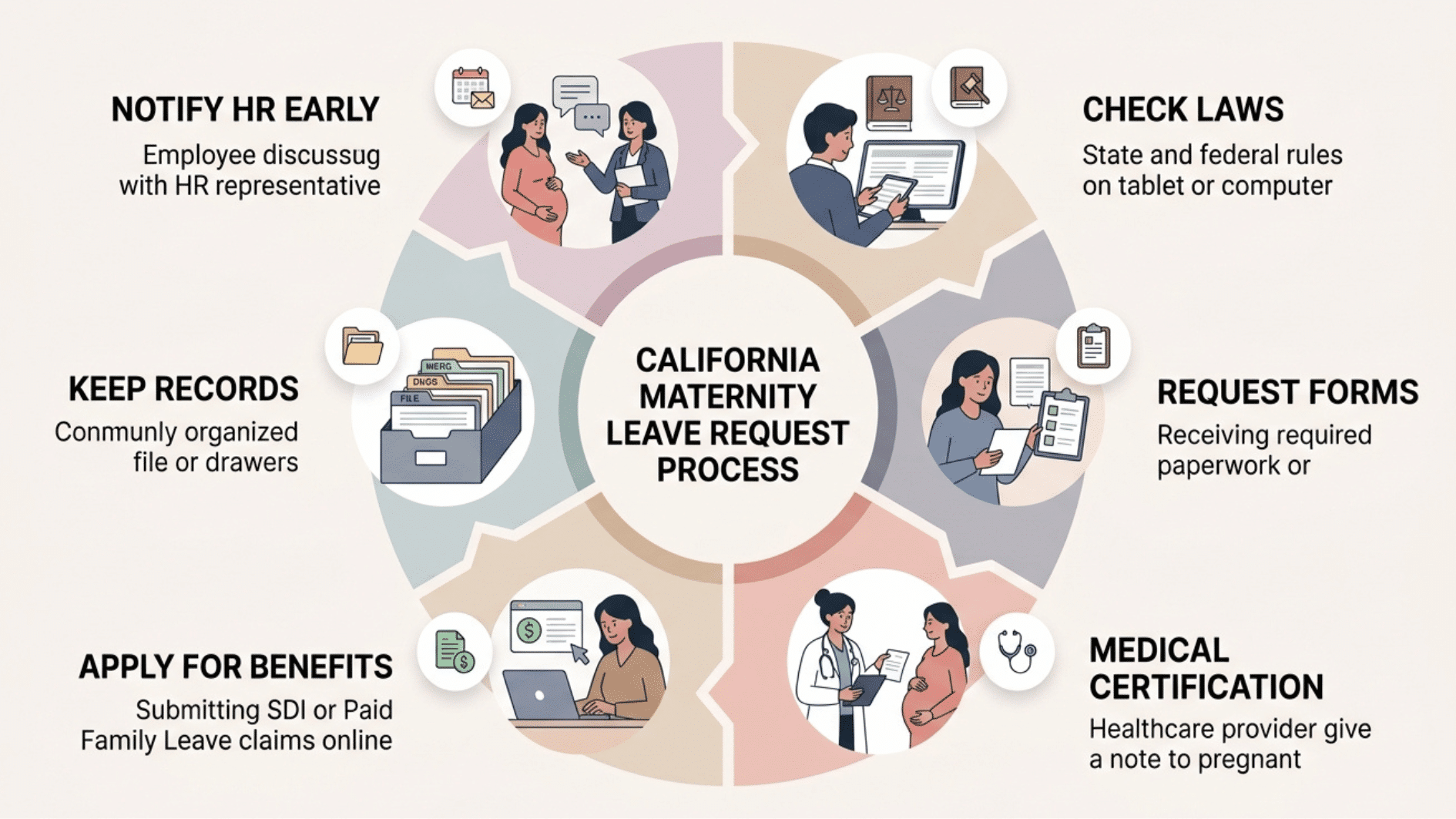
Planning ahead makes the leave process much smoother. Waiting until the last minute can delay paperwork or benefit payments from California maternity leave laws. Before requesting leave, employees should:
- Notify HR early: Share the expected leave dates as soon as reasonably possible.
- Check applicable laws: Ask HR which state and federal leave rules cover the position.
- Request leave forms: Get all required paperwork before the leave begins.
- Provide medical certification: Submit a healthcare provider’s note when PDL is needed.
- Apply for benefits: File SDI or Paid Family Leave claims through the California EDD when eligible.
- Keep records: Save copies of approvals, forms, and medical documents for reference.
What if An Employer Refuses Maternity Leave?
An employer cannot lawfully deny protected leave when an employee meets the requirements under PDL, CFRA, or FMLA. The employee should ask for the denial and the legal reason in writing.
An employer cannot take adverse action simply because an employee is pregnant. Employees concerned about retaliation can learn more about being fired while pregnant and their workplace rights.
An employee who believes their rights were denied may file a complaint with the California Civil Rights Department or speak with an employment attorney.
Final Thoughts
Knowing how long is maternity leave in California is only part of protecting workplace rights. Employees should also confirm eligibility, notice rules, medical certification, and the laws that apply to their employer.
California maternity leave laws offer strong protections, but each case depends on the facts. Clear records and timely legal support can help resolve problems before they place a job or income at risk.
Knowing these leave laws before leave begins can help employees prepare for paperwork, workplace conversations, and benefit applications with greater confidence.
Frequently Asked Questions
Can Fathers Take Maternity Leave in California?
Eligible fathers may qualify for bonding leave under the California Family Rights Act and may also receive Paid Family Leave benefits if they meet the program requirements.
What is the Difference Between CFRA and FMLA?
The main difference between CFRA and FMLA is that FMLA is a federal law and CFRA is a California state law.
Does Every California Employer Have to Provide Pregnancy Disability Leave?
Pregnancy Disability Leave generally applies to employers with five or more employees. Eligibility requirements are explained by the California Civil Rights Department