

Business travel often comes with extra costs that employees may not want to track individually. Meals, hotel stays, and small daily expenses can add up quickly.
Understanding how does per diem work helps employees know how companies handle these travel costs.
Per diem is a fixed daily allowance that may be provided during work trips instead of reimbursing each individual. The amount depends on company rules, travel location, and the type of expenses covered.
This blog explains how per diem payments are calculated, when they are required, and how they differ from regular reimbursements.
What is Per Diem?
Per diem means “per day” and refers to a daily amount provided for business-related travel expenses.
Employers commonly use it when employees travel away from their workplace for meetings, training, or events. A per diem payment may cover meals, lodging, and incidental costs such as tips or travel expenses.
The exact coverage depends on the employer’s travel policy. Some companies provide one daily amount for meals and other costs, while others separate lodging payments from meal allowances.
Per diem is not the same as extra salary. It is usually connected to a specific business trip and helps employees manage costs while traveling for work.
The IRS explains that travel reimbursements can follow different rules depending on how employers structure their payment plans. (IRS Publication 463)
How Does Per Diem Work for Employees?
The process of how does per diem work usually begins when an employee is approved for business travel. Before the trip, the employer decides the daily allowance amount based on its travel policy.
Some companies create their own rates, while others use government travel rates as a reference.
The employee may receive the money before traveling, during the trip, or after submitting required travel information.
Unlike regular expense reimbursement, per diem often reduces the need to save receipts for every meal or small purchase.
Who Receives Per Diem?
Per diem is commonly provided to people who travel away from their usual work location for approved business purposes.
- Employees traveling for work: Sales staff, consultants, managers, and other employees may receive per diem for overnight business trips, meetings, conferences, or client visits.
- Government employees and contractors: Federal, state, and local workers may receive per diem for official travel based on the rules and rates that apply to their agency.
- Temporary workers on assignment: Employees working on short-term projects away from their normal work location may receive a daily allowance to help cover travel-related costs
How Is a Per Diem Amount Calculated?
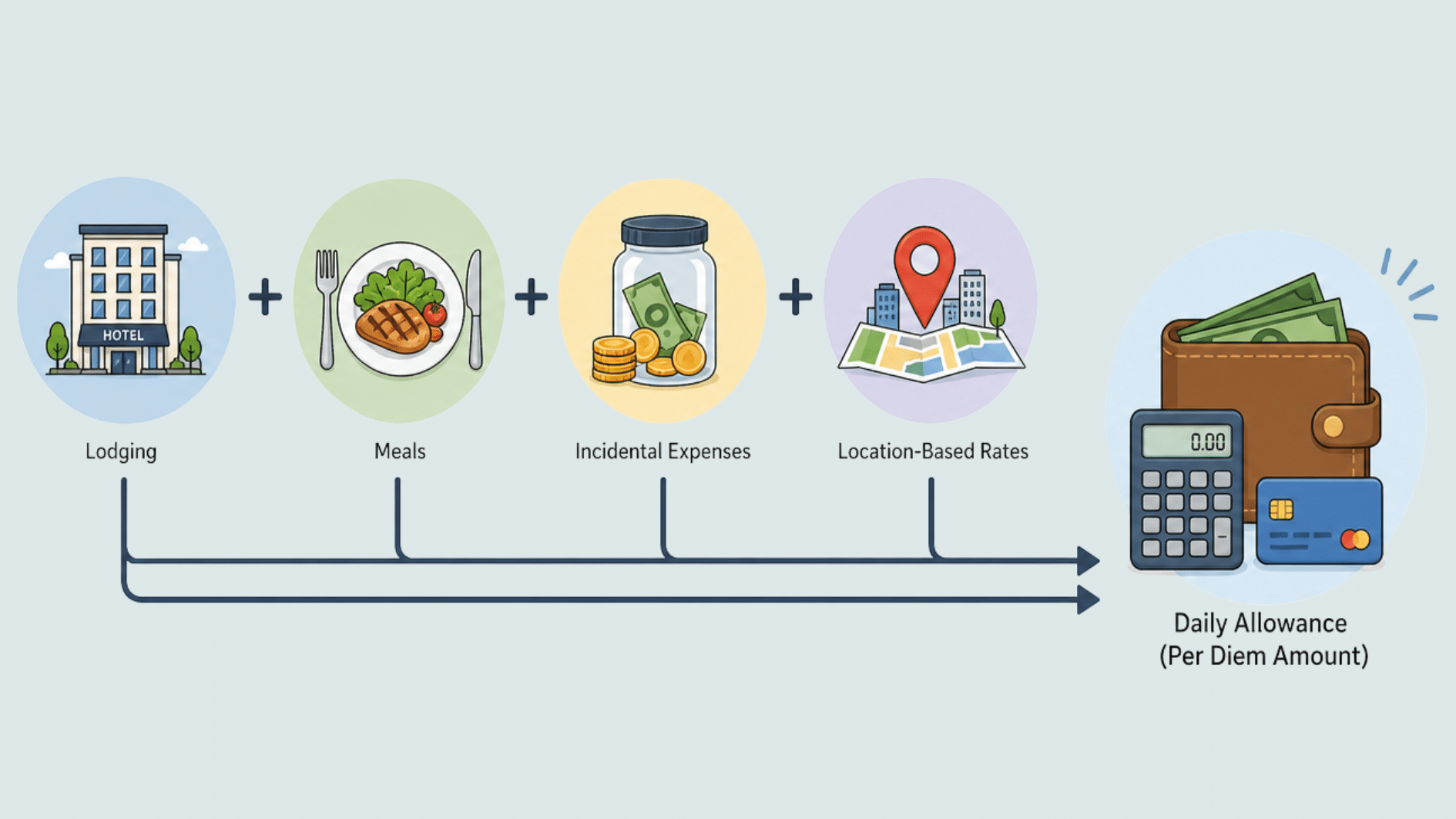
Per diem amounts are usually based on the expected cost of travel expenses in a specific location. Employers may set their own rates or use official figures from sources such as the General Services Administration (GSA).
A per diem calculation may include Lodging costs for overnight stays, Meals and incidental expenses, and location-based daily limits
Companies may also adjust rates depending on the length of the trip or their internal travel budget. The final amount depends on the employer’s policy and the purpose of the travel.
Example,

Suppose an employee travels somewhere with a daily rate of $180 for a hotel and $80 for meals and small expenses. For one full day:

Hotel: $180

Meals and small expenses: $80

Total per diem: $260

If it is the first or last travel day, the meal amount may be lower under GSA rules. For example, 75% of $80 is $60. So, for one hotel night and two travel days, the total could be:

$180 + $60 + $60 = $300
GSA rates vary depending on the city because travel costs differ between locations. (GSA per diem rates)
Is Per Diem Required by Law?
In most private-sector jobs, federal law does not require employers to offer per diem payments. The FLSA governs minimum wage, overtime, and recordkeeping, but it says nothing about covering travel expenses.
Companies can choose whether to provide a travel allowance, reimburse actual expenses with receipts, or use another payment method entirely, and the choice is largely theirs.
Per diem may become required, though, once it’s written into an employment agreement, union contract, company policy, or handbook, at which point it shifts from optional to enforceable.
A handful of states, like California, also have broader expense-reimbursement laws that can effectively require some form of travel cost coverage even without a specific per diem rule.
What Are the Benefits and Challenges of Per Diem?
Per diem can make business travel easier to manage, but it also has a few limits. The impact usually depends on the company’s policy, travel location, and how the daily allowance is set.
| Area | Benefit | Challenge |
|---|---|---|
| Expense tracking | Fewer small receipts may need to be submitted | Employees may still need records for certain expenses |
| Budgeting | Employees know the daily allowance in advance | The rate may not cover higher-than-expected costs |
| Administration | Can reduce time spent reviewing individual expenses | Employers still need clear travel and payment rules |
| Employee flexibility | Workers can manage meals and small costs within the allowance | Spending above the limit may come out of pocket |
| Travel planning | Location-based rates can reflect typical local costs | Rates may vary widely between cities and travel dates |
When Is Per Diem Required to Be Paid?
The answer to when per diem is required to be paid depends on the employer’s rules, agreements, and workplace policies.
Common situations where employers may provide per diem include:
- Business travel: Employees traveling away from their usual workplace may receive a daily allowance for meals and other travel costs.
- Work training: Companies may provide per diem when employees attend training programs in another city or location.
- Temporary assignments: Workers assigned to projects away from their normal job site may receive travel support.
- Client visits or events: Employees attending meetings, conferences, or company events may qualify for per diem payment
What Does Per Diem Mean in Healthcare Jobs?
In healthcare, per diem often refers to a work arrangement rather than a travel allowance.
Per diem nurses and other healthcare professionals work as needed, usually filling open shifts caused by staff absences, busy periods, or short-term staffing gaps.
According to the American Nurses Association’s guide to per diem nursing, these workers may provide their availability and accept shifts based on a facility’s staffing needs.
Unlike full-time employees, per diem healthcare workers may not have a fixed weekly schedule or guaranteed hours. Pay, scheduling rules, and benefits depend on the employer and position
Per Diem vs Expense Reimbursement: What is the Difference?
Per diem and expense reimbursement both help cover business travel costs, but they handle payments differently.
| Feature | Per Diem | Expense Reimbursement |
|---|---|---|
| Payment type | Fixed daily amount | Actual expense payment |
| Receipt needs | Usually fewer receipts | Receipts often required |
| Spending control | Employee manages daily budget | Employer reviews expenses |
| Best for | Regular business travel | Individual trip costs |
| Final amount | May differ from spending | Matches approved expenses |
With reimbursement, the employee is usually paid back only for approved expenses submitted with required details.
Is Per Diem Considered Taxable Income?
Per diem is not always treated as taxable income. The tax treatment depends on how the employer provides the payment and whether it follows IRS rules.
If a payment does not meet these requirements, it may be considered taxable wages.
Employees should check their pay records and employer policy to understand how per diem appears. Tax rules can vary based on the type of payment and how the company manages travel expenses.
Travel reimbursements may remain non-taxable when expenses have a business purpose, records are properly handled, and excess payments are returned when required. (IRS accountable plans)
Final Thoughts
Per diem helps employees manage business travel costs by providing a fixed daily allowance for approved expenses.
Knowing how does per diem work makes it easier to know how companies calculate payments, what costs may be covered, and how per diem differs from regular reimbursement.
Before taking a work trip, employees should review their company guidelines to understand payment timing, covered expenses, and any reporting rules.
A clear understanding of per diem policies can help avoid confusion and make business travel planning easier.
Frequently Asked Questions
Can an Employer Change the Per Diem Amount After a Trip Has Started?
Yes, an employer may adjust per diem rates for future trips or specific situations, but changes should follow the company’s travel policy. Employees should confirm the approved rate before traveling.
Does per Diem Cover Weekends During a Business Trip?
It depends on the company’s travel policy and whether the employee is required to remain away from their normal workplace during the weekend. Some employers provide allowances only for approved travel days.
Can Contractors Receive Per Diem Payments?
Yes, contractors may receive per diem if it is included in their agreement with the company. The payment terms usually depend on the contract rather than standard employee policies.
Does per Diem Apply to Remote Employees?
Remote employees may receive per diem if they travel for approved business purposes, such as attending company meetings, training sessions, or temporary assignments