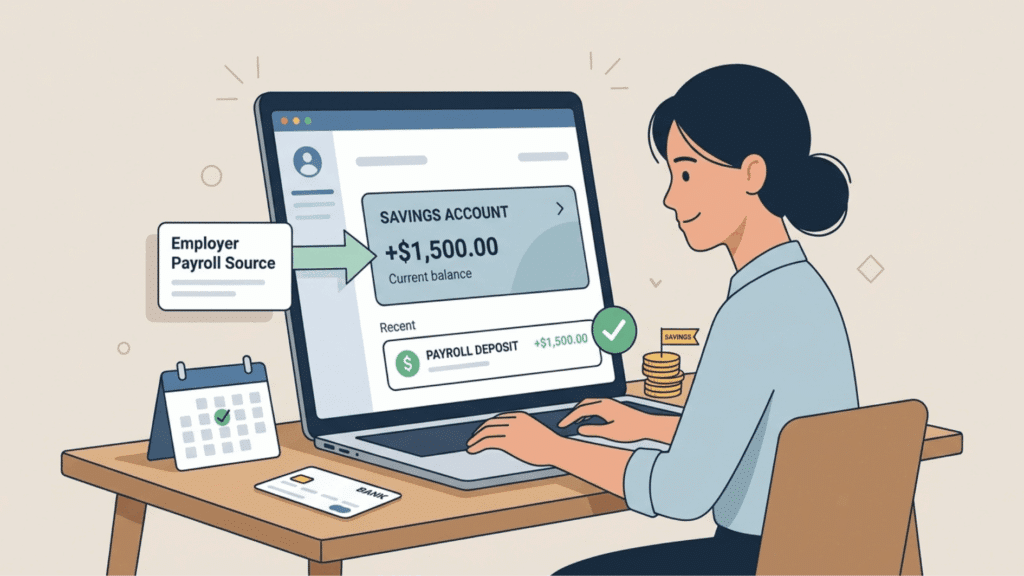


A pension is one of the few retirement plans that can pay you a steady check for life.
Plenty of workers have one through their job, yet many are not sure how a pension works until retirement gets close.
Money is set aside for you while you work, usually by your employer and sometimes by you too. After you retire, the plan pays it back as regular income.
The details depend on the type of plan, how long you’ve worked, and what you earned.
We will cover the main pension types, how payouts are figured, and what to check before retiring.
What You Need to Know Before Relying on a Pension?
A pension is a long-term saving/income arrangement to replace your salary when you stop working.
Traditional pensions are rarer than they used to be in private companies.
The Main Types of Pension
The type of pension you have determines who bears the risk and how your income is calculated.
-
Defined Benefit: Pays an income based on your salary and years of service. The employer or scheme carries the investment risk, so you know roughly what to expect.
-
Defined Contribution: Pays an income based on what you and your employer pay in, plus investment growth. The final amount isn’t guaranteed and depends on contributions, performance, and fees.
-
State Pension: A pension paid by the government, available in most countries once you reach the relevant age and meet the requisite conditions.
-
Social Security: The federal retirement benefit you earn by paying Social Security tax, which is part of the FICA tax on your paycheck. It’s paid on top of any workplace pension.
How Does a Pension Work?
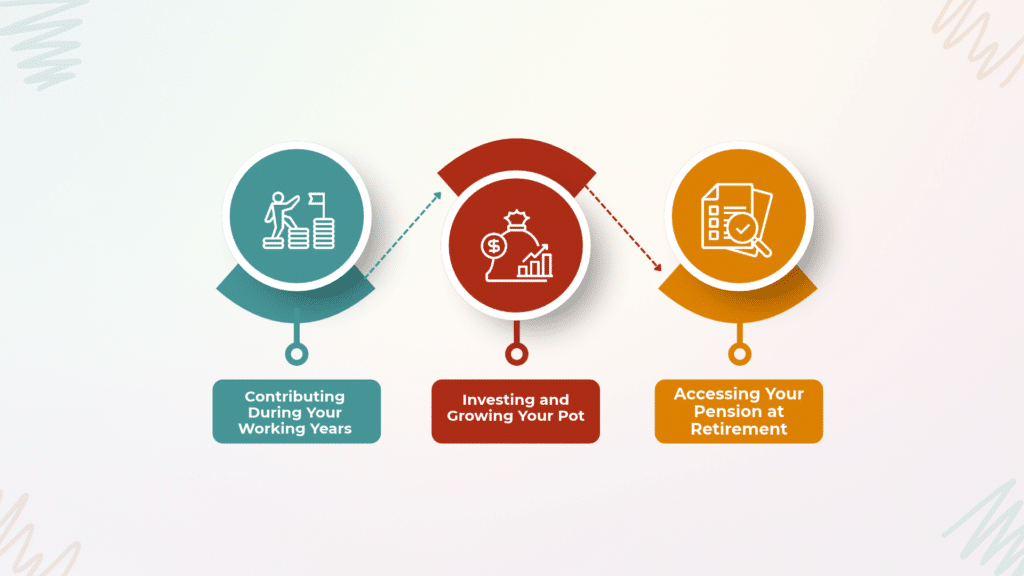
A pension moves through three stages: you pay in, your money is invested, and you draw an income.
Stage 1: Contributing During Your Working Years
Contributions are usually deducted from your paycheck, though you may also make personal deposits. Employers often contribute or match a portion of your savings.
These contributions may offer tax advantages, reducing taxable income today while allowing your investments to grow tax-deferred.
In most workplace pensions, you have to stay long enough to vest, which means earning a permanent right to the benefit.
Under federal vesting rules, a private-sector pension has to vest you fully after 5 years of service, or step by step, starting at 20% after 3 years and reaching 100% at 7 years.
Stage 2: Investing and Growing Your Savings
In a defined contribution pension plan, your contributions are invested in assets such as stocks, bonds, and funds.
Investment returns build your retirement savings through compounding, allowing earnings to generate further earnings.
However, fees can slowly eat into your account balance. Some plans automatically shift your investments toward lower-risk assets as retirement gets closer.
These investments can still lose value or struggle to outpace inflation.
Stage 3: Accessing Your Pension at Retirement
Pensions have a minimum access age, and taking money earlier can trigger penalties or tax charges.
How you are paid depends on your plan:
-
Defined Benefit: You get a regular income for life, calculated on your salary and length of service.
-
Defined Contribution: You usually choose between a lump sum, flexible withdrawals, or an annuity, which converts your pot into a guaranteed income.
Are Pensions Taxable?
Yes, pensions are taxable, and most pension checks count as regular income on your federal return.
According to the IRS, your payments are fully taxable when you never put after-tax money into the plan, which is the usual setup when your employer funds the whole plan.
If you pay in with after-tax dollars, then part of each payment comes back to you tax-free.
Your plan also holds back federal tax from each check, though you can change or stop that withholding with Form W-4P.
Lump sums follow a stricter rule. The plan must withhold 20% of the taxable amount unless you pick a direct rollover into an IRA, as IRS Publication 575 explains.
How is a Pension Calculated?
Most traditional defined benefit pensions use a formula that considers your years of service, final average salary, and benefit multiplier.
However, the exact formula varies by employer and pension plan.
The multiplier is the percentage of your salary you earn for each year worked. However, the exact formula varies by employer and pension plan.
Pension Calculation Example
This is a simplified example; your actual benefit may vary depending on retirement age, payout options, and plan rules.
Annual pension
$45,000
Your estimated annual pension is $45,000, or $3,750 a month.
How it is worked out
- Annual pension = final average salary × years of service × benefit multiplier.
- Monthly pension = annual pension ÷ 12.
This is an estimate; your plan’s formula and retirement options may change your benefit.
Factors Affecting Your Pension Amount
Several factors can influence how much retirement income you receive from your pension:
-
Years of Service: More years working under the plan may increase your pension benefits.
-
Final Average Salary: A higher average salary during the period specified by your plan can result in larger payments.
-
Benefit Multiplier: A higher multiplier increases the percentage of your salary used to calculate benefits.
-
Retirement Age: Retiring early may reduce your monthly pension, while delaying retirement may increase it.
-
Survivor Benefits: Choosing payments that continue to an eligible spouse after your death may lower your initial monthly benefit.
-
Cost-of-Living Adjustments (COLAs): Some plans increase payments over time to help account for inflation, while others offer no automatic increases.
Pension vs. 401(k): What’s the Difference?
Although both pensions and 401(k)s help you save for retirement, they work quite differently.
|
Factor |
Pension (defined benefit) |
401(k) (defined contribution) |
|---|---|---|
|
Who Pays In |
Mostly your employer, sometimes you too |
Mostly you, often with an employer match |
|
Who Picks the Investments |
Your employer |
You |
|
Is the Payout Guaranteed |
Yes, it’s set by the plan’s formula |
No, it depends on your balance |
|
Can You Take It With You |
You keep what you’ve vested, but it usually stays with the old plan |
Your balance can roll over to a new plan or an IRA |
|
Who Carries the Risk |
Your employer |
You |
Key Benefits of Choosing a Pension
A pension does more than store money. It offers benefits that ordinary savings often lack.
Here is why it is worth having.
-
Tax Advantages: In many countries, you get tax relief on contributions, or your money grows with less tax.
-
Employer Contributions: If your employer adds money to your pension, that is extra pay you would not get otherwise, often called “free money.”
-
Disciplined, Automatic Saving: Contributions come out of your pay regularly, so you build savings without thinking about it.
-
Protection Against Outliving Your Savings: Annuities or other guaranteed income can keep paying for as long as you live.
-
Inheritance and Death Benefits: Some pensions can pass money to your family or chosen beneficiaries.
Rules and benefits vary by country and plan, so check the details of yours before you decide. A financial adviser or your plan provider can help you check.
Pension Roadblocks and How to Overcome Them
Most pension problems are common, and most can be fixed. Let’s look at five frequent roadblocks and how to get past them.
|
Roadblock |
How to Overcome It |
|---|---|
|
Not Saving Enough |
Raise your contributions a little at a time, such as 1% a year. Switch on auto-escalation if your plan offers it. Pay in enough to get your employer’s full match. |
|
Starting Late |
Make catch-up contributions if your plan allows them, work a few years longer, or delay taking your pension. |
|
Losing Track of Old Pensions |
Use a pension tracing service to find old pots. Consider combining them, but check for fees or lost benefits first. |
|
Inflation and Market Volatility |
Spread your money across different types of investments. Review your plan once a year to make sure it still fits your goals. |
|
Not Knowing Where to Start |
Speak to a regulated financial adviser or use free official guidance in your country. |
Final Thoughts
Planning for retirement becomes much easier when you understand how does a pension works and what to expect from it.
Your years of service, salary, benefit formula, and retirement age all play a role in determining your future income.
Have you started planning around your pension, or are you already receiving monthly benefits? Share your experience, questions, or retirement planning tips.