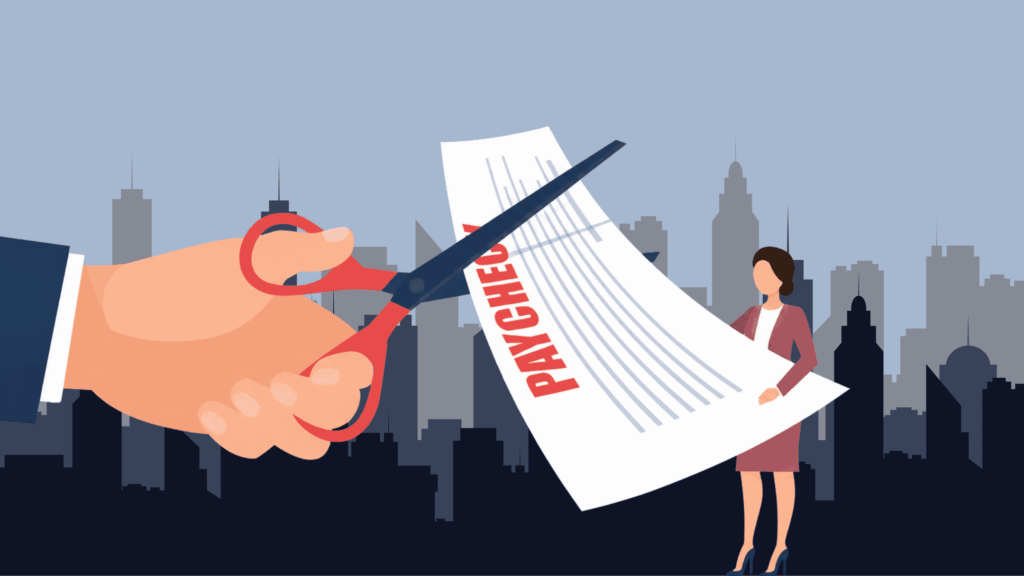

Finding less money in your paycheck than you expected can be unsettling, especially when you are not sure why.
Sometimes the reason is garnishment. It can affect your wages, your bank account, and your monthly budget, and it can catch you off guard if you do not know how it works.
I know how confusing legal and money terms can feel, so I have kept things simple here.
Once you know what garnishment is, why it happens, and what your rights are, the whole situation feels far less overwhelming.
What is Garnishment?
Garnishment is a legal process that lets a creditor collect a debt directly from your paycheck, and in some cases from your bank account.
Your employer holds back part of your earnings and sends it to the person or agency you owe.
Most garnishments are made by court order, though some debts, like federal taxes, can be collected without one.
For most regular debts, federal law caps the amount at 25% of your disposable earnings, and your employer cannot fire you over a garnishment for a single debt.
Who is Involved in a Garnishment?
A garnishment usually involves three parties:
-
Creditor: The person, business, or government agency owed money.
-
Debtor: The person who owes the unpaid debt.
-
Third party: The employer or financial institution that receives the garnishment order and withholds or releases the money.
For example, if you owe money on a credit card and a court orders wage garnishment, your employer may be required to withhold part of your paycheck and send it toward the debt.
The exact process depends on the debt.
The Types of Garnishment
Garnishment usually takes one of two forms, depending on where your money is when the creditor comes to collect it.
1. Wage Garnishment
Wage garnishment happens when your employer is required to hold back part of your paycheck and send it to the person or agency you owe.
The money is taken out before your pay ever reaches you, and it usually continues each payday until the debt is paid off or the order ends.
Most creditors can only do this after taking you to court and winning a judgment. For everyday debts like credit cards or medical bills, federal law limits garnishment to 25% of your disposable earnings.
Child support is different; up to 50% of your disposable earnings can be withheld if you support another spouse or child, or up to 60% if you don’t.
Some government agencies, like the IRS or the Department of Education, can also garnish wages without going to court first.
2. Bank Account Garnishment
Bank account garnishment happens when a creditor gets a court order telling your bank to freeze or hand over money from your checking or savings account.
The bank may lock the funds for a while before sending the required amount to the creditor, which can make paying regular bills tricky in the meantime.
There are important protections here too. If you receive federal benefits like Social Security, SSI, or veterans’ benefits by direct deposit, your bank must protect two months’ worth of those payments, so you can keep using that money.
If money above the protected amount is frozen, the bank must send you a notice explaining how to claim more exemptions, and many states shield an extra amount on top of that.
The Consumer Financial Protection Bureau explains these protections in more detail.
Debts That Have Special Garnishment Rules
Not all debts follow the same garnishment procedures. Certain debts have special collection rules that differ from ordinary consumer debts.
-
Unpaid Taxes: The IRS can collect unpaid taxes through a tax levy, which may apply to wages, bank accounts, and other assets without first obtaining a regular court judgment.
-
Federal Student Loans: The Department of Education paused administrative wage garnishment in January 2026 and has not announced a restart date, though the authority to garnish remains in place
-
Child Support and Alimony: These obligations follow separate garnishment rules and generally receive priority over ordinary consumer debts.
These exceptions mean that the standard wage garnishment rules do not apply equally to every type of debt.
Garnishment, Levy, and Lien: What’s the Difference?
These terms are related to debt collection, but they describe different legal actions.
|
Term |
What it means |
|---|---|
|
Garnishment |
Money is withheld from wages or taken from a bank account to repay a debt. |
|
Levy |
A government agency or creditor legally seizes money or property to collect a debt. |
|
Lien |
A legal claim is placed against property, which can affect its sale or refinancing. |
How Does the Garnishment Process Work?
The process depends on the type of debt and the laws that apply. For many private consumer debts, it follows these steps:
-
The Debt Goes Unpaid: You miss payments or fail to meet the repayment terms.
-
The Creditor Takes Legal Action: The creditor may file a lawsuit to recover the money.
-
The Court Enters a Judgment: If the creditor wins, the court may issue a judgment confirming that you owe the debt.
-
The Creditor Requests Garnishment: The creditor applies for a garnishment order under the applicable state procedure.
-
The Employer or Bank Receives the Order: The third party follows the instructions and withholds or freezes the money as required.
Government debts, such as federal taxes and certain federal student loans, may follow administrative procedures instead of this court-based process.
What Happens When Your Employer Receives the Order?
Once an employer receives a valid wage garnishment order, it becomes responsible for following its instructions.
The employer must calculate the amount that can legally be withheld, deduct it from the employee’s pay, and send the money to the appropriate creditor, court, or government agency.
The employee should receive information about the garnishment and how it affects their pay.
Notice requirements and timelines depend on the type of order and applicable federal or state law.
An employer generally cannot stop deductions simply because an employee disputes the debt.
It needs an official instruction, such as a court order or termination notice, authorizing the deductions to stop.
How Garnishment Appears on a Pay Stub
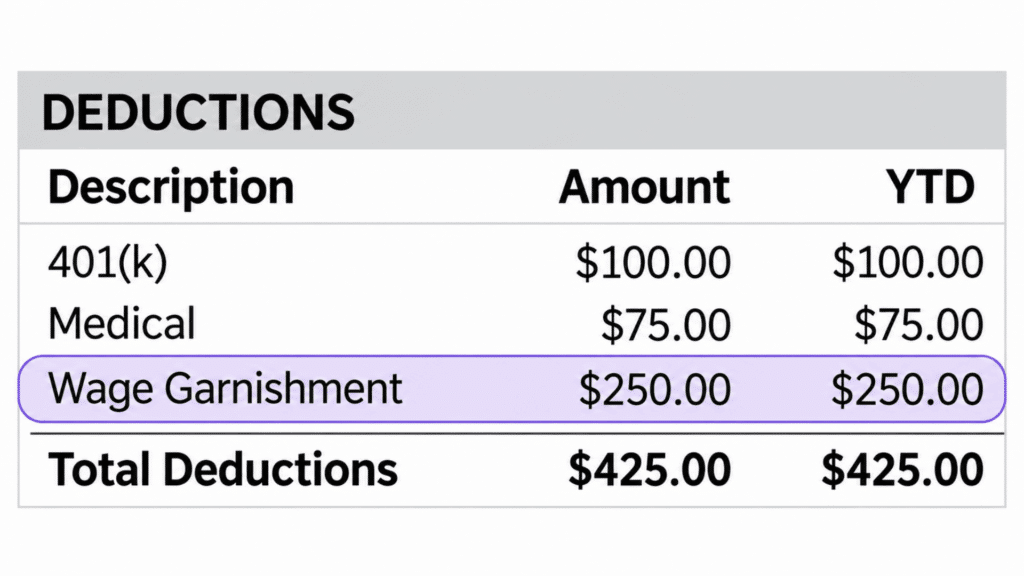
A wage garnishment usually appears as a separate deduction on your pay stub. It may be listed as “wage garnishment,” “garnishment deduction,” or under the name of the collecting agency.
Check your pay stub to confirm:
-
The amount withheld from your paycheck.
-
The creditor or agency receiving the payment, if listed.
-
Your disposable earnings and other deductions.
-
Whether the amount matches the garnishment order.
If the deduction looks incorrect, contact your payroll department or the agency handling the garnishment. Keep copies of your pay stubs and any notices you receive.
What Counts as Earnings for Garnishment?
Not every payment you receive is treated the same way under federal garnishment rules.
The Consumer Credit Protection Act (CCPA) defines earnings broadly as compensation paid or payable for personal services.
Depending on the payment and applicable law, earnings may include:
-
Hourly wages and salaries
-
Commissions and bonuses
-
Vacation pay
-
Certain periodic pension and retirement payments
-
Payments from employment-based disability plans
Tips you receive above your employer’s tip credit are generally not treated as earnings under the CCPA.
However, this does not mean every type of income outside this definition is automatically protected from other forms of debt collection.
How Much Money Can Be Garnished From Your Paycheck?
The amount that can be taken from your paycheck depends on the type of debt, your disposable earnings, and the state where you live.
Federal law sets different garnishment limits for ordinary consumer debts, federal student loans, child support, and unpaid taxes.
Federal Wage Garnishment Limits by Debt Type
Federal law does not treat every debt the same way. The amount that can come out of your paycheck depends on the kind of debt you owe. Child support and government debts follow stricter rules than everyday bills like credit cards.
Most of these limits are based on your disposable earnings, which is simply what’s left of your pay after legally required deductions like taxes and Social Security.
|
Type of Debt |
Federal Limit |
|---|---|
|
Credit cards, medical bills, and personal loans |
Lesser of 25% of disposable earnings or the amount exceeding $217.50 per week |
|
Defaulted federal student loans |
Generally up to 15%, subject to applicable protected earnings and aggregate limits |
|
Child support and alimony |
Up to 50% or 60%, with an additional 5% for payments more than 12 weeks overdue |
|
Unpaid federal taxes |
IRS levy rules apply; the exempt amount depends on filing status and dependents |
These are maximums. A creditor cannot take more, and state law may allow less.
State laws may provide additional protection, and some debt categories follow separate rules.
Two Easy Examples
Consider how the federal formula works for someone paid weekly.
Example 1: Weekly disposable pay of $400
So, up to $100 may be garnished, leaving $300.
Example 2: Weekly disposable pay of $230
So, up to $12.50 may be garnished, leaving $217.50.
How to Stop or Challenge a Garnishment?
A garnishment does not mean you have no options.
Depending on your situation, you may be able to claim an exemption, challenge the order, or arrange a payment plan.
Claim an Exemption
Certain income, including qualifying Social Security, SSI, and veterans’ benefits, may be protected from garnishment.
However, exceptions apply depending on the debt.
Banks must review your account and protect two months’ worth of directly deposited federal benefits, such as Social Security, before freezing money for most private creditor orders, according to the Consumer Financial Protection Bureau.
State laws may offer additional protections.
Challenge an Incorrect Garnishment
You may challenge a garnishment if the debt is incorrect, already paid, belongs to someone else, or exceeds legal limits.
Follow the instructions on your notice and meet any deadlines to file an objection or request a hearing.
Negotiate a Payment Plan
Contact the creditor to discuss a repayment plan or settlement. Get any agreement in writing.
Remember, an agreement does not automatically stop an existing garnishment.
You may need an official order to suspend or end it.
Frequently Asked Questions (FAQs)
Can My Employer Fire Me Because of a Wage Garnishment?
Federal law bars employers from firing you over a garnishment for one debt. That protection ends with a second debt’s garnishment, though some states offer broader job protection for workers.
Can More Than One Creditor Garnish My Wages at the Same Time?
Yes, but the combined amount taken for ordinary debts can’t exceed the federal cap, so another creditor may have to wait. Child support orders usually take priority over other garnishments.
How Long Does a Wage Garnishment Last?
It usually continues until the debt, interest, and allowed costs are paid, unless a court ends it. Filing for bankruptcy triggers an automatic stay that stops most wage garnishments.
Final Thoughts
Getting a garnishment notice is stressful, but it does not have to leave you feeling stuck.
Once you know what garnishment is and which parts of your income are protected, you are in a much stronger position to respond.
If a notice ever lands in your mailbox, open it right away, since the window to challenge an order can be short.
Keep your pay stubs and bank statements in one place, speak up if a deduction looks wrong, and reach out to a legal aid office or consumer attorney if you are unsure what to do next.
The sooner you act, the more options you will have.