
About one in six full-time workers in the U.S. works something other than a regular daytime schedule, and a large share of that group works overnight. So what is 3rd shift hours, exactly?
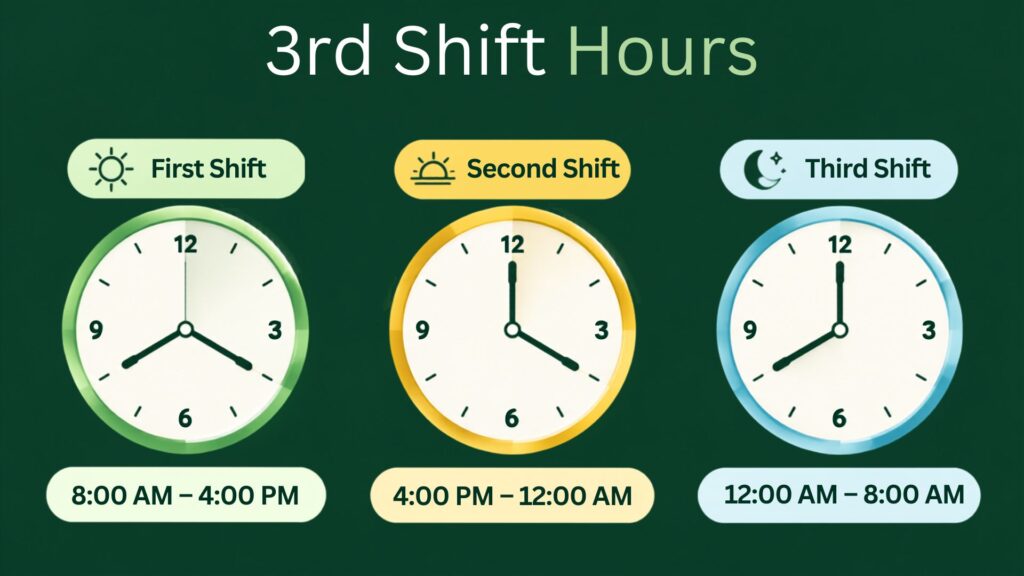
In most workplaces, it’s the block between roughly 11 PM and 7 AM, sometimes called the night shift or graveyard shift.
Because exact start and end times shift from one employer to the next, it helps to look at how these schedules are actually built, which industries depend on them, and what working overnight does to sleep, pay, and daily life.
What is 3rd Shift Hours? Schedule Overview and Key Details
Third shift is the overnight portion of a 24-hour work cycle, sitting after the daytime and evening shifts end. It exists mainly in workplaces that never fully close, so someone has to be on the floor while most of the country sleeps.
|
Detail |
Information |
|---|---|
|
Common names |
Night shift, graveyard shift, mid-shift |
|
Typical hours |
11 PM–7 AM, 12 AM–8 AM, or 10 PM–6 AM |
|
Usual shift length |
8 hours (sometimes 12 in healthcare) |
|
Common industries |
Healthcare, manufacturing, logistics, security, customer support |
|
Pay context |
Often includes a shift differential on top of base pay |
Exact hours depend on the employer, the industry, and whether the schedule is fixed or rotating. A hospital’s overnight nurse and a warehouse’s overnight picker may both say they work “third shift,” yet clock in at very different times.
Pros and Cons of Working Third Shift
Overnight work suits some people and drains others. Weighing both sides before committing to a schedule change is worth the time.
Pros:
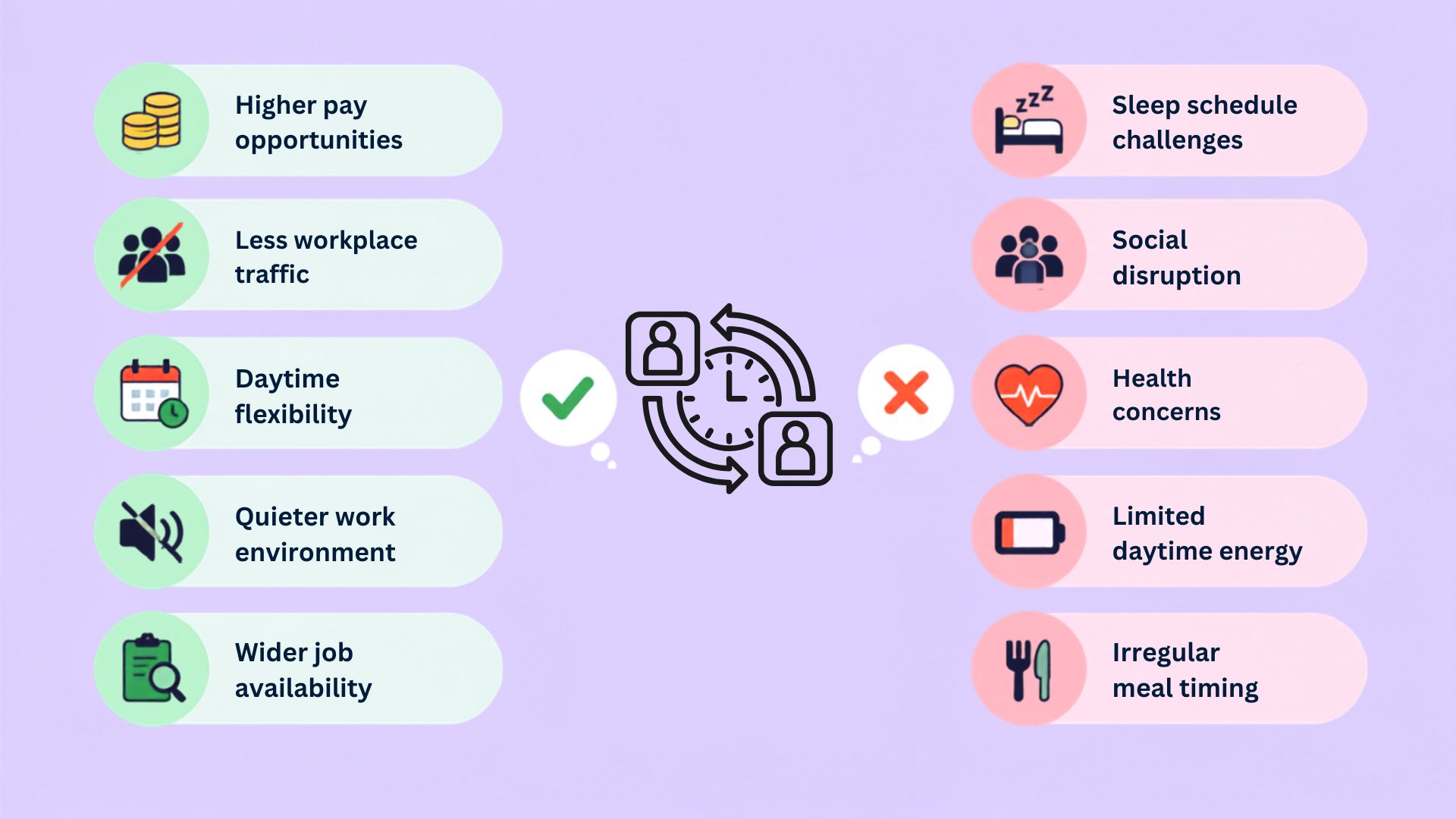
- Higher pay opportunities: Many employers add a shift differential, extra hourly pay for taking on the less desirable overnight slot.
- Less workplace traffic: Fewer meetings, phone calls, and drop-in interruptions during the overnight hours.
- Daytime flexibility: Easier to handle appointments, childcare pickups, or errands that only run during business hours.
- Quieter work environment: Some employees focus better with fewer people and distractions around.
- Wider job availability: Overnight roles are common in any industry that runs 24/7.
Cons:
- Sleep schedule challenges: Sleeping well during daylight hours takes real effort and doesn’t come naturally to most people.
- Social disruption: Overnight hours often clash with family dinners, weekend plans, and friends’ schedules.
- Health concerns: Long-term overnight work can strain the body’s circadian rhythm.
- Limited daytime energy: Fatigue can bleed into errands, exercise, and family time after a shift ends.
- Irregular meal timing: Eating at unconventional hours can disrupt normal digestion patterns.
How Third Shift Schedules Are Typically Structured
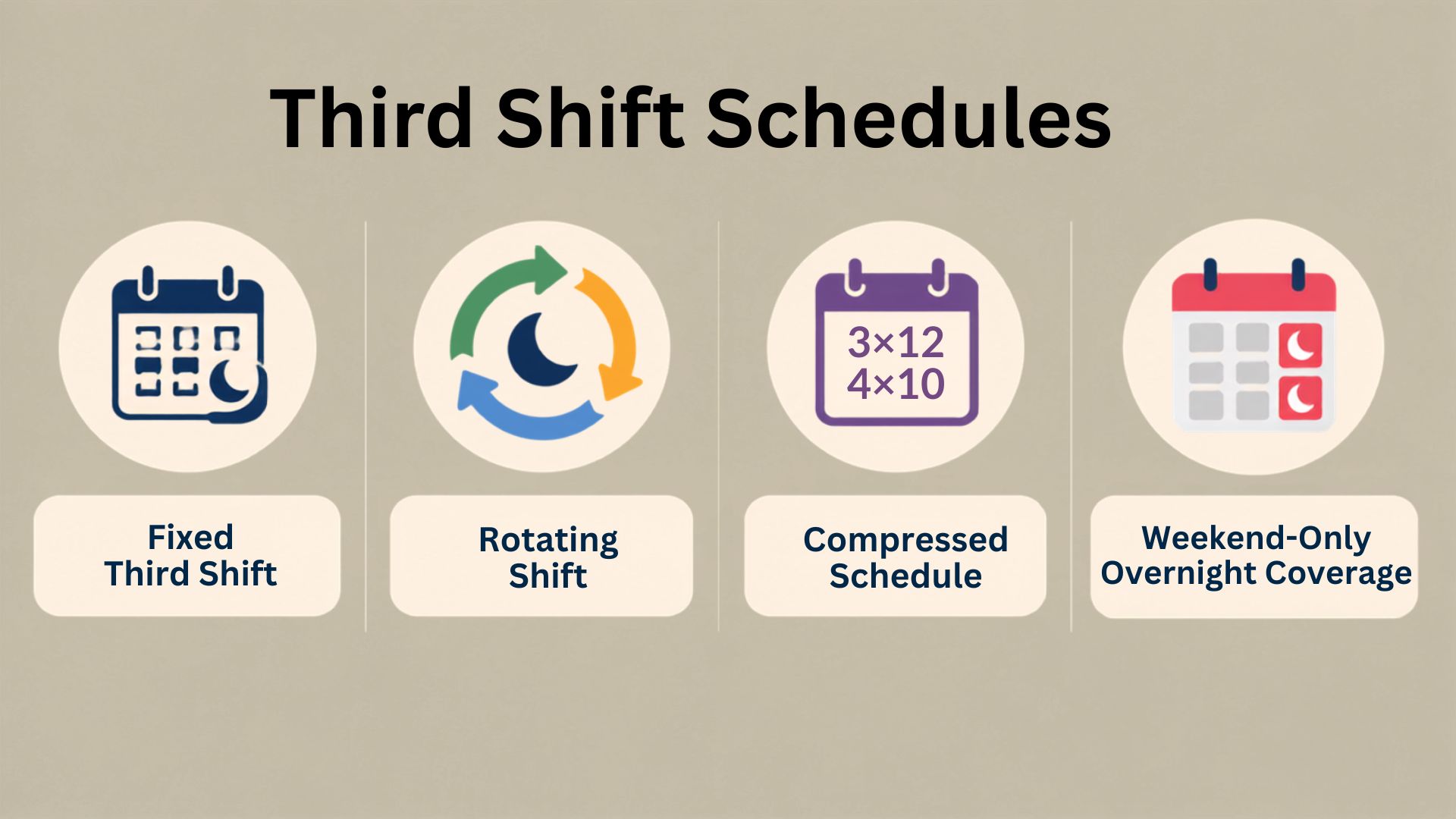
The start and end time is only part of the picture. How often someone works those hours, and whether the schedule stays the same week to week, affects daily life just as much as the hours themselves.
- Fixed third shift: The same overnight days and hours every week. Common in manufacturing plants that run continuous production and want consistent overnight staffing.
- Rotating shift: Employees cycle through first, second, and third shift over weeks or months. Common in policing, corrections, and some manufacturing settings.
- Compressed schedule (3×12 or 4×10): Fewer, longer shifts per week in exchange for more consecutive days off, comparable in structure to a 9/80 schedule. Common in hospitals and emergency services.
- Weekend-only overnight coverage: Fills overnight gaps without requiring a full-time night crew every day. Common in retail distribution and smaller warehouse operations.
A fixed schedule is generally easier to adjust to than a rotating one, since the body’s sleep pattern doesn’t have to reset every few weeks.
Which Industries and Jobs Use Third Shift Hours?
People searching for third shift work usually want to know two things: which industries run overnight, and what a specific role’s hours actually look like.
Many of these overnight roles also fall under the essential worker label, since hospitals, plants, and warehouses can’t pause when the sun goes down.
The table below covers both, so there’s no need to cross-check a separate list of job titles:
|
Industry / Job Type |
Example Third Shift Hours |
Why Overnight Coverage Is Needed |
|---|---|---|
|
Hospitals and healthcare (nurses, hospital staff) |
7 PM–7 AM or 11 PM–7 AM |
Patient care and emergency response |
|
Manufacturing (production, factory workers) |
11 PM–7 AM |
Keeping production lines running continuously |
|
Warehousing and logistics (warehouse associates) |
10 PM–6 AM or 12 AM–8 AM |
Inventory processing and shipping deadlines |
|
Security (security officers) |
10 PM–6 AM or 11 PM–7 AM |
Overnight monitoring of facilities |
|
Customer support (customer service reps) |
12 AM–8 AM |
Serving customers across different time zones |
|
Transportation and trucking |
Varies by route |
Overnight deliveries and dispatch operations |
Exact hours still depend on the employer and location, so confirm the schedule during the interview rather than assuming a standard block applies to every opening in the industry.
How Unhealthy is a 3rd Shift?
Working third shift can be unhealthy over time because it disrupts the body’s natural circadian rhythm, the internal clock that regulates sleep, hormones, and other daily biological functions.
Consistently sleeping during the day and staying awake at night works against this rhythm rather than with it. Over months and years, this mismatch has been linked to poor sleep quality, fatigue, and a higher risk of metabolic and heart-related issues, along with a greater chance of mood changes.
The severity depends heavily on the person, the length of time spent working overnight, and how consistent their sleep routine stays.
Third shift is not automatically harmful for everyone, but it does require more deliberate effort around sleep and lifestyle habits than a standard daytime job.
Advisory: Health impact from overnight work varies from person to person. Anyone with existing sleep, heart, or metabolic conditions should discuss overnight scheduling with a healthcare provider before accepting a permanent third shift role. For general guidance on shift work and fatigue, see the CDC/NIOSH resources on work hours and the OSHA guidance on worker fatigue.
1st, 2nd, and 3rd Shift Hours: What Is the Difference?
Workplaces that operate all day typically split the 24-hour cycle into three blocks, each covering a different part of the day.
|
Shift |
Typical Hours |
Also Called |
Common Workplaces |
|---|---|---|---|
|
First shift |
7 AM–3 PM / 8 AM–4 PM / 9 AM–5 PM |
Day shift |
Offices, schools, retail |
|
Second shift |
3 PM–11 PM / 4 PM–midnight |
Evening or swing shift |
Manufacturing, hospitality |
|
Third shift |
11 PM–7 AM/midnight–8 AM |
Night or graveyard shift |
Healthcare, logistics |
|
What Shift Is Healthiest? Verdict: No shift is inherently healthiest. First shift best supports natural rhythms, but third shift can work long-term with strict sleep discipline, consistent routines, and realistic expectations about recovery time. |
|---|
How To Make Third Shift Work Better
A predictable routine makes the biggest difference for anyone new to overnight hours. Small, consistent habits around sleep and light exposure tend to matter more than any single trick.
- Maintain a consistent sleep schedule: Keep similar sleep and wake times, even on days off, so your body doesn’t constantly readjust.
- Create a dark sleep environment: Blackout curtains, an eye mask, or white noise can help daytime sleep feel more like nighttime rest.
- Plan meals around your shift: Save heavier meals for earlier in the shift and keep things lighter as bedtime approaches.
- Use light strategically: Bright light during work hours and dimmer light before sleep supports the body’s natural rhythm.
- Protect recovery time: Switching back and forth between day and night schedules too often makes adjustment harder each time.
Recommendation: Anyone starting a third shift role benefits from shifting sleep timing gradually in the days before their first overnight shift, rather than flipping the schedule all at once.
Final Takeaway
So, what is 3rd shift hours in practice? It’s the overnight block, usually landing somewhere between 11 PM and 8 AM, that keeps hospitals, factories, and warehouses running when most people are asleep. Exact start times vary by employer and industry, so it pays to confirm the schedule before accepting a role.
Third shift can offer better pay and a quieter workday, but it also demands more of your sleep habits and daily routine than a standard schedule.
Weighing the pros, the health considerations, and your own natural sleep patterns will help determine whether 3rd shift hours actually fit your life.
Have you worked overnight hours before? Share what helped you adjust to third shift in the comments so other workers can plan their schedules better.
FAQs About Third Shift Hours
What Is Considered A Third Shift Job?
A third shift job is any role scheduled during overnight hours, typically between 11 PM and 7 AM, in industries that operate continuously or need overnight coverage.
Is Third Shift The Same As Night Shift?
Yes, third shift and night shift refer to the same overnight schedule. Graveyard shift is another common name used interchangeably across most U.S. workplaces.
Do Third Shift Jobs Pay More?
Many employers pay a shift differential for third shift work, adding extra pay on top of the base rate to offset the less convenient overnight hours.
How Long Does It Take To Adjust To Third Shift?
Adjustment varies by person, but most people need one to two weeks of consistent sleep timing before overnight hours start to feel more manageable.