

| ⚠️ Advisory: Employment laws operate at federal, state, and local levels, and they change often. The information below is general guidance, not legal advice. For a specific workplace situation, speak with a qualified employment attorney. |
A company can run smoothly for years and still get blindsided by a single missed form. The numbers say a lot: 89% of employers report their teams need more training on FMLA rights and responsibilities, and only 18% outsource the technology that keeps compliance on track.
Those gaps quietly turn into fines, employee claims, and stressed managers. After two decades advising businesses on workplace law, the pattern I keep seeing is simple.
Employment law compliance rarely breaks because a rule is impossible to follow. It breaks because nobody owns the process.
What follows is a plain-language look at what employment law compliance covers, which laws carry the most weight, and the everyday habits that keep a business on the right side of the line.
What Is Employment Law Compliance and Why Does It Matter?
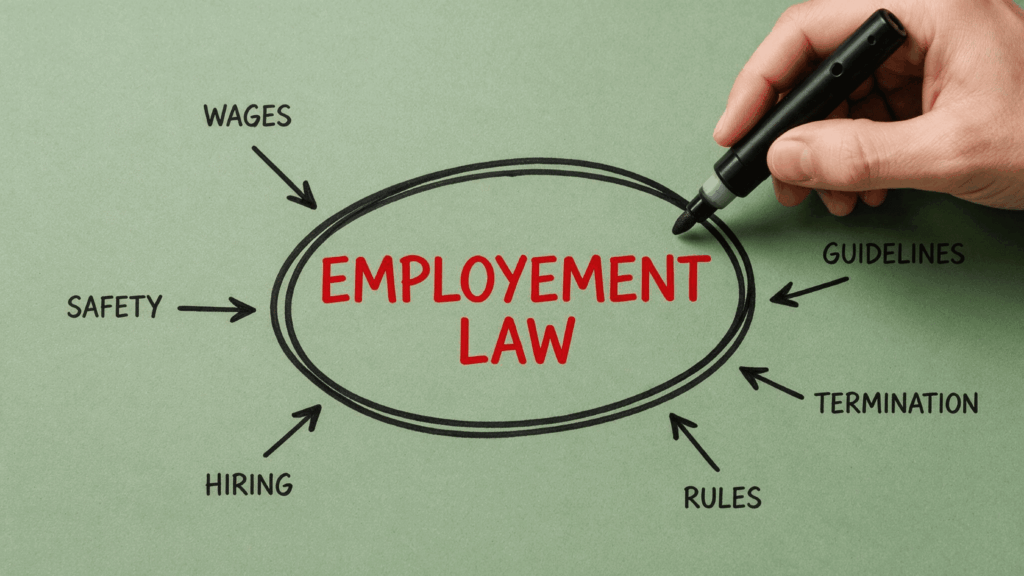
Employment law compliance is the process a business follows to meet federal, state, and local rules that govern the working relationship, from the first job posting to the final paycheck. It protects employees and shields the company from penalties, lawsuits, and reputational harm.
It reaches almost every part of daily operations:
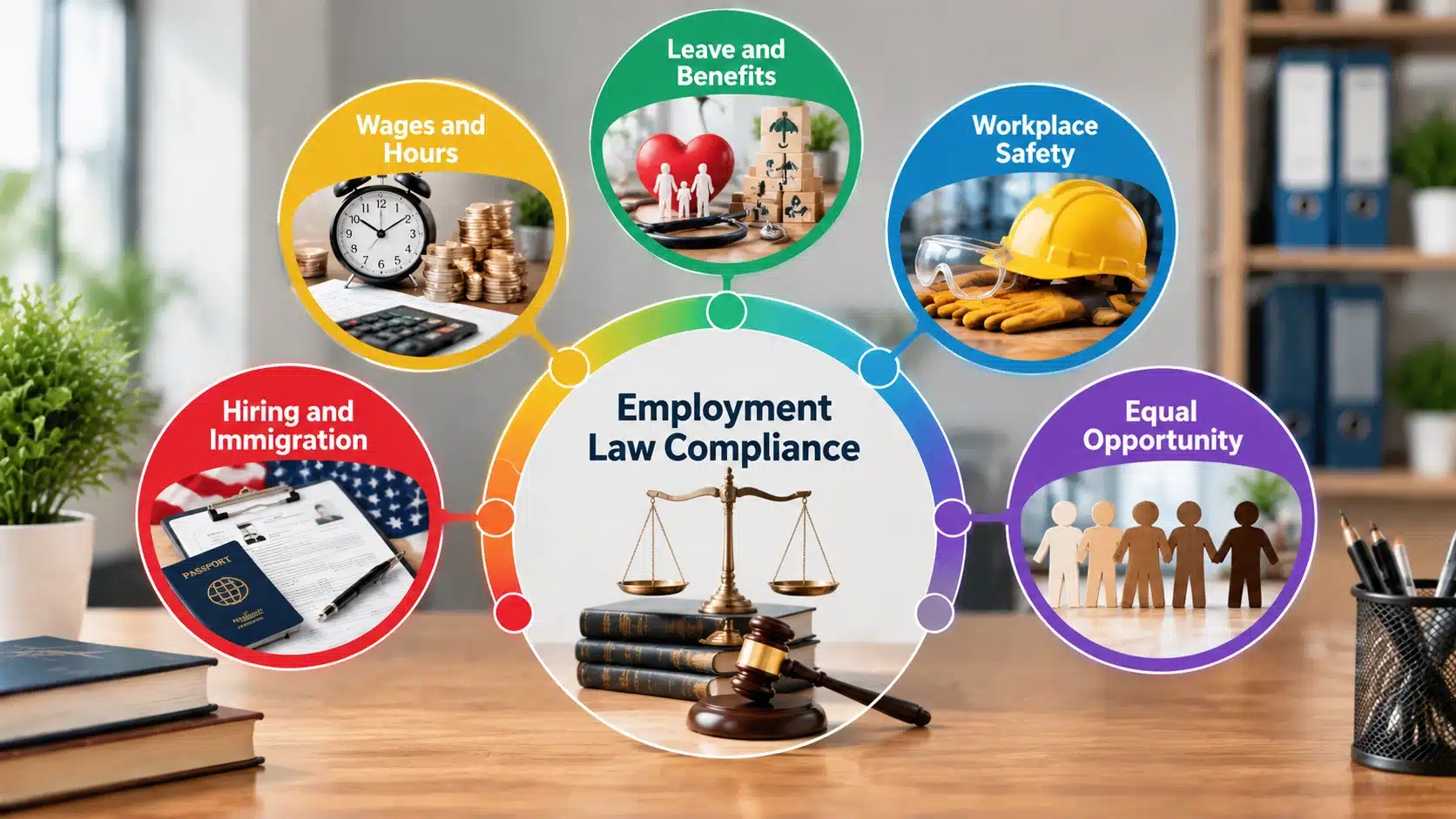
- Hiring and job applications
- Wages, hours, and overtime
- Workplace safety
- Employee records and privacy
- Leave, benefits, and termination
A common myth is that this only applies to large corporations. It does not. A five-person shop and a five-thousand-person firm answer to the same core federal statutes, even if reporting duties grow with headcount.
The U.S. Department of Labor and the Equal Employment Opportunity Commission set much of that baseline. In practice, HR is usually the function that turns those agency rules into workplace policy.
What Are the Key Legal Areas Covered Under Employment Law Compliance?
 What Are the Core Employment Laws Businesses Should Know?
Five federal laws form the backbone that state rules build on. Each carries its own duties, and each has an official source worth bookmarking.
HR teams usually act as the first line of defense in applying them correctly:
1. Fair Labor Standards Act (FLSA)
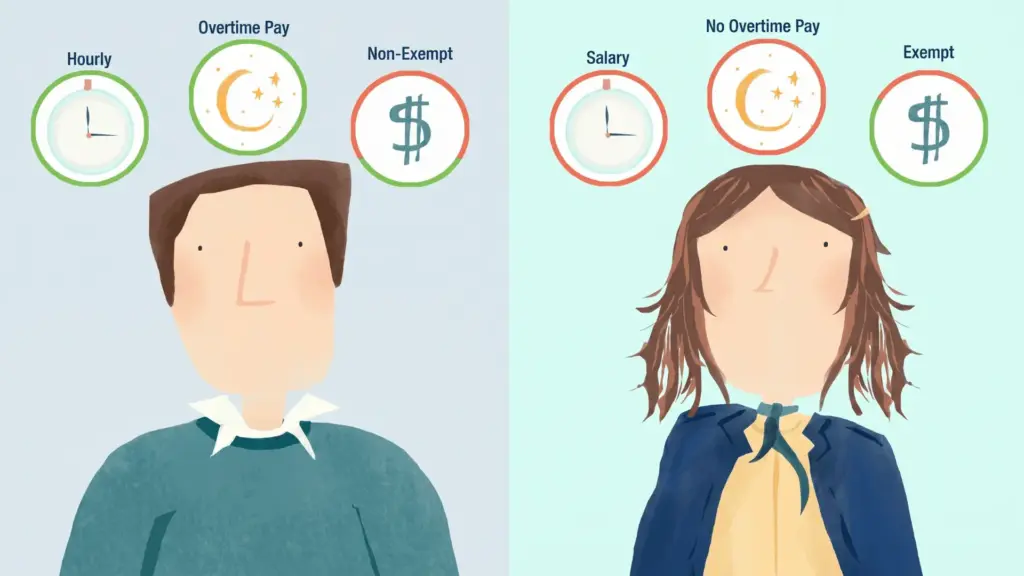
The Fair Labor Standards Act sets the federal floor for pay. It defines minimum wage, requires overtime at one and a half times the regular rate for non-exempt staff past 40 hours in a week, and spells out recordkeeping duties.
Misclassifying an employee as exempt, or as an independent contractor, is one of the costliest errors in this area.
2. Occupational Safety and Health Act (OSHA)
The Occupational Safety and Health Act requires a workplace free of recognized hazards. In practice, that means safety training, proper equipment, hazard communication, and posting the official notice where staff can see it.
Serious violations invite inspections and fines, and certain injuries must be recorded and reported within set timeframes.
3. Family and Medical Leave Act (FMLA)
The Family and Medical Leave Act gives eligible employees up to 12 weeks of unpaid, job-protected leave for a serious health condition, a new child, or family care.
It applies to businesses with 50 or more employees within a 75-mile radius. Handling requests consistently and holding the role open keeps a company on solid ground.
Data point: Organizations that actively support caregivers report 71% employee engagement, compared with 48% at those without such support. Leave handled well is also retention handled well.
4. Equal Employment Opportunity Laws
Equal opportunity rules ban discrimination based on protected traits. Title VII covers race, color, religion, sex, and national origin.
ADA protects qualified workers with disabilities and requires reasonable accommodation; the ADEA shields workers 40 and older. These apply across recruiting, pay, promotion, and firing, and the EEOC enforces them.
5. Immigration and Employment Verification
Every employer must verify identity and work authorization using Form I-9 within three days of a new hire’s start date.
Documents need correct dates and signatures, and the form carries its own retention and destruction timelines. Using the current version matters, since an outdated or incomplete form can bring paperwork fines on its own.
What Are Industry-Specific and Small Business Compliance Resources?
Employment rules apply across businesses, but each sector faces different responsibilities. The table below highlights common compliance areas by industry. HR teams often adapt these baseline rules to fit their sector.
| Industry Group | Common Compliance Focus |
| Industries A-G | Agriculture, construction, and education: workplace safety, wage rules, seasonal and youth-worker regulations. |
| Industries H-L | Healthcare, hospitality, and logistics: scheduling, overtime tracking, tipped wages, and safety standards. |
| Industries M-R | Manufacturing, nonprofit, and professional services: machine safety, worker classification, and volunteer rules. |
| Industries S-Z | Technology, transportation, and warehousing: contractor classification, driver rules, and policies for fast growth. |
What Happens if a Company Does Not Follow Employment Laws?
Ignoring workplace rules rarely stays a small problem. The fallout tends to arrive in stages, starting as a nuisance and growing into something that threatens the whole operation.
Here is how the damage usually unfolds:
- Short-term consequences: Government complaints, back-pay demands, and fix-it orders land first, often alongside an unhappy employee and a rushed internal scramble to locate missing records.
- Long-term consequences: Repeat issues raise insurance costs, damage the employer’s reputation, and make hiring and retention harder as word spreads and turnover climbs.
- Legal consequences: Agency audits, EEOC charges, and employee lawsuits can bring steep fines, settlements, and legal fees, with willful or repeated violations drawing the harshest penalties.
The encouraging part is that nearly all of this is preventable, and the tools in the next section make prevention far less manual.
How Is HR Compliance Different From Employment Law Compliance?
The two terms get used interchangeably, but they are not the same thing. One is the legal obligation; the other is the internal system a company builds to meet it. Knowing where they split helps clarify who owns what.
| Aspect | Employment Law Compliance | HR Compliance |
| What it is | Meeting the actual laws set by government bodies | Following the internal policies and processes that carry those laws out |
| Set by | Federal, state, and local legislators and agencies | The company’s own HR team and leadership |
| Scope | The legal minimum every employer must meet | Company policy, which often goes beyond the legal minimum |
| Example | The FLSA requires overtime pay | HR builds the timekeeping and approval process that delivers it |
| If ignored | Fines, lawsuits, and government penalties | Internal disputes, inconsistent decisions, and legal exposure |
How Do HR Tools Help With Employment Law Compliance?
 How Can Businesses Stay Compliant With Employment Laws?
Labor law compliance gets far easier when it runs on repeatable systems instead of last-minute scrambles after a complaint lands. Five habits carry most of the weight.
- Keep policies current: Review the employee handbook whenever a federal or state rule shifts, then confirm managers apply the updated version, not last year’s copy.
- Maintain accurate records: Store payroll, I-9 forms, and medical files separately and securely, since mixing or losing them is a frequent trigger for penalties.
- Train managers routinely: Cover harassment prevention, leave handling, and fair hiring, because frontline decisions, not written policy, usually create legal exposure.
- Audit hiring practices: Check that applications carry required notices, interviews stay job-related, and background checks follow the Fair Credit Reporting Act.
- Track legal changes: Monitor the Department of Labor’s compliance assistance resources and your state agency, since rules move yearly and old assumptions age badly.
Final Thoughts
Rules will keep shifting, and no business gets every detail perfect on the first try. What separates the companies that stay out of trouble is not luck.
Employment law compliance becomes manageable when workplace rules are treated as part of regular operations rather than a once-a-year fire drill. A capable HR function is what keeps that rhythm going week to week.
Keep policies current, document decisions, train the people making daily calls, and lean on official government sources when a question comes up.
What compliance area has been hardest for your organization to manage: hiring, records, payroll, or employee policies? Share your experience in the comments.
Frequently Asked Questions
Can I Be Fired for Not Following Company Policy?
Yes. In at-will states, an employer can end employment for breaking a clear, lawfully applied policy. The exception is when the firing masks discrimination, retaliation, or punishment for a legally protected act, which can make the termination unlawful.
What Are the Most Common Employment Law Violations?
The frequent ones are unpaid overtime, misclassifying employees as contractors or exempt, incomplete I-9 forms, discrimination in hiring or pay, and denied leave. Most trace back to weak recordkeeping or managers applying rules inconsistently rather than deliberate wrongdoing.
Can You Sue a Company for Violating Its Own Policy?
Sometimes. A handbook is usually not a contract, so a broken policy alone is often not enough. A claim gets stronger when that policy ties to a legal right, such as promised leave, final pay, or protection from discrimination.



One Response