
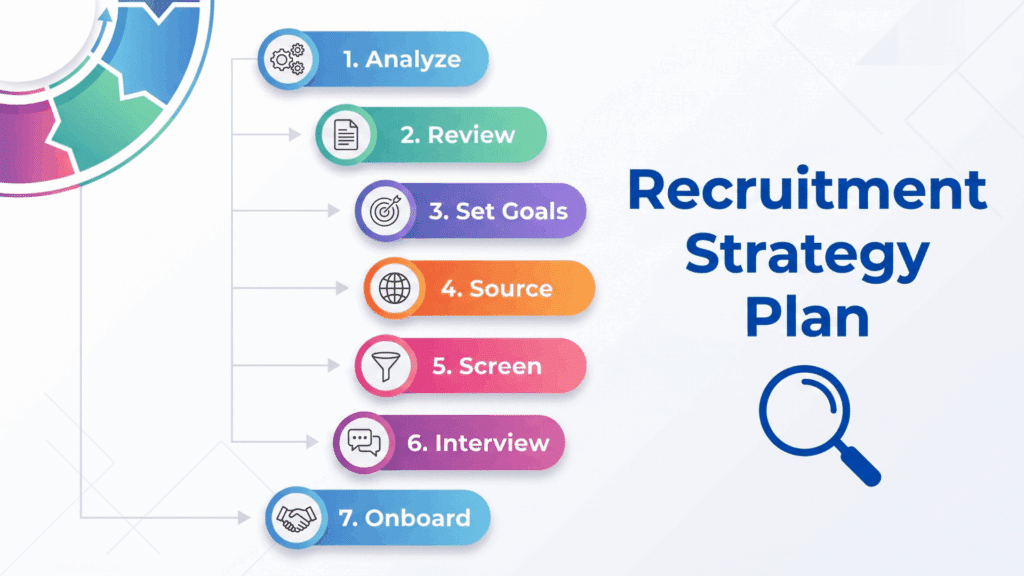

Finding the right talent is harder than ever. Many companies waste time and money on poor hires.
Effective recruitment strategies can change that. They help attract skilled candidates, reduce hiring time, and improve employee retention.
With the right approach, you can also strengthen your employer brand and save on recruitment costs.
In this blog, you will learn practical ways to build strong recruitment strategies, streamline hiring, and find the best candidates for your team.
You will also get actionable tips for retaining top talent and keeping your workforce productive.
What Is a Recruitment Strategy?
A recruitment strategy is a clear plan that guides how an organization attracts and hires talent. It defines the steps for reaching potential candidates and managing hiring process efficiently.
It outlines methods for sourcing candidates, such as job postings, referrals, or social media outreach.
It also specifies how to assess applicants through interviews, tests, or background checks.
The strategy sets timelines, responsibilities, and goals for each stage of the hiring process. It ensures the organization hires the right people while saving time and resources.
A strong recruitment strategy improves candidate experience and retention. It aligns hiring with the company’s long-term workforce needs and culture.
A clear recruitment strategy helps companies plan hiring needs, attract suitable candidates, and build a stronger team over time.
How the Recruitment Process Works
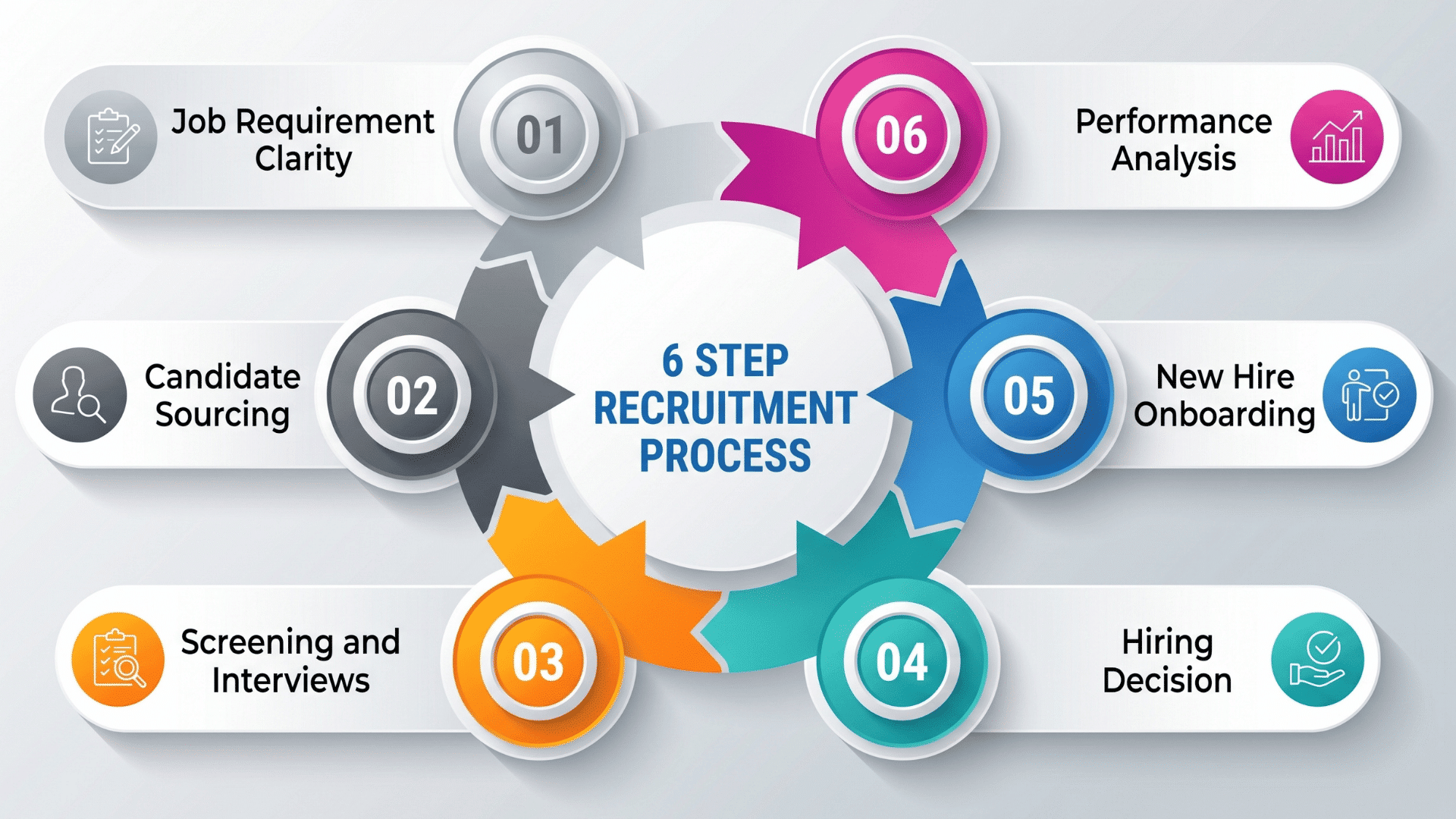
A clear recruitment process helps companies move from job planning to hiring with less confusion and better candidate matching.
- Job Requirement Clarity: Define the role, key duties, required skills, and qualifications so that candidates clearly understand the position.
- Candidate Sourcing: Use job boards, referrals, networks, and direct outreach to reach both active and passive candidates.
- Screening and Interviews: Review applications, assess skills, and use structured interviews to fairly compare candidates.
- Hiring Decision: Select the best-fit candidate through team input, careful review, and a smooth offer process.
- New Hire Onboarding: Welcome new employees, explain key tasks, and help them settle into the role from day one.
A strong recruitment process makes hiring more organized, fair, and useful for both employers and candidates. It also helps new hires start with better support and confidence.
How to Create Effective Recruitment Strategies
Workforce Needs Review: Identify current skill gaps and future hiring demands so your team can plan before roles become urgent.
- Set clear hiring goals with measurable targets to accelerate hiring, attract better candidates, or improve retention.
- Define core process steps including job requirements, sourcing channels, screening methods, interviews, and onboarding.
- Align hiring approach with company culture and values to attract suitable candidates.
- Regularly track results, gather feedback, and update your recruitment strategy as needed.
A strong recruitment strategy makes hiring more focused, consistent, and practical. It also helps companies find people who fit both the role and the workplace.
Recruitment Strategies to Attract Best Talent
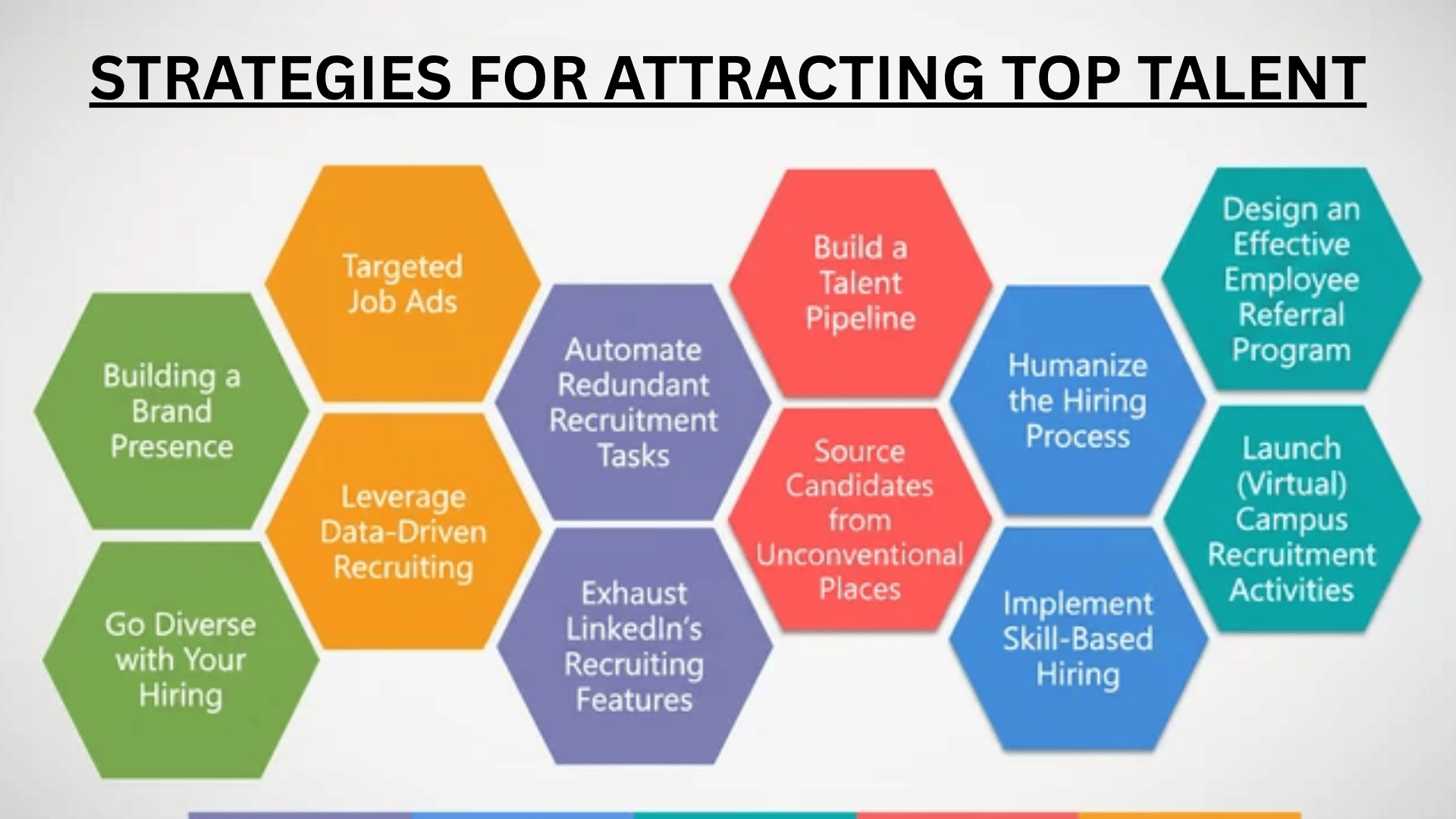
In today’s market, staffing firms face declining profits due to rising competition, making innovative recruitment strategies essential.
Read the best recruitment strategies to stay ahead of the curve and scale your recruiting business.
1. Building a Brand Presence
Building a strong brand presence helps attract top-tier candidates and clients beyond conventional recruiting.
A recognizable brand makes candidates eager to work with you and positions your company as a trusted recruitment partner.
Key Steps to Build Your Brand
- Create business accounts on LinkedIn and X, and build a website with clear brand messaging and offerings.
- Highlight culture, work ethics, and USPs on the “About” and “Careers” pages.
- Design a recognizable brand identity with a logo, colors, fonts, and voice.
- Keep up with social media trends and produce content, including blog posts, social posts, and newsletters, for candidates and clients.
- Boost brand awareness using ad tech tools, smart ad placements, and targeted campaigns.
Pro Tip: Update your content regularly with success stories, employee testimonials, and behind-the-scenes posts to keep your brand relatable and authentic.
2. Targeted Job Ads
More than half of job seekers consider job descriptions a key factor in deciding to apply, so well-crafted postings are essential.
Creating targeted job ads helps attract the right candidates and increases the chances of quality applications. Well-crafted ads reflect your brand and engage candidates effectively.
Key Steps for Targeted Job Ads
- Write clear, simple job descriptions that capture the role’s essence.
- Avoid robotic, copy-pasted content that fails to engage candidates.
- Highlight key responsibilities, skills, and benefits to appeal to top talent.
- Reflect your brand voice and culture in every job posting.
- Use job boards and social media channels to reach your target audience.
Pro Tip: Include keywords in your job titles and descriptions to improve search visibility on job boards and LinkedIn.
3. Automate Redundant Recruitment Tasks
Automating repetitive recruitment tasks saves time and allows focus on strategic hiring decisions.
It helps hire faster and improves overall efficiency.
Ways to Automate Recruitment
- Use an ATS to automatically screen resumes.
- Implement interview scheduling software that syncs with calendars.
- Send personalized communications to candidates at each stage.
- Automate job postings across multiple boards using integrations.
- Use recruitment analytics tools to track metrics like time-to-fill and source of hire.
4. Build a Talent Pipeline
Building a talent pipeline ensures you have candidates ready when new roles open. It helps nurture passive candidates, access wider talent pools, and gain a competitive edge.
A strong pipeline reduces last-minute hiring stress and keeps your recruitment process proactive. It also allows you to maintain relationships with potential candidates before urgent needs arise.
Key Steps to Build a Talent Pipeline
- Nurture passive candidates who might consider switching later.
- Maintain a database of potential candidates for quick sourcing.
- Collaborate with RPOs or recruitment partners to strengthen your pipeline.
- Reach out proactively to top talent before competitors do.
- Centralize candidate information to save time on resume screening.
5. Go Diverse with Your Hiring
Diverse hiring promotes fairness and builds a workforce that reflects society. It also gives access to unique perspectives and a broader talent pool.
Focusing on diversity strengthens innovation and improves team collaboration. It ensures your company attracts and retains talent from all backgrounds.
Key Steps to Recruit Diverse Talent
- Expand outreach to underrepresented groups via job boards and career events.
- Remove biased language and unnecessary requirements from job descriptions.
- Ensure interview panels are diverse and inclusive.
- Use structured interviews with standardized questions and criteria.
- Promote DE&I in every stage of the hiring process.
Pro Tip: Highlight your company’s diversity initiatives on job ads to attract candidates from all backgrounds.
6. Keep Track of Recruiting Metrics
Tracking recruiting metrics helps make evidence-based decisions and improve performance. It allows efficient allocation of time, budget, and resources while identifying bottlenecks.
Monitoring metrics also highlights areas for process improvement and efficiency gains. It helps recruiters focus on strategies that deliver measurable results.
Key Metrics to Track
- Time-to-fill and time-to-hire for each role.
- Cost-per-hire to optimize recruitment spending.
- Quality-of-hire to measure candidate success and retention.
- Revenue per recruiter to assess recruiter efficiency.
- Source-of-hire to evaluate which channels produce the best candidates.
7. Focus on Delivering a Smooth Candidate Experience
A positive candidate experience improves your employer brand and retention rates. It starts when candidates apply and continues through onboarding.
Providing a seamless experience encourages top candidates to accept offers. It also strengthens your reputation in the market for future recruitment efforts.
Key Steps to Enhance Candidate Experience
- Provide clear and engaging job descriptions to set expectations.
- Keep the application process short and simple (5–8 minutes).
- Automate communication to keep candidates updated on status.
- Structure interviews to address candidate concerns and assess skills fairly.
- Stay connected with candidates even if they aren’t selected.
8. Be in Sync with the Hiring Manager
Collaboration with hiring managers ensures candidates meet role requirements and fit the company culture. It improves decision-making, reduces time-to-fill, and enhances retention.
Key Steps to Align with Hiring Managers
- Understand the specific skills and qualifications required for each role.
- Identify desired soft skills, cultural fit, and alignment with company values.
- Maintain regular communication to address questions and concerns.
- Provide high-quality candidates that match the team and organizational needs.
- Use feedback to refine recruitment strategies and reduce mismatches.
9. Leverage Data-Driven Recruiting
Data-driven recruiting uses analytics to improve sourcing, screening, and hiring decisions. It ensures every step of the recruitment process is informed by accurate data.
Tracking key metrics helps identify bottlenecks and optimize efficiency. It allows recruiters to make smarter, evidence-based decisions for better outcomes.
Key Steps for Data-Driven Recruiting
- Log all candidate and client communications and touchpoints.
- Use AI recruiting tools to capture and analyze recruitment data automatically.
- Automate outbound communication using templates and GPT to create engaging emails.
- Evaluate candidates using scorecards based on skills, results, and qualifications.
- Track time spent in each recruitment stage to find delays and improve speed.
10. Exhaust LinkedIn’s Recruiting Features
LinkedIn is a powerful platform for sourcing candidates and building professional relationships. Optimizing LinkedIn recruiting expands your reach to millions of active and passive candidates.
Key Steps to Use LinkedIn Effectively
- Join relevant groups for job seekers, industry peers, and leaders.
- Create a professional company page and post job openings there.
- Reach out to passive candidates and build relationships over time.
- Use Boolean search to filter candidates by skills, location, and connections.
- Prepare outreach templates for connection requests and initial messages.
11. Source Candidates from Unconventional Places
Finding talent beyond standard channels can give you a competitive edge. Unconventional sourcing uncovers candidates with unique skills and passion.
It also helps diversify your candidate pool and improves recruitment outcomes. Exploring varied channels ensures you don’t miss top talent hidden in niche areas.
Key Ways to Source Unconventionally
- Attend recruiting events, job fairs, career expos, and networking meetups.
- Participate in seminars, workshops, and professional development events.
- Engage with candidates on online forums, social media groups, and niche platforms.
- Explore volunteer work or community service initiatives aligned with your mission.
- Build relationships through professional and personal interactions, not just postings.
Pro Tip: Keep a list of high-potential candidates from unconventional channels for future openings.
12. Humanize the Hiring Process
Even with AI and automation, personal connections remain essential in hiring. Humanizing recruitment builds trust, engagement, and a positive candidate experience.
It ensures candidates feel valued and respected throughout the process. A human approach helps identify motivated, culturally aligned candidates.
Key Steps to Humanize Hiring
- Have meaningful conversations to understand candidate motivations and goals.
- Keep candidates informed and provide constructive feedback.
- Create a supportive, inclusive environment where candidates feel valued.
- Avoid rigid criteria; assess candidates based on strengths and potential.
- Balance AI tools with human judgment to make final decisions.
13. Be Innovative with Your Interview Strategy
Traditional interviews can be repetitive and fail to assess a candidate’s true potential. Innovative approaches make the process engaging and reveal real-world skills.
Key Steps for Innovative Interviews
- Use simulation exercises that mimic real-life job scenarios.
- Incorporate role-playing to assess handling of challenging situations.
- Invite candidates to present projects or portfolios.
- Assemble cross-functional panels for diverse perspectives.
- Continuously update interview formats to match evolving role requirements.
Pro Tip: Record mock scenarios or exercises and review them with the hiring team for better scoring consistency.
14. Implement Skill-Based Hiring
Skill-based hiring focuses on candidates’ abilities rather than just education or titles. It is open to diverse talent and ensures suitability for the role.
Assessing real skills reduces bias and improves overall quality of hire. It prioritizes potential and competency over traditional credentials.
Key Steps for Skill-Based Hiring
- Use pre-employment tests to fairly evaluate candidate skills.
- Replace resume screening with skills assessments where possible.
- Focus on relevant abilities required for the job, not just background.
- Ensure assessments are unbiased and standardized across candidates.
- Use results to guide interview decisions and final hiring choices.
15. Design an Effective Employee Referral Program
An employee referral program accelerates hiring, reduces costs, and improves culture fit. Referred candidates often move faster through the recruitment funnel and have higher engagement.
It also lowers turnover because referrals enter with realistic expectations. Employees feel more connected and invested when they help shape the team.
Key Elements of a Successful Referral Program
- Offer incentives such as cash bonuses, extra holidays, or perks employees prefer.
- Keep the program simple and easy to understand and use.
- Provide employees with feedback on the status of their referrals.
- Recognize and celebrate successful referrals through newsletters or internal mentions.
- Encourage participation regularly and highlight success stories.
Pro Tip: Survey employees periodically to understand which incentives motivate them most, making the program more effective and engaging.
16. Launch (Virtual) Campus Recruitment Activities
Campus recruitment helps connect with emerging talent, especially Gen Z entering the workforce. Many employers continue to invest in early talent programs and ramp up campus recruiting efforts.
Key Campus Recruitment Tactics
- Host or join career fairs and project fairs, both virtual and in-person, to meet potential candidates.
- Engage with student organizations through sponsorships or event participation.
- Create a dedicated graduate landing page showcasing internships, entry-level roles, and growth paths.
- Offer webinars, workshops, or info sessions to share company culture and career opportunities.
- Provide clear application guidance and resources to simplify the student application process.
Why Effective Recruitment Strategies Matter?
Recruitment strategies shape the success of your organization by attracting and retaining the right talent.
| Area | Benefit | Effect |
|---|---|---|
| Hiring Time | Faster search and onboarding | Keeps operations moving smoothly |
| Candidate Quality | Attracts skilled, aligned talent | Better performance and goal alignment |
| Employer Branding | Positions the company as desirable | Easier to attract top talent |
| Hiring Costs | Saves time and resources | Reduces overall recruitment expenses |
| Retention Rates | Cultural fit for longer tenure | Lowers turnover and associated costs |
Focusing on these five areas ensures long-term benefits for both employees and the company.
Reddit Insights: Effective Recruiting Strategies and Ideas
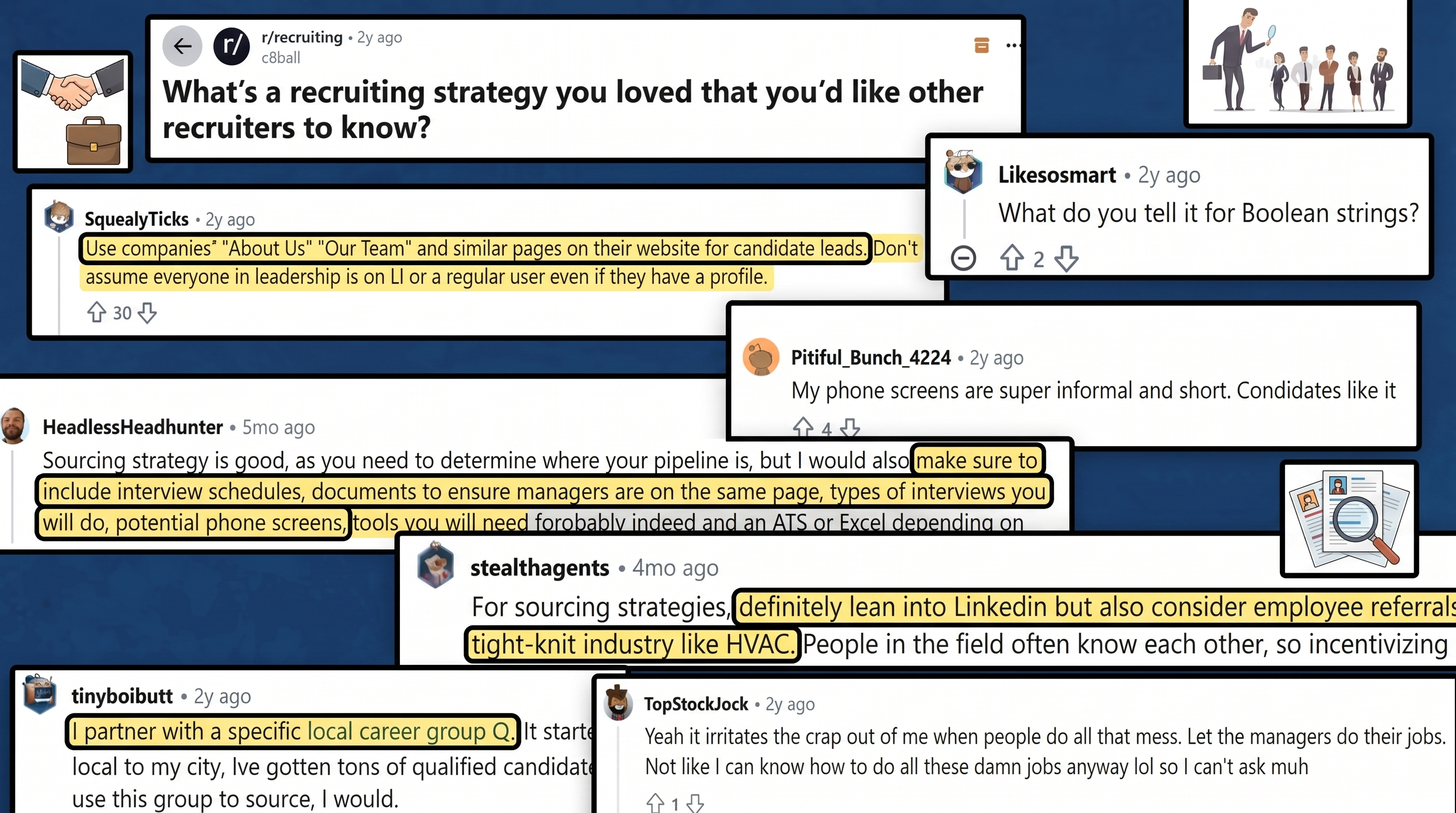
A Reddit thread asked recruiters to share the recruiting strategies they loved and wanted other recruiters to know about.
Some users recommended using the company “About Us” or “Our Team” pages to generate candidate leads, noting that not all leaders are active on LinkedIn.
Others shared that keeping phone screens informal and short helps candidates feel comfortable and engaged.
Additional strategies included carefully planning sourcing pipelines, efficiently scheduling interviews, and ensuring that all managers have the necessary documents and tools to maintain consistency.
Several users emphasized leveraging LinkedIn, employee referrals, and local career groups to find top talent in specialized industries.
The overall discussion highlighted practical, real-world approaches that combine thorough preparation, candidate engagement, and creative sourcing techniques for successful recruiting.
Best AI Recruitment Tools
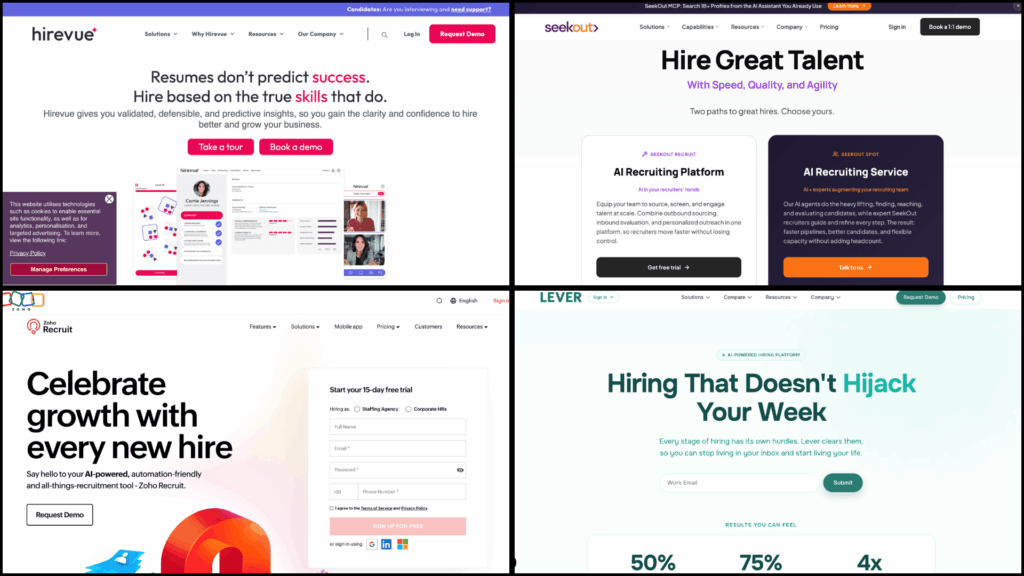
Businesses often compare different AI recruiting platforms before selecting a hiring solution.
Below are some popular recruitment tools commonly used by hiring teams and recruiters:
- HireVue: AI interviews and video assessment tools for enterprise hiring.
- Eightfold AI: Talent intelligence and skill-based hiring platform.
- Paradox: Conversational hiring and AI candidate engagement automation.
- SeekOut: Talent sourcing platform with diversity hiring support.
- Manatal: Affordable AI recruitment CRM for smaller hiring teams.
- Zoho Recruit: ATS automation with customizable recruitment workflows.
- Greenhouse: Structured hiring and recruiting collaboration platform.
- Lever: ATS and CRM platform with candidate pipeline management.
Conclusion
Implementing effective recruitment strategies brings measurable benefits. You save time, cut hiring costs, and attract candidates who truly fit your company culture.
Strong strategies improve retention and team performance. Refine processes, use data, and engage candidates effectively.
These small improvements can make hiring smoother and more efficient. Start applying these steps today to see immediate results.
Ready to hire smarter? Begin updating your recruitment strategies now and build a stronger, more capable team.
Share your recruitment tips, experiences, or challenges below and connect with others improving their hiring process!
Frequently Asked Questions
How Does a Recruitment Strategy Impact Long-Term Company Growth?
A clear strategy ensures the right hires who align with company goals. This consistently boosts performance and reduces turnover.
Can Automation Replace Human Judgment in Recruitment?
Automation handles repetitive tasks efficiently. Human judgment is still needed for cultural fit and soft skills.
Why Is Tracking Recruitment Metrics Important?
Metrics reveal process bottlenecks and efficiency gaps. They help make hiring decisions based on data. Regular tracking also highlights areas for continuous improvement in recruitment.