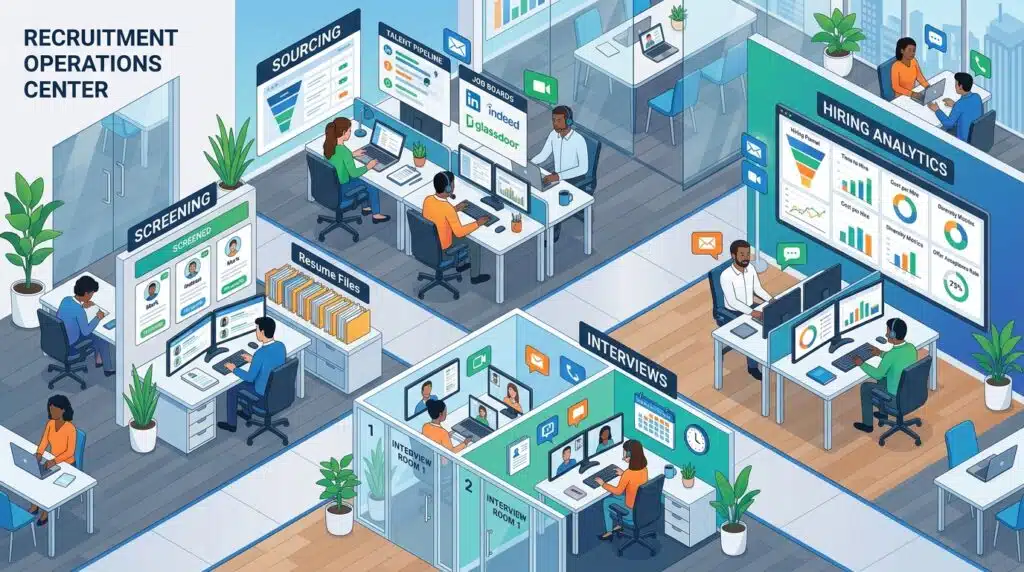

Finding the right talent is one of the most important investments a business can make and one of the most time-consuming.
As hiring demands grow more complex, many organizations are turning to recruitment process outsourcing companies to take that weight off their internal teams.
These specialized partners manage everything from candidate sourcing to final onboarding, allowing businesses to focus on what they do best.
If you are a fast-growing startup or an established enterprise, the right outsourcing partner can bring speed, structure, and expertise to your hiring process.
The Basics of Recruitment Process Outsourcing
Recruitment Process Outsourcing is a strategic hiring partnership in which an external provider manages specific recruitment tasks or the entire hiring lifecycle for a company.
Unlike a traditional staffing agency that usually focuses on filling individual roles, an RPO partner works more closely with the business.
It may serve as an extension of the internal HR or talent acquisition team and be responsible for improving the recruitment process itself.
An RPO provider can support a single hiring project, a single department, a single region, or the entire organization. The scope depends on business size, hiring volume, budget, and internal recruitment capacity.
Key Features of Recruitment Process Outsourcing
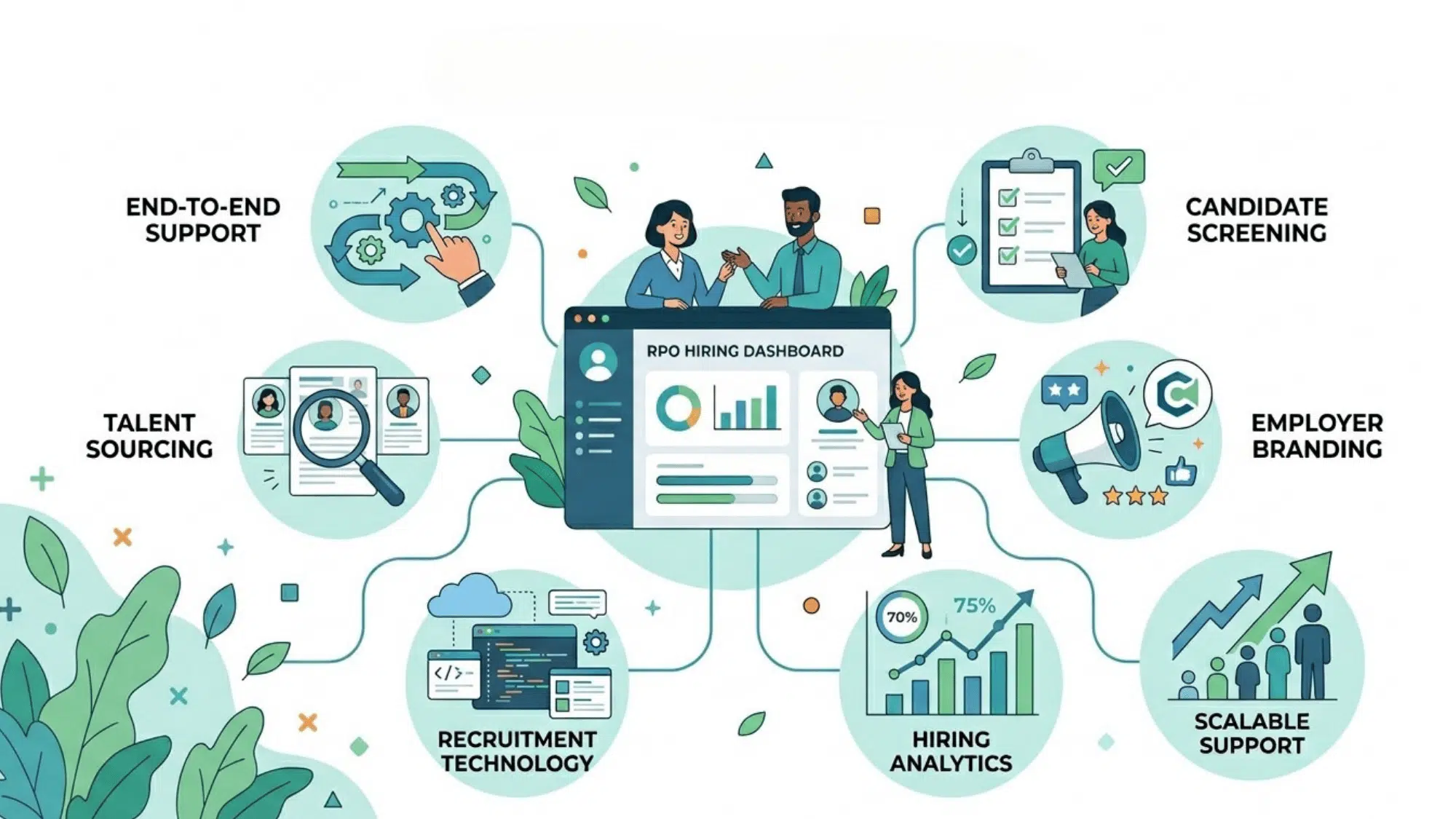
Recruitment Process Outsourcing helps businesses manage hiring faster, smarter, and more efficiently.
- End-To-End Recruitment Support: Handles sourcing, screening, interviews, offers, and onboarding support.
- Talent Sourcing: Finds qualified active and passive candidates.
- Candidate Screening: Shortlists the most suitable applicants.
- Employer Branding: Itimproves how the company is perceived by candidates.
- Recruitment Technology: Ituses hiring tools to manage the process.
- Hiring Analytics: Tracks key recruitment performance metrics.
- Scalable Support: Adjusts hiring help based on business needs.
Types of RPO Models
Different RPO models are available depending on how much hiring support a business needs. The right model depends on hiring volume, timeline, budget, and internal recruitment capacity.
| RPO Model | Description | Best For |
|---|---|---|
| End-to-end RPO | Manages the full recruitment process from sourcing to onboarding support. | Companies with ongoing hiring needs |
| Project-based RPO | Supports recruitment for a specific project or hiring campaign. | Short-term hiring drives |
| On-demand RPO | Provides flexible recruiter support when hiring demand increases. | Businesses needing temporary hiring help |
| Selective RPO | Handles specific recruitment tasks like sourcing, screening, or scheduling. | Teams that need support in one area |
| Hybrid RPO | Combines internal HR efforts with external recruitment support. | Companies wanting shared control |
Benefits of Recruitment Process Outsourcing
RPO gives businesses practical hiring advantages that go beyond basic recruitment tasks.
- Faster Hiring Results: Help reduce delays and fill roles more quickly.
- Lower Recruitment Costs: Reduce spending on repeated job ads, tools, and extra hiring resources.
- Better-Quality Hires: Frees internal teams to focus on employee management and business priorities.
- Less Pressure on HR Teams: Frees internal teams to focus on employee management and business priorities.
- Improved Candidate Experience: maintains clear, professional communication throughout the hiring process.
- Stronger Workforce Planning: It helps businesses prepare for future hiring needs rather than react late.
How Do Recruitment Process Outsourcing Companies Work?
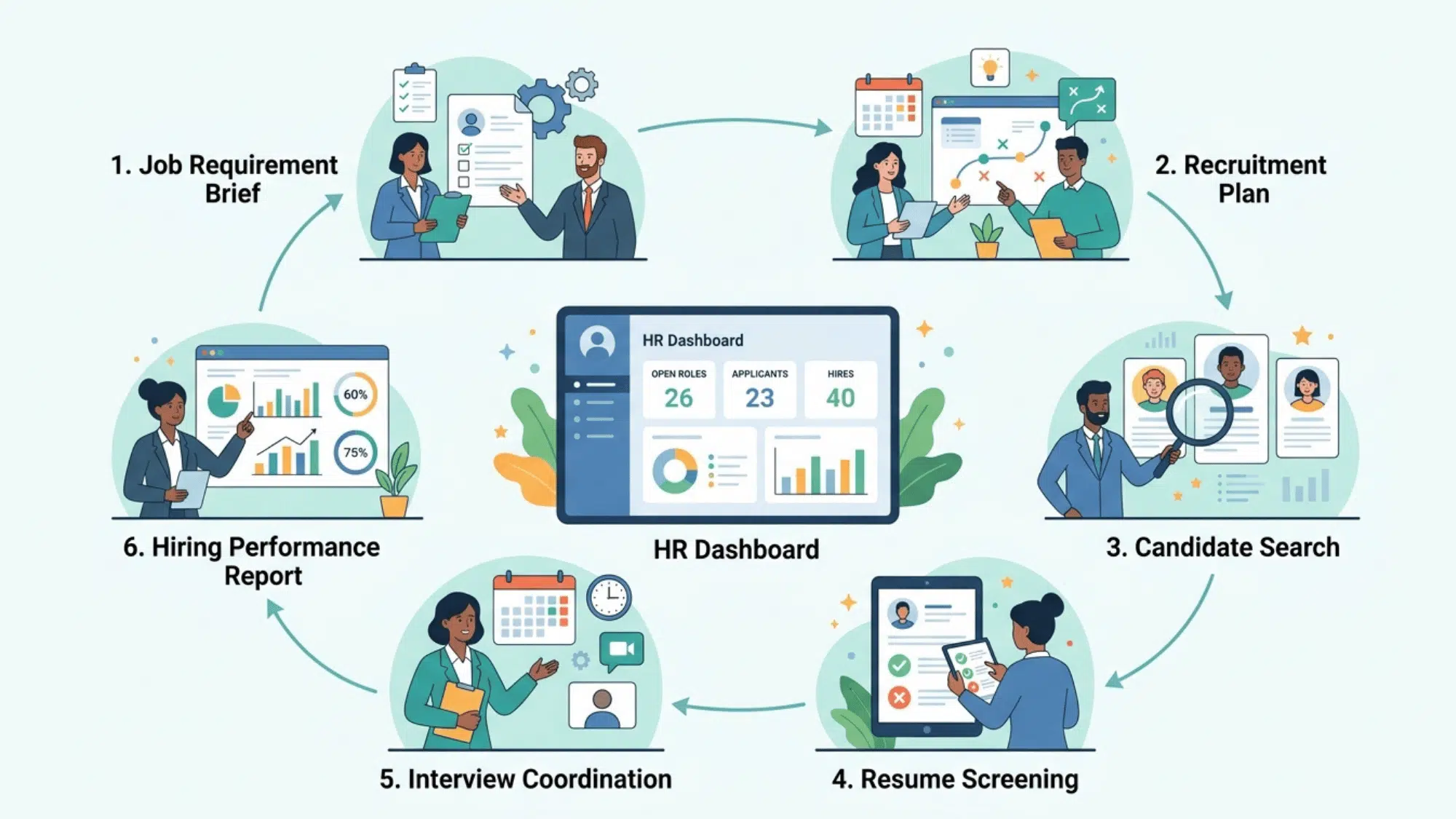
Recruitment process outsourcing companies work by taking over key hiring activities and improving the way businesses attract, screen, and hire talent.
1. Understanding Hiring Needs
The process begins with understanding the company’s hiring goals. The RPO provider reviews open roles, required skills, hiring timelines, and team expectations.
They also look at current recruitment challenges and gaps. This helps create a hiring plan that matches business needs.
2. Creating a Recruitment Strategy
After reviewing the hiring needs, the provider builds a recruitment strategy. This includes deciding where to find candidates and how to attract them.
The strategy may also cover job descriptions, hiring channels, and employer branding. A clear plan helps make the recruitment process more focused.
3. Sourcing Qualified Candidates
The RPO team searches for candidates across multiple platforms. They may use job boards, talent databases, referrals, social media, and direct outreach. This helps reach both active job seekers and passive candidates.
Strong sourcing improves the chances of finding better-fit talent.
This is also where talent sourcing best practices make a real difference in the quality of candidates reaching the next stage.
4. Screening and Shortlisting Applicants
Once candidates apply or respond, the RPO provider reviews their profiles. They check resumes, skills, experience, and suitability for the role.
Some providers also conduct phone screens or basic assessments. In many cases, this step overlaps with what happens during a pre-screening interview, which helps filter candidates before the formal hiring rounds begin.
5. Managing interviews and communication
The provider helps coordinate interviews between candidates and hiring teams. They manage scheduling, follow-ups, feedback collection, and candidate updates. This keeps the process smooth and avoids delays.
Good communication also improves the candidate experience.
6. Tracking Results and Improving Hiring
RPO providers track important hiring metrics throughout the process. These may include time-to-hire, cost-per-hire, source quality, and offer acceptance rates.
The data helps identify what is working and what needs improvement. Over time, this makes recruitment more efficient and predictable.
Businesses that also invest in performance management systems alongside RPO tend to see stronger long-term results from every hire.
Top RPO Companies that Help Businesses Improve Hiring
RPO providers’ businesses often compare for scalable hiring, global recruitment support, and talent acquisition expertise.
1. Cielo
Cielo is a global talent acquisition partner known for helping large organizations build structured and scalable recruitment programs.
- Best for: Global RPO programs and enterprise hiring
- Key services: Full-cycle RPO, sourcing, screening, recruitment marketing, and analytics
- Why consider it: Strong option for businesses that need structured hiring support across multiple regions.
2. Korn Ferry
Korn Ferry combines recruitment delivery with workforce advisory, making it suitable for companies that want hiring support linked to long-term talent strategy.
- Best for: Leadership hiring and workforce strategy
- Key services: RPO, executive search, talent advisory, assessments, and succession planning
- Why consider it: Useful for companies seeking recruitment support alongside broader talent consulting.
3. Allegis Global Solutions
Allegis Global Solutions is often considered by organizations with complex workforce needs and multi-location recruitment requirements.
- Best for: Large-scale workforce and recruitment programs
- Key services: RPO, workforce advisory, talent analytics, and recruitment operations
- Why consider it: Good fit for companies managing complex hiring needs across departments or locations.
4. PeopleScout
PeopleScout focuses on helping businesses manage high-volume hiring while improving candidate engagement and recruitment consistency.
- Best for: High-volume and global recruitment
- Key services: RPO, recruitment marketing, candidate experience, sourcing, and diversity hiring support
- Why consider it: Helpful for businesses with recurring hiring needs and large candidate pipelines.
5. ManpowerGroup Talent Solutions
ManpowerGroup Talent Solutions brings extensive workforce expertise and recruitment support to businesses hiring across industries and markets.
- Best for: Workforce planning and multi-industry recruitment support
- Key services: RPO, talent consulting, sourcing, market insights, and workforce management
- Why consider it: Strong choice for companies that need flexible hiring support backed by global workforce experience.
6. Hudson RPO
Hudson RPO offers tailored recruitment outsourcing solutions for businesses that need flexible support across specific roles, regions, or hiring projects.
- Best for: Tailored RPO and regional recruitment support
- Key services: RPO, talent sourcing, employer branding, assessments, recruitment analytics
- Why consider it: Hudson RPO offers flexible recruitment support for companies that need customized hiring solutions.
When Should a Business Use RPO?
A business should use RPO when its hiring needs become difficult to manage with internal resources alone.
- High hiring volume: When the company needs to fill many roles quickly.
- Limited internal HR capacity: When the HR team is too busy to fully manage recruitment.
- Slow hiring process: When open roles take too long to fill.
- Poor candidate quality: When the business struggles to attract suitable applicants.
- Rapid business growth: When expansion creates urgent recruitment needs.
- Specialized role hiring: When technical or niche positions are hard to fill.
- Need for better hiring data: When leaders want clearer recruitment reports and insights.
The Bottom Line
Choosing the right recruitment process outsourcing company is not just a hiring decision; it is a business decision that shapes your workforce for years to come.
The best RPO partners bring more than speed and efficiency. They bring structure, expertise, and a deep understanding of what your organization actually needs to grow.
If you are looking to scale quickly, reduce hiring costs, or simply build a more reliable talent pipeline, the right partner makes all the difference.
Which factor matters most to you when choosing an RPO company? Share your thoughts in the comments.
Frequently Asked Questions
Is RPO Suitable for Small Businesses?
Yes, RPO can work for small businesses with regular hiring needs or limited HR support. A small company can choose project-based or on-demand RPO instead of a full outsourcing model.
How Long Does It Take to See Results from RPO?
Results depend on the role type, hiring volume, and market conditions. Some businesses may see faster candidate flow within a few weeks, while larger process improvements may take longer.
Does RPO Replace the Internal Hr Team?
No, RPO does not always replace the internal HR team. It usually works alongside HR to handle recruitment tasks while internal teams focus on employee management and business priorities.
Can RPO Help with Remote Hiring?
Yes, many RPO providers support remote hiring by sourcing candidates from a wider geographic area, managing virtual interviews, and helping companies build distributed teams.