

Pay gaps can quietly affect employee trust, retention, and even legal compliance if they go unnoticed. Many businesses struggle to identify whether compensation decisions are truly fair across roles, departments, and employee groups.
A pay equity analysis helps organizations uncover unfair treatment in the workplace, such as pay gaps, improve compensation transparency, and build stronger salary structures.
It also supports compliance with equal pay and pay transparency laws while creating a more consistent employee experience.
In this article, you’ll learn what pay equity analysis is, why it matters, key concepts to understand, and the steps businesses can take to build fair compensation practices
Pay Equity Definition
According to U.S. payroll laws, employers must ensure employees are paid fairly and equally for the same work.
Pay equity means providing equal pay regardless of gender, race, or other personal characteristics, with laws like the Equal Pay Act of 1963 aiming to reduce pay discrimination and support transparent compensation practices.
Despite progress, pay gaps still exist, especially across gender and racial groups.
Studies show Black workers and women often earn less than others in similar roles, even with comparable education and experience.
A pay equity analysis, also known as an equal pay audit, helps businesses identify unjustified pay differences by analyzing payroll and compensation data using statistical methods. This process supports fair pay practices and equal pay for equal work.
Importance of Pay Equity Analysis for Employers
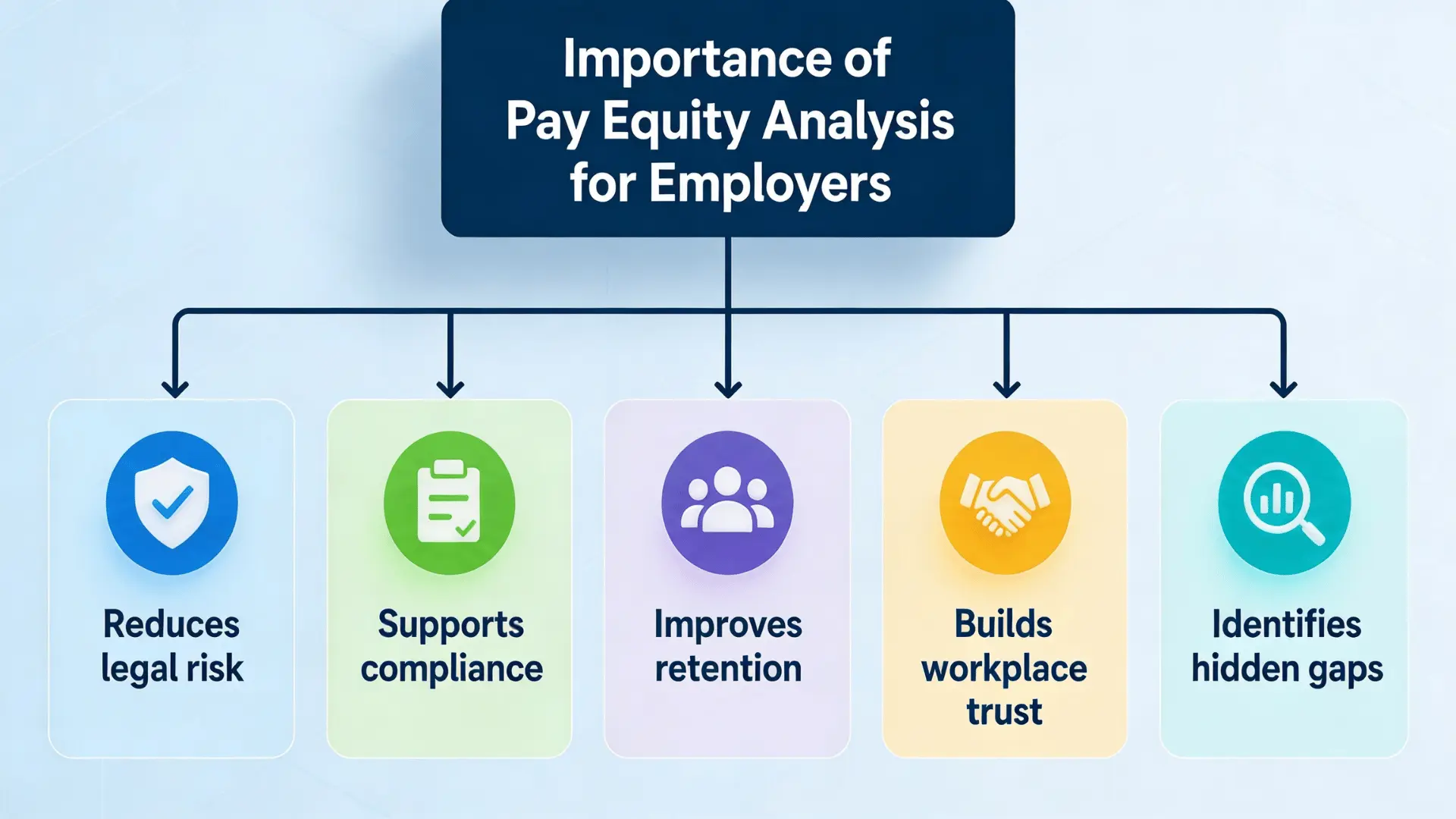
- Reduces legal risk: Helps identify and fix unfair pay gaps early.
- Supports compliance: Assists with pay transparency and equal pay regulations.
- Improves retention: Fair compensation increases employee trust and loyalty.
- Builds workplace trust: Creates a more transparent and positive work culture.
- Identifies hidden gaps: Reveals pay disparities through compensation data analysis.
Regular pay equity reviews help employers create stronger compensation strategies while improving fairness and accountability across the workplace.
How Is Pay Equity Calculated?
Pay equity analysis compares employee salaries to identify unfair pay differences between employees doing similar work.
Unadjusted Pay Gap: The unadjusted pay gap compares average salaries without considering role, experience, or qualifications.
For example:
- Men earn $100,000
- Women earn $85,000
Calculation:
((100,000 − 85,000) ÷ 100,000) × 100 = 15%
This means women earn 15% less on average.
Adjusted Pay Gap:The adjusted pay gap compares employees after considering factors like role, experience, and location.
For example:
- Employee A earns $92,000
- Employee B earns $88,000
Calculation:
((92,000 − 88,000) ÷ 92,000) × 100 = 4.3%
This means one employee earns 4.3% less despite having a similar role and qualifications.
For accurate results, businesses should compare employees within similar job groups.
Step-by-Step Methodology for Running Pay Equity Analysis
A pay equity analysis is a systematic review of your employee compensation data to determine whether employees are being paid fairly across protected groups.
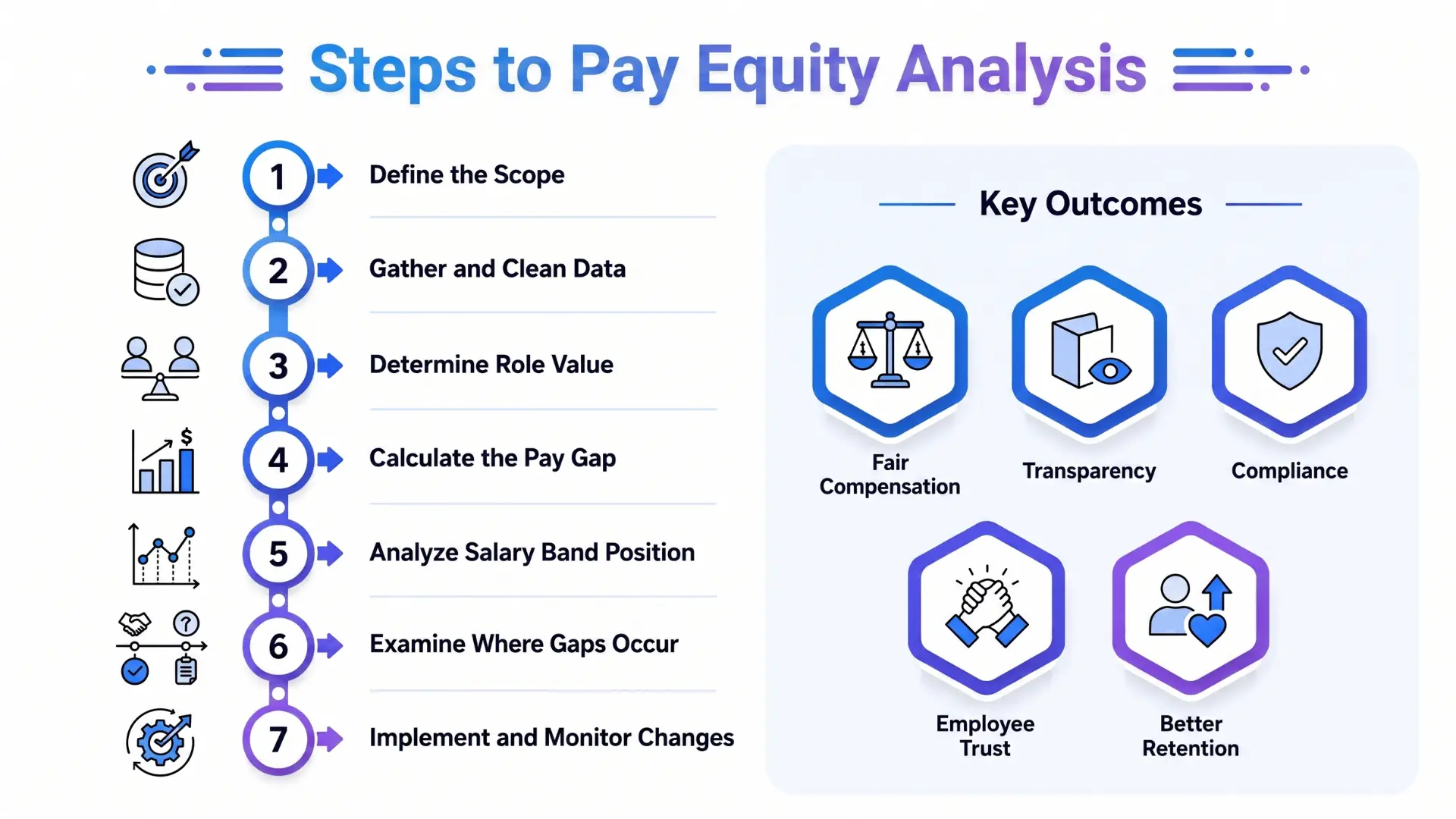
Running one rigorously means following a clear process and being honest about what you find. Here are the key steps involved in conducting a pay equity analysis:
Step 1: Define the Scope of the Analysis
Before collecting compensation data, determine what the pay equity analysis will cover. This includes identifying the protected characteristics, pay components, and employee groups that will be reviewed.
Most organizations begin with gender-based analysis, but a broader review may also include ethnicity, age, disability status, and other protected groups.
The review should clearly define which compensation elements and employee segments will be included in the analysis.
Step 2: Gather and Clean Your Data
A pay equity analysis depends on accurate and complete compensation data.
Collect information such as base salary, bonuses, equity, total compensation, job level, role, location, tenure, performance ratings, and protected characteristic data from HR and payroll systems.
Before starting the analysis, clean and validate the data by checking for missing records and incorrect job levels, as poor-quality data can affect the accuracy of the entire review.
Step 3: Determine the Relative Value of Each Role
Before comparing employee pay, businesses need a consistent way to measure the value of different roles. Job evaluation methods assess roles based on factors like skills, responsibilities, effort, and working conditions to create fair comparisons among groups.
These comparable groups allow organizations to compare employees performing work of equal value rather than unrelated roles. This makes it easier to identify unexplained pay gaps that may require correction or further review.
Step 4: Calculate the Pay Gap
Once comparable employee groups are defined, the next step is calculating pay gaps across the organization. Most businesses begin with the overall company pay gap and then analyze compensation differences by department, job level, location, or role group.
Calculating pay gaps within employees performing similar work provides a clearer view of potential pay inequities and helps businesses prioritize corrective actions
Step 5: Analyze Salary Band Position by Protected Group
In addition to pay gap calculations, businesses should review where employees fall within their salary ranges or pay bands. This helps identify patterns in which certain groups consistently receive lower compensation within the same pay range.
For example, employees in similar roles may have equal salaries overall, but one group may regularly fall in the lower half of the salary band. Reviewing salary band positioning helps organizations identify long-term compensation trends and improve fairness in hiring, promotions, and pay decisions.
Step 6: Examine Where Pay Gaps Occur
Pay equity analysis should go beyond current salaries and examine where pay gaps begin during the employee lifecycle. Review starting salaries, promotion rates, merit increases, and compensation changes across different employee groups.
This helps identify whether disparities begin during hiring, promotions, or performance-based pay decisions. Understanding the root cause makes it easier to improve compensation practices and prevent future pay gaps.
Step 7: Implement, Communicate, and Monitor Changes
Use the findings from the pay equity analysis to develop a clear action plan to address unjustified pay gaps. This may include salary adjustments, policy updates, improvements to hiring practices, and changes to promotion or compensation practices.
Including pay equity reviews in annual compensation cycles helps businesses maintain fair, consistent, and transparent pay practices over time.
Common Pay Equity Analysis Mistakes to Avoid
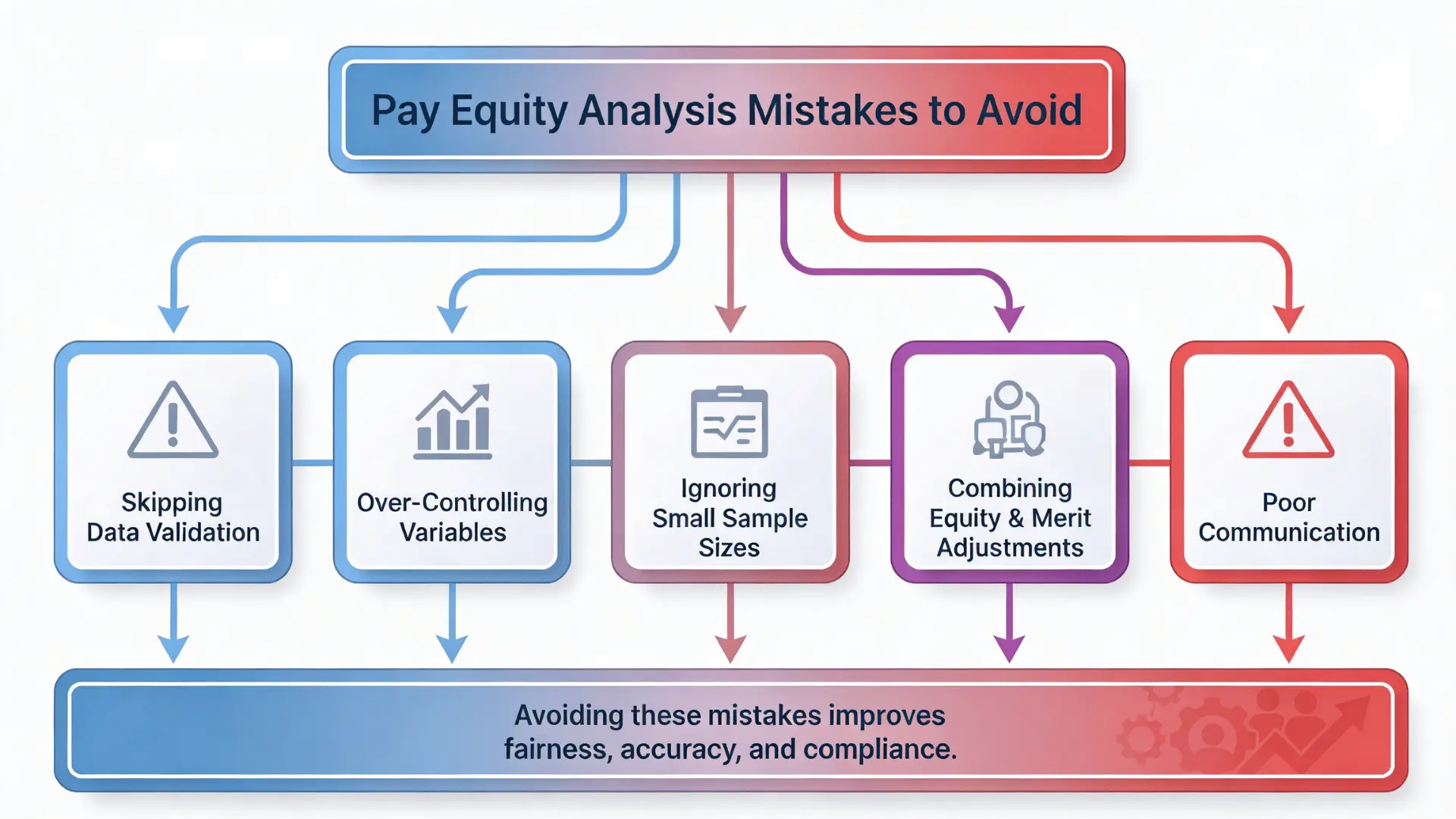
Even well-planned pay equity analyses can produce inaccurate results if common mistakes are overlooked. Avoiding these issues helps improve accuracy, fairness, and compliance.
- Skipping data validation: Incomplete data can reduce analysis accuracy.
- Over-controlling variables: Unnecessary factors may hide real pay gaps.
- Ignoring small sample sizes: Small groups can produce unreliable results.
- Combining equity and merit adjustments: Keep pay corrections separate from performance raises.
- Poor communication: Clearly explain compensation adjustments and their purpose.
Addressing these challenges helps businesses conduct more reliable pay equity analyses and build stronger compensation practices.
Best Practices for Fair Pay
Employers can reduce pay inequality by building clear, transparent, and consistent compensation practices across the organization.
Regularly reviewing compensation trends helps businesses compare pay across employee groups and align salary structures with industry benchmarks. This supports fair hiring, promotions, and compensation decisions.
Many organizations also reduce bias by limiting salary negotiations and instead relying on standardized salary bands and objective performance criteria. This helps create more equitable compensation outcomes across employees.
Businesses should also prioritize compensation budgets carefully to support fair pay adjustments and long-term pay equity goals.
Pay Equity Analysis Tools and Software
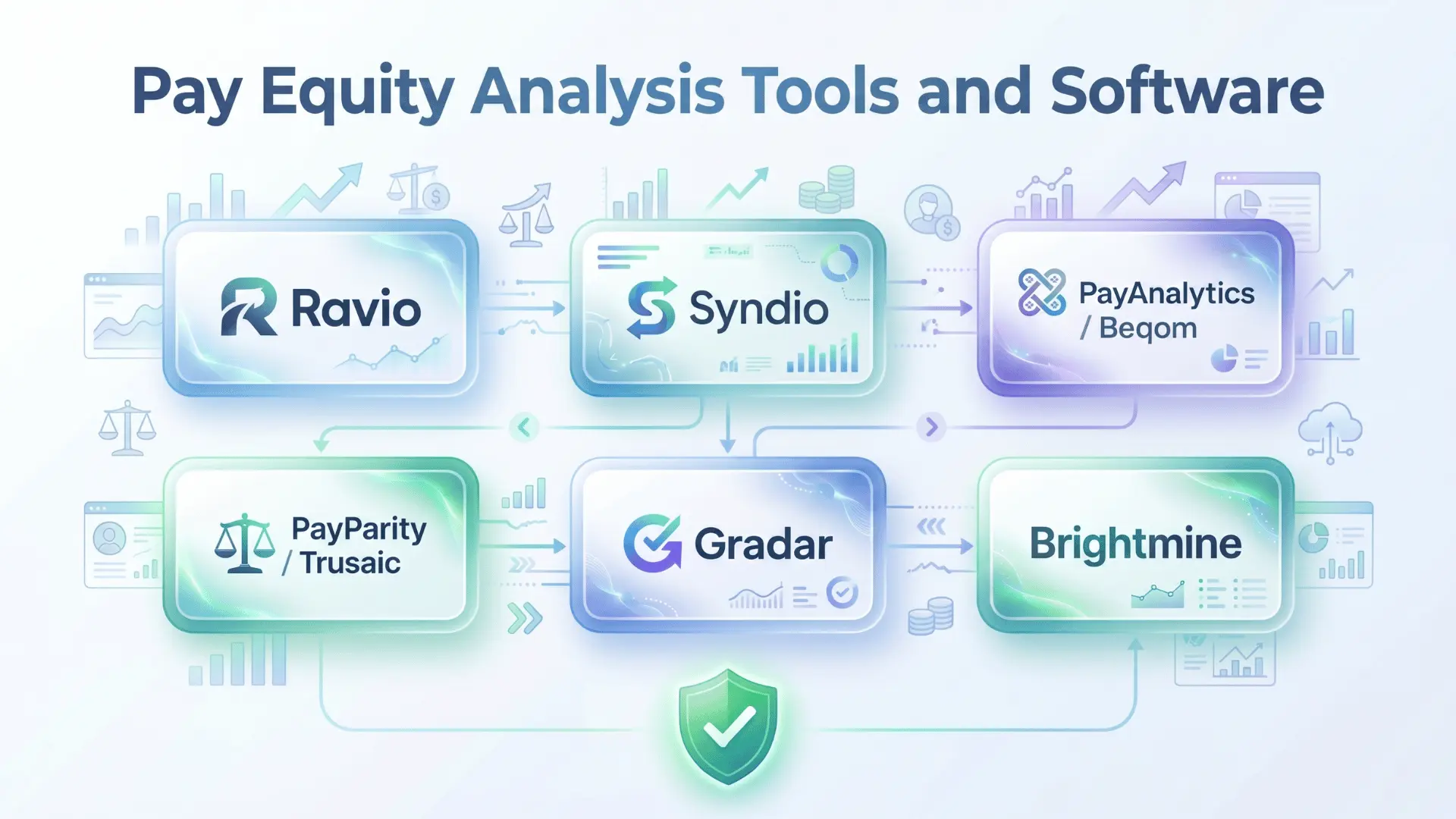
Manual pay equity analysis using spreadsheets can be time-consuming and difficult to manage at scale. Dedicated pay equity software helps automate compensation analysis, reporting, monitoring, and compliance tracking.
- Ravio: Pay equity analysis with benchmarking and salary band management.
- Syndio: Enterprise pay equity and compliance reporting platform.
- PayAnalytics (Beqom): Global pay equity and remediation planning tool.
- PayParity (Trusaic): AI-powered pay gap analysis and remediation software.
- Gradar: Job evaluation and compensation structure platform.
- Brightmine: Pay equity analytics with HR compliance support.
Using pay equity software helps businesses improve compensation transparency, simplify reporting, and maintain fair pay practices more efficiently.
Final Thoughts
A pay equity analysis is more than a compliance exercise. It helps businesses create fair compensation practices, strengthen employee trust, and make more consistent salary decisions across the organization.
Regular pay equity reviews also help identify hidden pay gaps early before they affect retention, morale, or legal compliance. Building a fair pay structure requires accurate data, transparent compensation policies, and ongoing monitoring.
Businesses that prioritize pay equity are better positioned to attract talent, improve workplace culture, and support long-term growth.
If your organization wants to build a more transparent and equitable workplace, now is the right time to conduct a pay equity analysis and strengthen your compensation strategy.
Frequently Asked Questions
What Is the Equal Pay Act?
The Equal Pay Act prohibits gender-based wage discrimination for employees performing substantially equal work.
How Do You Ensure Internal Pay Equity?
Businesses ensure internal pay equity through salary benchmarking, compensation reviews, and regular pay equity audits.
How Often Should Companies Conduct a Pay Equity Analysis?
Most businesses conduct a pay equity analysis annually or during compensation review cycles. Regular reviews help identify pay gaps early and maintain fair salary practices.