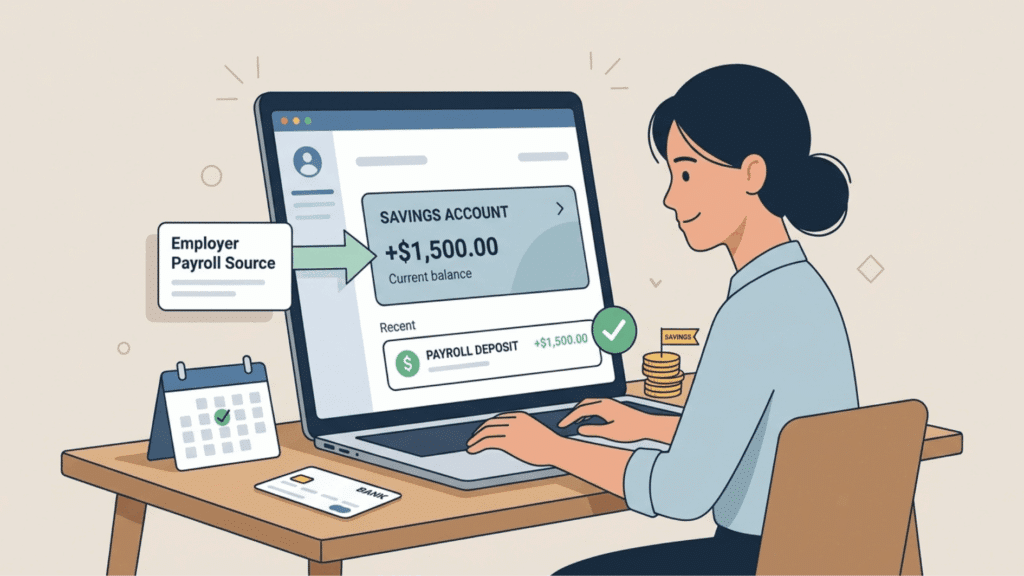


Earned Wage Access, or EWA, lets you get part of the pay you have already earned before your regular payday.
If you have worked five days of a two-week pay period, an EWA app can send you a share of those wages now.
On payday, you get the rest of your paycheck, minus what you took early and any fees.
So what is earned wage access in practice? It’s a timing tool, not extra money.
This post explains how it works, what it costs, whether it counts as a loan, and when it makes sense to use it.
What Earned Wage Access Means for Hourly Workers?
EWA goes by several names, and sources don’t always use them the same way.
On-demand pay is often used for direct-to-consumer products, while EWA usually refers to employer-integrated services.
The difference matters because EWA is offered through two main delivery models:
-
Employer-integrated: The provider connects to the company’s payroll and time-tracking systems, so draws are limited to wages already accrued.
-
Direct-to-Consumer: The app works independently of the employer and markets itself straight to the public.
Some providers also use “early wage access” for advances on future pay, so check how a provider defines its product before you sign up.
The service is most common where pay is hourly or per shift.
Employers such as Walmart and Kroger offer early access through third-party providers, and gig platforms like Uber and Lyft let drivers cash out earned pay several times a day.
The CFPB reported that about $22 billion in earned pay went out early to more than 7 million workers in 2022.
Types of Earned Wage Access
EWA comes in two forms. The main difference is whether your employer is part of the setup.
|
Feature |
Employer-integrated EWA |
Direct-to-Consumer EWA |
|---|---|---|
|
How Earnings Are Checked |
Your employer’s payroll and time-tracking data |
Your bank deposit history |
|
How You Get It |
Your employer offers it as a benefit |
You download the app yourself |
|
How It’s Repaid |
An earned wage access deduction from your paycheck |
An automatic debit from your bank account on payday |
|
Examples |
DailyPay, Payactiv |
EarnIn |
|
Main Risk |
A smaller paycheck |
An overdraft if your account is short when the debit hits |
If you are looking for earned wage access without an employer, you will be using the direct-to-consumer type.
These apps are often grouped with cash advance apps because they estimate your pay instead of confirming it with your employer.
Following Your Money Through an EWA Request
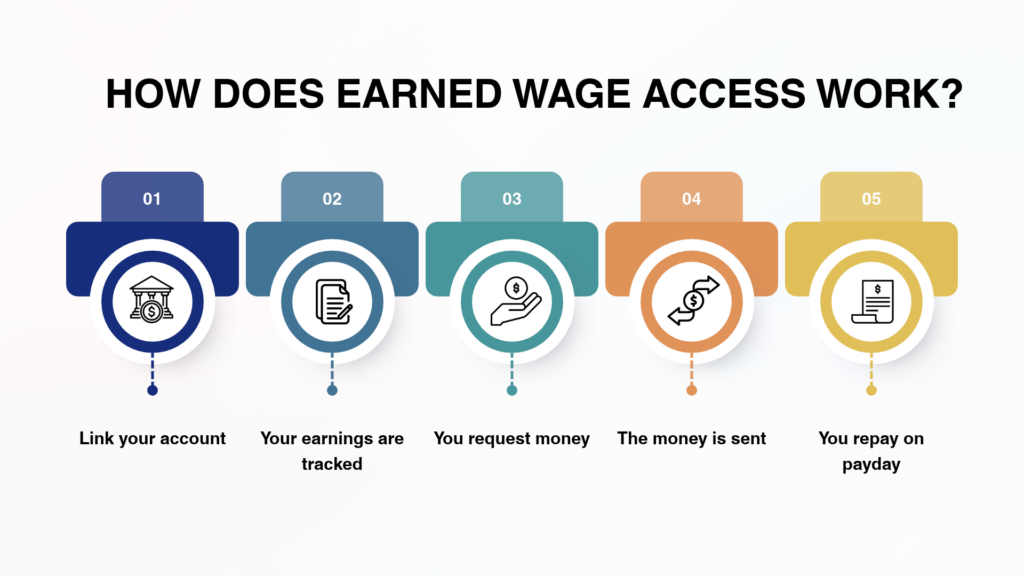
Most EWA services follow the same five steps. The data source and repayment method change depending on the type you use.
The Basic Steps
-
Link Your Account: Download the app your employer partners with, then link a bank account or debit card for deposits.
-
Your Earnings are Tracked: The service connects to your employer’s payroll or time system, or reads your bank deposits, to estimate what you’ve earned so far.
-
You Request Money: You pick an amount up to your limit. Many providers cap access at a share of your earned pay, such as 50%, so you still have money left on payday.
-
The Money is Sent: A standard transfer usually takes one to three business days. An instant transfer often arrives within minutes, usually for a fee.
-
You Repay on Payday: The amount you took, plus any fees, comes out of your paycheck or your bank account.
Three Ways EWA is Repaid
Providers collect repayment in one of three ways. Which one applies affects both your paycheck and the legal risk for employers.
-
Payroll Deduction: Your employer subtracts the advance from your paycheck and sends it to the provider.
-
Payroll Intercept: Your full paycheck goes to the provider first, which takes its share and passes the rest on.
-
Bank Account Settlement: You get your full paycheck as usual, then the provider collects from your bank account.
Annualized fee rate
2.1%
A $4 fee on $100 for 7 days works out to an annualized rate of 2.1%.
- Transfer fee
- $4
- Total repayment
- $104
How it is worked out
- Divide the fee by the amount received, then multiply by 365 ÷ the repayment days.
This simple annualized estimate is not a provider’s disclosed APR.
Who Qualifies for Earned Wage Access?
Qualifying is usually simple because approval depends on your pay, not your credit.
To use an employer-offered service, you typically need to:
-
Work for a company that offers EWA as a benefit.
-
Download the app your employer works with.
-
Link a bank account or debit card for deposits.
-
Set up direct deposit, in some cases, to qualify or lower transfer fees.
Does EWA Need a Credit Check?
No. The CFPB notes that employer-partnered providers don’t pull credit reports or credit scores. Instead, they use payroll data and limits your employer sets to decide how much you can take early.
Some state laws also bar providers from reporting unpaid balances to credit bureaus or sending them to debt collectors, according to Payroll. Terms vary by provider, so read the agreement.
How Much Does Earned Wage Access Cost?
Most EWA providers don’t charge interest, but EWA isn’t always free. What you pay depends on how fast you want the money and how your provider earns revenue.
Common Fee Types
-
Standard Transfer: Often free, but slower.
-
Instant Transfer Fee: A flat fee each time you want the money right away. This is the most common cost.
-
Optional Tips: Some direct-to-consumer apps ask you to “tip” for the service.
-
Subscription Fee: Some apps charge a monthly membership.
-
Employer-Paid Fees: Some employers cover the cost, so workers pay nothing.
How to Figure Out the True Cost?
A small flat fee can be expensive compared with how briefly you use the money.
The annual percentage rate (APR) shows a cost as a yearly rate, which makes it easier to compare EWA with other options.
Simple annualized cost
208.57%
A $4 fee on a $100 transfer repaid in 7 days equals 208.57% simple annualized.
- Total repayment
- $104
- Fee as share of transfer
- 4.00%
How it is worked out
- Simple annualized cost = fee ÷ transfer amount × 365 ÷ repayment days × 100.
This simple annualized estimate is not a legal APR disclosure.
Whether EWA fees legally count as interest is still debated, as the next section explains. But the math shows why frequent instant transfers add up.
If you paid a $4 fee twice every pay period on a biweekly schedule, you would spend $208 a year (2 × $4 × 26 paychecks).
Is Earned Wage Access a Loan?
Whether EWA counts as a loan depends on how the product is set up and where you live. Regulators, consumer groups, and the EWA industry don’t fully agree.
The Case For and Against Calling It Credit
Supporters, including the Financial Technology Association, say EWA isn’t a loan because you are getting money you’ve already earned, not borrowing against future income.
The CFPB notes that most employer-partnered providers offer both free and fee-based ways to receive funds.
Consumer advocates disagree. The National Consumer Law Center argues that EWA is a form of payday loan whose small fees can pile up.
They also point to repeat use: the CFPB found that the average worker using an employer-partnered product took 27 transactions a year.
Earned Wage Access Regulations at the Federal Level
As of November 2026, the Consumer Financial Protection Bureau (CFPB) has changed its stance several times.
The question is whether EWA is “credit” under the Truth in Lending Act (TILA), the federal law that requires lenders to disclose borrowing costs.
-
2020: The CFPB said certain employer-integrated EWA programs with no fees to workers weren’t credit under TILA.
-
2024: The CFPB proposed an interpretive rule treating many paycheck advance products, including ones with fees or tips, as consumer loans under TILA.
-
2025: The CFPB withdrew that proposal. On December 23, 2025, it issued a new advisory opinion. It says “covered” EWA is not credit under Regulation Z, which implements TILA. For those products, it also says optional expedited delivery fees and voluntary tips are not finance charges.
Federal guidance on EWA has shifted several times, so check the CFPB website for its current position.
Earned Wage Access vs. Payday Loans, Cash Advance Apps, and Overdrafts
EWA is often compared with other short-term cash options.
Here’s how they generally stack up:
|
Option |
Where the Money Comes From |
Typical Cost |
How It’s Repaid |
|---|---|---|---|
|
Employer-integrated EWA |
Wages you’ve already earned |
Free standard transfer; fee for instant |
Paycheck deduction |
|
Direct-to-Consumer EWA or Cash Advance App |
An estimate of your upcoming pay |
Fees, tips, or subscriptions |
Bank debit on payday |
|
Payday Loan |
The lender’s money |
High: a typical $15 fee per $100 on a two-week loan equals an APR of almost 400%, according to the CFPB |
Lump sum, often within two to four weeks |
|
Bank Overdraft |
Your bank covers the shortfall |
A flat fee per overdraft at many banks, though some have cut or dropped these fees |
Your next deposit |
Pros and Cons of Earned Wage Access
EWA can help in a pinch, but it comes with trade-offs. Workers and employers face different ones.
For Workers
Pros
- Covers surprise bills that land between paychecks
- Can help you avoid overdraft fees and payday loans
- Costs nothing if you use standard transfers or your employer pays the fees
Cons
- A smaller paycheck on payday can make the next round of bills harder to pay
- Instant transfer fees add up quickly with frequent use
- Repeated use can leave you always one paycheck behind
For Employers
Pros
- EWA may help with hiring and keeping staff, and many providers charge workers rather than employers
Cons
- It requires connecting payroll and time-tracking systems, and employers need to compare fee terms and state licensing be
When Does Earned Wage Access Make Sense?
EWA works best as an occasional backup, not a regular part of your budget. It can make sense for a one-time emergency, such as a car repair or medical bill, when your other choice is a payday loan or an overdraft.
It’s a poor fit if you need it every pay period. That usually points to a budget gap EWA cannot fix, and the fees can make the gap wider.
Questions to Ask Before You Sign Up
All done.
The Bottom Line
Earned wage access lets you reach money you have already earned before payday.
Used once in a while with free transfers, it is usually cheaper than a payday loan or an overdraft.
Used often, instant fees pile up, and your paycheck shrinks.
Know the costs and repayment terms before you sign up, and keep EWA for real emergencies.
Frequently Asked Questions (FAQs)
Can You Be Sued for Not Paying Back Earned Wage Access?
Possibly, but it depends on the provider. Many employer-integrated providers say they won’t sue or use debt collectors, while some direct-to-consumer apps have different terms. Read your agreement.
Is Earned Wage Access Taxed?
Yes, the wages are taxed as usual. Your employer withholds income and payroll taxes on payday, and direct-to-consumer advances are repaid from pay that’s already been taxed.
Why Can’t I Access My Earned Wages in My EWA App?
Common reasons include hours your manager hasn’t approved yet, hitting your withdrawal limit, a payroll cutoff near payday, or a new account that’s still being verified by the provider.